If you’re searching for a Ford Edge coolant leak recall, you’re probably watching your coolant reservoir mysteriously drain or seeing white smoke pour from your tailpipe. Here’s the problem: there isn’t a federal safety recall for most coolant issues plaguing Edge models. What exists instead is a complex web of Technical Service Bulletins, selective warranty extensions, and ongoing lawsuits that leave many owners holding a $7,000+ repair bill.
The Ford Edge Coolant Leak Recall That Doesn’t Exist
Let’s clear this up right away: Ford hasn’t issued a traditional safety recall for the most common coolant leak problems in the Edge. What they’ve done is release a series of Technical Service Bulletins (TSBs) that acknowledge the issues but don’t automatically cover repairs outside warranty periods.
The distinction matters because a recall means free repairs regardless of mileage or warranty status. A TSB simply tells dealership techs how to fix a known problem—but you’re still paying if your warranty expired.
Here’s what actually exists:
- TSB 22-2229: Addresses coolant intrusion in 2015-2018 Edge models with the 2.0L EcoBoost engine
- Customer Satisfaction Program 21N12: Covers the 1.5L EcoBoost engine but specifically excludes the Edge
- Warranty Extension: Covers 2019-2020 Edge models for EGR cooler failures (11 years/120,000 miles)
- Safety Recall 24S55: Addresses intake valve fractures in 2021-2022 Edge ST models with the 2.7L engine
Notice something? The 2015-2018 Edge with the 2.0L engine—the most problematic combination—gets a TSB but no extended warranty or recall coverage.
Why Your 2015-2018 Ford Edge 2.0L Is Drinking Coolant
The 2.0L EcoBoost engine in your Edge has what engineers call an “open-deck” design. Think of it like this: the top of the engine block has continuous channels (saw cuts) around the cylinders to maximize cooling. Great for preventing knock in a turbocharged engine. Terrible for long-term durability.
These channels create a weak point between cylinders #2 and #3. After enough heat cycles and pressure, the head gasket fails or the cylinder liner shifts microscopically. Suddenly, pressurized coolant has a direct path into your combustion chamber.
You’ll notice these symptoms in order:
- Cold start misfires: After sitting overnight, coolant seeps into the cylinder. Your engine stumbles on startup and throws a Check Engine Light with codes P0302, P0303, or P0316.
- White exhaust smoke: As the engine runs, coolant vaporizes and exits through the exhaust. It smells sweet—that’s burning ethylene glycol.
- Vanishing coolant: You’re topping off the reservoir weekly, but there’s no puddle under your car. The coolant is going inside the engine.
- Hydro-lock: In severe cases, enough coolant fills the cylinder that the piston can’t compress it. This bends connecting rods or punches holes through the engine block.
Ford acknowledged this issue in TSB 19-2208 back in 2019, then updated it to TSB 22-2229 in 2022. The fix? Replace the entire engine long block. Band-aid repairs like new head gaskets don’t work because the block design itself is flawed.
The April 2019 Cutoff: Gen I vs. Gen II Engines
Not all 2.0L EcoBoost engines fail at the same rate. Ford redesigned the block in April 2019, switching from the open-deck design to a “closed-deck” configuration with small drilled holes instead of continuous channels.
Here’s how to tell which you have:
- Pre-April 2019 (Gen I): High risk of coolant intrusion due to the open-deck design
- Post-April 2019 (Gen II): Significantly lower risk with the closed-deck redesign
If you’re buying a used Edge or already own one, check the engine build date on the label near the timing cover. Unfortunately, verifying the deck design visually requires removing the cylinder head—not exactly a quick parking lot inspection.
Ford used both the Cleveland Engine Plant in Ohio and the Valencia plant in Spain to manufacture these engines. While some owners report higher failure rates from Cleveland-built engines, both facilities produced the flawed Gen I design.
Why the 1.5L Gets Coverage But Your 2.0L Doesn’t
This is where things get frustrating. In June 2022, Ford released Customer Satisfaction Program 21N12—a one-time, no-cost short block replacement for coolant intrusion. It extends coverage to 7 years or 84,000 miles from the warranty start date.
Sounds great, right? Except it only applies to the 1.5L EcoBoost found in the Escape and Fusion. The 2.0L Edge is specifically excluded.
Let that sink in:
A 2018 Escape owner with a 1.5L engine and 70,000 miles gets a free engine. A 2018 Edge owner with a 2.0L engine and 70,000 miles gets a $7,000+ bill for essentially the same failure mechanism.
Ford hasn’t publicly explained this discrepancy. Both engines use similar open-deck designs. Both suffer from coolant intrusion into cylinders. The only real difference is displacement—and apparently, whether Ford feels like covering the repair.
Some Edge owners have successfully petitioned for “Goodwill Assistance” from Ford Corporate, typically receiving 40-60% coverage of the repair cost. Success depends heavily on your service history with Ford dealerships and whether you’re the original owner. Buy it used or get your oil changed at an independent shop? You’ll probably get denied.
The 3.5L V6 Water Pump Disaster
While everyone focuses on the 2.0L EcoBoost drama, the 3.5L Duratec V6 found in 2011-2018 Edge models has its own expensive coolant problem: the internal water pump.
Most cars mount the water pump on the outside of the engine, driven by the accessory belt. Easy to access, cheap to replace. Ford decided to mount the 3.5L’s water pump inside the engine, driven by the timing chain, behind the front cover.
When the water pump seal fails, it’s supposed to drip coolant out through a “weep hole” to alert you. But that weep hole often clogs with debris or simply can’t handle the leak volume. Instead, coolant gets forced into the oil pan.
Here’s what happens next:
Coolant mixes with engine oil, creating a chocolate milkshake-looking emulsion. This sludge can’t lubricate properly. Your main bearings spin, your crankshaft gets scored, and suddenly you need a complete short block replacement because a water pump failed.
The cost breakdown:
- Preventative water pump replacement: $1,500-$2,000 (10-14 labor hours)
- Engine replacement after pump failure destroys bearings: $5,500-$8,000
For older Edge models, this repair cost often exceeds the vehicle’s value. Many owners end up with a total loss from a water pump—a part that costs $150.
Ford has faced class-action litigation over this design in Militello v. Ford Motor Company, but as of 2025, there’s no settlement or recall. You’re on your own.
2019-2020 Models: The EGR Cooler Problem
If you own a 2019 or 2020 Edge, you’ve probably got the redesigned Gen II 2.0L EcoBoost with the closed-deck block. Good news: your risk of block failure is dramatically lower.
Bad news: these model years have a different coolant leak source—the Exhaust Gas Recirculation (EGR) cooler.
The EGR system recirculates exhaust gases back into the intake to reduce emissions. These hot gases pass through a liquid-cooled heat exchanger. In affected 2019-2020 models, the internal brazing in this cooler cracks under thermal stress, allowing coolant to leak into either the exhaust stream (white smoke) or the intake manifold (misfires).
Here’s the silver lining:
Ford issued TSB 20-2234 specifically for this issue and extended warranty coverage to 11 years or 120,000 miles. If your 2019-2020 Edge is consuming coolant, it’s likely the EGR cooler, and you’re probably covered.
This is the warranty extension that 2015-2018 owners desperately wish existed for their block failures.
The 2.7L EcoBoost: Actual Recall Territory
If you own a 2021-2022 Ford Edge ST with the 2.7L V6 EcoBoost, pay attention: there’s an actual federal safety recall that affects you.
Recall 24S55 addresses a batch of engines with defective intake valves made from a brittle alloy. These valves can fracture, with the valve head breaking off and dropping into the cylinder, causing catastrophic engine failure.
This is a proper NHTSA safety recall, meaning free repairs regardless of mileage or warranty status. Check your VIN on Ford’s recall website immediately if you own one of these models.
The 2.7L also suffers from oil pan leaks (the plastic oil pan sealed with RTV silicone tends to weep), but that’s addressed through TSBs 19-2249 and 19-2387, not a recall.
What the Lawsuits Mean for You Right Now
Two major class-action lawsuits are working their way through federal courts:
Miller et al. v. Ford Motor Company (Case 2:20-cv-01796)
This consolidated lawsuit specifically covers the 2015-2018 Ford Edge with the 2.0L EcoBoost. Plaintiffs argue Ford knew about the open-deck defect before selling these vehicles but concealed the information to maintain sales.
The case is active and moving through discovery. A motion for class certification is scheduled for August 29, 2025, with a final pretrial conference set for April 14, 2026.
Critical point: There’s no settlement yet. You can’t file a claim for reimbursement through this lawsuit right now. If you’re facing repairs today, this lawsuit won’t help you pay for them.
Militello v. Ford Motor Company (Case 2:23-cv-11363)
This litigation addresses the 3.5L Duratec water pump failures in 2007-2018 Edge models. The suit alleges the internal water pump design is inherently defective because it places a wear item in a location where its failure destroys the engine.
Like Miller, this case is ongoing with no settlement mechanism in place. A similar class action was certified in Ontario, Canada, but U.S. owners remain in legal limbo.
What this means for you:
Don’t delay repairs hoping a settlement will reimburse you. These cases could take years to resolve, and there’s no guarantee of a favorable outcome. If your engine is failing now, you need to address it now.
Your Actual Options When Coolant Disappears
If you’re still under warranty (5 years/60,000 miles):
Get to a Ford dealership immediately. Insist they pressure test the cooling system per TSB 22-2229 procedures. If coolant intrusion is confirmed, Ford must replace the long block at no cost.
Don’t let them “monitor the situation” or just replace the head gasket. The TSB specifically calls for complete engine replacement because gasket-only repairs fail.
If you’re outside warranty:
- Request Goodwill Assistance: Call Ford Customer Service (800-392-3673) and open a case. Be prepared with complete service records showing you maintained the vehicle at Ford dealerships. Success rates vary wildly, but some owners receive 40-60% coverage.
- Get multiple quotes: Dealership labor rates differ significantly. The repair requires 13-15 hours of labor. At $150/hour, that’s $1,950-$2,250 in labor alone, plus $4,500-$6,000 for the long block.
- Consider independent shops: Find a shop experienced with EcoBoost engines. They can source remanufactured long blocks for less than dealer pricing, though you’ll lose any remaining warranty.
- Document everything: If you pursue legal action later, you’ll need receipts, service records, and communication logs with Ford.
If repair costs exceed vehicle value:
For older Edge models, particularly 2011-2014 with 3.5L engines, a $7,000 engine replacement often exceeds the vehicle’s worth. You’re looking at either selling “as-is” for scrap value or accepting the total loss.
The Data You Need Before Buying a Used Edge
| Model Year | Engine | Primary Risk | Coverage Status | What to Check |
|---|---|---|---|---|
| 2011-2014 | 3.5L V6 | Internal water pump failure | None | Service records showing pump replacement |
| 2015-2018 | 2.0L I4 | Cylinder block coolant intrusion | TSB only (no warranty extension) | Engine build date (pre/post April 2019), existing codes P0302/P0303/P0316 |
| 2019-2020 | 2.0L I4 | EGR cooler failure | Extended warranty (11yr/120k mi) | Check for white smoke, sweet exhaust smell |
| 2021-2022 | 2.7L V6 | Intake valve fracture | Federal Safety Recall 24S55 | VIN lookup on Ford recall website |
Pre-purchase inspection essentials:
- Pressure test the cooling system for 5 hours (per TSB protocol) to detect slow leaks
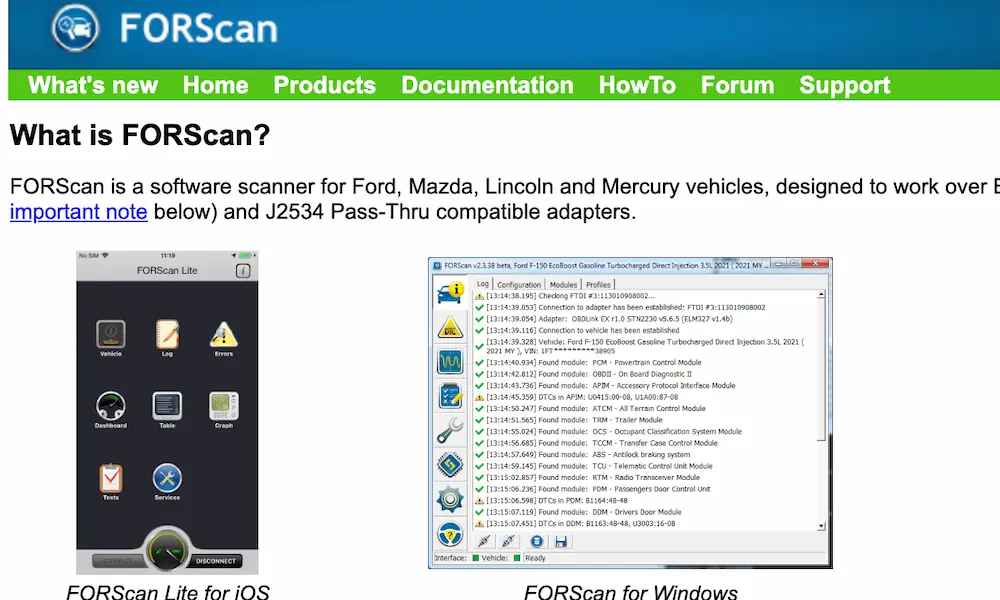
- Scan for stored codes, especially P0300-series misfire codes
- Pull spark plugs and inspect for coolant residue or steam cleaning
- Check oil for milky discoloration indicating coolant contamination
- Request CARFAX and verify no open recalls
Don’t trust a “clean” vehicle history report. Many of these failures occur just outside warranty periods, so there’s no repair history to report.
What Ford Isn’t Telling You
The 2015-2018 Ford Edge with the 2.0L EcoBoost represents a perfect storm: a known defect with documented TSBs, engines that fail predictably between 60,000-90,000 miles (conveniently outside the powertrain warranty), and selective coverage that excludes the Edge while covering mechanically similar engines in other models.
Owners are calling NHTSA (888-327-4236) to file complaints, hoping to trigger an investigation that could force a recall. The more complaints filed, the higher the priority for investigation.
If you own a 2015-2018 Edge and haven’t experienced coolant intrusion yet, don’t assume you’re safe. The failure mode is progressive. Regular cooling system pressure tests (every 15,000 miles) can catch the problem before catastrophic failure, potentially saving you from hydro-lock damage that totals the engine.
The Gen II redesign proves Ford knew the Gen I design was flawed. They fixed it for 2019+ production. They just didn’t extend that fix—or adequate coverage—to the hundreds of thousands of Gen I engines already on the road.
You’re not imagining things if your Edge is mysteriously drinking coolant. It’s a documented defect. You just happen to own the model year Ford decided not to cover.