Ford Escape transmission problems have burned a lot of owners — some facing $6,000+ repair bills with no warning. Whether you’re buying used or already dealing with a shudder or hard shift, this guide breaks down every generation, every known failure, and exactly what it’ll cost you to fix it.
A Quick Look at Every Generation’s Transmission Track Record
Not all Ford Escapes are created equal. The transmission story spans four distinct generations, and the reliability swings wildly depending on which year you own.
| Generation | Years | Transmission | Reliability |
|---|---|---|---|
| First | 2001–2007 | CD4E (4-speed auto) / eCVT | Moderate — thermal issues |
| Second | 2008–2012 | 6F35 (6-speed) / eCVT | Poor early; solid by 2011–2012 |
| Third | 2013–2019 | 6F35 (6-speed) | Very poor (especially 2013–2014) |
| Fourth | 2020–Present | 8F24 / 8F35 / HF45 hybrid eCVT | Moderate (auto); superior (hybrid) |
The worst years to own a Ford Escape cluster around 2013 and 2014. Those years combined transmission failures with engine cooling defects — a bad combination that triggered thousands of NHTSA complaints.
The best years? If you want a gas-powered Escape, 2011 and 2012 hit the sweet spot once Ford ironed out the early 6F35 bugs.
The 6F35 Six-Speed: The Main Culprit Behind Most Complaints
The 6F35 powered the Escape from 2008 through 2019. It’s also the transmission behind the most documented Ford Escape transmission problems. Here’s what actually breaks — and why.
Solenoid and Valve Body Failures
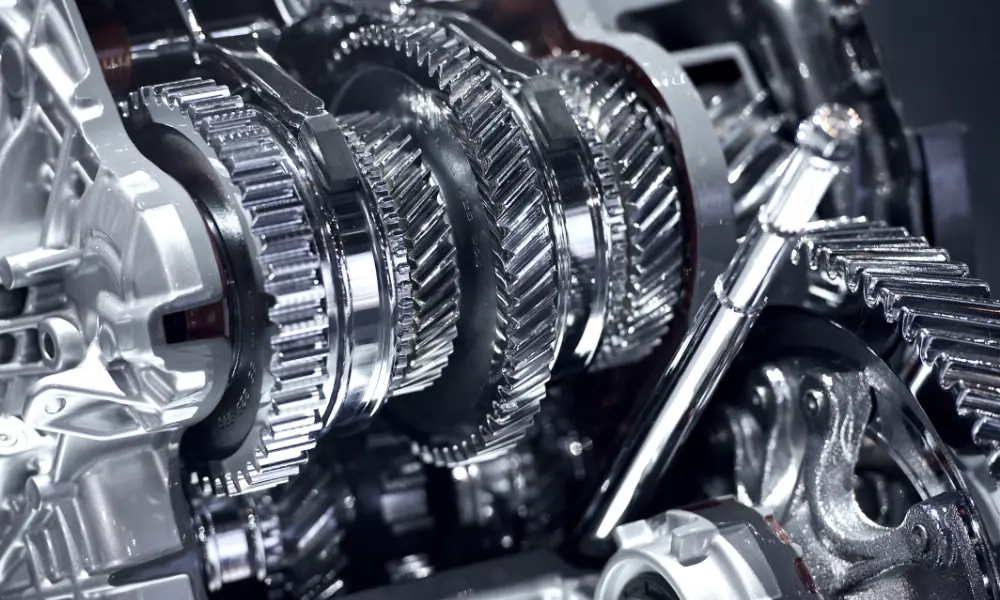
The 6F35 uses pulse-width modulated solenoids to control fluid flow to each clutch pack. Over time, those solenoids wear out or clog with metal debris. The result? Harsh engagement, slipping between gears, and “shift flares” where the RPMs spike awkwardly between shifts.
Behind that sits a deeper problem: the valve body itself. The solenoid regulator valve and pressure regulator valve wear down their bores over time. Once that happens, hydraulic pressure bleeds off, and the clutches don’t get enough clamping force to hold the gear properly.
Torque Converter Shudder
This one’s sneaky. When the input shaft bushings develop play beyond about 0.0015 inches — roughly the thickness of cellophane tape — the torque converter clutch (TCC) loses oil apply pressure. That triggers a shudder that feels like driving over rumble strips at highway speed.
It’s not just annoying. That shudder accelerates heat buildup, which destroys Mercon LV fluid, turning it into sludge that then clogs the entire valve body. One problem feeds the next.
Common Fault Codes to Watch For
| Symptom | Likely Cause | Fault Code | Fix |
|---|---|---|---|
| Harsh 2–3 shift | Solenoid regulator valve wear | P0732, P0733 | Valve body overhaul |
| TCC shudder | Stator support bushing play | P0741, P1744 | Torque converter / bushing kit |
| No forward or reverse | Case bore failure | P0751, P0766 | Full rebuild or case saver |
| Fluid turns black | Thermal overload | None | Fluid change every 30k miles |
The 6F35 lawsuit (Gerkarrah Jones, et al. v. Ford Motor Company) alleged Ford concealed these known defects from buyers. A Michigan judge dismissed the mass action in December 2024 on procedural grounds — not because the mechanical claims were wrong. Each of the nearly 4,000 plaintiffs can still refile individually, and many qualify under state lemon laws.
2020 and Newer: What’s Wrong With the 8-Speed?
Ford replaced the 6F35 with the 8F35 eight-speed automatic in the 2020 Escape. It’s smoother and more efficient — but it brought its own set of problems.
Planetary Gear Failures (2020–2022)
Early 8F35 units suffered from needle bearings in the output planet carrier that weren’t hardened enough during manufacturing. When those bearings fail, they don’t just wear — they shatter. Metal fragments spread through the entire case, and the transmission needs a full replacement. TSB 22-2281 from NHTSA addresses this specific failure.
No Reverse: The SOWC Problem (2023–2024)
The 8F35 uses a Selectable One-Way Clutch (SOWC) to keep the unit compact. In 2023 and 2024 models, a mechanical lever inside the SOWC sometimes fails to deploy correctly — usually due to manufacturing debris or contamination in the valve body separator plate.
The result: intermittent or total loss of reverse. TSB 24-2412 from NHTSA covers this repair, which takes 14 to 17 labor hours and requires a full teardown.
Snap Ring Seating Issues
Ford’s Customer Satisfaction Program CSP 22B38 from NHTSA addressed improperly seated snap rings in 2022 8F35 units. These are VIN-specific programs with expiration dates, so check Ford’s recall and satisfaction program portal to see if your vehicle qualifies.
Hybrid Escape: The Outlier With a Great Track Record
Here’s the plot twist: the Ford Escape Hybrid has one of the best drivetrain records in its class.
The eCVT (HF45) uses a single planetary gear set to blend inputs from the engine and two electric motors. There are no friction clutches, no bands, no complex hydraulic valve body. That eliminates the primary heat sources that destroy conventional automatics.
Taxi fleets in high-use cities like Seattle and New York have run Escape Hybrids past 300,000 miles on the original transmission with minimal maintenance. That’s not a fluke — it’s the absence of all the parts that break.
One caveat: The plug-in hybrid (PHEV) has faced separate battery recalls. Recall 24V954 and 25V789 from NHTSA both target a manufacturing defect in the battery cell separator layer that can cause internal short-circuits or fire risk. Ford issued software updates, but those updates didn’t catch every anomaly — leading to an expanded “do not charge” advisory for some PHEV owners.
What Does It Actually Cost to Fix a Ford Escape Transmission?
Repair costs vary a lot depending on what’s wrong and how you fix it.
| Repair Type | Cost Range | Warranty | Best For |
|---|---|---|---|
| Fluid flush / change | $175–$250 | None | Preventive maintenance |
| Solenoid pack replacement | $400–$850 | 12 mo / 12k mi | Electrical-only faults |
| Sonnax Zip Kit (valve body) | $300–$1,000 | Varies | Early shift problems |
| Used transmission | $2,500–$4,500 | 30–90 days | Tight budget |
| Factory remanufactured unit | $4,000–$8,000+ | 3 years / unlimited miles | Long-term fix |
The Sonnax Zip Kit for the 6F35 is worth knowing about. It seals pressure loss in the valve body without needing specialized reaming tools. If your clutches are still good, this $300–$1,000 fix can restore shift quality and buy you years of reliable driving.
Dealerships typically push remanufactured units with a 3-year, unlimited-mileage warranty. Independent shops may do a localized rebuild for less, but their warranty coverage is usually more limited.
Ford’s “Lifetime Fluid” Claim Is the Problem
Ford marketed the 6F35 and 8F35 as “lifetime fluid” transmissions. That claim has caused a lot of preventable failures.
Mercon LV and Mercon ULV fluids are highly sensitive to heat. In the 8F35, the fluid can turn black in as little as 10,000 to 15,000 miles from the torque converter clutch’s aggressive duty cycle. Once the fluid breaks down, suspended metal particles clog solenoids, pressure drops, clutches slip, temperatures rise, and the cycle destroys the transmission from the inside out.
The 30,000-mile rule: Drain and fill your transmission every 30,000 miles. Each service replaces 40–60% of the total fluid volume and removes metal particles before they cause damage. This applies to both the 6-speed and 8-speed automatic Escapes.
For the 8F35, there’s another wrinkle — the internal filter isn’t serviceable without a full teardown. Regular fluid changes become even more important because you can’t swap the filter on a routine basis.
Reliability Ratings: What the Numbers Say
| Source | Score | What It Measures |
|---|---|---|
| J.D. Power (2025) | 84/100 — #1 small SUV | Initial quality off the lot |
| Consumer Reports (2025 Hybrid) | 21/100 | Long-term reliability history |
| RepairPal | 4.0 / 5.0 | Ownership costs (~$600/year) |
| Cars.com | 2025 Best Value | Cost-to-features ratio |
There’s a clear split here. Ford has genuinely improved assembly quality — they pushed 9.5 million over-the-air software updates in Q1 2025 and reported a 10% drop in early-ownership repairs. J.D. Power noticed. But Consumer Reports looks at historical failure rates, and the 6F35 era drags those numbers down hard.
Which Years Should You Actually Buy?
If you’re shopping the used market, here’s the short version:
- Best gas-powered years: 2011–2012 (6F35 issues mostly resolved) and 2023–2025 (refined 8F35)
- Avoid: 2013 and 2014 — highest complaint volume, combined transmission and cooling failures
- Best overall: Any hybrid year except the 2024–2025 PHEV until the battery recall is fully resolved
If you plan to drive high miles, the hybrid powertrain’s 300,000-mile track record makes the higher purchase price a smart long-term investment. A single transmission replacement on a gas model costs $6,000+. The hybrid avoids that bill entirely.
If you already own one and notice shuddering, don’t immediately approve a full replacement. Have a shop check the stator support bushings first and ask about the Sonnax Zip Kit approach. You might fix the problem for a fraction of replacement cost.
And regardless of what year you own — change your transmission fluid every 30,000 miles. That one habit prevents most of the failures covered in this entire post.