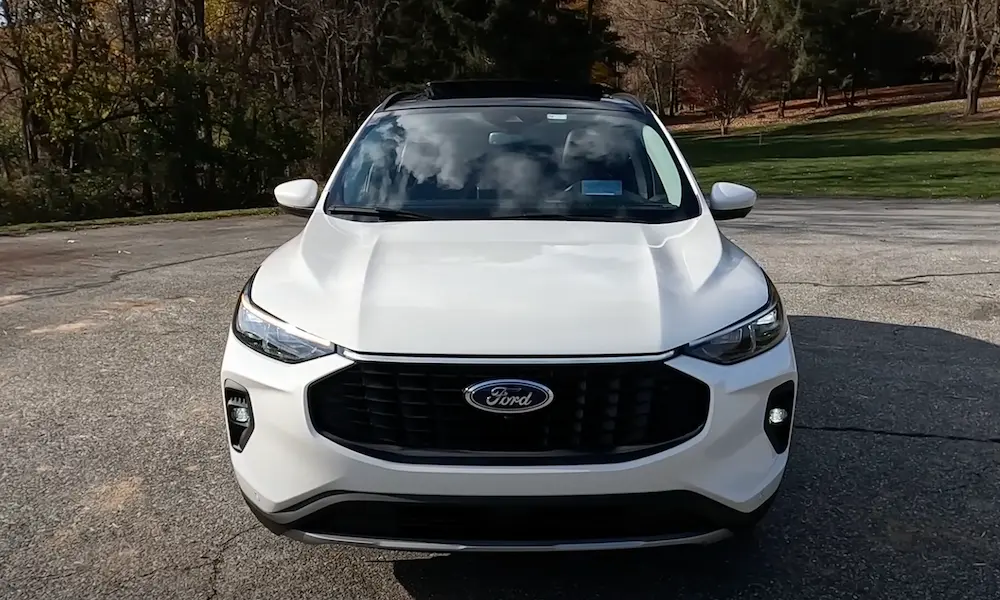
Thinking about towing with a Ford Explorer but not sure if it can handle your boat, camper, or trailer? You’re in the right place. This guide breaks down the Ford Explorer towing capacity across the 2024, 2025, and 2026 model years — including which engine gets you the most pull, what packages you actually need, and how to stay safe on the road. Stick around to the end — there’s a lot here that could save you a headache.
How Much Can a Ford Explorer Tow?
The short answer: up to 5,600 pounds, depending on the trim and model year.
The longer answer is a bit more nuanced. Ford Explorer towing capacity varies depending on the engine, drivetrain, and tow package. Here’s a quick snapshot across model years:
| Model Year | Standard Towing | Max Available Towing | Package Required |
|---|---|---|---|
| 2024 | 3,000 lbs | 5,600 lbs | Class IV Optional |
| 2025 | 5,000 lbs | 5,000 lbs | Class III Standard |
| 2026 | 5,000 lbs | 5,600 lbs | Class III Standard |
The big shift happened in 2025. Ford stopped making towing an optional add-on and made the Class III Tow Package standard on every Explorer — no more hunting through window stickers to see if your trim can actually tow.
Ford Explorer Towing Capacity by Engine
Your engine choice matters more than your trim level when it comes to raw towing numbers. Here’s how each powertrain stacks up.
2.3-Liter EcoBoost Four-Cylinder
This is the standard engine on most Explorer trims — the XLT, ST-Line, and Active. Don’t let the four-cylinder label fool you. It pumps out 300 horsepower and 310 lb-ft of torque, with peak torque hitting as low as 3,500 RPM. That’s exactly what you want when you’re pulling a loaded trailer from a dead stop.
- 2024 max tow rating: 5,300 lbs (with Class IV package)
- 2025/2026 max tow rating: 5,000 lbs (Class III standard)
3.0-Liter EcoBoost Twin-Turbo V-6
This engine lives in the Explorer ST, and it’s the one that unlocks the highest tow rating. Two turbochargers work together to deliver 400 horsepower and 415 lb-ft of torque with virtually zero lag. If you’re pulling heavy loads regularly, this is the engine you want.
- 2024 max tow rating: 5,600 lbs
- 2025/2026 max tow rating: 5,000–5,600 lbs depending on trim
3.3-Liter Hybrid V-6
The hybrid powertrain shows up in fleet and government versions — think Police Interceptor Utility. The electric motor adds instant torque off the line, making it surprisingly capable for towing. Despite the added weight of the battery pack, it still hits 5,000 lbs.
| Engine | Horsepower | Torque (lb-ft) | 2024 Max Tow | 2025/2026 Max Tow |
|---|---|---|---|---|
| 2.3L EcoBoost I-4 | 300 | 310 | 5,300 lbs | 5,000 lbs |
| 3.0L EcoBoost V-6 | 400 | 415 | 5,600 lbs | 5,000–5,600 lbs |
| 3.3L Hybrid V-6 | 318 | 322 | 5,000 lbs | 5,000 lbs |
| 3.3L Ti-VCT V-6 (Fleet) | 285 | 260 | 5,600 lbs | 5,000 lbs |
Class III vs. Class IV: What’s the Difference?
Before 2025, Ford offered two towing packages. Understanding the difference helps if you’re shopping for a used 2024 Explorer.
Class IV (2024 only, optional on most trims) unlocked the higher ratings — 5,300 lbs on the four-cylinder and 5,600 lbs on the V-6. It also included beefier cooling components and allowed for up to 55 square feet of trailer frontal area.
Class III (standard on 2025 and 2026) comes factory-installed on every Explorer. It includes:
- A 2-inch Class III hitch receiver bolted directly to the reinforced frame
- A 7-wire harness with both 4-pin and 7-pin connectors — the 7-pin handles trailers with electric brakes
- Lane Keeping Alert calibrated for trailer length and width
- High-flow radiator and auxiliary transmission cooler integrated into the front fascia
If you’re looking at a used 2024, check the front radiator area for extra cooling stacks. That’s the fastest way to confirm a factory tow package without digging through paperwork.
Weight Limits You Can’t Ignore
The towing capacity number is just one piece of the puzzle. Ignore the others and you risk a mechanical failure — or worse.
Gross Combined Weight Rating (GCWR)
The GCWR covers everything: your Explorer, all passengers, all cargo, and the trailer. For the Explorer, that ceiling sits between 10,000 and 10,800 lbs. Load up seven passengers and a roof rack, and your remaining trailer capacity drops fast.
Payload and Tongue Weight
Payload is what goes inside or on top of your Explorer. It varies by trim — the base Active can handle up to 1,800 lbs, while the luxury Platinum drops to around 1,400 lbs due to extra feature weight.
Tongue weight — the downward force your trailer puts on the hitch — maxes out at 500 lbs on the Explorer. Here’s the math that catches people off guard:
Explorer ST payload: 1,400 lbs
Minus 500 lbs tongue weight = only 900 lbs left for passengers and cargo
That goes fast with three kids, two adults, and a loaded roof box.
Frontal Area Limit
Your trailer’s front face can’t exceed 40 square feet with the standard Class III package. A too-tall trailer creates so much aerodynamic drag at highway speed that your transmission overheats — even if the weight is within limits.
Towing Tech That Actually Helps
The Explorer doesn’t just have muscle — it has some genuinely useful driver-assist features built around towing.
Trailer Sway Control
The Explorer uses gyroscopic sensors to detect side-to-side trailer movement before it becomes a problem. When it catches early sway, it applies selective braking and dials back engine power to straighten things out automatically. You may not even notice it working.
BLIS with Trailer Coverage
The Blind Spot Information System gets smarter when you plug into the 7-pin connector. It extends the radar monitoring zone to cover the full length of your trailer, not just the area beside your rear bumper. Lane changes on a busy interstate get a lot less stressful.
You can see it in action in this BLIS with Trailer Coverage video from Ford.
Pro Trailer Backup Assist
Reversing a trailer is the one skill that turns grown adults into nervous wrecks. Ford’s Pro Trailer Backup Assist handles the counter-intuitive steering for you. Turn a dashboard knob in the direction you want the trailer to go — the Explorer figures out the rest.
Pro Trailer Hitch Assist
Lining up the hitch ball solo? The 360-degree camera system and ultrasonic sensors automate the entire alignment process — steering, speed, and braking included. No spotter required.
Tow/Haul Mode
Part of the Terrain Management System, Tow/Haul mode delays upshifts and aggressively downshifts on descents to use engine braking instead of wearing out your mechanical brakes. It’s especially valuable on mountain passes and long grades in the Rockies or Appalachians.
Explorer ST vs. Tremor: Which Is Better for Towing?
The 2026 lineup adds the new Tremor trim. Here’s how it compares to the performance-focused ST.
| Feature | Explorer ST | Explorer Tremor | Platinum Trim |
|---|---|---|---|
| Standard Engine | 3.0L V-6 | 2.3L I-4* | 2.3L I-4* |
| Standard Drive | Intelligent 4WD | Intelligent 4WD | RWD (4WD Avail) |
| Suspension | Sport-Tuned | Off-Road Lifted | Comfort-Tuned |
| Max Towing | 5,600 lbs | 5,000 lbs | 5,000–5,600 lbs |
| Rear Axle | 3.58 Ratio | Torsen Limited Slip | 3.31 Ratio |
*3.0L V-6 available as an option on both Tremor and Platinum.
Pick the ST if you tow frequently on highways and paved roads. The sport-tuned suspension reduces rear squat under load, keeping your front tires planted for more precise steering response.
Pick the Tremor if you’re pulling a boat up slippery ramps or navigating a trailer through muddy campsites. Its Torsen limited-slip rear differential sends torque to whichever rear wheel has more grip — a real advantage when pavement ends and things get slick. The 8.7 inches of ground clearance and standard all-terrain tires round out the off-road package.
EcoBoost Towing at High Altitude
Here’s something most buyers overlook: naturally aspirated engines lose significant power as altitude increases. The air gets thinner, and horsepower drops with it.
The Explorer’s EcoBoost turbochargers actively compress incoming air to maintain manifold pressure. That means your tow ratings stay consistent whether you’re hauling a trailer through Florida or crossing the Continental Divide in Colorado. A 5,000-lb load that’s manageable at sea level doesn’t suddenly become a problem at 10,000 feet.
Smart Towing Habits That Protect Your Explorer
Load Your Trailer 60/40
Put roughly 60% of your cargo weight in the front half of the trailer and 40% in the rear. This creates the right amount of tongue weight — the primary factor in preventing high-speed trailer sway.
Cross Your Safety Chains
Always run the safety chains in an X pattern under the tongue. If the hitch fails, crossed chains catch the tongue before it hits the road. An uncrossed chain lets the tongue dig in — and that flips the trailer. This is the correct method outlined in Ford’s towing guides.
Check These Systems More Often If You Tow Regularly
Ford classifies frequent towing as “Extreme Service” use. That means your maintenance schedule needs to be tighter than the standard intervals:
- Transmission fluid — High thermal loads degrade synthetic fluid faster under tow conditions
- Brake pads and rotors — Check for warping and glazing, especially after mountain driving
- Tire pressure — Under-inflated tires are the leading cause of trailer-related accidents in the US. Check both vehicle and trailer pressure before every trip
How the Explorer Stacks Up Against the Competition
The Explorer consistently leads the midsize three-row SUV segment for towing. The Honda Pilot and Toyota Highlander both top out at 5,000 lbs — and often need expensive optional packages to get there.
The Explorer hits that same number as the standard baseline in 2025 and 2026, with the V-6-equipped ST pushing to 5,600 lbs. That extra 600 lbs of headroom might not sound like much, but it’s the difference between fitting your loaded ski boat on the trailer or having to leave gear behind.
The rear-wheel-drive-biased architecture is a key reason for this edge. When you attach a trailer, the tongue weight presses down on the rear — which is exactly where the drive wheels sit. That increases tire contact and traction instead of working against it, the way front-wheel-drive platforms do.