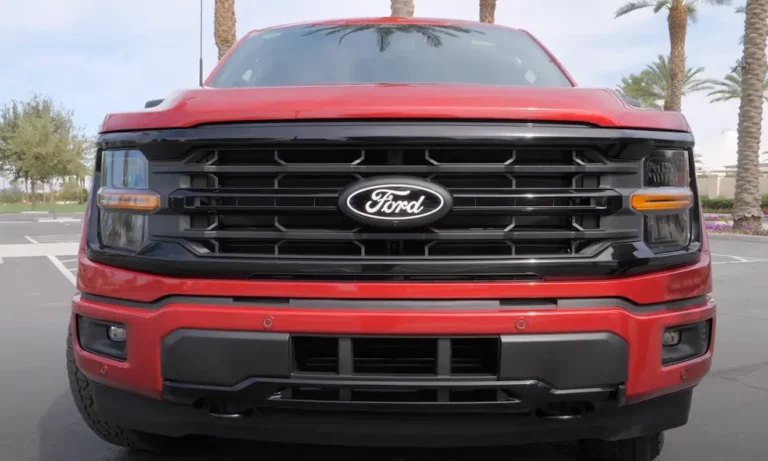
When your F150 displays the dreaded “starting system fault” message, it can quickly turn a normal day into a frustrating experience. This comprehensive guide will walk you through the most common causes, diagnostic approaches, and repair options for Ford F150 starting system problems. Whether you’re dealing with a truck that won’t crank at all or one that starts intermittently, you’ll find practical solutions that can save you time and money.
What Causes Ford F150 Starting System Faults?
Starting system faults in F150 trucks can stem from simple electrical issues to complex computer-related problems. Understanding the root cause is crucial for effective repairs.
Heat Soak Issues (2015-2020 F150s with 5.0L Engines)
One of the most notorious starting problems in F150s is the starter heat soak issue affecting 2015-2020 models with 5.0L engines. This problem occurs when the starter motor overheats due to its proximity to the exhaust manifold.
The symptoms are distinctive:
- Your truck starts perfectly when cold
- After driving (especially highway driving or towing), the truck won’t restart
- You need to wait 20-60 minutes for the engine to cool before it will start again
The heat causes internal starter components to expand, creating excessive electrical resistance that prevents proper operation. Ford Performance addressed this with upgraded starter motors that feature a smaller profile and better heat resistance.
PATS and BCM-Related Failures
The Passive Anti-Theft System (PATS) is another common culprit behind starting system faults. This system requires communication between multiple components:
- Body Control Module (BCM)
- Powertrain Control Module (PCM)
- Transponder ring around the ignition cylinder
When a PATS fault occurs, you’ll often see the “Starting System Fault” message on your dashboard even though the battery and starter seem fine. The system is designed to prevent the engine from starting if it detects potential theft attempts, but it can malfunction due to:
- Corroded connections in the passenger footwell
- Worn key transponders
- BCM communication errors
These issues can be frustratingly intermittent – working perfectly one day and failing the next.
PCM Relay and Electrical System Problems
The PCM relay controls power distribution to critical engine management systems. When it fails, you might experience:
- Complete loss of communication with diagnostic tools
- All dashboard warning lights illuminating at once
- No-start conditions despite a good battery
The good news? This is one of the easiest and cheapest fixes for starting system faults. The PCM relay is located in the passenger side fuse box and typically costs only $25-50 to replace.
How to Diagnose Ford F150 Starting System Issues
Proper diagnosis is essential to avoid replacing parts unnecessarily. Follow these steps to pinpoint the exact cause of your starting system fault.
Initial Assessment
Start by determining exactly what happens when you try to start your truck:
- Does the engine crank but not start?
- Is there no cranking at all?
- Do you hear clicking sounds but no cranking?
- Does it start sometimes but not others?
Next, check your battery voltage. A fully charged 12-volt battery should read approximately 12.6 volts with the engine off and maintain at least 10.5 volts during cranking. Even minor battery terminal corrosion can create enough resistance to prevent starting.
Advanced Diagnostic Techniques
For more complex issues, especially with newer F150s, professional diagnostic equipment may be necessary. Modern F150s generate specific diagnostic trouble codes that can pinpoint the exact nature of starting system faults:
- P0606: PCM processor fault
- P0603: PCM memory error
- U-codes: Communication errors between vehicle modules
The neutral safety switch can also cause starting problems. Try starting your truck in both Park and Neutral positions. If it starts in Neutral but not Park, the neutral safety switch likely needs adjustment or replacement.
Component-Specific Repair Information
Once you’ve identified the likely cause, you can move forward with repairs. Here’s what you need to know about fixing specific components.
Starter Motor Replacement and Upgrades
Traditional starter replacement costs between $240-895 depending on your specific F150 model year and engine. Labor costs vary significantly based on starter accessibility – some installations take just 1-2 hours while others require up to 8 hours for complex engine layouts.
For trucks affected by heat soak issues, upgrading to a Ford Performance starter (part numbers M-11000-C50 for 2WD and M-11000-C50A for 4WD) provides both immediate problem resolution and improved long-term reliability. These performance starters typically cost $250-400 installed – excellent value compared to repeatedly replacing standard starters.
Ignition Switch and Neutral Safety Switch Repairs
Ignition switch problems often manifest as intermittent starting combined with dashboard gauge malfunctions. Replacement typically costs $150-400 including labor, though the job requires moderate mechanical skill due to steering column disassembly.
Neutral safety switch replacement ranges from $100-250 depending on access difficulty and local labor rates. This switch mounts on the transmission and connects to the shift linkage, requiring careful adjustment after installation.
| Component | Cost Range | DIY Difficulty | Symptoms |
|---|---|---|---|
| PCM Relay | $25-50 | Easy | No communication, multiple warning lights |
| Starter Motor | $240-895 | Moderate-Hard | No cranking, heat-related no-start |
| Ignition Switch | $150-400 | Moderate | Intermittent start, gauge issues |
| Neutral Safety Switch | $100-250 | Moderate | Starts in Neutral but not Park |
| PATS Components | $100-1,200+ | Hard | “Starting System Fault” message |
PATS System Repairs and Key Programming
PATS system repairs vary widely in complexity and cost:
- Antenna ring replacement: $100-200
- BCM replacement: Can exceed $1,200
- Key programming: $100-300 at dealerships or qualified automotive locksmiths
Many PATS problems stem from loose connections rather than component failures. The antenna ring around the ignition cylinder is particularly susceptible to damage during other repairs, and loose connections can cause intermittent starting problems.
Prevention and Maintenance Strategies
An ounce of prevention is worth a pound of cure when it comes to starting system faults.
Electrical System Maintenance
Regular battery and charging system maintenance prevents many starting problems:
- Clean battery terminals every six months using a wire brush
- Apply protective terminal spray to prevent corrosion
- Check battery cable connections for tightness
- Pay special attention to the ground cable connection to the engine block
- Test your charging system annually with a multimeter
A failing alternator can damage batteries and create starting difficulties, while worn drive belts can prevent proper charging even with a good alternator.
Heat Management for Heat Soak Prevention
If your F150 is susceptible to heat soak problems, consider these preventive measures:
- Install a starter heat shield (can reduce thermal exposure by up to 200°F)
- Ensure proper cooling system maintenance
- Maintain adequate coolant levels
- Verify cooling fans are functioning correctly
- Keep radiators clean and unobstructed
Proper cooling system maintenance helps reduce overall engine bay temperatures, minimizing heat buildup that contributes to starter overheating.
Cost-Effective Repair Strategies
Starting system repairs can range from simple DIY fixes to complex dealer-only procedures. Here’s how to approach repairs strategically.
DIY vs Professional Service
Many starting system repairs fall within the capabilities of mechanically inclined owners:
- PCM relay replacement
- Battery service
- Basic electrical connection cleaning
These DIY-friendly repairs require minimal tools and experience while potentially saving hundreds in labor costs.
However, certain repairs demand professional service due to complexity or required programming:
- BCM replacement
- Fuel system repairs
- PATS programming
These typically require specialized equipment and technical knowledge. Attempting these repairs without proper tools can result in additional damage and higher ultimate costs.
Strategic Repair Prioritization
When facing multiple potential problems, prioritize repairs based on cost-effectiveness:
- Start with the least expensive possibilities: check PCM relay, clean battery connections, verify fuses
- Move to moderately priced components: starter motor, ignition switch, neutral safety switch
- Consider expensive repairs like BCM replacement only after ruling out simpler causes
For older trucks with multiple aging components, consider the overall vehicle value when deciding between repairs and replacement. A $1,200 BCM replacement may not make economic sense on a high-mileage truck worth less than $5,000.
Real-World Solutions for Common F150 Starting Problems
Let’s look at specific scenarios you might encounter and their solutions.
Scenario 1: Truck Won’t Start When Hot
If your 2015-2020 F150 with the 5.0L engine starts fine when cold but won’t restart after driving:
- First, check for Ford technical service bulletins related to starter heat soak
- Consider upgrading to the Ford Performance starter designed specifically for this issue
- As a temporary measure, carrying a can of compressed air to cool the starter can help in emergency situations
Scenario 2: “Starting System Fault” Message Appears
When the “Starting System Fault” message appears on your dashboard:
- Check if your key fob battery is weak or dead
- Look for loose connections in the passenger footwell where the BCM is located
- Have the PATS system scanned for specific error codes
- Verify the PCM relay is functioning properly
Scenario 3: Clicking Sound But No Crank
If you hear a clicking sound when trying to start but the engine doesn’t crank:
- Test battery voltage under load
- Check for corroded battery terminals or loose connections
- Verify the starter solenoid is functioning
- Inspect the starter motor for heat damage
When to Upgrade Rather Than Replace
In some cases, upgrading components makes more sense than direct replacement, especially for known problem areas.
The Ford Performance starter for 5.0L engines is a prime example – it costs slightly more than a standard replacement but offers significantly improved reliability and heat resistance. Similarly, premium electrical connections with corrosion protection can prevent recurring problems in harsh environments.
For trucks with a history of electrical issues, upgrading to a higher capacity battery or adding an auxiliary battery management system may provide better long-term reliability, especially for trucks used in demanding applications.
Ford F150 starting system faults can be frustrating, but with systematic troubleshooting, most issues can be resolved effectively. By understanding the common failure points and following a logical diagnostic approach, you can save time and money while keeping your truck running reliably.
Remember that prevention remains the most cost-effective strategy. Regular maintenance of electrical connections, batteries, and cooling systems can prevent many common problems before they leave you stranded.