Seeing that yellow wrench icon glowing on your Ford Fusion’s dashboard? Don’t panic—but don’t ignore it either. This light is your car’s way of saying there’s a powertrain problem that needs attention. We’ll break down what’s triggering it, what you can do about it, and how much it’ll cost to fix.
What the Ford Fusion Wrench Light Actually Means
The wrench light isn’t your standard check engine light. It’s a powertrain malfunction indicator that tells you something’s wrong with your engine or transmission systems. Think of it as your car’s urgent message: “I can still move, but I’m not happy about it.”
When this light flips on, your Fusion’s computer (the Powertrain Control Module, or PCM) has detected a fault that could damage your drivetrain. Unlike the check engine light that monitors emissions, the wrench light focuses on drivability issues.
The Dreaded Limp Mode
You’ll know you’re in trouble when your Fusion suddenly feels like it’s dragging a piano. This is “limp mode”—a protective state where your car limits power to prevent further damage. Your symptoms might include:
- Acceleration feels like molasses
- You can’t get above 35-40 mph
- The transmission won’t shift past 2nd or 3rd gear
- Engine RPM is capped around 3,000
This isn’t a malfunction—it’s your car protecting itself. The PCM has decided something’s so wrong that unrestricted operation could destroy your engine or transmission.
The Most Common Culprit: Your Throttle Body Is Gunked Up
If you’re driving a 2009-2016 Fusion with the 2.5L or 3.0L engine, there’s a good chance your electronic throttle body is the problem. This failure is so common that Ford issued an extended warranty program specifically for it.
How the Throttle Body Fails
Your Fusion uses a “drive-by-wire” throttle—no cable connects your gas pedal to the engine. Instead, sensors tell the computer what you want, and an electric motor opens the throttle plate accordingly.
Here’s what goes wrong:
Sludge buildup: Oil vapor from your engine’s crankcase recirculates through the intake. When it hits the throttle plate, it condenses into a sticky tar that makes the plate stick. Your PCM commands the throttle to open, but the plate stays glued shut. Codes P2111 (stuck open) or P2112 (stuck closed) pop up, and the wrench light comes on.
Sensor wear: Inside the throttle body are two position sensors that tell the PCM where the throttle plate is. Over time, the sensor’s carbon tracks wear out, creating dead spots. When the sensor signal drops out or the two sensors disagree, you get code P2135 and—you guessed it—the wrench light.
The Extended Warranty That’s Probably Expired
Ford’s Customer Satisfaction Program 13N03 covered throttle body failures for 10 years or 150,000 miles on 2009-2013 models. Problem is, that coverage has expired for virtually every vehicle now. You’re on your own dime.
Can You Just Clean It?
If you’ve got codes P2111 or P2112, cleaning might work—but only if you do it right.
The wrong way: Spray some throttle body cleaner in there, wipe it down, button it back up. Your idle will race to 2,000 RPM because the computer still thinks the throttle is dirty.
The right way:
- Remove the throttle body completely
- Clean it thoroughly with proper solvent
- Disconnect your battery for 15 minutes to clear the computer’s memory
- Perform the idle relearn procedure: Start cold, idle for 15 minutes with A/C on, then drive for 10 miles
If you’ve got P2135, don’t bother cleaning. The sensors are worn out. You need a new throttle body, period.
Cost: DIY parts run $100-$180. A shop will charge $360-$650 installed.
Transmission Problems: When Shifting Gets Ugly
The Ford 6F35 six-speed automatic in your Fusion has its own set of issues. If your wrench light comes with harsh shifting, delayed engagement, or the transmission hunting for gears, you’re likely dealing with solenoid problems.
Solenoid Strategy: The Hidden Complexity
Here’s something most mechanics don’t know: Ford’s 6F35 transmission has a “solenoid strategy” programmed into the computer. Each valve body flows fluid slightly differently due to manufacturing tolerances, so Ford laser-etches a 13-digit ID code on the transmission case and programs it into your PCM.
If a mechanic replaces your valve body and doesn’t reprogram the new strategy ID, your transmission will shift like a drunk teenager. The computer’s using math for the old solenoid, not the new one.
This is why you can’t just DIY a transmission repair without professional-grade scan tools.
Common Transmission Codes
- P0750/P0755: Shift solenoid malfunction. Usually means the solenoid is stuck or the coil is fried.
- P0C27: If you’ve got the Auto Start-Stop feature, this code points to air in your auxiliary transmission pump. There’s a specific TSB for bleeding the system.
Cost: Expect $600-$1,500 for a valve body replacement with proper programming at a shop.
The 1.5L EcoBoost Nightmare: Coolant Where It Shouldn’t Be
If you’ve got a 2014-2019 Fusion SE with the 1.5L EcoBoost, pay close attention. This engine has a catastrophic design flaw that can total your car.
The Block Crack Problem
Ford used an “open-deck” engine block design to save weight. The problem? The thin aluminum bridge between cylinders can crack over time from heat stress. When it does, pressurized coolant leaks past the head gasket and into your cylinders.
The warning signs:
- Coolant level drops mysteriously (no puddles underneath)
- Rough cold starts—the engine shakes violently for 30 seconds
- White smoke from the exhaust
- Wrench light with misfire codes P0302 or P0303
That rough start? Coolant pooling on your piston overnight. When you crank the engine, it tries to compress liquid—which doesn’t compress. Your spark plugs are soaked. The engine misfires until combustion heat evaporates the coolant.
This Repair Will Hurt
If the block has cracked, you need a short block replacement. Machine work won’t fix this—the deck surface is eroded. Expect $7,000-$9,000 at a dealer, often more than the car’s worth.
Ford had extended warranty programs (21N12 and 19B37), but most have expired. Check your VIN for eligibility, but don’t get your hopes up.
Hybrid and Plug-In Issues: When Electrons Misbehave
Fusion Hybrid and Energi owners get special wrench light triggers related to high-voltage systems.
Overheating Inverters
Your hybrid’s inverter converts DC battery power to AC for the electric motors. It generates massive heat and has its own cooling loop with an electric water pump.
If that pump fails, the inverter temperature spikes. Your PCM throws code P0A3E and the wrench light. The car severely limits power to save the inverter from melting. Ignore it long enough, and you’ll see the red “Stop Safely Now” warning—then your car shuts down completely.
High-Voltage Isolation Faults
The hybrid battery operates at over 300 volts. If a cable gets chafed or insulation breaks down, current can leak to the chassis. Your Battery Energy Control Module detects this shock hazard and triggers the wrench light before shutting the whole system down.
The Stupid-Simple Fixes You Should Check First
Before you throw money at major repairs, rule out these cheap problems:
The Disappearing Brake Pedal Bumper
Your brake pedal has a little rubber bumper that pushes a switch when you take your foot off the brake. In hot climates, this bumper crumbles and falls out.
Without it, the switch thinks your brake is always pressed. When you hit the gas, the computer sees “brake + gas = stuck throttle” and cuts power. Wrench light. No acceleration.
The fix: A $5 replacement bumper from the parts store.
The Shifter Cable Recall
Ford issued safety recall 22S43 for 2013-2016 Fusions because the shifter cable bushing disintegrates. When it fails, your shifter might say “Park” but the transmission’s in “Drive.”
The computer sees the mismatch and triggers the wrench light with a “Shift System Fault” message. This is a free repair at any Ford dealer, even if you’re out of warranty.
Battery Voltage Drops
A dying 12V battery can cause electrical noise on the communication network. You’ll see multiple warning lights—wrench, airbag, traction control—all at once. It looks like your car’s having a stroke, but it’s often just low voltage confusing the modules.
Try a new battery before chasing ghosts.
How to Actually Diagnose the Problem
A $20 code reader from AutoZone won’t cut it for wrench light diagnosis. Those cheap scanners only read engine codes, but wrench light codes often live in the transmission or body control modules.
The Free Method: Engineering Test Mode
Your Fusion has a hidden diagnostic mode. Here’s how to access it:
- Put your key in (or have the fob present)
- Press and hold the “OK” button on your steering wheel
- While holding OK, turn the ignition to “On” (don’t start)
- Keep holding for 5-8 seconds until “ET” appears on the screen
You can scroll through screens showing real-time data like exact coolant temperature and battery voltage. It’ll show some codes, though they’re often hexadecimal cluster codes rather than standard DTCs.
The Right Tool: Forscan
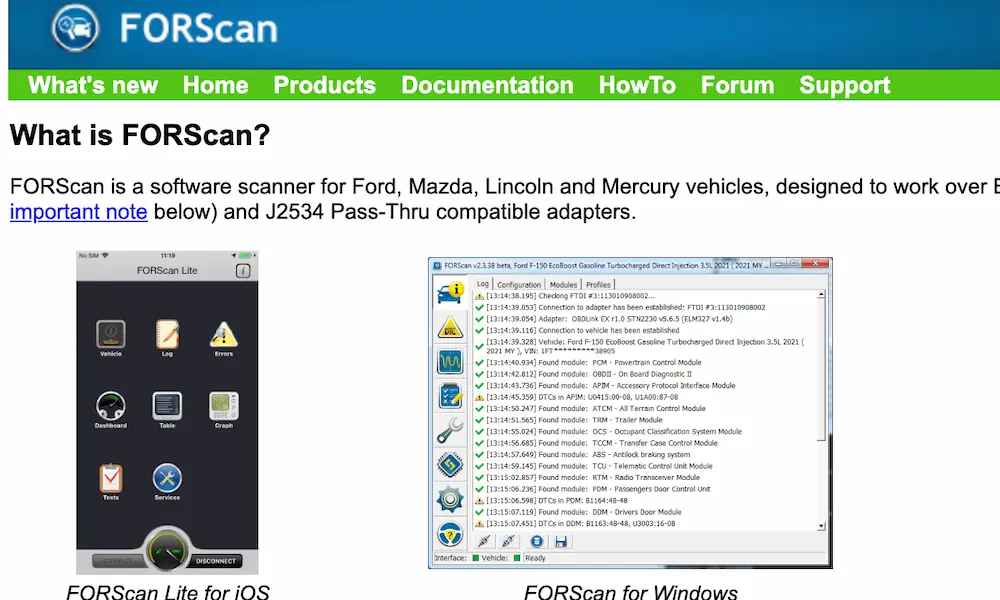
For serious diagnosis, you need Forscan software. It’s free software that works with a $25 OBD adapter. Forscan can read every module in your car and run active tests—like commanding your throttle to open and watching if it responds.
This is the tool that separates guessing from knowing.
What It’s Going to Cost You
Here’s the reality check on common repairs:
| Problem | DIY Parts | Independent Shop | Dealership |
|---|---|---|---|
| Throttle body replacement | $100-$180 | $360-$480 | $450-$650 |
| Transmission solenoid body | $300-$500 | $600-$900 | $1,000-$1,500 |
| 1.5L engine short block | $3,500 (used) | $5,000-$6,500 | $7,000-$9,000 |
| Shifter cable bushing | $5-$30 | $150-$250 | FREE (recall) |
| Brake pedal bumper | $5-$10 | $100 | $150 |
What to Do When the Light Comes On
Immediate actions:
- Pull over safely if you’re in limp mode
- Turn the car off and restart—sometimes it clears temporarily
- Check for obvious issues (low coolant, loose gas cap)
- Get the codes read ASAP
Don’t do this:
- Drive hundreds of miles ignoring it (especially with the 1.5L engine)
- Clear the codes without fixing the problem
- Assume it’ll “just go away”
The wrench light is your car’s way of begging for help. Listen to it before a $300 throttle body turns into a $7,000 engine replacement.
Your best move? Get the specific code, identify the root cause, and fix it right the first time. Your Fusion will thank you with another 100,000 miles.