That check engine light just ruined your morning. You plug in a code reader and get Ford P0401 staring back at you. Don’t panic — this code is common, fixable, and doesn’t always mean an expensive repair. This guide breaks down exactly what’s happening, why it happens on Fords specifically, and how to find the real cause without throwing parts at the problem.
What Does the Ford P0401 Code Actually Mean?
P0401 stands for “Exhaust Gas Recirculation (EGR) Flow Insufficient Detected.” Your engine’s computer — the Powertrain Control Module (PCM) — commanded the EGR valve to open but didn’t see the expected flow response. It basically told the valve to do its job, and got nothing back.
The EGR system works by routing a small portion of exhaust gas back into the intake manifold. Why? Because exhaust gas cools combustion temperatures, keeping them below the 2,500°F threshold where nitrogen oxides (NOx) form. NOx contributes to smog and is heavily regulated. The EGR system is your engine’s built-in temperature control during part-throttle driving.
Ford doesn’t just check whether the valve opens. It actually measures how much gas flows. That’s what makes the Ford P0401 diagnosis a bit more nuanced than on other brands.
Why Ford’s EGR System Is Different
Most manufacturers use a temperature sensor to confirm EGR flow. Ford uses a smarter, more demanding approach: the Differential Pressure Feedback EGR (DPFE) system.
Here’s how it works. A precision orifice sits inside the EGR tube. When exhaust gas flows through it, a pressure drop occurs. The DPFE sensor measures that pressure drop using two small hoses — one upstream of the orifice (high pressure) and one downstream (reference). The sensor converts that difference into a DC voltage signal, which the PCM monitors in real time.
If the PCM commands the valve open and the DPFE voltage doesn’t rise, it flags insufficient flow. That’s your P0401.
DPFE Voltage Reference Guide
Knowing what your DPFE sensor should read helps you spot a failure fast.
| Engine Condition | Aluminum Sensor | Plastic Sensor | What It Means |
|---|---|---|---|
| Key on, engine off | 0.45V – 0.60V | 1.0V | Baseline calibration check |
| Idle (EGR closed) | 0.45V – 0.60V | 1.0V | Should match baseline |
| Cruise (EGR open) | 1.50V – 2.50V | 2.0V – 3.5V | Confirms gas is flowing |
| Heavy load / acceleration | 3.5V – 4.5V | 4.0V – 4.8V | Maximum pressure differential |
| Fault condition | Stuck at idle voltage | Stuck at idle voltage | PCM sees no flow — P0401 triggers |
A sensor that “flatlines” at its baseline voltage regardless of engine conditions is a dead giveaway for DPFE failure.
The Most Common Cause: Carbon Buildup
The single biggest reason Fords throw a P0401 is carbon deposits clogging the EGR passages. Exhaust gas carries soot, unburned hydrocarbons, and oil mist from the PCV system. When that hot gas hits the cooler intake manifold, oil vapors condense and trap soot particles. Over thousands of miles, this hardens into a dense, rock-solid plug.
On Ford’s 4.6L and 5.4L Triton V8 engines (found in F-150s from 1997–2004), this is especially nasty. The EGR gas routes through a 90-degree throttle body adapter elbow with narrow internal passages. Carbon settles in the bend, and eventually a single chunk blocks the entire passage. The valve might be working perfectly — but the gas has nowhere to go.
All the Ways a Ford P0401 Can Happen
Carbon is the top culprit, but it’s not the only one. Here’s the full list of failure points in the EGR system:
| Component | Primary Failure Mode |
|---|---|
| EGR valve | Stuck closed from carbon, or ruptured diaphragm |
| DPFE sensor | Corroded internals, failed ceramic element, clogged pick-up tubes |
| EVR solenoid | Failed coil or clogged internal filter |
| Vacuum lines | Cracked, collapsed, or heat-hardened rubber |
| EGR tube/orifice | Blocked orifice from soot accumulation |
| Intake manifold ports | Dense carbon slugging in the passages |
Symptoms You’ll Actually Notice
The P0401 code often presents subtly, which is why a lot of owners ignore it until emissions inspection day. That’s a mistake. Here’s what to watch for:
Engine knock or pinging — This is the big one. Without EGR cooling the combustion chamber, temperatures rise unchecked. The fuel-air mix can ignite before the spark plug fires. You’ll hear metallic tapping or rattling under acceleration or load. Left alone, this causes cracked piston ring lands and burnt valves.
Lower fuel economy — When P0401 is set, the PCM often pulls back ignition timing and enriches the fuel mixture to protect the engine. You lose efficiency and feel a sluggishness at cruising speeds.
Rough or surging idle — The PCM uses DPFE data to fine-tune air management. An erratic sensor signal throws off the idle air strategy, causing surging or stumbling when you come to a stop.
Failed emissions test — Higher NOx output is the direct result of a dead EGR system. Your state’s smog check will catch it even if you haven’t.
How to Diagnose Ford P0401 the Right Way
Don’t just swap parts hoping one sticks. Follow this sequence and you’ll find the real problem on the first try.
Step 1: Test the Mechanical Flow Path
Start with a manual vacuum test. With the engine idling, disconnect the vacuum line from the EGR valve and apply 5–10 inches of mercury using a hand vacuum pump.
- Engine stumbles or stalls → Gas is reaching the intake. The problem is in the control circuit (vacuum lines, EVR solenoid) or the DPFE sensor.
- No change in idle RPM → Gas isn’t reaching the intake at all. The valve is stuck, the diaphragm is ruptured, or the intake ports are fully blocked with carbon.
This single test splits the diagnosis into two clean branches.
Step 2: Check the Control Circuit
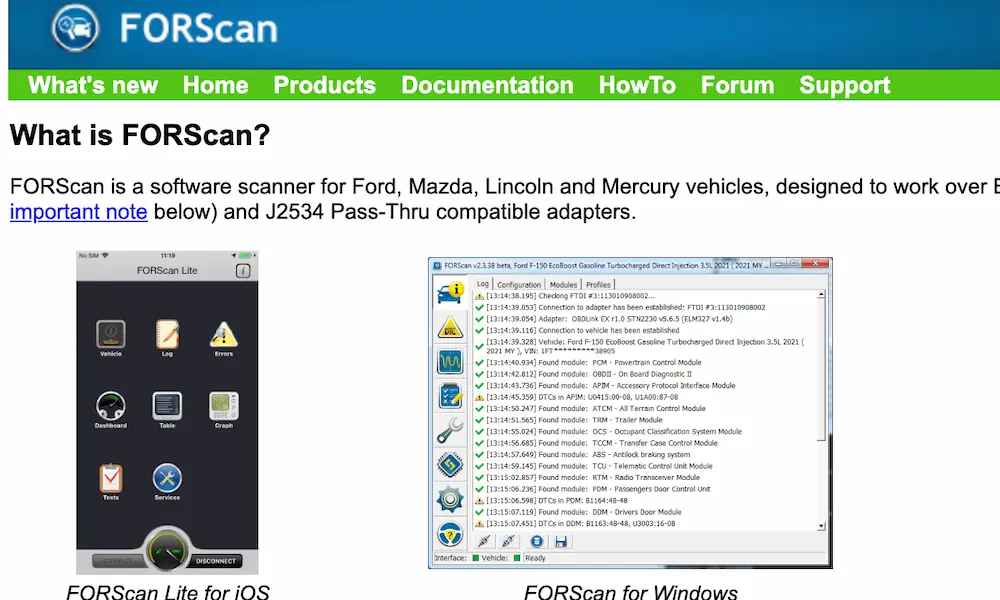
If Step 1 confirmed gas can flow, verify the PCM is actually commanding the valve. Connect a scan tool and monitor EVR duty cycle under load. Check for vacuum at the EGR valve while the engine runs. If vacuum is present at the solenoid but not at the valve, your vacuum lines or EVR solenoid are the problem.
Step 3: Validate the DPFE Sensor Signal
If the valve opens correctly and the engine reacted in Step 1, the fault is in the feedback loop. Monitor DPFE voltage live on a scan tool while driving. A sensor stuck at its idle baseline voltage — no matter what the engine does — means the sensor has failed. Also inspect both DPFE hoses for clogs or reversal. Swapping the two hoses gives the PCM a negative pressure reading, which triggers P0401 just as reliably as a blockage.
Ford-Specific Fixes by Model
F-150 Triton 4.6L and 5.4L (1997–2004)
The throttle body adapter elbow is almost always the culprit on these engines. Remove the throttle body and drill out the hardened carbon slugs from the internal ports. A section of old speedometer cable chucked into a drill works well. Chemical cleaners alone rarely cut through the hardened deposits on these.
Super Duty 6.7L Powerstroke Diesel (2011–2014)
On diesel applications, P0401 often points to EGR cooler failure. The cooler’s internal fins become matted with soot over time. Ford recognized the high failure rate and issued Customer Satisfaction Program 21M04, which provides extended coverage — 11 years or 120,000 miles — for EGR cooler replacement on affected 2011–2014 Super Duty trucks. Check if your VIN qualifies before you pay for that repair.
Ranger and Focus (2.3L, 3.0L, 4.0L)
These platforms lean toward DPFE sensor failure rather than port clogging. The smaller engine bay creates brutal thermal cycling that degrades rubber components fast. When replacing the DPFE sensor on these models, also replace the DPFE hoses and the EVR solenoid. Refreshing the entire loop prevents a comeback visit in six months.
What Repairs Actually Cost
| Repair | Parts Cost | Labor Time | Total at Shop |
|---|---|---|---|
| Intake port carbon cleaning | ~$15 | 2.0 – 3.5 hrs | $250 – $450 |
| DPFE sensor replacement | $60 – $120 | 0.5 hrs | $150 – $300 |
| EGR valve replacement | $100 – $250 | 1.0 – 1.5 hrs | $250 – $550 |
| EVR solenoid and vacuum lines | $40 – $80 | 0.5 – 1.0 hrs | $100 – $250 |
| EGR cooler (diesel) | $400 – $800 | 3.0 – 5.0 hrs | $800 – $1,500 |
One important note: cleaning the EGR valve is often a short-term fix. If the internal pintle seat is pitted from heat and age, carbon re-accumulates fast. In high-mileage valves, replacement beats cleaning every time.
Why the Code Keeps Coming Back After You Clear It
Ford P0401 is a two-trip monitor. The PCM won’t illuminate the check engine light the first time it detects low flow. It stores a pending code and waits for the same failure to appear on a second, separate drive cycle before turning on the light. Clear the code without fixing the root cause, and it comes right back.
To confirm the repair actually worked, the EGR monitor needs to complete a full OBD-II drive cycle. Three conditions need to be met:
- Coolant temperature must reach normal operating range (above 160°F)
- Steady highway driving at 45–65 mph for several minutes
- Deceleration events where the PCM tests valve response during coast-down
If you only drive stop-and-go after clearing the code, the EGR monitor may never run — giving you false confidence until the next highway trip lights things up again.
Keeping P0401 From Coming Back
The best defense is fuel quality and driving habits. Tier 1 fuels — those meeting Top Tier standards — carry higher concentrations of detergents that keep carbon deposits soft. Engines that regularly reach full operating temperature and spend time at highway speeds accumulate far less carbon than those stuck in short suburban commutes.
For high-mileage Fords, an annual air-induction service — where a solvent is atomized into the intake stream — dissolves the oily binders that hold carbon in place before they harden into a blockage. It’s cheap insurance compared to drilling out a throttle body elbow or replacing an EGR cooler.
The Ford P0401 code has a reputation for being stubborn, but it’s not mysterious. Diagnose it in order — mechanical path, control circuit, sensor feedback — and you’ll find the actual failure without guessing. Fix the right thing, verify the drive cycle completes cleanly, and you’re done.