Got a check engine light and a Ford P2195 code staring you down? You’re probably wondering if it’s a quick fix or a wallet-draining nightmare. The good news: most causes are straightforward once you know what to look for. This guide breaks down exactly what triggers this code, what it does to your engine, and how to fix it — so keep reading.
What Is the Ford P2195 Code?
The Ford P2195 code means your engine’s upstream oxygen sensor on Bank 1 is reporting a stuck lean signal. In plain English? Your car’s computer thinks there’s too much air and not enough fuel — and it can’t fix it on its own.
Your powertrain control module (PCM) constantly chases a 14.7:1 air-to-fuel ratio. That’s the sweet spot where everything burns cleanly. When the oxygen sensor on Bank 1, Sensor 1 gets stuck reporting low voltage, the PCM keeps dumping in more fuel. Once it maxes out its correction limit — usually around +25% fuel trim — it throws the P2195 code and turns on your check engine light.
Bank 1 is the side of the engine containing cylinder number one. On four-cylinders like the Fusion, there’s only one bank. On V6 and V8 engines in the F-150 and Explorer, you’ll need to identify which side that is before touching anything.
How the Oxygen Sensor Actually Works
Your oxygen sensor uses a zirconium dioxide ceramic element coated with platinum. One side reads exhaust gases; the other reads fresh air. The voltage difference between those two sides tells the PCM how rich or lean the mixture is.
Here’s what the voltage readings actually mean:
| Sensor State | Voltage Range | PCM Response |
|---|---|---|
| Rich condition | 0.6V – 0.9V | Reduces fuel delivery |
| Lean condition | 0.1V – 0.4V | Increases fuel delivery |
| Stoichiometric (ideal) | ~0.45V | Holds steady |
| P2195 fault | < 0.2V (static) | Maxes out fuel correction |
A healthy sensor flips between high and low voltage at least 10 times per second. When it gets stuck at the bottom, P2195 is the result.
The Most Common Causes of Ford P2195
Vacuum Leaks
This is the number one culprit — especially on F-150s and Explorers. Air sneaking past the mass airflow (MAF) sensor doesn’t get counted. The PCM doesn’t add fuel for air it doesn’t know about, so the mixture goes lean.
Check these spots first:
- Intake manifold gaskets — they dry out and crack over time
- Vacuum hoses — heat and age make rubber brittle
- Intake air tubes — the accordion sections near the air filter box crack easily
- PCV hoses — a stuck-open PCV valve creates a massive unmetered air leak
A smoke test is the most reliable way to find small leaks that you can’t see or hear.
A Dead or Contaminated Oxygen Sensor
The sensor itself fails more often than people expect. The exhaust environment hits over 1,000°F with a constant chemical blast. That wears things out fast.
Common sensor failure modes include:
- Carbon fouling — blocks the ceramic’s tiny pores, causing a lazy or stuck lean reading
- Oil or coolant contamination — residue from internal leaks coats the sensor
- Silicone poisoning — silicone-based sprays near the engine leave a glassy film on the sensor
- Heater circuit failure — if the internal heater dies, the sensor never reaches its 600°F operating temp and reads low
Wiring and Electrical Issues
The oxygen sensor generates a tiny voltage signal. Even a small amount of resistance in the wiring can make a perfectly good rich reading look lean to the PCM.
Watch for:
- Corroded or frayed wires near the hot exhaust manifold
- High resistance in the signal wire (more than 1 ohm = a problem)
- A poor ground connection causing reference voltage drift
Fuel Delivery Problems
If the air side is fine, look at fuel. Low fuel pressure means not enough fuel reaches the injectors, and the mixture goes lean.
Common fuel-side causes:
- Weak fuel pump — pressure should sit between 35–45 PSI; below that and you’re running lean
- Clogged fuel injectors — deposits narrow the nozzle and reduce spray volume
- Failing fuel pressure regulator — sends too much fuel back to the tank
- Restricted fuel filter — creates a bottleneck, especially under load
Exhaust Leaks Near the Sensor
This one surprises a lot of people. An exhaust leak before the oxygen sensor pulls outside air into the exhaust stream through the Venturi effect. The sensor detects that extra oxygen and reports a lean condition — even if combustion is perfectly balanced.
Look for:
- Broken exhaust manifold studs — extremely common on Ford V8 trucks
- Cracked exhaust manifold — causes warping and air intrusion
- Deteriorated flex pipes — common on front-wheel-drive models like the Fusion
Ford-Specific TSBs You Need to Know
Ford has issued Technical Service Bulletins for specific models where P2195 shows up with predictable patterns. Here’s a breakdown:
| Ford Model Group | Typical P2195 Cause | First Check |
|---|---|---|
| F-150/Explorer (3.5L EcoBoost) | Faulty heated O2 sensor | Sensor voltage response |
| Fusion/Escape (EcoBoost) | Stuck purge valve / vacuum leak | EVAP system integrity |
| Crown Victoria (Panther platform) | PCV breather hose rot | Visual inspection of rubber elbows |
| F-150 (4.6L/5.4L V8) | Broken exhaust manifold studs | Audible leak inspection |
For 2015–2016 F-150s and 2015–2017 Explorers with the 3.5L EcoBoost, TSB 17-2124 specifically addresses P2195. Ford found the right-side Bank 1 oxygen sensor is the usual failure point in these engines. The fix is a direct sensor swap with the specified part.
Fusion and Escape owners with smaller EcoBoost engines should check the EVAP purge valve first. A stuck-open valve dumps unmetered vapors straight into the intake — which creates lean codes, rough idle, and sometimes stalling.
How to Diagnose Ford P2195 the Right Way
Don’t just throw parts at it. Here’s how a proper diagnosis flows:
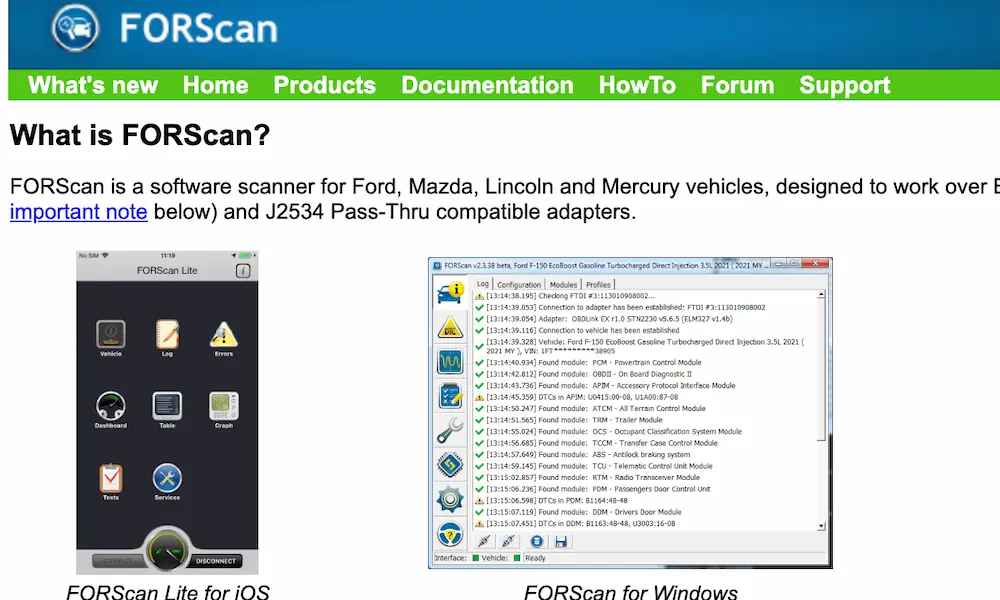
Step 1: Read freeze frame data. Your scan tool captures engine conditions at the moment the code triggered — RPM, load, fuel trim, coolant temp. High fuel trims at idle that improve at highway speed = vacuum leak. High trims across all speeds = MAF sensor or fuel pressure issue.
Step 2: Watch live O2 sensor data. A healthy sensor flips rapidly between 0.1V and 0.9V. A dead sensor sits flat. To confirm sensor health, add a small amount of propane near the intake — a good sensor spikes to near 0.9V instantly. No reaction means the sensor’s gone.
Step 3: Run a smoke test. Seal the intake and pump in pressurized smoke. Even pinhole leaks under the intake manifold show up clearly. This is the only reliable way to find hidden vacuum leaks in complex EVAP systems.
Step 4: Test the wiring electrically. Check resistance across the sensor heater wires and along the signal wire back to the PCM. More than 1 ohm in the signal circuit means a damaged harness — not a bad sensor.
What Happens If You Ignore Ford P2195
Driving with P2195 active isn’t just annoying — it causes real damage over time.
Short-term symptoms:
- Rough idle and vibration at stops
- Hesitation or stumbling under load
- Hard starting when cold
- Noticeably worse fuel economy (typically 2–4 MPG lost)
Long-term damage:
- Spark plug failure — lean combustion runs hot enough to crack or melt plug insulators
- Burnt exhaust valves — excess heat makes valves brittle and causes compression loss
- Catalytic converter meltdown — when the PCM overcompensates with extra fuel, that fuel burns inside the converter and destroys the ceramic core
That last one hurts the most. Catalytic converter replacement can easily run $1,500 or more. Fixing a P2195 code early is always cheaper than ignoring it.
What Does It Cost to Fix?
Repair costs vary depending on root cause. Here’s what you’re looking at for common repairs:
| Repair | Average Cost (USD) | Labor Time |
|---|---|---|
| Oxygen sensor replacement | $200 – $520 | 0.5 – 1.5 hrs |
| Vacuum hose repair | $110 – $200 | 1.0 – 2.0 hrs |
| MAF sensor replacement | $250 – $470 | 0.5 – 1.0 hrs |
| Fuel pump replacement | $1,100 – $1,300 | 3.0 – 5.0 hrs |
| Intake manifold gasket | $170 – $380 | 2.5 – 4.0 hrs |
One more thing worth knowing: a vehicle with an active P2195 code won’t pass an emissions test. The code disables closed-loop operation, which means the self-correcting pollution control system is off. Most state smog tests will auto-fail you for that.
Fix it before your renewal date rolls around — your wallet and the air quality will thank you.