Ever wondered why your GM truck suddenly sounds different or why mechanics grimace when you mention “Active Fuel Management”? If you own a GM vehicle or are shopping for one, understanding which years had this fuel-saving technology—and how reliable it was—could save you thousands in repair bills.
I’ve compiled everything you need to know about GM’s cylinder deactivation technology across different years, engines, and vehicle models. By the end, you’ll know exactly which model years to embrace and which to avoid.
What Is Active Fuel Management (AFM)?
Active Fuel Management is GM’s cylinder deactivation technology that shuts down half the cylinders in your engine when full power isn’t needed. In theory, this clever system improves fuel economy by up to 12% by switching your V8 to run as a V4 during highway cruising or light acceleration.
But theory and reality don’t always align. While the fuel savings are real, the reliability issues that came with AFM have created a love-hate relationship with these engines among owners and mechanics alike.
The Evolution of GM’s Cylinder Deactivation
GM’s journey with cylinder deactivation technology evolved through several distinct phases:
2005-2006: The Early DoD Years
GM first tested the waters with “Displacement on Demand” (DoD) on select V8 models. This early implementation was limited to specific applications as GM was still perfecting the technology.
During this experimental phase, GM installed DoD on selected V6 engines including the 3.9L V6. However, these early systems were quite limited compared to what would follow.
2007-2013: Full AFM Rollout (First Generation)
This period saw the widespread implementation of Active Fuel Management across GM’s Gen IV engines. Unfortunately, this first full generation of AFM became notorious for reliability issues.
Common problems during this era included:
- Collapsed lifters leading to engine damage
- Excessive oil consumption exceeding 1 quart per 1,000 miles
- Premature camshaft wear
- Engine failures requiring complete replacement
These early AFM years (2007-2013) are widely considered the most problematic in GM’s cylinder deactivation history.
2014-2018: Improved AFM (Second Generation)
The Gen V engines introduced during this period featured significant improvements to the AFM system. While not perfect, these years saw better reliability and fewer catastrophic failures.
New Parts confirms that 2014-2018 models still had AFM-related issues, but at a much lower rate than the previous generation. Many owners of vehicles from this period drive for years without problems, while others still experience failures.
2019-Present: Dynamic Fuel Management (DFM)
In 2019, GM introduced Dynamic Fuel Management (DFM), the next evolution of cylinder deactivation technology. Instead of the simple V8/V4 modes of AFM, DFM can operate in 17 different cylinder patterns, activating only the exact number of cylinders needed at any moment.
Interestingly, 2019—the first year of DFM—turned out to be particularly problematic, with lifter failure rates even higher than some AFM years. The complexity of the system, with double the number of potentially problematic lifters, contributed to these issues.
Engine-Specific AFM/DFM Years
Let’s break down exactly which engines had AFM/DFM and during which years:
5.3L V8 Engines
- AFM Years: 2007-2018
- DFM Years: 2019-Present
- Most Problematic: 2007-2013, 2019-2020
- Most Reliable AFM: 2014-2018
The 5.3L V8 is GM’s most common engine with AFM/DFM technology. According to Summit Racing’s technical resources, all 5.3L engines from 2007-2018 featured AFM, while 2019 and newer models use the more complex DFM system.
6.2L V8 Engines
- AFM Years: 2007-2018
- DFM Years: 2019-Present
- Most Problematic: 2007-2013, 2019-2020
The premium 6.2L V8 follows the same pattern as the 5.3L. Haynes reports that these engines suffer from similar reliability issues, though some owners perceive them as slightly more robust than the 5.3L.
6.0L V8 Engines
- AFM Years: 2007-2018
- DFM Years: None (discontinued before DFM)
The 6.0L V8 was phased out before DFM implementation, but all 2007-2018 models featured AFM technology. These engines faced similar issues to other AFM-equipped V8s during the problematic 2007-2013 period.
3.9L V6 Engines
- AFM Years: 2007-2008 (very limited)
This rare application of AFM was short-lived and is generally recommended to avoid or disable if you own one.
Vehicles Equipped with AFM/DFM
The following GM vehicles came equipped with AFM or DFM technology:
- Chevrolet Silverado/GMC Sierra 1500: 2007-present
- Chevrolet Tahoe/Suburban/GMC Yukon: 2007-present
- Cadillac Escalade: 2007-present
- Chevrolet Corvette: 2014-present (C7 generation and newer)
- Chevrolet Camaro SS: 2016-present
Heavy-duty trucks (2500/3500 series) never received AFM or DFM, making them attractive alternatives for those concerned about these systems.
Reliability Analysis: The Worst Years for AFM/DFM
2007-2013: First-Generation Headaches
These years represent the most problematic period for AFM technology. Valero Law reports that these model years experienced:
- High rates of lifter collapse and failure
- Excessive oil consumption
- Camshaft damage requiring replacement
- Complete engine failures
A distressing number of owners reported catastrophic failures before reaching 100,000 miles, with repair costs often exceeding $3,000-$5,000.
2019: The DFM Disaster
While 2019 introduced the more sophisticated DFM system, it also brought significant reliability concerns. According to multiple YouTube investigations, first-year DFM implementation suffered from:
- Higher lifter failure rates than late-model AFM engines
- More complex system with 17 possible cylinder patterns
- Twice as many active/inactive switching lifters (all 16 vs. 8 in AFM)
These issues made 2019 one of the most problematic years in GM’s cylinder deactivation history.
Hidden Gems: 2021-2022 Chip Shortage Trucks
Here’s something fascinating that few people know: Due to the semiconductor shortage, some 2021-2022 GM trucks were built without functioning AFM/DFM systems!
Reddit discussions confirm that these unicorn trucks:
- Have the physical DFM hardware but no controlling software
- Show a “$50 credit” on the window sticker for missing DFM
- Can be identified by RPO code YK9
- Are considered by many to be the most reliable recent GM V8 trucks
This unexpected benefit of the chip shortage created a small production run of trucks that combine modern features with more reliable non-AFM/DFM engines.
Reliability Comparison Table: AFM/DFM Years
| Years | Technology | Reliability Rating | Common Issues | Notes |
|---|---|---|---|---|
| 2005-2006 | DoD (Limited) | ★★★☆☆ | Limited implementation | Experimental phase |
| 2007-2013 | AFM (Gen IV) | ★☆☆☆☆ | Lifter failure, oil consumption, camshaft damage | Avoid these years |
| 2014-2018 | AFM (Gen V) | ★★★★☆ | Improved but not perfect | Best AFM years |
| 2019-2020 | DFM (First Gen) | ★☆☆☆☆ | Increased lifter failures, complex system | 2019 particularly bad |
| 2021-2022* | Some without DFM | ★★★★★ | Minimal (if DFM disabled) | *Chip shortage models with YK9 code |
| 2022-Present | DFM with “revised lifters” | ★★★☆☆ | Early data shows ongoing issues | Jury still out |
2014-2018: The Sweet Spot for AFM
If you’re looking for a GM vehicle with AFM, the 2014-2018 model years represent the most reliable period. While not entirely problem-free, these years show significantly better reliability than both earlier AFM years and newer DFM years.
The Gen V engines used during this period featured:
- Improved lifter design
- Better oil management
- More refined AFM activation strategy
- Lower reported failure rates
Many 2014-2018 vehicles reach high mileage without AFM-related issues, though problems can still occur.
Current Status: 2022+ “Revised Lifters”
GM claims that 2022 and newer models have revised lifters to address DFM failures. However, early reports are mixed:
- Some owners report continued failures
- All DFM hardware remains present regardless of activation
- Long-term reliability data isn’t yet available
According to forum discussions, while GM has made changes, it’s too early to declare these newer models problem-free.
How to Identify If Your GM Vehicle Has AFM/DFM
Not sure if your vehicle has AFM or DFM? Here’s how to check:
- Check your RPO codes: Look for the code L99, LH6, LC9, L94, L9H, LY5, or LMG on your glove box sticker or in your VIN information.
- Listen for the transition: AFM/DFM vehicles have a distinctive sound change when half the cylinders deactivate, typically around 40-50 mph under light load.
- Watch your dashboard: Many models display “V4 Mode” or similar indicator when running on fewer cylinders.
- Check your oil fill cap: AFM-equipped engines often have specialized oil requirements and markings.
Solutions for AFM/DFM Problems
If you already own a vehicle with AFM or DFM, you have several options:
1. AFM/DFM Disablers
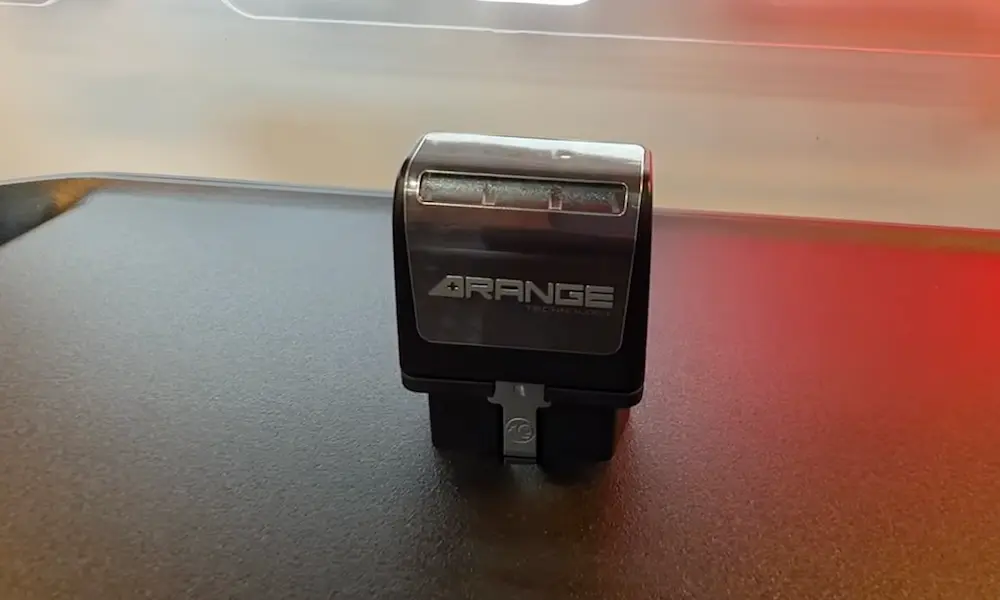
These electronic devices plug into your OBD-II port and prevent the engine from entering AFM/DFM mode. They’re non-permanent and cost around $150-300. Popular options include:
- Range Technology AFM Disabler
- DiabloSport AFM Disabler
- Pulsar LT
2. Mechanical Disabling/Deleting
For a permanent solution, mechanics can physically modify your engine to eliminate AFM/DFM. This typically involves:
- Replacing AFM lifters with standard lifters
- Installing a non-AFM camshaft
- Reprogramming the ECU
This approach costs $1,500-$3,000 but permanently resolves the issues.
3. Preventative Maintenance
If you keep your AFM/DFM system active:
- Use high-quality synthetic oil
- Change oil more frequently (every 5,000 miles or less)
- Consider adding an oil catch can
- Listen for any unusual ticking sounds that might indicate lifter problems
Vehicle Shopping Recommendations
Based on the reliability data, here are practical recommendations if you’re shopping for a GM vehicle:
- Best option: Hunt for 2021-2022 “chip shortage” trucks without active DFM (look for RPO code YK9)
- Good compromise: 2014-2018 models (especially if you plan to disable AFM)
- Alternative: Heavy-duty (2500/3500) trucks that never had AFM/DFM
- Avoid if possible: 2007-2013 (worst AFM years) and 2019-2020 (early DFM problems)
- Consider: Pre-2007 models with no cylinder deactivation technology at all
Is AFM/DFM Worth the Fuel Savings?
The big question: Do the fuel economy benefits outweigh the reliability concerns?
- Fuel savings: Typically 1-2 MPG improvement (about 5-12%)
- Repair costs: $3,000-$10,000 when failures occur
- Peace of mind: Many owners report constant worry about potential failures
For many owners and mechanics, the consensus is that these systems create more problems than the fuel savings justify. This is especially true if you plan to keep your vehicle beyond 100,000 miles or if you use your truck for towing.
The Future of GM’s Cylinder Deactivation
What’s next for GM’s fuel-saving technology? The company continues to refine its DFM system, and reports suggest that newer models may have improved reliability. However, with the auto industry moving toward electrification, it’s possible that traditional cylinder deactivation may eventually be phased out in favor of hybrid or fully electric powertrains.
For now, GM remains committed to DFM technology as part of its fuel economy strategy, with the latest trucks and SUVs continuing to feature this system.