You hit the HDC button on your Ford or Land Rover, and instead of smooth downhill control, you get a dashboard full of warning lights. That “hill descent control fault” message isn’t just annoying—it’s your truck telling you something deeper is broken. Let’s cut through the confusion and figure out what’s really happening.
What Hill Descent Control Actually Does
Hill descent control isn’t a single part you can point to under the hood. It’s a team effort between your brakes, engine, and transmission working together to crawl down steep grades without you riding the brake pedal.
Here’s the deal: When you’re descending a hill, gravity wants to speed you up. HDC fights this by pulsing your ABS brakes rapidly (like pumping them 15 times per second) while also using engine braking. This keeps you at a steady walking pace—usually between 2 and 20 mph.
The system depends on constant data from wheel speed sensors, the steering angle sensor, and the engine control module. If any of these signals go sideways, the whole system shuts down. That’s why a “hill descent control fault” rarely means the HDC itself is broken—it means one of the supporting systems has failed.
The Ford Throttle Body Connection
This one catches people off guard. You’re getting a hill descent control fault, but the real problem is your throttle body? Yep.
Ford F-150s (especially 2015-2020 models) and Rangers have a weird failure pattern. The electronic throttle body has two position sensors inside called TP1 and TP2. They’re supposed to send opposite voltage signals—when one goes up, the other goes down.
Over time, the resistive tracks inside wear out. When the sensors disagree (code P2135), your truck’s computer freaks out. It can’t trust the throttle position, so it can’t control engine braking. Without reliable engine braking data, HDC immediately disables.
You’ll see the wrench light, “Service AdvanceTrac,” and “Hill Descent Control Fault” all at once. The truck might drop into limp mode—barely accelerating past 30 mph. It feels like a transmission problem, but it’s actually in your air intake system.
The Wiring Harness Rub
Here’s a manufacturing oversight that’s cost Ford owners thousands in misdiagnosed repairs. On 2015-2017 F-150s with the 3.5L EcoBoost, the engine wiring harness rubs against a metal coolant pipe bracket.
The vibration slowly grinds through the insulation on critical wires—including the 5-volt reference circuit that powers multiple sensors. When that wire shorts to ground, every sensor on that circuit fails simultaneously.
Your dashboard lights up like a Christmas tree: HDC fault, AdvanceTrac fault, blind spot system fault, sometimes even a false “low oil pressure” warning. Technicians often replace the ABS module or PCM unnecessarily when the actual fix is $50 worth of wire repair and proper routing.
Check under your engine cover on the driver’s side. Look for worn spots where the harness contacts the fuel pump or coolant pipes. If you find frayed wiring, that’s your culprit.
Land Rover’s Battery Voltage Problem
Land Rover owners face a completely different issue. The number one cause of “HDC Fault System Unavailable” on Discovery and Range Rover models is low battery voltage—not a dead battery, but one that’s just weak enough.
During engine cranking, the starter motor pulls massive current. If your battery is three or four years old, the voltage might dip below 10.8 volts for a fraction of a second. Land Rover control modules are extremely sensitive to this.
When voltage drops, the ABS module and terrain response system experience a “brownout.” Unlike simpler vehicles where the warning light disappears once the alternator kicks in, Land Rover modules often latch the fault. They essentially decide, “I experienced unstable power; I can’t be trusted this trip,” and disable HDC for the entire drive cycle.
The frustrating part? Your battery might test “good” on a standard load test. The issue is internal resistance—the battery can’t deliver clean power during the high-current cranking phase.
Replace the battery with a quality AGM unit. Critical step: You must use a diagnostic tool to reset the Battery Management System afterward. Skip this, and your alternator will undercharge the new battery, killing it within months.
The Steering Angle Sensor Failure
This mechanical failure hits Land Rover Discovery 3 and 4 models hard. The steering angle sensor mounts on the steering column, driven by a plastic collar that keys into the steering shaft.
The problem? That plastic collar wears out or wasn’t machined to tight tolerances. It starts slipping on the metal shaft. You turn the wheel 90 degrees, but the sensor only registers 45 degrees because the collar is spinning independently.
Now your stability control system sees a massive contradiction: the yaw sensor (which measures actual vehicle rotation) reports the truck is turning, but the steering angle sensor says the wheel is straight. The computer concludes the vehicle must be sliding uncontrollably.
Safety shutdown activates immediately. You’ll see “HDC Fault System Unavailable,” “DSC Fault,” and the air suspension might drop to bump stops.
The fix? Some mechanics replace the entire steering column for $2,000. The smarter move is removing the column trim and using automotive epoxy to permanently bond the loose collar to the shaft. Cost: $20 in materials. You’ll need to recalibrate the sensor afterward using a Land Rover diagnostic tool.
Wheel Speed Sensors and Rust
Wheel speed sensors are the eyes of your HDC system. They watch each wheel’s rotation speed to prevent lockup and detect slipping. When they fail, HDC goes dark.
Ford Super Duty trucks and older F-150s use a magnetic encoder ring built into the wheel bearing seal. In the Rust Belt, corrosion builds up behind the sensor mounting surface. This “rust jacking” pushes the sensor away from the tone ring, increasing the air gap.
At highway speeds, the sensor works fine—there’s enough signal strength. But HDC operates under 20 mph. At low speeds, that enlarged air gap means the sensor can’t pick up the magnetic pulses. The system thinks the wheel stopped rotating and shuts down.
You might see codes like C1296 (wheel speed sensor fault). Before replacing the sensor, clean the mounting surface thoroughly. Use a wire brush on the hub face and the back of the sensor bracket. Check that the tone ring isn’t damaged or covered in metallic debris.
If the sensor breaks off during removal (common on high-mileage trucks), you’re looking at a full hub assembly replacement—$500 to $800 parts and labor.
The Brake Light Switch Trap
Here’s a sneaky one that fools DIYers and some mechanics. Your brake lights work perfectly, so obviously the brake light switch is fine, right? Wrong.
The brake light switch contains two separate circuits in one housing:
- Circuit A (Normally Open): Powers the brake lights
- Circuit B (Normally Closed): Signals the computer
Circuit A can work flawlessly while Circuit B fails. HDC needs Circuit B to know when you’re pressing the brake pedal. If those contacts are burned or corroded, the system receives flickering “brake applied” signals even when your foot is off the pedal.
The HDC logic interprets this as conflicting driver input and disables to avoid fighting you. This is extremely common on Land Rover models (part number XKB500030).
Don’t trust your brake lights as a diagnostic tool. Hook up a scan tool and watch the “Brake On/Off” or “BOO” parameter in live data. Press and release the pedal. The reading should toggle instantly with no flickering. Any hesitation confirms switch failure.
Replacement is usually simple—$50 part, accessible from inside the cabin above the brake pedal.
The Third Brake Light Water Leak
This one sounds bizarre but it’s verified across multiple Ford F-150s from 2009-2014. The center high-mounted stop lamp (the third brake light on top of the cab) develops a leak.
The foam gasket deteriorates, letting rainwater into the housing. Water bridges the electrical contacts inside the lamp. This creates a resistive short that the Body Control Module interprets as a brake signal.
Now the computer sees simultaneous throttle position (you’re accelerating) and brake activation (due to the short). This impossible scenario triggers a safety shutdown of cruise control and HDC.
You might also notice cruise control refusing to engage or turn signals hyper-flashing. Pull the third brake light, inspect for water damage, and replace the gasket seal.
How to Diagnose the Real Problem
Don’t throw parts at this. Modern vehicles need actual data.
Step 1: Scan ALL modules
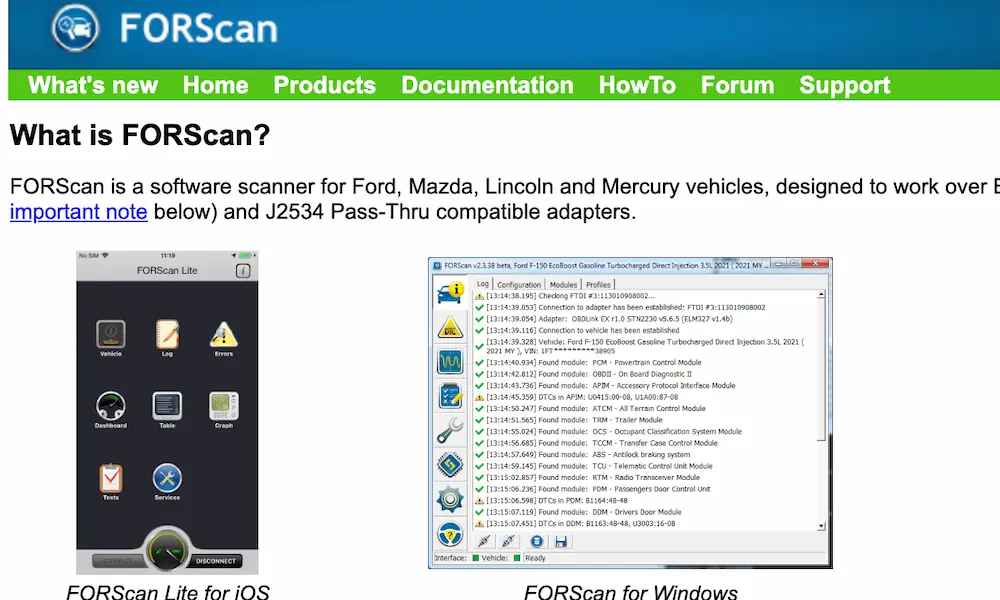
Don’t just read ABS codes. Use a tool like FORScan (Ford) or GAP IID (Land Rover) to scan every control module. Look for patterns:
- Multiple modules showing “Low Voltage” codes at the same timestamp? Battery issue.
- ABS showing U0401 (Invalid Data from PCM)? Check the engine computer for P2135 throttle codes.
Step 2: Watch live data
Static codes tell you what failed, not why. You need to see what’s happening in real-time:
- Graph all four wheel speeds at 5 mph. They should be identical smooth lines. One wheel dropping to zero or spiking? Sensor or tone ring problem.
- Turn the steering wheel lock-to-lock with the engine running. The angle should sweep smoothly from -540° to +540°. Jumping or freezing numbers? Steering angle sensor is slipping.
- Monitor brake switch status. Tap the pedal rapidly. Any lag confirms switch failure.
Step 3: Voltage drop test
Before condemning any sensor, verify clean power. Connect a multimeter to the battery terminals in min/max mode. Crank the engine. If voltage drops below 10.0V (Ford) or 10.8V (Land Rover), stop—the battery is the problem. No sensor diagnosis is valid until you fix the power supply.
What It Costs to Fix
Ford Throttle Body Replacement
- OEM Motorcraft part: $150-$250
- Labor: 1 hour ($120-$180)
- Total: $300-$450
- Requires throttle relearn procedure after installation
Ford Wiring Harness Repair
- Materials: Under $50
- Mostly labor time to locate and properly repair
- Must add protective loom to prevent recurrence
Wheel Speed Sensor
- Sensor only: ~$150 installed
- Full hub assembly (if sensor breaks): $500-$800
Land Rover Battery
- Quality AGM battery: $200-$300
- Must reset Battery Management System with scan tool
- Skipping this step kills the new battery in months
Land Rover Steering Angle Sensor
- Official repair (column replacement): ~$2,000
- DIY epoxy fix: $20 in materials
- Requires recalibration afterward
Can You Keep Driving?
It depends on what triggered the fault.
Dangerous situations:
If you’ve got the wrench light (Ford limp mode from throttle body failure), the truck might suddenly cut power to idle while you’re driving 65 mph. That’s genuinely dangerous in traffic. Get it towed or stick to slow side streets.
Reduced safety:
With HDC disabled, your Electronic Stability Control and Roll Stability Control are typically offline too. The truck won’t intervene to stop a skid or correct trailer sway. You still have normal brakes and steering, but you’ve lost the digital safety net.
Drive cautiously. Increase following distance. Don’t tow heavy loads.
Land Rover suspension drop:
If the air suspension drops to bump stops as part of the fault cascade, continued driving damages bushings and overworks the compressor. You’ll also scrape on speed bumps due to lost ground clearance.
Why This Happens
Modern trucks aren’t collections of independent parts—they’re integrated networks. HDC sits at the top of a hierarchy that includes ABS, traction control, and stability control. When a base component fails (like a wheel speed sensor), the error propagates upward.
The system can’t trust corrupted data to autonomously brake your vehicle down a mountain. So HDC becomes the first feature to disable, even though the actual failure might be something as simple as a corroded sensor wire.
That’s why the “hill descent control fault” message is often the most visible symptom of a deeper problem lurking in the powertrain, brake system, or electrical network. Fix the root cause, and the HDC fault disappears on its own.