Are you seeing multiple warning lights on your Honda’s dashboard and discovered a U0122 trouble code? This communication error with your vehicle’s stability control module can be confusing and potentially serious. Let’s break down what’s happening in your Honda’s electronic systems, how it affects driving safety, and the most cost-effective repair options.
What Does the Honda U0122 Code Mean?
The U0122 code stands for “Lost Communication with Vehicle Dynamics Control Module.” In Honda vehicles, this specifically means your car’s computer (PCM) can’t communicate with the Vehicle Stability Assist (VSA) system.
This isn’t just a minor glitch – when this communication fails, critical safety systems stop working:
- Anti-lock Braking System (ABS)
- Traction Control System (TCS)
- Electronic Stability Control (ESC)
These systems help prevent wheel lock during braking, reduce wheel spin during acceleration, and keep your car stable during emergency maneuvers.
How You’ll Know There’s a Problem
When the U0122 code appears, you’ll notice several immediate symptoms:
Dashboard Warning Lights
The most obvious sign is what Honda owners call the “Christmas tree effect” – multiple warning lights illuminating at once, typically including:
- ABS warning light
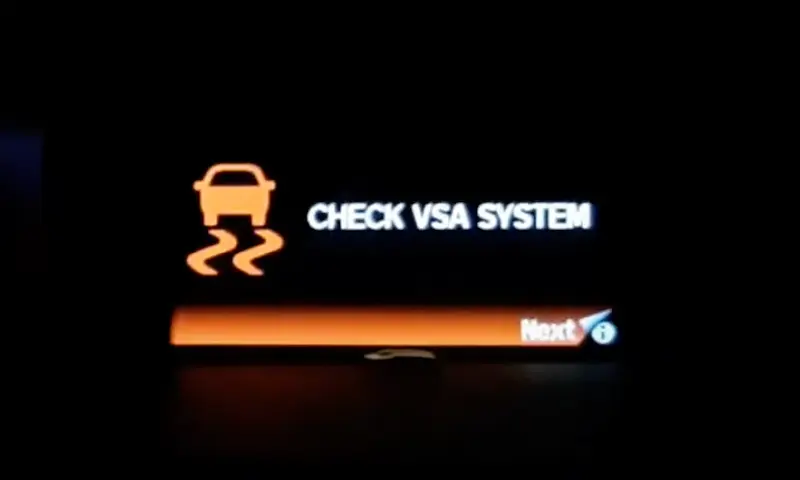
- VSA/Stability Control light (car icon with squiggly lines)
- Traction Control light
- Brake system warning light
- In newer models with Honda Sensing: Forward Collision Warning light may also activate
Changes in Vehicle Handling
You’ll also experience noticeable changes in how your vehicle performs:
- Compromised braking: Without ABS, your wheels can lock up during hard braking, increasing stopping distance and causing loss of steering control
- Reduced stability: The car may feel less planted during turns or lane changes
- Wheel spin: Acceleration on wet or slippery surfaces may cause excessive wheel spin
What Causes the U0122 Code in Hondas?
The U0122 code often creates confusion because it indicates a communication problem rather than the failure of a specific component. The issue could lie anywhere in the network connecting your car’s electronic systems.
Primary Causes (Most Common)
-
Battery and charging system issues
- A weak or failing 12-volt battery is a frequent culprit
- When voltage drops too low during startup, control modules may not initialize properly
-
Wiring and connector problems
- Damaged, corroded, or loose connections in the F-CAN network (the communication system)
- Common failure points include the VSA module connector and ground connections
- Chafed or broken wires in the harness
-
Power and ground circuit issues
- Blown fuses
- Poor ground connections at the VSA module or PCM
- Corrosion at ground points on the chassis
Secondary Causes (Less Common)
-
Module failures
- Internal failure of the VSA modulator-control unit
- PCM issues affecting network communication
-
Software/firmware issues
- Outdated programming in the VSA module or PCM
- Software conflicts between modules
Diagnosing the Problem: A Systematic Approach
Before rushing to replace expensive components, follow this hierarchical approach to diagnosis:
Step 1: Check Battery Health
Always start with the basics. A weak battery can cause a cascade of seemingly unrelated electronic issues.
- Test battery voltage (should be 12.4-12.7V when the engine is off)
- Perform a load test to verify the battery can maintain voltage under strain
- Check alternator output (13.5-14.5V when the engine is running)
Step 2: Visual Inspection
Look for obvious issues that might be causing communication problems:
- Check all fuses related to the VSA system and PCM
- Inspect wiring harnesses for visible damage, especially in high-stress areas
- Look for signs of fluid leaks near electronic components
- Examine ground connections for corrosion or looseness
Step 3: Scan for Additional Codes
A professional-grade scan tool can provide crucial context:
- Scan all vehicle systems, not just the engine
- Look for patterns of codes that might indicate the root cause
- Pay attention to freeze frame data that shows when the problem occurred
Step 4: Test F-CAN Network Integrity
This step requires technical knowledge and proper equipment:
- Test continuity on F-CAN High and F-CAN Low wires between modules
- Check for shorts to ground or power
- Verify there’s no short between the two CAN lines
Step 5: Verify Power and Ground at the VSA Module
- Test for proper voltage at the VSA module connector
- Confirm good ground connections
- Check resistance in power and ground circuits
Repair Options and Costs
The cost to fix a U0122 code varies dramatically depending on the root cause:
| Repair/Service | Estimated Cost | Notes |
|---|---|---|
| Battery replacement | $150-$300 | Often overlooked but solves many intermittent issues |
| Diagnostic scan | $120-$200 | Essential first step at a repair shop |
| Wiring/connector repair | $85-$800 | Highly variable based on complexity |
| VSA module repair (mail-in service) | $250-$500 | Cost-effective alternative to replacement |
| VSA module replacement (independent shop) | $400-$1,000+ | Using a used or remanufactured part |
| VSA module replacement (dealer) | $3,000-$4,800 | Includes OEM part, labor and programming |
| Software update | $100-$200 | May resolve the issue if it’s firmware-related |
Where to Get It Fixed
DIY approach (for the technically inclined):
- Battery replacement
- Fuse checks
- Basic wiring inspection
- Cleaning corroded connections
Independent repair shop (best value for most repairs):
- Comprehensive electrical testing
- Wiring repairs
- Component replacement (if equipped for programming)
Honda dealership (necessary in some cases):
- Software updates
- New OEM module installation with programming
- Warranty repairs
Real-World Success Stories
Many Honda owners have resolved this issue without replacing the expensive VSA module:
-
One 2016 Civic owner discovered that cleaning the ground connections under the dashboard eliminated the U0122 code completely.
-
A 2013 Accord owner found that a faulty brake pedal switch was causing the U0122 code – a much cheaper fix than a new module.
-
Several owners report success using third-party module repair services for around $250, compared to thousands at the dealership.
Preventing Future Communication Issues
Keep your Honda’s electrical system healthy with these preventative measures:
-
Maintain battery health
- Have it tested regularly
- Replace proactively every 3-5 years
- Use a battery maintainer for vehicles in storage
-
Keep connections clean
- Periodically inspect and clean ground points
- Protect electrical connectors from moisture and corrosion
-
Address fluid leaks promptly
- Prevent oil, coolant, or other fluids from damaging wiring harnesses
-
Be cautious with aftermarket electronics
- Improper installations can introduce network instability
- Use qualified professionals for complex electrical work
When to Check for Recalls and TSBs
While there are no recalls specifically for the U0122 code, Honda has issued Technical Service Bulletins (TSBs) for similar communication issues on certain models. Before extensive repairs:
- Check your VIN for recalls on the Honda Owners website
- Ask your mechanic to search for TSBs related to VSA or communication issues for your specific model
- Some communication problems have been resolved with software updates covered under TSBs
Remember that driving with the U0122 code means your vehicle’s critical safety systems are disabled. While the car will still drive, your risk during emergency maneuvers is significantly increased. Prioritize diagnosis and repair to restore your Honda’s full safety capabilities.