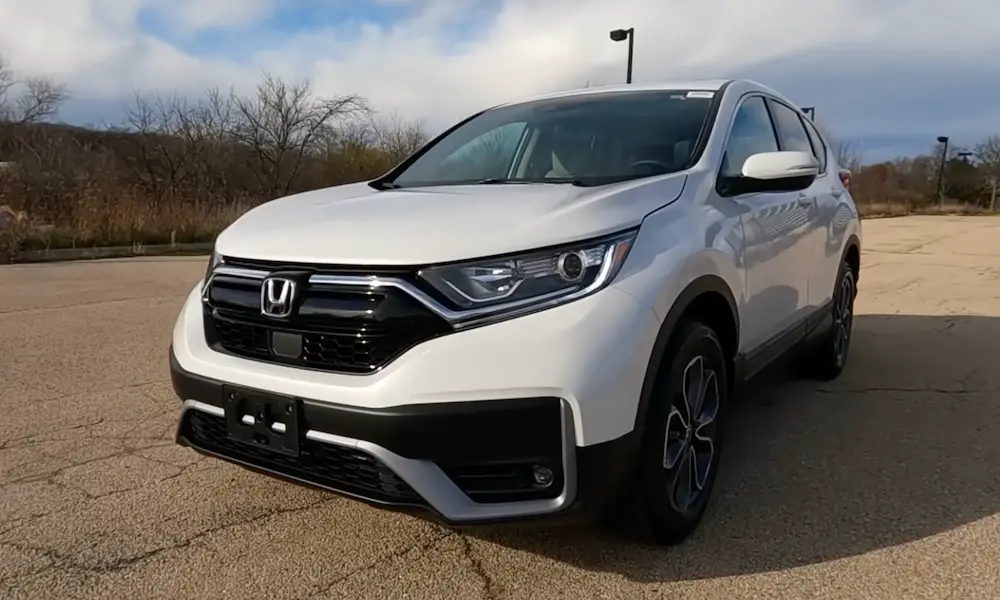
Your Honda Pilot, Ridgeline, or Acura MDX makes a grinding or shuddering noise during tight turns. You Google the fix, find out it needs a VTM-4 fluid change, then hit a wall trying to figure out if there’s a cheaper alternative. This post breaks down exactly what Honda VTM-4 fluid is, why it’s so specific, and whether any aftermarket honda vtm-4 fluid equivalent actually holds up. Read to the end — the answer might surprise you.
What Is Honda VTM-4 Fluid, Exactly?
The VTM-4 system (Variable Torque Management 4-Wheel Drive) is Honda’s proactive all-wheel-drive setup. Unlike basic AWD systems that react after wheel slip happens, VTM-4 actively pushes torque to the rear wheels before you lose grip.
The rear differential in VTM-4 vehicles isn’t a simple gear housing. It contains:
- A hypoid ring and pinion gear set
- Two electronically controlled wet clutch packs (one per rear axle shaft)
- Internal hydraulic pumps activated by electromagnetic coils
That’s three completely different jobs happening in one housing. The fluid has to handle all of them simultaneously — heavy gear lubrication, clutch friction modulation, and hydraulic pressure. No standard gear oil does all three.
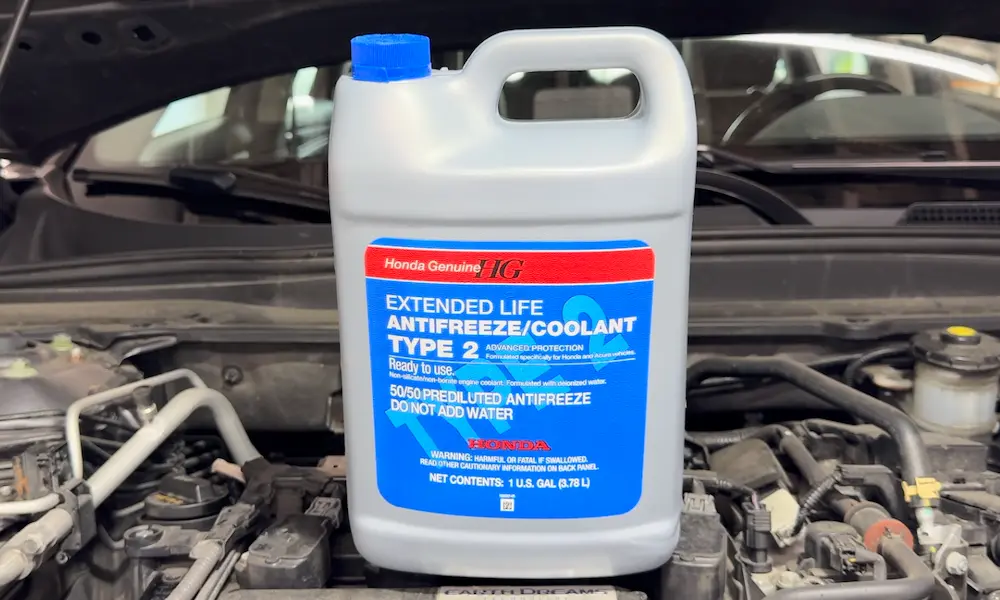
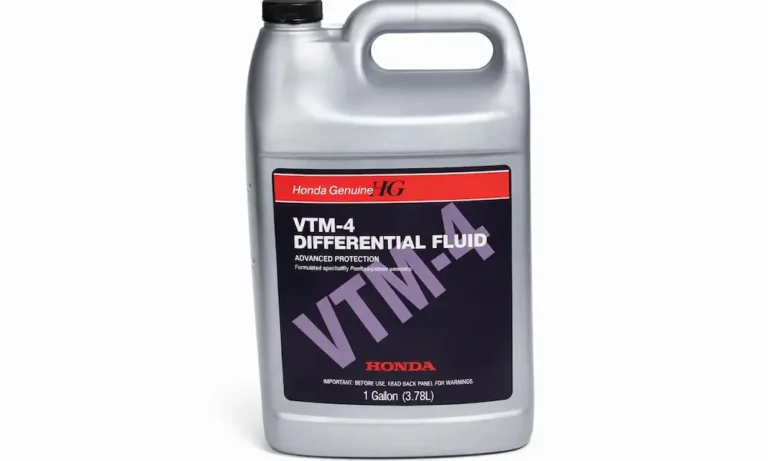
Honda’s answer is Genuine VTM-4 Differential Fluid, part number 08200-9003. Acura labels it 08200-9003A, but it’s chemically the same product.
Why VTM-4 Fluid Is Thinner Than You’d Expect
Here’s where most people go wrong. They assume a rear differential needs thick gear oil — something like 75W-90. VTM-4 fluid is nothing like that.
| Property | VTM-4 Fluid | Typical 75W-90 Gear Oil |
|---|---|---|
| Kinematic Viscosity @ 100°C | 7.32 cSt | 13.5–24.0 cSt |
| Pour Point | -50°C / -58°F | Approx. -40°C |
| Flash Point | >170°C / 338°F | ~180°C |
| Density @ 15°C | 0.86 g/cm³ | ~0.87 g/cm³ |
At just 7.32 cSt at 100°C, VTM-4 fluid sits closer to a modern automatic transmission fluid than any gear oil. That’s intentional. The electromagnetic clutches inside the diff need to engage and disengage rapidly based on ECU commands. A thick fluid would slow that response, causing a lag between what your computer asks for and what the diff actually does.
Think of it this way: you wouldn’t pour honey into a fuel injector and expect it to fire cleanly. Same logic applies here.
The Science Behind Clutch Shudder (And Why Wrong Fluid Causes It)
“Clutch shudder” is the most common symptom of using the wrong fluid in a VTM-4 differential. Drivers describe it as a vibration or dragging sensation when turning slowly in parking lots or tight corners.
Here’s what’s actually happening inside the diff.
The wet clutch packs need a fluid that hits a very specific “stick-slip” balance. Long-chain friction modifier molecules in the fluid coat the clutch plates. They need to:
- Provide enough grip so the clutches can lock and transfer torque
- Allow controlled slip during engagement and disengagement
Standard GL-5 gear oils are engineered to be slippery. That’s great for hypoid gears but terrible for wet clutches — the plates slip uncontrollably under load. On the flip side, a fluid with too much friction makes the clutches grab suddenly and release just as fast, creating that rapid shudder vibration.
VTM-4 fluid’s proprietary polymer esters are specifically tuned to the friction material Honda uses in those clutch packs. No generic product replicates that match.
What’s Actually Inside Honda VTM-4 Fluid
The Safety Data Sheet for Honda VTM-4 fluid reveals a complex formula:
| Chemical Component | Role | Percentage |
|---|---|---|
| Petroleum Lubricating Base Stocks | Primary lubrication & heat transfer | >75% |
| Zinc Dialkyldithiophosphate (ZDDP) | Anti-wear & extreme pressure protection | 1.0–5.0% |
| 2,6-di-tert-butyl p-cresol | Antioxidant & thermal stabilizer | 0.1–1.0% |
| Polymer Esters | Friction modifier & viscosity improver | Proprietary |
| Succinic Anhydride Derivatives | Detergent & dispersant | Proprietary |
The ZDDP protects the hypoid gears under the intense sliding and pressure they experience. The antioxidant slows down fluid breakdown from heat. The polymer esters handle clutch friction. Remove or change any one of these, and something in the system suffers.
Does a Real Honda VTM-4 Fluid Equivalent Exist?
Short answer: no verified aftermarket equivalent exists for part number 08200-9003.
Here’s what the major brands actually say:
Amsoil
Amsoil’s official product guide for the 2005 Honda Pilot doesn’t list a direct replacement for VTM-4 fluid. Their Multi-Vehicle ATF and Severe Gear oils don’t cross-reference part number 08200-9003. Some forum users use Amsoil’s ATV/UTV Powertrain Fluid, but that product is designed for Polaris and Kawasaki powertrains — not Honda’s differential architecture.
Red Line Synthetic
Red Line’s MTL 75W80 GL-4 gets close on viscosity and works well for manual transmissions with brass synchronizers. But VTM-4 differentials use hypoid gears that need GL-5 extreme pressure protection — something the MTL doesn’t provide. Red Line’s 75W-90 GL-5 flips that problem: it protects the gears but it’s too viscous and too slippery for the clutch packs.
Ravenol
Ravenol’s MTF-2 75W-80 is officially approved as a Honda Manual Transmission Fluid replacement. But manual transmission fluid is not VTM-4 differential fluid. Ravenol doesn’t market any certified substitute for 08200-9003.
Idemitsu
Idemitsu supplies Honda factory fluids and makes an “ATF Type H PLUS,” but that’s strictly for automatic transmissions. Their product lineup doesn’t include a certified VTM-4 substitute.
The pattern is consistent: respected brands, no official certification for this specific application. Forum posts claiming success with substitutes rely on anecdotal experience, not technical validation.
VTM-4 Fluid vs. Dual Pump Fluid II: Don’t Mix These Up
Here’s one of the most common and costly mistakes Honda owners make. The jump from VTM-4 to i-VTM4 brought a completely different fluid — Dual Pump Fluid II (DPSF-II, part number 08200-9007).
Some dealership staff have reportedly told customers these fluids are interchangeable. They’re not.
| Feature | VTM-4 Fluid (08200-9003) | Dual Pump Fluid II (08200-9007) |
|---|---|---|
| Color | Red | Amber / Light Brown |
| Mechanism | Active wet clutch torque vectoring | Hydraulic dual pump |
| Viscosity @ 100°C | 7.32 cSt | Optimized for hydraulic pressure |
| Applications | MDX (2001–2006), Pilot (2003–2015), Ridgeline (2006–2014) | CR-V (all), Pilot (2016+), Ridgeline (2017+) |
The Acura DPSF fluid (08200-9007A) is essentially the same as Honda Dual Pump Fluid II and is used interchangeably by dealers. But neither replaces VTM-4 fluid in older Pilots, Ridgelines, or the MDX.
Check your model year before you buy anything.
The Transfer Case Mix-Up That Kills Differentials
A huge number of VTM-4 failures trace back to one mistake: confusing the front transfer assembly with the rear differential.
VTM-4 vehicles have two separate units, and they need completely different fluids:
- Front Transfer Assembly: A simple 90-degree gearbox with no clutches. It needs standard hypoid gear oil, typically SAE 75W-90 or 80W-90, rated API GL-4 or GL-5.
- VTM-4 Rear Differential: The complex clutch-and-pump unit. It needs VTM-4 fluid (08200-9003) only.
Using VTM-4 fluid in the transfer case starves the gears — it’s too thin. Using gear oil in the rear diff destroys the clutch system immediately. These aren’t interchangeable, and they’re not in the same location on the vehicle.
How Often Should You Change VTM-4 Fluid?
Honda’s recommended intervals vary based on how hard you drive.
| Operating Condition | First Change | Subsequent Changes |
|---|---|---|
| Normal Driving | 15,000 miles | Every 30,000 miles |
| Towing / Mountainous Terrain | 7,500 miles | Every 15,000 miles |
| Off-Road / Water Fording | Immediate inspection | Every 15,000 miles |
| Extremely Cold Climate | 15,000 miles | Every 15,000 miles |
That first change at 15,000 miles matters more than most people realize. New gear sets and clutch plates shed metallic particles during break-in. That metal stays suspended in the fluid and acts like sandpaper on the internal hydraulic pump passages. Getting it out early prevents accelerated wear on components that cost a lot more than a gallon of fluid.
Water contamination is the other issue. The VTM-4 differential is a vented system — it breathes. Moisture from humid or coastal air condenses inside the housing. Water reacts with the sulfur-based anti-wear additives and forms acids. If your vehicle regularly drives through puddles or you live near the coast, tighten up that service interval.
Where to Buy Genuine VTM-4 Fluid and What It Costs
Genuine VTM-4 fluid comes in one-gallon containers. A typical service uses more than two quarts, so the gallon format makes sense.
| Retailer | Part Number | Price (Per Gallon) |
|---|---|---|
| Honda Dealer (MSRP) | 08200-9003 | ~$38.50 |
| College Hills Honda | 08200-9003 | ~$31.19 |
| Honda Parts Now | 08200-9003 | ~$28.41 |
| Advance Auto Parts | 08200-9003 | ~$31.99 |
| eBay Motors | 08200-9003 | $43.58–$47.18 |
The $10–$15 difference between a dealer and an online Honda parts seller isn’t worth agonizing over. What’s worth avoiding is the $1,200–$3,000 rear differential replacement that follows a bad fluid decision.
If your vehicle is still under powertrain warranty, using anything other than 08200-9003 is a significant risk. Honda can and does deny warranty claims when non-genuine fluids caused the failure.
Safe Handling and Disposal
VTM-4 fluid is petroleum-based with a complex additive package. A few basics to keep in mind when changing it yourself:
- Work ventilated: Vapor inhalation irritates airways. Don’t do this in a sealed garage.
- Skin contact: Repeated exposure causes oil acne or dermatitis. Wear gloves.
- Spills: Use sand or an absorbent material to contain any spills immediately. Don’t let it run into drains.
- Disposal: Most auto parts stores and municipal waste facilities accept used differential fluid for recycling. Don’t pour it in the trash or down a drain.
The fluid carries an NFPA Health rating of 1 (slight hazard), Flammability rating of 1 (requires preheating to ignite), and Reactivity rating of 0 (stable). It’s not dangerous to handle with basic precautions.
The Bottom Line on Honda VTM-4 Fluid Equivalents
Here’s the summary that matters:
- No aftermarket brand officially certifies a honda vtm-4 fluid equivalent for part number 08200-9003
- The fluid’s 7.32 cSt viscosity is thinner than all standard gear oils — by design
- Using the wrong fluid causes clutch shudder at best, differential failure at worst
- VTM-4 fluid and Dual Pump Fluid II are not the same — verify your model year
- The front transfer case and rear differential need completely different fluids
- Change it every 30,000 miles normally, every 15,000 miles under severe conditions
- Always do the first change at 15,000 miles to flush break-in metal particles
The VTM-4 system is a genuinely clever piece of engineering. It just happens to be one that doesn’t tolerate shortcuts in its lubrication. Stick with 08200-9003, buy it from a Honda dealer or trusted online Honda parts retailer, and change it on schedule. That’s genuinely the most cost-effective maintenance move you can make for this system.