You’re staring at two gas stations—one’s a Valero, the other’s a Shell. The Valero price is 20 cents cheaper per gallon. Your gut says “cheaper = worse,” but is that true? Let’s cut through the noise with actual data, independent testing, and what automotive engineers recommend for your engine.
What Actually Makes Gas “Good”
Here’s where most folks get it wrong: octane rating isn’t a quality measurement.
The number on the pump (87, 91, 93) measures knock resistance—nothing else. If your car’s manual says “87 octane,” premium fuel won’t boost performance, improve mileage, or clean better. You’re literally burning money.
Real quality lives in the detergent package. Since 1995, the EPA requires minimum detergents in all gas. But here’s the problem: modern engines—especially direct injection systems—run hotter and need way more cleaning power than that baseline provides.
The TOP TIER Standard Changes Everything
When your car’s intake valves get gunked up with carbon deposits, you’ll notice rough idling, reduced power, and worse fuel economy. That’s why BMW, Honda, Toyota, GM, and seven other automakers created the TOP TIER Detergent Gasoline program.
This isn’t marketing fluff. It’s a performance specification requiring significantly higher detergent concentrations in every grade—regular through premium.
The AAA Study That Settled the Debate
AAA’s automotive engineers ran controlled tests comparing TOP TIER gas against regular EPA-minimum fuel. The results were stark.
After simulating 4,000 miles of driving, non-TOP TIER gas left 19 times more carbon deposits on intake valves. We’re talking 660 milligrams per valve versus just 34 milligrams with TOP TIER certified fuel.
That’s a 95% reduction in engine-choking buildup.
Even better? Switching to TOP TIER gas can actually clean existing deposits from engines previously run on low-quality fuel.
TOP TIER vs. Regular Gas Performance
| Measurement | TOP TIER Gas | Non-TOP TIER Gas |
|---|---|---|
| Avg. Valve Deposits | 34 mg | 660 mg |
| Deposit Level | Baseline (1x) | 19x worse |
| Cleaning Reduction | 95% better | N/A |
So, Is Valero Gas Good?
Yes. Full stop.
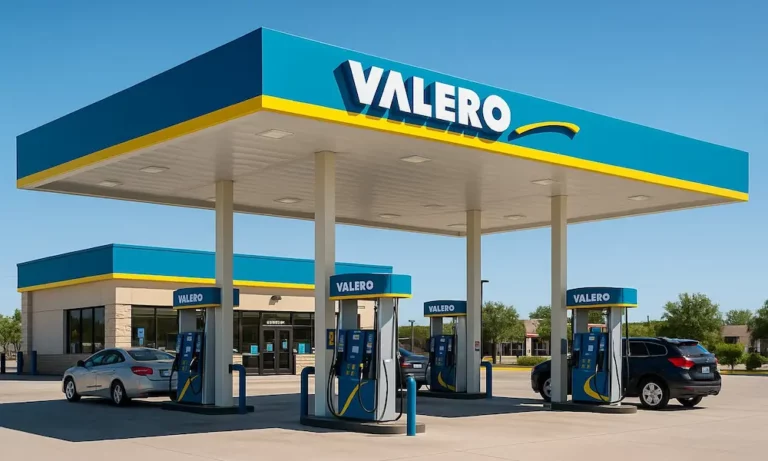
Valero is a licensed TOP TIER retailer. You can verify this yourself on the official TOP TIER brand registry. That means Valero’s detergent package meets the exact same rigorous standards as Shell, Chevron, and Mobil.
Your engine doesn’t care about the sign above the pump. It only cares about what’s in the additive package.
But What About That 2022 Supply Issue?
Sharp-eyed Redditors found a notice where Valero warned about temporary detergent shortages during supply chain chaos. This actually proves the program’s legitimacy.
TOP TIER isn’t pay-to-play. You can’t just slap the logo on your pump. Valero had to publicly announce when it couldn’t meet the standard, then got recertified once supplies normalized. That’s accountability.
Valero’s Marine Fuel Connection
Here’s something most people don’t know: Valero works with ValvTect, which produces high-performance marine gasoline additives. Marine engines face brutal conditions—high RPMs, moisture, ethanol problems.
ValvTect’s marine formula is marketed as “Beyond Top Tier.” That level of fuel chemistry expertise directly informs Valero’s automotive gas formulation.
Why Valero Costs Less (And It’s Not What You Think)
Let’s tackle the elephant at the pump: if Valero uses the same high-grade detergents, why’s it consistently cheaper?
The “All Gas Is the Same” Myth
Here’s the half-truth people love repeating: base gasoline is a commodity. In your region, every station—Valero, Shell, the sketchy no-name joint—draws from the same pipeline terminal.
But that’s where “same” ends.
At the loading rack, each brand injects its proprietary additive package. That’s the difference between TOP TIER and junk gas. The secret sauce costs more, but it’s what keeps your engine clean.
Valero’s Vertical Integration Advantage
Valero is the world’s largest independent refiner. Unlike competitors who primarily market fuel, Valero refines and distributes it. They cut out middlemen entirely.
Near a Valero refinery? Your transportation costs drop significantly. Those savings hit your wallet at the pump—not because the product’s inferior, but because the supply chain’s more efficient.
The “Worst Gas” Lists Prove It
When 24/7 Wall St. compiled the “9 Worst Gasoline Brands in America,” they listed BP, Circle K, Speedway, and Sam’s Club.
Notice who’s missing? Valero.
Every brand on that worst-of list lacks TOP TIER certification. The report’s core advice: avoid those stations and choose TOP TIER retailers instead.
The Real Risks You Should Worry About
Let’s separate two completely different issues people conflate.
Station-Level Contamination (The Actual Danger)
Yes, there are legitimate reports of bad Valero gas damaging engines. But here’s what investigations found:
El Paso incident: Station owner immediately shut down pumps—standard procedure for water contamination in underground tanks.
DeKalb County: State inspectors confirmed water in premium fuel. The local franchisee, not Valero corporate, handled it.
California case: One bad shipment had elevated ethanol concentrations.
This is critical: Valero corporate provides TOP TIER formula. The local station owner maintains underground storage tanks. Water enters through flooding, failed seals, or plain neglect.
This risk exists at every gas brand. It’s a mechanical station failure, not a chemical formula failure.
Corporate Fines vs. Product Quality
Valero’s faced major environmental penalties—$82 million to CARB in 2024, $2.85 million to EPA in 2020.
Here’s what those fines were actually for:
- Refinery emissions violations
- Sulfur content in refining processes
- Volatile organic compound releases
- Petroleum coke discharge into San Francisco Bay
Notice what’s missing? Nothing about failing to put detergents in consumer gasoline.
These are serious environmental issues worth considering if you’re making ethical purchasing decisions. But they’re completely separate from whether Valero’s gas will clean or damage your engine.
What Each Issue Actually Affects
| Problem Type | What Happened | Real Cause | Impact on Your Engine |
|---|---|---|---|
| Bad gas reports | Water/contamination | Station’s underground tank maintenance | Severe—stalling, misfires, damage |
| 2022 additive shortage | Temporary TOP TIER lapse | Industry supply chain failure | Minor—resolved, was temporary |
| EPA/CARB fines | Refinery emissions | Corporate compliance failure | Zero—unrelated to pump gas quality |
How to Protect Yourself at Any Gas Station
The contamination risk isn’t unique to Valero. You can dramatically reduce it with one simple rule:
Buy gas from busy, high-volume stations.
High-traffic locations get frequent deliveries. Fresh fuel cycles through underground tanks quickly, minimizing water accumulation and degradation.
A well-lit, modern, busy Valero with cars constantly at the pumps? That’s one of the best values on the market—TOP TIER quality at a price enabled by smart logistics.
The Bottom Line on Valero
Valero gasoline is objectively high-quality. Its TOP TIER certification puts it in the same performance category as premium-priced competitors.
The negative reputation comes from three separate issues people incorrectly bundle together:
Lower price? That’s vertical integration and refinery proximity, not inferior additives.
Corporate fines? Those concern refinery environmental practices, not what goes in your tank.
Bad gas stories? Station-level contamination that can happen at any brand.
Independent AAA testing proves TOP TIER fuel leaves 95% fewer deposits than regular gas. Eleven major automakers recommend it. Valero delivers it.
Fill up confidently at busy Valero stations. Your engine will thank you, and your wallet won’t hate you.