Ever noticed that little light on your Jeep’s dashboard that seems to change colors when you’re stopped at traffic lights? That’s your Jeep auto start stop light, and understanding what it’s trying to tell you can save you headaches (and possibly repair costs) down the road. Whether you’re dealing with a flickering indicator or just curious about how this fuel-saving feature works, this guide has you covered.
What Exactly Is the Jeep Auto Start Stop System?
The auto start stop system in your Jeep is a clever fuel-saving feature designed to boost your gas mileage. When you come to a complete stop—like at a red light or in bumper-to-bumper traffic—the system automatically shuts off your engine. Don’t worry: as soon as you lift your foot off the brake or press the accelerator, the engine springs back to life in a fraction of a second.
This fuel economy feature isn’t just about saving you money at the pump—it also helps reduce emissions while your vehicle would otherwise be idling. In heavy traffic, these small engine-off moments can add up to meaningful fuel savings.
Decoding Your Auto Start Stop Light Colors
Your Jeep communicates the status of this system through a dashboard indicator that changes colors. Here’s what each color means:
Green Light
When you see a green auto start stop light, everything’s working perfectly. This means your engine has temporarily shut off while you’re stopped, and the system is doing exactly what it’s designed to do. No action needed!
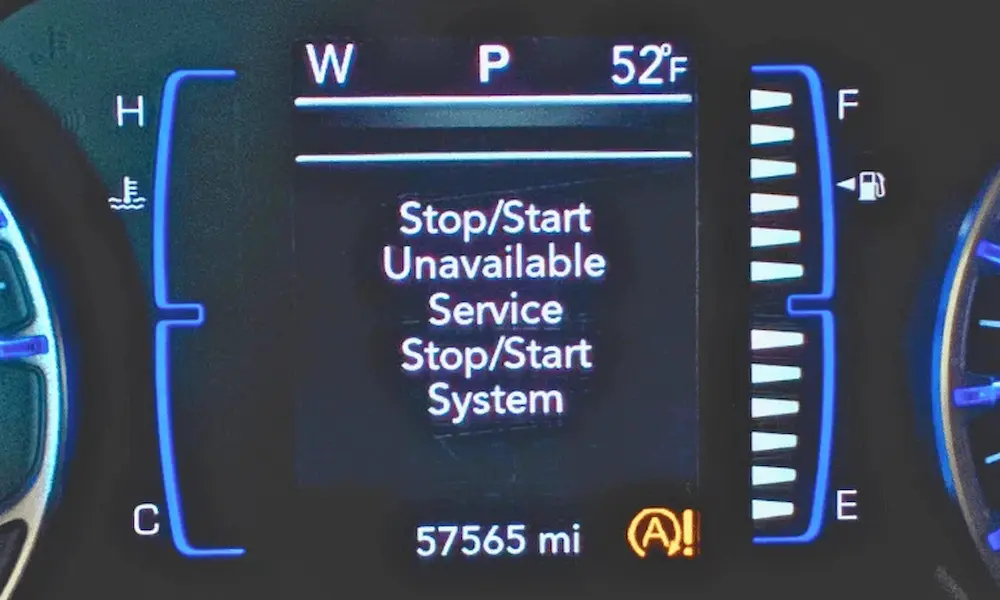
Yellow or Amber Light
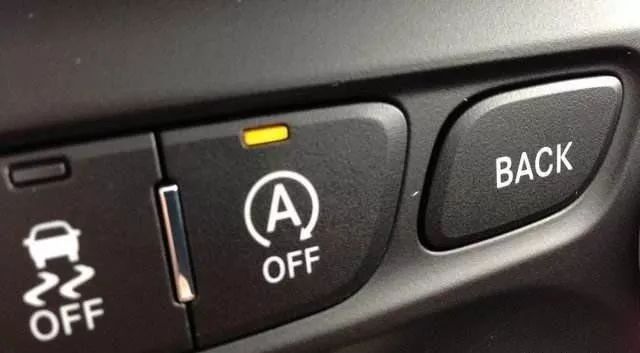
A yellow/amber warning light is your Jeep’s way of saying “Houston, we have a problem.” This indicates the system has detected an issue that needs attention. Don’t panic, but you’ll want to figure out what’s going on.
Gray Light with a Line Through It
Spotted a gray light with a strike-through? This tells you the system isn’t available right now because certain conditions aren’t being met. This is usually temporary and resolves when conditions change.
Why Your Auto Start Stop Light Might Be Acting Up
Battery Issues: The Most Common Culprit
Battery problems top the list of reasons why your start stop system might not be working properly. Unlike standard vehicles, Jeeps with this system have both a main battery and an auxiliary battery that powers your electronics when the engine is off.
Common battery-related problems include:
- Low charge in your auxiliary battery
- Worn-out auxiliary battery that needs replacement
- Wrong battery type installed during a previous replacement
- Dirty or corroded battery connections
- Too many accessories drawing power when the engine is off
If your Jeep’s start stop warning light keeps coming on, checking both batteries should be your first move.
Electrical System Gremlins
Electrical issues can also trigger warning lights:
- Blown fuses related to the start-stop system
- Faulty relays that control the system
- Damaged wiring connections
- Problems with the charging sensor that communicates between your main and auxiliary batteries
These issues often require diagnostic equipment to pinpoint exactly what’s wrong.
Environmental and Operational Factors
Sometimes the system disables itself due to external conditions:
- Temperature extremes (either too hot or too cold)
- Driving on steep hills
- Engine hasn’t reached normal operating temperature
- Your seatbelt is unbuckled
- Driver’s door is open
- Vehicle isn’t in the right gear
In these cases, the system will typically resume normal operation once conditions change.
Mechanical Problems
Other mechanical issues that might trigger the warning light include:
- Worn spark plugs affecting restart reliability
- Fuel system problems
- Faulty transmission range sensor
- Issues with your starter motor
- Problems with the brake pedal switch
When Will Your Auto Start Stop System Actually Work?
For your system to engage properly, several conditions must be met:
- Your Jeep must be completely stopped
- The transmission must be in a forward gear
- Your foot needs to be firmly on the brake pedal
- All safety conditions must be satisfied
If any of these requirements aren’t met, you’ll often see that gray indicator with a line through it, letting you know the system is temporarily unavailable.
DIY Troubleshooting Steps
Try These Reset Methods First
Before heading to the dealer, try these reset methods:
- Battery Disconnect Reset: Turn off your Jeep, disconnect the negative terminal of the main battery for about 30 seconds, then reconnect and restart. This often clears temporary system glitches.
- Button Reset: The simplest approach—just press the auto start-stop button on your dashboard to turn the feature off and then on again.
- OBD-II Reset: If you have access to an OBD-II diagnostic tool, you can navigate to the auto start-stop settings and perform a system reset.
These reset methods often resolve temporary issues without a trip to the mechanic.
Auxiliary Battery: The Heart of Your Start-Stop System
The auxiliary battery is crucial for your start-stop system’s operation. In most Jeep models like the Grand Cherokee, this battery is typically located under the front passenger seat or in the engine compartment.
If your system issues persist, the auxiliary battery is likely the problem. Replacement typically costs around $99, which is significantly less than a full diagnostic service at the dealership.
Here’s a quick comparison of battery options:
| Battery Type | Pros | Cons | Average Cost |
|---|---|---|---|
| OEM Auxiliary | Perfect fit, reliable | More expensive | $120-180 |
| Aftermarket | Lower cost, widely available | May have shorter lifespan | $80-120 |
| AGM Upgrade | Longer life, better performance | Highest initial cost | $150-250 |
If you’re comfortable with basic vehicle maintenance, replacing the auxiliary battery yourself can save money, but always follow proper safety procedures when working with electrical components.
Disabling the System: Is It Worth It?
If you find the start-stop feature annoying (some drivers do), you can temporarily disable it by pressing the dedicated button on your dashboard. Look for a button with an “A” with a circular arrow around it.
Keep in mind that the system will reactivate every time you restart your Jeep, so you’ll need to press the button again if you want to keep it disabled. Also worth noting: disabling this feature will slightly increase your fuel consumption and emissions.
Maintenance Tips for Reliable Operation
To keep your auto start-stop system working properly:
- Have your auxiliary battery tested annually
- Keep battery terminals clean and free of corrosion
- Avoid excessive use of electronic accessories when the engine is off
- Follow your Jeep’s recommended maintenance schedule
- Address any warning lights promptly
Common Warning Signs That Require Attention
Don’t ignore these indicators that your system needs professional help:
- Yellow warning light that won’t turn off even after reset attempts
- Engine stalling when the start-stop system activates
- Delayed restart when lifting your foot off the brake
- Unusual noises during system activation
When these symptoms appear, it’s time to consult a professional. The National Highway Traffic Safety Administration recommends addressing warning lights promptly to prevent more serious issues.
System Requirements for Different Jeep Models
Different Jeep models have slightly different start-stop systems. Here’s a quick reference:
| Jeep Model | Auxiliary Battery Location | System Activation Method |
|---|---|---|
| Grand Cherokee | Under passenger seat | Automatic when stopped |
| Wrangler JL | Engine compartment | Automatic when stopped |
| Cherokee | Under hood near main battery | Automatic when stopped |
| Compass | Engine compartment | Automatic when stopped |
The Technical Side: How Auto Start Stop Actually Works
The system uses an enhanced starter motor and battery setup to enable quick, smooth restarts. When you stop, the engine control unit:
- Monitors if all conditions for shutdown are met
- Positions the engine pistons for optimal restart
- Shuts off fuel and ignition
- Maintains power to all critical systems via the auxiliary battery
- Monitors for the moment you release the brake
- Instantly restarts the engine when you’re ready to move
This complex dance happens in milliseconds and is designed to be virtually unnoticeable when working properly.
Long-Term Benefits vs. Short-Term Annoyances
Some drivers find the start-stop system irritating, especially in stop-and-go traffic. However, the fuel economy benefits are real:
- Average fuel savings of 3-5% in city driving
- Reduced emissions, particularly in urban environments
- Less engine wear from extended idling periods
- Lower fuel costs over your vehicle’s lifetime
Many Jeep owners initially dislike the system but grow accustomed to it over time as they notice the improved fuel economy.
Real-World Performance and Expectations
The auto start-stop system works best in certain driving conditions:
- City driving with frequent stops at traffic lights
- Heavy traffic situations with lots of stop-and-go
- Warm weather conditions when climate control demands are modest
The system is less effective (and sometimes automatically disables itself) during:
- Extreme weather conditions
- Short trips before the engine reaches operating temperature
- Situations requiring maximum climate control performance
Setting realistic expectations about when and how the system works can help you appreciate its benefits rather than focusing on limitations.
System Evolution and Improvements
Jeep has continuously improved their auto start-stop system over the years:
- Newer models have faster, smoother restarts
- Updated battery technology provides better reliability
- Refined algorithms better predict when you’re about to accelerate
- Improved integration with climate control systems
If you’re driving an older Jeep with this feature, you might notice improvements if you upgrade to a newer model.
The Bottom Line on Jeep Auto Start Stop Lights
Understanding what your Jeep’s auto start stop light is telling you can save you time, money, and frustration. In most cases, issues with the system are related to the auxiliary battery or simple conditions that prevent the system from engaging.
By paying attention to the color of your indicator light and following the troubleshooting steps outlined above, you can keep this fuel-saving feature working as intended. And remember—if you ever feel uncomfortable with the system’s operation, that little dashboard button lets you disable it until you’re ready to have it checked out.
Keep an eye on that little light—it’s your window into one of your Jeep’s most innovative fuel-saving technologies.