Wondering which type of fuel to put in your Jeep Wrangler? You’ve come to the right place. Whether you’ve just driven your new Wrangler off the lot or you’re a seasoned off-roader looking to maximize performance, understanding the right gas type is crucial for keeping your Jeep running smoothly for years to come.
Jeep Wrangler Fuel Requirements by Engine Type
Different Wrangler engines have different fuel needs. Let’s break down what each engine requires:
3.6L Pentastar V6 Engine
If your Wrangler has the popular 3.6L V6 engine (found in many Sport and Rubicon models), you’re in luck. This engine runs perfectly fine on 87 octane regular unleaded gasoline.
Don’t waste your money on premium gas for this engine. Multiple tests have shown no measurable performance or fuel economy benefits when using higher-octane fuels in the 3.6L V6. Chrysler Jeep confirms that the naturally aspirated design of this engine doesn’t benefit from premium fuel.
The engine’s lack of forced induction (no turbocharger) means it’s less likely to experience knocking or pre-ignition issues that higher-octane fuels help prevent.
2.0L Turbocharged I4 Engine
If you opted for the 2.0L turbocharged four-cylinder engine (common in higher trims like the Sahara and High Altitude), your fuel choice gets a bit more nuanced.
While Jeep states that 87 octane is the minimum requirement, they recommend 91 octane or higher for optimal performance and fuel economy. Here’s why:
- The turbocharger creates higher pressure in the cylinders, increasing the risk of engine knock, especially under heavy loads
- Using 91 octane can improve horsepower and torque by 5-7%
- Many drivers report getting 3-4 MPG better fuel economy with premium gas
- The performance difference is most noticeable in hot weather, when towing, or during intense off-roading
According to forum discussions, many owners of the 2.0L turbo split the difference – using regular gas for normal city driving but switching to premium for road trips or when heading off-road.
6.4L Hemi V8 (Rubicon 392)
Own the high-performance Rubicon 392 with its monstrous 6.4L Hemi V8? You have no choice but to use 91 octane premium gasoline. This isn’t just a recommendation – it’s a requirement.
The 392’s high 11.5:1 compression ratio and performance-focused tuning make premium fuel mandatory. While the engine’s knock sensors will adjust timing to prevent damage if you use regular gas, you’ll experience:
- Significant power loss
- Reduced fuel economy (owners report 15-20% worse MPG)
- Noticeably worse throttle response
- Potential long-term engine damage
The 392’s high-performance nature demands premium fuel for proper operation.
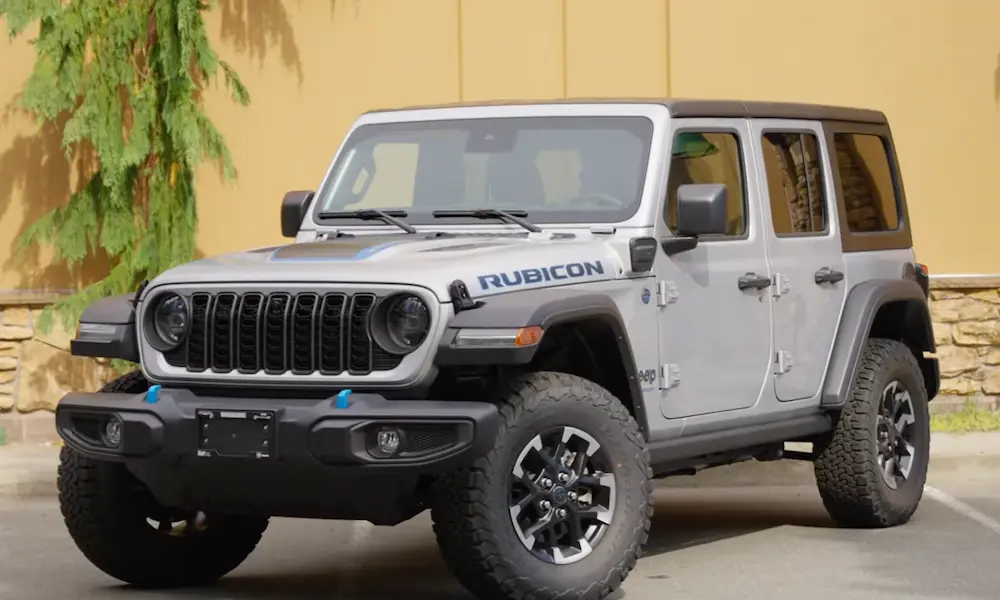
2.0L Turbocharged PHEV (4xe Hybrid)
The plug-in hybrid 4xe Wrangler pairs a 2.0L turbocharged engine with electric motors. Interestingly, despite having a turbocharger, Jeep specifically states that 87 octane regular fuel is sufficient for this model.
This works because the electric motor’s instant torque delivery helps support the gasoline engine during high-load situations, effectively reducing the conditions that would typically cause knock in a traditional turbocharged engine. This hybrid design eliminates the need for premium fuel even in demanding off-road conditions.
Cost vs. Performance: Is Premium Gas Worth It?
Let’s talk dollars and sense. Is spending extra on premium fuel a good investment for your Wrangler?
For the 3.6L V6
Verdict: Stick with regular 87 octane
There’s simply no benefit to using premium in this engine. Save your money – over a year, the premium fuel upcharge could cost you $300-500 for literally zero performance or efficiency improvement.
For the 2.0L Turbo
Verdict: Consider your driving style
- Daily commuting in moderate weather: Regular 87 octane is fine
- Towing, off-roading, or hot weather driving: Premium 91 octane is worth it
- Annual cost difference: About $500 (assuming 15,000 miles/year and $0.30/gallon premium upcharge)
Many owners report that the improved fuel economy with premium partially offsets the higher fuel cost, making the real-world price difference smaller than expected.
For the 6.4L V8 (392)
Verdict: Premium fuel is non-negotiable
The 392 requires premium fuel, period. Budget for approximately $700-900 extra per year in fuel costs compared to using regular gas in other models. Think of it as part of the cost of owning a high-performance vehicle.
For the 4xe Hybrid
Verdict: Regular 87 octane is all you need
One of the hidden benefits of the 4xe is that you can use regular fuel without any performance penalty. Given that you’ll use less gas overall thanks to the electric motor, the 4xe offers the best fuel flexibility and economy in the Wrangler lineup.
How Altitude Affects Your Fuel Needs
If you live or frequently drive at high elevations (above 5,000 feet), the thinner air actually reduces the risk of engine knock. For 2.0L turbo owners, this means you might get away with using 87 octane even in situations where you’d normally want premium fuel at lower elevations.
As discussed by Wrangler owners, the reduced oxygen density at altitude naturally decreases cylinder pressure, mitigating knock risk.
Ethanol Content and Your Wrangler
Most gasoline in the US contains some ethanol, typically 10% (E10). Here’s what you need to know:
E85 and Higher Ethanol Blends
Standard Jeep Wranglers are NOT designed for E85 fuel (85% ethanol). Using E85 in a non-FlexFuel vehicle can cause:
- Fuel system corrosion
- Damaged injectors
- Poor performance and fuel economy
- Potential engine damage
The exception is if you’ve installed an aftermarket FlexFuel kit, like the ProFlex Commander, which allows the 6.4L V8 to safely run E85. These systems can actually yield a 7-10% horsepower gain due to ethanol’s higher octane rating (approximately 105).
E15 (15% Ethanol)
Some newer Wranglers can handle E15, but check your owner’s manual first. When in doubt, stick with standard E10 gasoline to avoid potential issues.
Weather Considerations for Fuel Choice
Hot Weather
In high temperatures, engines are more prone to knocking, especially turbocharged ones. If you have the 2.0L turbo and live in a hot climate, you’ll likely notice better performance with premium fuel during summer months.
Cold Weather
Interestingly, premium fuel can sometimes be harder to ignite in extremely cold temperatures due to its slower evaporation rate. The 2.0L turbo’s direct injection system helps with cold starts, but Jeep has implemented special Cold Start Plus software to optimize performance in frigid conditions. Some Arctic-region drivers report longer cranking times with 91 octane in sub-zero temperatures.
Towing and Off-Road Fuel Requirements
When your Wrangler is working hard, fuel quality becomes more important:
Towing with Your Wrangler
Pulling a trailer puts your engine under sustained load, increasing temperatures and the risk of knock. Recommendations:
- 3.6L V6: Regular 87 octane is still adequate, but stay within towing capacity limits
- 2.0L Turbo: Definitely use premium 91 octane for towing
- 6.4L V8: Premium 91 octane is required regardless
- 4xe Hybrid: Regular 87 octane works fine thanks to electric motor assistance
Rock Crawling and Technical Off-Roading
Off-road conditions that involve low-speed, high-torque situations (like rock crawling) can stress your engine:
- The 2.0L turbo benefits significantly from premium fuel during technical off-roading
- Premium fuel helps maintain power and prevents derating (power reduction) in challenging conditions
- The 4xe hybrid’s electric torque support means regular fuel works well even in tough off-road situations
Fuel Additives: Help or Hype?
Octane Boosters
While octane boosters promise to increase your fuel’s octane rating, they come with risks:
- Many contain methylcyclopentadienyl manganese tricarbonyl (MMT)
- MMT leaves deposits that can damage oxygen sensors and catalytic converters
- The performance benefit is often minimal and temporary
For 392 owners in areas where 91 octane isn’t available, transporting premium fuel or using certain ethanol blends is safer than relying on additives.
Fuel System Cleaners
Quality fuel system cleaners used occasionally (every 3-6 months) can help keep injectors and valves clean. Look for products containing PEA (Polyetheramine) for best results.
What About Warranty Considerations?
Using the wrong fuel could potentially affect your warranty coverage. Jeep’s warranty specifically requires following the manufacturer’s fuel recommendations:
- Using regular fuel in the Rubicon 392 could void powertrain warranty coverage for related issues
- Using E85 in a non-FlexFuel Wrangler similarly risks warranty problems
- For the 2.0L turbo, regular fuel won’t void the warranty, but premium is recommended for optimal performance
The Bottom Line: Choosing the Right Gas for Your Wrangler
Here’s your straightforward guide to fueling your Wrangler properly:
- 3.6L V6: Use 87 octane regular gas. Premium offers zero benefits.
- 2.0L Turbo: 87 octane works, but consider 91 octane for towing, hot weather, or maximum performance.
- 6.4L V8 (392): Use 91 octane premium gas always. No exceptions.
- 4xe Hybrid: 87 octane regular gas is perfectly fine in all conditions.
Trust the engineering – Jeep designed each engine with specific fuel requirements in mind. Following these guidelines will ensure your Wrangler delivers the performance, reliability, and longevity you expect from this iconic off-roader.
Remember: the right jeep wrangler gas type isn’t just about what works—it’s about what works best for your specific engine and driving needs.