Got a Ram 1500 and just swapped wheels, rotated tires, or replaced a flat? You need the correct lug nut torque spec — and it’s not the same for every model year or lug nut type. Get it wrong, and you’re looking at loose wheels, warped rotors, or snapped studs. This guide covers every Ram 1500 lug nut torque spec from 1994 to 2026, plus the exact steps to do it right. Read through to the end — the re-torque section alone could save your wheel.
Ram 1500 Lug Nut Torque Specs by Year (Quick Reference)
Before diving into the details, here’s the full torque spec table. Match your model year and lug nut type, and you’ve got your number.
| Model Year | Lug Nut Type | Torque Spec (ft-lbs) | Thread Size |
|---|---|---|---|
| 1994–2001 | Standard | 80–110 ft-lbs | 9/16×18 |
| 2002–2008 | Cone-Type | 120–150 ft-lbs | 9/16×18 |
| 2002–2008 | Flanged-Type | 130–160 ft-lbs | 9/16×18 |
| 2009–2013 | All Standard | 130–135 ft-lbs | Transitional |
| 2014–2026 | Cone-Type | 130 ft-lbs | M14x1.5 |
| 2014–2026 | Flanged-Type | 140 ft-lbs | M14x1.5 |
For most modern Ram 1500 owners, your number is either 130 or 140 ft-lbs, depending entirely on which lug nut style your wheels use. Belle Fourche CDJR’s complete Ram 1500 lug nut torque guide confirms these specs across the modern platform.
Why Your Ram 1500 Lug Nut Torque Spec Actually Matters
This isn’t just a formality. When you tighten a lug nut, the stud stretches slightly — like a stiff spring. That microscopic stretch creates the clamping force holding your wheel, rotor, and hub together as one unit.
Under-torqued studs don’t stretch enough. The wheel micro-moves against the hub under braking, cornering, and acceleration forces. That movement fatigues the metal fast. Hunt Chrysler Center’s wheel torque guide explains that loose lug nuts cause steering vibration, uneven tire wear, and — in the worst case — complete wheel separation at speed.
Over-torqued studs stretch past their elastic limit. The stud permanently deforms, loses its clamping ability, and can snap under a normal load. Excessive torque also warps brake rotors, causing that pulsing pedal feel you’ve probably experienced.
The Ram 1500 handles payloads up to 2,300 lbs and tows up to 12,750 lbs. Those forces all run through the wheel hubs. Precise torque isn’t optional — it’s the math holding everything together.
Cone-Type vs. Flanged-Type Lug Nuts: Why the Torque Is Different
This is the single most important distinction for 2014–2026 Ram 1500 owners. Get the type wrong, and you’re applying the wrong torque.
Cone-Type (Acorn) Lug Nuts — 130 ft-lbs
These have a tapered, 60-degree angled base. That taper wedges into a matching 60-degree seat machined into your wheel’s lug holes. As you tighten them in a star pattern, they self-center the wheel on the hub like a funnel guiding itself to center.
The wedge design is efficient — it converts rotational force into stud tension very effectively. Less friction means the stud reaches proper tension at a lower torque number. That’s why cone-type nuts sit at 130 ft-lbs.
Flanged-Type Lug Nuts — 140 ft-lbs
These have a flat, washer-like base that presses against a flat milled surface on the wheel face. There’s no self-centering action here — your Ram’s hub-centric bore (the center hole fitting over the hub lip) handles alignment instead.
The flat flange spreads the clamping load over a wider surface area, which protects softer aluminum wheels from being crushed. But that large flat surface creates significantly more friction under the nut head during tightening. To overcome that friction and achieve the same stud tension as a cone nut, you need 140 ft-lbs — a full 10 ft-lbs more.
Same stud, same thread, same truck. Different nut geometry means a different torque requirement.
How Ram 1500 Lug Nut Torque Specs Changed Over the Generations
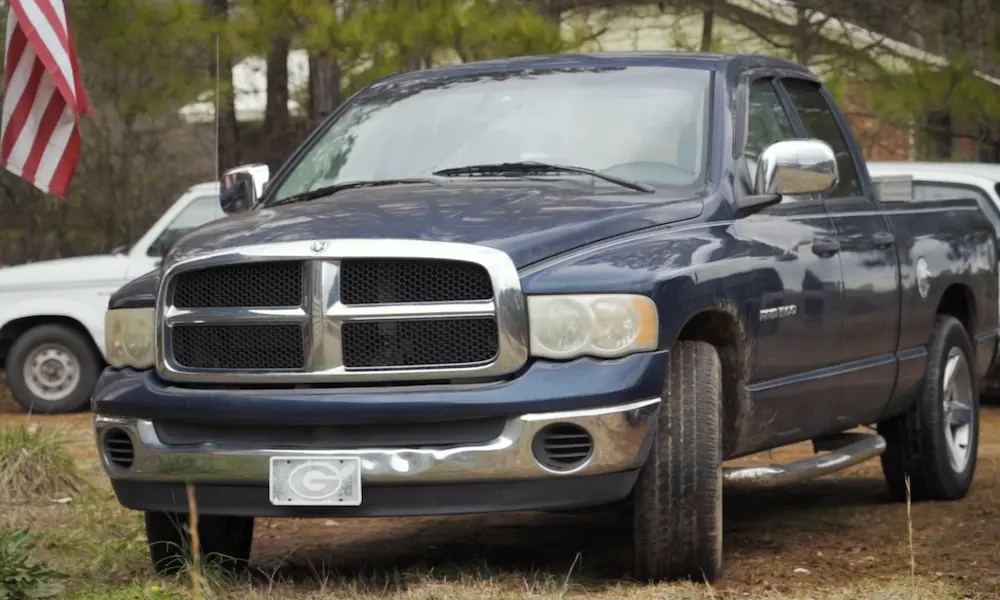
1994–2001 (2nd Gen): 80–110 ft-lbs
These earlier trucks were lighter, ran smaller 15- to 16-inch wheels, and used half-inch threaded studs common to the era. The lower torque range matched those engineering realities. For context, CarParts.com notes that passenger cars of this era typically needed only 80 ft-lbs — so these trucks weren’t dramatically different.
2002–2008 (3rd Gen): 120–160 ft-lbs
The redesigned third-gen Ram brought a stiffer chassis, bigger towing numbers, and 17- to 20-inch wheel options. Torque specs went up to match. This era introduced the cone vs. flanged split in specifications. Many service databases recommend settling on 135 ft-lbs as a practical middle-ground for these aging platforms.
2009–2013 (4th Gen): 130–135 ft-lbs
Ram narrowed the range here, eliminating guesswork for technicians. This generation also debuted the coil spring rear suspension, making precise torque and wheel balance more important than ever — any looseness transmitted directly into the cab through that responsive new suspension.
2014–2026 (4th Gen Refined + 5th Gen DT): 130 or 140 ft-lbs
The specs locked in as exact figures based purely on lug nut geometry. These numbers have held consistent through both the 5th-gen DT platform (2019+) and the Ram 1500 Classic (the continued 4th-gen sold through 2024).
The 5-Lug vs. 6-Lug Situation (2019–2024 Overlap)
This trips up a lot of Ram owners and shop technicians. Starting in 2019, Ram sold two completely different trucks under the “Ram 1500” name simultaneously:
- Ram 1500 Classic (older 4th-gen platform): 5-lug, 5×139.7mm bolt pattern
- Ram 1500 DT (new 5th-gen platform): 6-lug, 6×139.7mm bolt pattern, 77.8mm center bore
A 2021 Ram 1500 Classic and a 2021 Ram 1500 DT take completely different wheels. Don’t assume. Check your bolt pattern before ordering anything.
The good news: despite the extra lug, the torque spec stayed identical. Both use M14x1.5 metric threads, so you’re still at 130 ft-lbs (cone) or 140 ft-lbs (flanged) regardless of which platform you own.
Thread Size Changed in 2012 — Here’s What That Means for You
Pre-2012 Ram 1500s mostly used 9/16×18 imperial threads. Starting in 2012, Ram switched to M14x1.5 metric threads across the lineup.
If you’re buying replacement lug nuts or using a socket, this matters:
- Pre-2012: 9/16×18 thread, typically needs a 3/4-inch or 13/16-inch socket
- 2012+: M14x1.5 thread, needs a 22mm (or 7/8-inch) hex socket
Using the wrong socket size on swollen or corroded OEM lug nuts is a fast way to round them off completely. More on that below.
The Swollen OEM Lug Nut Problem (And How to Fix It)
This is one of the most widely reported Ram 1500 issues, and it’s a direct result of the factory two-piece lug nut design. The OEM nuts have a hardened steel inner core capped with a thin decorative chrome shell — strong-looking, but structurally flawed.
Cracks form in the chrome cap over time, especially from impact wrench abuse during tire rotations. Moisture gets in. In winter climates with road salt, galvanic corrosion kicks off between the two dissimilar metals. The rust expands. The chrome shell swells outward, distorting the hex shape beyond the standard 22mm spec.
The result: Your emergency lug wrench won’t fit. Your standard socket won’t slide on. You’re stuck on the side of the road with a flat and useless tools.
The fix: Replace the entire set with solid, one-piece cold-forged steel lug nuts. American Trucks’ Ram 1500 M14x1.5 solid lug nut kits are a popular direct replacement. One-piece construction means no void for moisture, no cap to swell, no emergency. It’s a small investment that eliminates a genuinely dangerous failure point.
How to Properly Torque Your Ram 1500 Wheels
Step 1: Prep the Surfaces
Clean the hub face and wheel mounting surface completely. Any rust, dirt, or debris between these surfaces creates a false torque reading — the wrench clicks at 130 ft-lbs, but you’re just compressing grime. When that grime pulverizes from road vibration, the wheel instantly goes loose.
Step 2: Check the Threads
Threads must be clean, undamaged, and dry. Factory torque specs assume no lubrication. Adding grease or anti-seize dramatically reduces thread friction, which lets the nut spin too easily. Your wrench clicks at the right number, but the stud is already over-stretched and structurally compromised.
Step 3: Hand-Thread First
Thread every lug nut by hand before using any tool. This confirms no cross-threading — a mistake that’s easy to miss until the stud snaps.
Step 4: Use the Star Pattern
Never tighten in a circle. Always use a cross/star pattern to seat the wheel evenly against the hub.
- 5-lug (Classic): Top nut → skip one → tighten next → continue in star shape
- 6-lug (DT platform): One nut → directly opposite nut → next nut → directly opposite → repeat
Step 5: Final Torque on the Ground
Lower the truck so the tire contacts the ground and resists rotation. Apply your calibrated torque wrench smoothly until it clicks. Never use an impact wrench for final installation — even the best impact tools can blow past 400 ft-lbs in seconds, instantly over-stretching the studs.
Re-Torquing: The Step Most People Skip (Don’t)
After installation, drive 50–100 miles, then re-check every lug nut with your torque wrench. Heat from braking, road vibration, and micro-settling of the wheel against the hub all relieve some stud tension. This is especially true on aluminum alloy wheels, where the softer metal compresses slightly under the initial clamping load.
This isn’t optional. It’s the step that determines whether your wheels stay on the truck.
Ongoing maintenance schedule:
- Every oil change or 6,000 miles
- After heavy towing sessions
- After aggressive off-road driving
- Any time you hear a new vibration or feel steering wheel shimmy
Ram 1500 TRX and RHO: Same Spec, Extreme Stakes
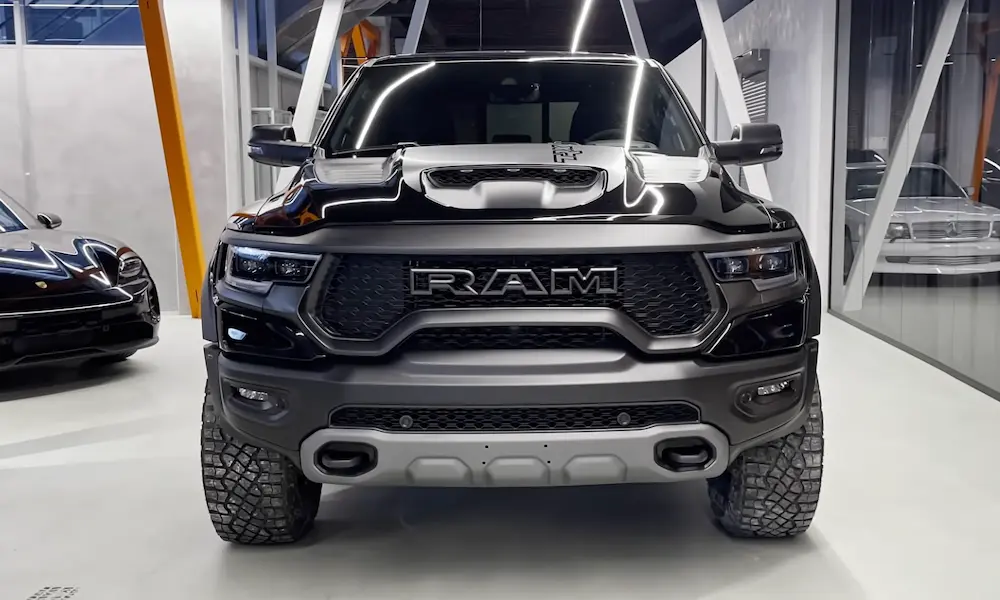
The TRX runs a supercharged 6.2L V8 producing 702 horsepower. It hits 0–60 in under four seconds and lands jumps on 35-inch 325/65R18 all-terrain tires. The forces through those wheel hubs during a desert run are enormous.
The torque spec? Still 130 ft-lbs. Same 6×139.7mm bolt pattern as every other 5th-gen DT truck. The fact that the standard spec handles TRX-level abuse is a solid testament to what properly tensioned M14x1.5 hardware can do. TRX and RHO owners just need to check torque more frequently given the extreme operational demands.
Lifted Trucks and Aftermarket Wheels: Why Torque Matters Even More
| Suspension Mod | Max Tire Fitment | Common Setup |
|---|---|---|
| Stock | 33-inch | 20×10 (-18 offset), 33×12.5R20 |
| 2–3″ Leveling Kit | Slim 35-inch | 20×10 (-12 offset), 275/65R20 |
| 4–6″ Full Lift | True 35-inch | 22×12 (-44 offset), 35×12.5R22 |
Bigger tires and aggressive negative offsets push the wheel’s mounting plane further from the hub. That extra distance multiplies the leverage applied to every stud during cornering. An under-torqued stud on a lifted truck with wide-offset wheels can shear in a fraction of the time it would on a stock rig.
If you’ve upgraded wheels, confirm your new wheels use the correct lug nut seating profile (cone or flanged), apply the matching torque spec, and re-torque after the first 50–100 miles without exception.
Frequently Asked Questions
What’s the difference between a torque stick and a manual torque wrench?
A torque stick is a spring-steel extension bar used with an impact wrench. It theoretically flexes to limit torque output, but its accuracy varies wildly depending on air pressure, gun power output, and socket weight. It’s fine for snugging nuts quickly. It’s not acceptable for final installation. A calibrated manual torque wrench applies smooth, steady, measurable force — the only tool you should use for final tightening on any Ram 1500 wheel.
Do wheel spacers change the required lug nut torque spec?
The torque number stays the same, but spacers double your work. The spacer bolts to the hub at factory spec. The wheel then bolts to the spacer. Both sets of fasteners need the full 50–100 mile re-torque protocol. To check the spacer’s inner lug nuts, you must remove the wheel entirely. People who skip this step are the reason wheel separations happen on modified trucks.
Does replacing brake rotors affect wheel torque?
Yes. New rotors often have a thin anti-corrosion coating on the hat surface. If it isn’t completely removed with solvent before installation, it burns or compresses under heat during the initial brake bed-in. That micro-thin loss of material immediately drops lug nut tension. Always clean new rotor hats thoroughly, and treat every rotor replacement as a mandatory re-torque situation after the first 50–100 miles.
Does extreme temperature affect the torquing process?
It does. Torquing wheels right after heavy towing or hard driving — when hubs and rotors are still hot — gives you an inaccurate reading. As those metals cool and contract, stud tension drops. You end up with under-torqued lug nuts that passed the wrench test. Always let the truck cool completely before doing a final torque check.
What socket size do I need for modern Ram 1500 lug nuts?
Modern Ram 1500s (2012+) use M14x1.5 metric lug nuts requiring a 22mm socket (or equivalent 7/8-inch). Pre-2012 trucks with 9/16×18 imperial threads typically use a 3/4-inch or 13/16-inch socket. If you’re dealing with swollen OEM lug nuts, even a 22mm may not fit — try a 23mm, or better yet, replace the set with solid one-piece aftermarket nuts.