That annoying “Shift to Park” message just killed your engine — or worse, it won’t let you turn off your car at all. This defect has hit millions of vehicles across GM, VW, Nissan, and more. Here’s what’s actually happening, which brands are affected, and how to get your money back.
What Does “Shift to Park” Actually Mean?
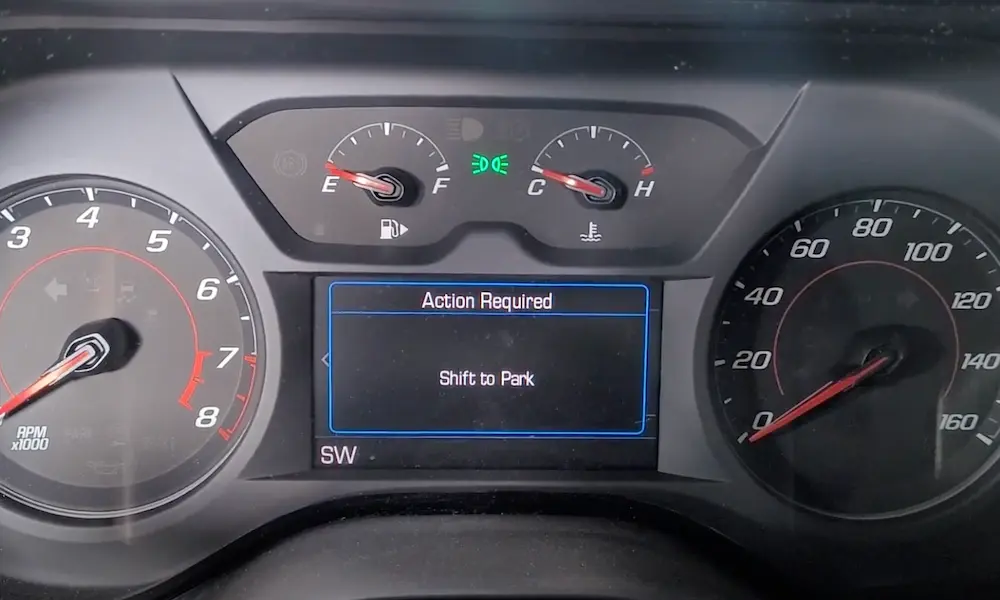
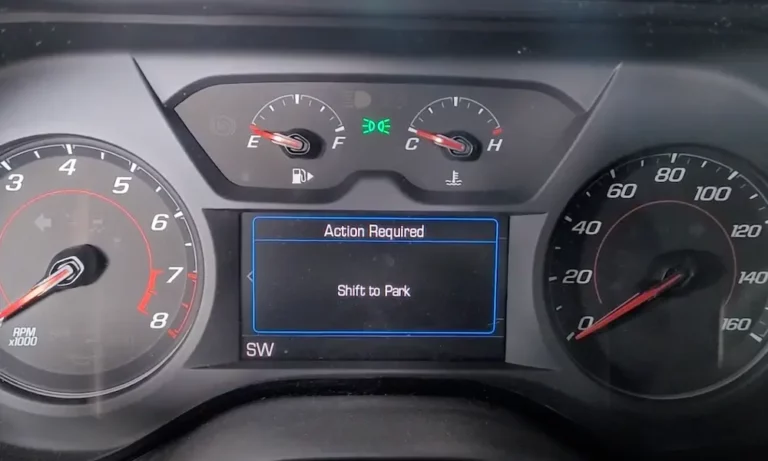
Your car thinks it’s not in Park — even when it clearly is.
Modern vehicles use tiny electronic switches inside the shifter to tell your car’s computer where the gear lever sits. When those switches fail, your car gets confused. It keeps thinking you’re in Drive or Neutral, even though the lever is firmly in Park.
The result? Your engine might stay running. Your doors might not lock. Your battery could drain overnight. And in some cases, you can’t shut the car off at all.
This isn’t a minor glitch. It’s a failure in the vehicle’s core safety architecture — and manufacturers have known about it for years.
Why This Happens: The Switch That Fails
Inside your shifter, there’s a micro-switch. It sends a signal to your Body Control Module (BCM) confirming you’ve parked. When that switch wears out, gets contaminated, or loses electrical contact, the signal breaks.
The BCM never gets the “we’re parked” message, so the vehicle stays in a half-awake state. This is directly tied to Federal Motor Vehicle Safety Standard (FMVSS) 114 — the federal rule that says your key must not be removable unless the transmission is locked in Park.
When the switch fails, that rule breaks. Your car becomes a rollaway risk.
GM’s Shift to Park Recall: The Biggest Problem
General Motors owns the biggest piece of this mess. The GM shift to park defect affects millions of vehicles across Chevrolet, Buick, and GMC — all sharing the same flawed shifter design.
Which GM Vehicles Are Affected?
| Model | Years Affected | Primary Fix | Reference |
|---|---|---|---|
| Chevrolet Malibu | 2016–2023 | Shifter Replacement / Jumper Harness | TSB 19-NA-206 / 23-NA-119 |
| Chevrolet Volt | 2016–2019 | Shifter Assembly Replacement | Voltec Warranty (Disputed) |
| Chevrolet Traverse | 2018–2022 | Special Coverage / Shifter Swap | TSB 19-NA-206 |
| Chevrolet Blazer | 2019–2023 | Assembly Replacement | Class Action Settlement |
| GMC Acadia | 2017–2021 | Connector & Harness Inspection | TSB PIT5616A |
| Buick Encore GX | 2020–2023 | Control Assembly Replacement | TSB 23-NA-119 |
How GM Has Responded (And Why It’s Not Enough)
GM’s initial Technical Service Bulletins told technicians to look for physical causes — like the shifter boot bunching up and blocking the lever. That was wrong. Later bulletins identified the real culprit: a faulty park switch inside the shifter assembly itself.
The official fix involves replacing the shifter assembly and installing an “In-line Shifter Wire Harness Jumper” (Part Number 84733196). The problem? Owners report the message comes right back — sometimes within weeks. That jumper isn’t fixing the root cause. It’s a band-aid.
The 2025 Class Action Settlement
Legal action caught up with GM, and a major class action settlement landed in 2025. Here’s what eligible owners can get:
| Benefit | Who Qualifies | What You Need |
|---|---|---|
| $500 Cash Payment | Owners in GM’s warranty database (or via claim form) | VIN, proof of ownership |
| $375 Reimbursement | Owners who paid out of pocket for a shift-to-park repair | Invoices, receipts, proof of payment |
The catch? The settlement has geographic restrictions. Many claims require the vehicle to have been purchased and repaired in Ohio or, for GMC Acadia owners, Tennessee. If you own a 2020–2023 Malibu, Trailblazer, or Buick Encore, you might be locked out of the settlement entirely — but lemon law protection may still apply if the defect persists through multiple repair attempts under warranty.
The Chevy Volt Warranty Dispute
Volt owners have a unique headache. GM’s Voltec warranty covers the hybrid system for 8 years or 100,000 miles. Some dealers honor it for shift-to-park repairs. Others refuse and push the standard 3-year bumper-to-bumper warranty instead. It’s a coin flip, and owners on Reddit have shared wildly different outcomes.
If your dealer denies coverage, escalate directly to GM corporate before paying a dime.
Volkswagen’s Shift to Park Recall (Campaign 37M2)
VW’s version of the problem has a different cause — and the company handled it differently too.
Over time, a chemical build-up of silicate forms on the shift lever micro-switch contacts. This acts like an insulating layer. The VW system reads an open switch as “car is in Park” — so you can pull your key out while the car is still in Drive or Reverse.
That’s a serious rollaway risk, and it’s a direct violation of FMVSS 114.
VW Models Covered by Recall 37M2
| Model | Years Affected | Repair | Action Type |
|---|---|---|---|
| Beetle | 2012–2019 | New switch + circuit board (Part: 5Q0713128A) | Safety Recall |
| Golf | 2011–2019 | New switch + circuit board (Part: 5Q0713128A) | Safety Recall |
| Jetta | 2011–2019 | New switch + circuit board (Part: 5Q0713128A) | Safety Recall |
VW installs an additional switch and circuit board to bypass the failing contacts. The repair is free of charge. If you own one of these vehicles and haven’t had the recall done, call your VW dealer today.
Nissan’s 2025 Kicks Recall: A Factory Error
Nissan’s shift to park recall (Campaign 24V-969) is different from every other brand on this list. The defect wasn’t caused by wear or a bad part. It was caused by a software setting left active after vehicles left the factory.
During shipping, Nissan disables the shift-to-park warning to prevent battery drain. That setting gets reactivated before the car ships to dealers — except for a small batch of 2025 Kicks SUVs, where a plant repair step was skipped.
In those vehicles, if you turn off the ignition while not in Park and open your door, no warning sounds. No alert. Nothing. The car just sits there, potentially rolling away.
The fix is simple: a BCM reconfiguration that reactivates the warning system. It’s free, and Nissan issued the recall quickly. If you own a 2025 Kicks, check your VIN at NHTSA.gov right now.
Stellantis and the Jeep 4xe Problem
Jeep’s shift to park message works differently in plug-in hybrid models. In the Wrangler 4xe and Grand Cherokee 4xe, the message sometimes signals a full system failure rather than a faulty switch.
What Actually Happens
When the Hybrid Control Processor (HCP) detects a critical error — like a torque calculation fault (DTC P06E4 or P061B) — it cuts power to protect the drivetrain. The “Shift to Park” message becomes the vehicle’s way of saying: stop everything, we have a problem.
Owners have reported the Wrangler 4xe going dead at highway speeds. No steering assist. No acceleration. Just a screen telling them to shift to Park.
| Stellantis Campaign | Affected Models | Main Symptom | Fix |
|---|---|---|---|
| TSB 21-017-24 | 2024 Wrangler 4xe | Propulsion Loss + STP Message | PCM/TCM/HCP Reprogramming |
| Recall 73C | 2022–26 Grand Cherokee PHEV | Sudden Loss of Drive Power | Software Update |
| Recall 68C | 2024 Wrangler 4xe | HV Battery Failure | Battery Replacement |
If your Jeep 4xe throws a shift-to-park message alongside a loss of power, that’s not a glitch — it’s the system telling you it’s failing. Get it to a dealer immediately and document every visit.
Ford: Software Fixes and a Massive Settlement
Ford’s shift to park issues come from two different eras of vehicles.
Older 2011–2016 Fiesta and 2012–2016 Focus models with the PowerShift dual-clutch transmission had a wider mechanical problem — lurching, slipping, and unexpected power loss — that routinely forced drivers to stop and shift to Park in unsafe spots. A massive class action settlement addressed those defects.
For newer models, Ford introduced an “exit strategy” — software that automatically applies the Electric Parking Brake when you shift to Park or try to leave the vehicle without securing it. It’s a smart solution that addresses the safety risk caused by failing park detection sensors.
What FMVSS 114 Actually Requires
Every shift to park recall connects back to the same federal standard. FMVSS 114 — first introduced in 1969 — requires that you can’t remove your key (or fully shut off a keyless car) unless the transmission is locked in Park.
The standard exists to prevent rollaways. When switches fail, that protection disappears. Safety researchers argue the standard hasn’t kept pace with push-button ignitions and electronic shifters, leaving a regulatory gap that manufacturers exploit through voluntary bulletins instead of mandatory recalls.
How to Protect Yourself and Get Your Money Back
Warranty Extensions You Need to Know About
| Manufacturer | Program | Coverage | Benefit |
|---|---|---|---|
| GM | Special Coverage | 2017–2018 Acadia | 10 years / 120,000 miles |
| VW | Safety Recall 37M2 | 2011–2019 Golf, Jetta, Beetle | Free repair, no mileage limit |
| Nissan | Safety Recall 24V-969 | 2025 Kicks | Free BCM reconfiguration |
| Chevy Volt | Voltec Warranty | 2016–2019 Volt | 8 years / 100,000 miles (contested) |
Steps to Take Right Now
Repairs for this defect run $500 to $1,000 without warranty coverage. Don’t pay that without exhausting every option first.
- Record the warning. Film your dashboard showing the shift-to-park message while the lever is physically in Park. This is your strongest evidence.
- Keep every repair order. Make sure the technician writes “Shift to Park message displayed” explicitly on the paperwork.
- Check your VIN. Go to NHTSA.gov and enter your VIN. See if there’s an open recall before you pay anything.
- Push for lemon law protection. If the defect returns after multiple repairs under warranty, you may qualify for a buyback. In California, a persistent safety defect that can’t be fixed in a reasonable number of attempts triggers a mandatory manufacturer buyback.
- Contact a lemon law attorney. Many work on contingency — you pay nothing unless they win.
The shift to park recall situation is still evolving. New lawsuits get filed. Settlement windows open and close. The best move you can make right now is to document everything and act fast before your window closes.