Subaru’s boxer engine is clever, unique, and genuinely fun to drive. It’s also known for some frustrating mechanical issues that have cost owners thousands of dollars in repairs. Whether you own an older EJ-powered Outback or a newer FB-equipped Forester, this guide covers the most common Subaru engine problems, what causes them, and how to protect yourself.
Why the Boxer Engine Creates Unique Problems
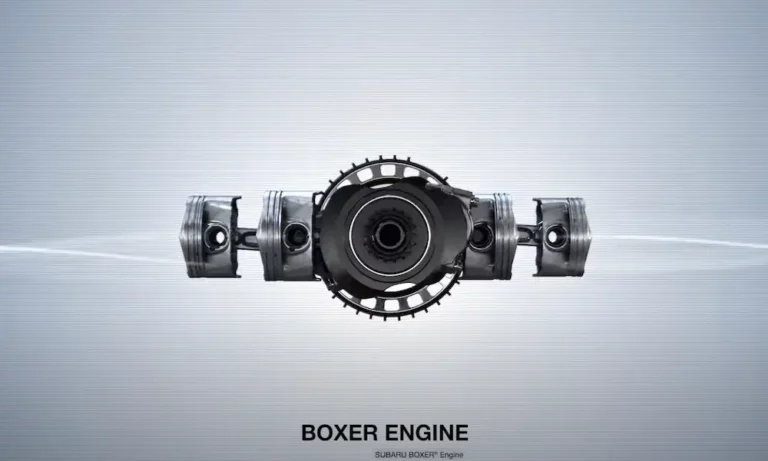
The boxer engine lays its cylinders flat, facing outward at 180 degrees. That’s great for a low center of gravity and crash safety — in a frontal collision, the engine slides beneath the cabin instead of into it.
But here’s the trade-off: gravity.
In a conventional upright engine, oil and coolant drain away from the head gaskets when you shut the engine off. In a boxer, those fluids sit against the gaskets constantly. That means the seals are always soaking in fluid — and if that coolant turns acidic from neglect, it eats away at the gasket material from the outside in.
Add in the thermal expansion cycles from hot summers and cold winters, and you’ve got a recipe for seal failures that Subaru has spent decades trying to solve.
The EJ Engine and the Head Gasket Problem
If you’ve heard one thing about Subaru engine problems, it’s probably this: head gaskets. The EJ engine family (produced from 1989 through the early 2020s) earned a notorious reputation here, split into two distinct phases.
Phase 1: Internal Leaks (1996–1999)
The first-generation 2.5-liter EJ engines used a composite head gasket — a steel shim coated in graphite. Under heat and pressure, that graphite coating would delaminate or burn away, creating an internal leak.
Internal leaks are sneaky. There’s nothing dripping on your driveway. Instead, combustion gases enter the cooling system, create air pockets, and cause sudden, severe overheating — often during a long highway drive. You might smell something sweet from the exhaust or notice an oily film in the coolant overflow bottle before anything dramatic happens.
Phase 2: External Seepage (1999–2011)
Subaru fixed the internal leak problem in 1999 with a redesign. Problem solved, right? Not quite. The new design shifted the failure point to external oil and coolant leaks, especially on the lower portion of the cylinder heads — exactly where gravity-driven fluid pooling is worst.
These Phase 2 external leaks were manageable if caught early. But if oil and coolant started mixing at the gasket interface, the resulting milky sludge would circulate through the engine. That contaminated fluid has terrible lubrication properties, leading to accelerated bearing wear and potentially a seized engine.
Head Gasket Warning Signs at a Glance
| Symptom | What to Check | What It Means |
|---|---|---|
| External oil seepage | Residue below cylinder heads | Early gasket degradation |
| Sweet exhaust smell | Noticeable on cold starts | Coolant entering combustion chamber |
| Oily residue in coolant bottle | Inspect the overflow tank | Oil mixing with coolant |
| Blue exhaust smoke | Visible on acceleration | Oil burning in the combustion chamber |
| Milky oil on dipstick | Check the oil fill cap | Coolant-to-oil contamination — high risk |
The FB Engine’s Oil Consumption Nightmare
Introduced around 2011, the FB engine family was supposed to be a fresh start. Better fuel economy, lower emissions, and a timing chain instead of a belt. Owners were excited.
Then the oil disappearing act started.
Why the FB Engine Burns Oil
The culprit was the piston ring design. To reduce friction and improve fuel efficiency ratings, Subaru used “low-tension” piston rings. These rings don’t press as firmly against the cylinder walls. If the rings or cylinder walls were even slightly out of spec, oil slipped past them and burned during combustion.
The switch to 0W-20 synthetic oil made things worse. It’s great for cold starts and reducing drag, but its low viscosity makes it much easier for oil to bypass compromised rings. Some owners reported consuming more than a quart every 1,000 to 1,200 miles — far above what any modern engine should use.
The Class-Action Settlement
The Yaegar v. Subaru of America class-action lawsuit resulted in real benefits for affected owners. The settlement extended the powertrain warranty to 8 years or 100,000 miles and covered a free oil consumption test at dealerships. Vehicles consuming more than one-third of a quart per 1,200 miles qualified for a short block replacement with improved piston rings.
Here are the models and years covered:
| Model | Affected Years | Key VIN Threshold |
|---|---|---|
| Forester | 2011–2015 | Below VIN *529004 (Auto) |
| Impreza | 2012–2015 | Below VIN *033336 (4-door) |
| Crosstrek | 2013–2015 | Below VIN *856139 (Auto) |
| Legacy | 2013–2014 | Below VIN *048086 (Auto) |
| Outback | 2013–2014 | Below VIN *321435 (Auto) |
If your vehicle falls within these ranges, check whether your warranty extension is still active.
Rod Bearing Failure and the Oil Pickup Tube Problem
This one is particularly nasty because it can destroy an engine fast.
The EJ engine’s factory oil pickup tube uses thin-wall tubing joined by a brazed connection. Over time, thermal cycling and vibration crack that brazed joint. Once cracked, the oil pump sucks air along with the oil. Aerated oil can’t maintain the pressurized film between the bearings and the crankshaft, and bearings wear out rapidly.
The warning sound is rod knock — a deep, heavy metallic hammering from the bottom of the engine that gets worse as the engine warms up. Unlike a light valve tick from the top end, rod knock from deep in the block means you need to stop driving immediately. This isn’t a “keep an eye on it” situation.
Piston Ringland Failure in WRX and STI Models
Turbocharged Subaru models like the EJ257 (STI) and the FA20DIT (WRX) carry an additional risk: ringland failure.
The ringland is the part of the piston that holds the rings in place. Excessive heat, pressure, or engine knock — often caused by running low-octane fuel or making engine modifications without a proper tune — can fracture these cast aluminum lands. You’ll lose compression, burn oil heavily, and likely notice “blow-by” smoke when you open the oil fill cap with the engine running.
Prevention is straightforward:
- Always run 91 or 93 octane fuel
- Never modify the engine without a proper ECU tune
- Monitor intake air temperatures, especially in hot weather
Cam Carrier Seepage on Modern FB and FA Engines
Modern Subaru engines moved away from traditional gaskets for many sealing surfaces. Instead, they rely on RTV silicone sealant — particularly around the cam carriers, the plates that hold the camshafts in place.
Over time, that RTV sealant can develop gaps, and oil starts seeping out. The repair isn’t simple. Because the cam carrier is structural, fixing it means pulling the timing chain, removing the camshafts, and often pulling the entire engine. A typical cam carrier reseal can cost several thousand dollars in labor alone.
Subaru has issued Technical Service Bulletins addressing this issue. TSB 02-131-12R covers 2012–2019 Foresters and Imprezas with FB engines, recommending inspection of specific areas and the use of ThreeBond 1280B sealant. TSB 02-136-12R addresses 2013–2020 BRZ models with FA engines.
There’s also a safety recall (18V-772) covering 2012–2014 Impreza, Crosstrek, and BRZ models for valve spring fracture risk — a full replacement taking 15 to 20 hours of labor.
What Engine Noises Actually Mean
Not every Subaru engine sound is a disaster. Here’s how to tell the difference:
| Sound | Likely Cause | Urgency |
|---|---|---|
| High-pitched rhythmic tapping | Fuel injectors | Normal — it’s direct injection |
| Light tick-tick from the top end | Valve lifters | Low to medium — check oil level first |
| Deep metallic hammering from the bottom | Rod bearings | Critical — stop driving now |
| Rhythmic clicking that fades when warm | Piston slap | Low — pistons expanding to fit the bore |
| Squealing on startup or acceleration | Serpentine belt | Medium — inspect belt and tensioner |
How to Keep Your Subaru Engine Healthy
Most Subaru engine problems are preventable with the right maintenance habits.
Change your oil more often. The factory recommends 6,000-mile intervals, but many enthusiasts and technicians recommend 3,000 to 4,000 miles, especially for turbocharged models. Fresh oil maintains the correct viscosity to protect sensitive rod bearings.
Use the right coolant and change it on schedule. Older EJ engines used green inorganic coolant (30,000-mile service intervals). Modern Subaru engines use Subaru Super Coolant (blue), rated for up to 10 years or 137,000 miles. Mixing coolant types creates sludge that can block your radiator and heater core.
Skip the Cooling System Conditioner in newer engines. This stop-leak additive was designed for EJ head gaskets. In modern FA and FB engines, it can clog the radiator and heater core over time. It doesn’t belong in your newer Subaru.
Use a quality oil filter. In the Subaru community, filters made by Tokyo Roki are consistently recommended over generic alternatives. The bypass valve design is better suited to the high flow demands of the boxer engine’s oil pump.
Install an Air-Oil Separator if you drive a turbo model. The horizontal layout naturally promotes oil vapor entering the intake manifold. An Air-Oil Separator captures that vapor before it coats your intake valves with carbon buildup.
The 2025–2026 Hybrid Recall You Should Know About
Subaru’s newest problem involves its hybrid lineup. In early 2026, Subaru recalled nearly 70,000 vehicles — specifically the 2025 Forester Hybrid and 2026 Crosstrek Hybrid — over a faulty fuel filler cap seal.
When the tank is near full and ambient temperatures rise, fuel expands. The compromised seal allows liquid fuel or vapors to leak from the filler neck, creating a fire risk if an ignition source is nearby. Subaru has advised affected owners to park outdoors, away from structures, and keep their fuel level below 50% until the dealership installs a new O-ring gasket.
If you own either of these models, contact your dealer to schedule the fix as soon as possible. This one isn’t worth waiting on.
The Bottom Line on Subaru Engine Problems
Subaru’s boxer engine has real strengths — all-wheel drive capability, a low center of gravity, and solid crash safety. But it demands more attention than a conventional engine. The horizontal layout, gravity-driven fluid exposure, and precision sealing requirements mean that skipping maintenance creates problems quickly.
The good news: most of these failures are predictable. You know which model years and engine families carry the most risk. You know what sounds to listen for and what fluids to check. Stay on top of your oil changes, use the right coolant, and pay attention to early warning signs — and your Subaru should give you plenty of reliable miles.