If you own a Kia built between 2011 and 2022, your car might be on a thief’s shortlist. A missing security chip turned millions of Kias into easy targets — and a viral TikTok trend made things dramatically worse. Here’s exactly which Kia models are being stolen, why it happened, and what you can do right now to protect yourself.
The Real Reason So Many Kias Got Stolen
Most car manufacturers added engine immobilizers as standard equipment in the late 1990s. An immobilizer uses a tiny transponder chip in your key to send a security code to your car’s engine control unit. No matching code? The engine won’t start — period.
Kia skipped this technology on a huge chunk of their U.S. lineup.
According to Highway Loss Data Institute (HLDI) research, by 2015 roughly 96% of other manufacturers’ vehicles had immobilizers as standard. Only 26% of Kia and Hyundai’s combined U.S. fleet did. That left millions of cars secured by nothing more than a mechanical key — which, it turns out, is surprisingly easy to bypass.
Which Kia Models Are Being Stolen Most?
The theft problem isn’t random. It targets specific models with twist-to-start ignitions. Vehicles with push-button start and smart key systems were largely immune because those systems need an electronic signal to fire the engine.
Here’s the full breakdown of the most vulnerable Kia models:
| Kia Model | Vulnerable Years | Notes |
|---|---|---|
| Kia Sportage | 2011–2022 | High theft frequency throughout the full production window |
| Kia Optima | 2011–2020 | Topped theft charts for mid-sized sedans nationwide |
| Kia Sorento | 2011–2022 | Heavily targeted in Midwest cities |
| Kia Forte | 2011–2021 | Frequent target in metro areas |
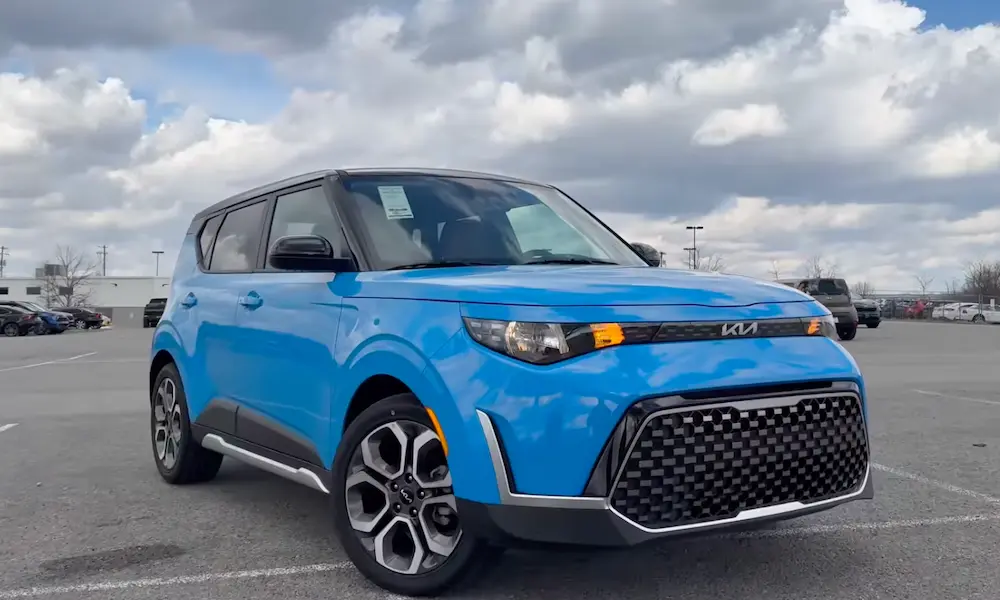
| Kia Soul | 2011–2022 | Distinctive shape made it an easy pick for joyriders |
| Kia Rio | 2012–2021 | Base trims rarely had immobilizers |
| Kia Sedona | 2011–2021 | Included in both software and hardware fix programs |
| Kia Seltos | 2021–2022 | Early twist-to-start trims remain susceptible |
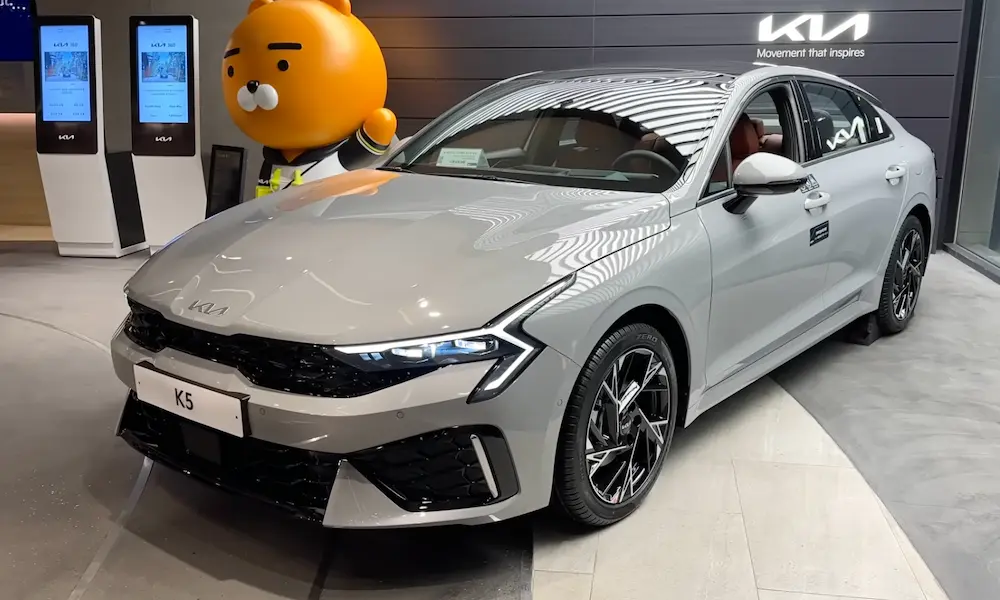
| Kia K5 | 2021–2022 | Some early 2022 models still lacked factory immobilizers |
Yes, some 2022 models made the list. Kia started adding immobilizers during 2021, but a batch of early-release 2022 vehicles still used the older ignition setup. That’s why several 2022 models ended up in recalls and settlement programs.
How Thieves Actually Stole These Cars
The method is almost embarrassingly low-tech. No hacking, no electronics — just physical force and a USB cable.
Here’s how The Drive broke down the technique:
- Strip the steering column — Remove the plastic cowl to expose the ignition assembly
- Punch out the lock cylinder — Physically remove the key slot
- Find the metal nub — A small rectangular piece now controls the ignition switch
- Insert a USB-A plug — The internal dimensions fit perfectly over the nub
- Turn it like a key — The engine starts, and the steering lock releases
The whole thing takes under 60 seconds. Because no transponder signal is required, the car starts without hesitation. That’s it. No special tools, no technical skills.
TikTok Turned a Flaw Into a Crisis
A local security problem became a national epidemic the moment it went viral.
The “Kia Challenge” exploded on TikTok in mid-2022. Teenagers filmed themselves stealing cars for social clout — not money. The National Insurance Crime Bureau (NICB) flagged the trend immediately, but the algorithm had already done its damage.
The numbers tell the story:
| Metric | Pre-Viral (2020) | Post-Viral (2022) |
|---|---|---|
| Kia/Hyundai share of thefts in St. Paul, MN | 3.8% | 30.5% |
| Total stolen vehicles (Twin Cities) | Under 400 | Over 3,200 |
| Los Angeles theft increase | Baseline | 85% |
| Milwaukee theft increase | Baseline | 200%+ |
In Minneapolis, the 2022 surge linked to these thefts was connected to five homicides, 13 shootings, and 36 robberies. Many of the perpetrators weren’t even old enough to hold a driver’s license.
The Theft Data Gets Worse Before It Gets Better
HLDI’s research tracked just how bad it got. By the second half of 2023, theft claim frequency for vulnerable Kia models hit 11.7 claims per 1,000 insured vehicle years. The national average for everyone else? About two.
| Period | Kia/Hyundai Frequency | Other Manufacturers | Ratio |
|---|---|---|---|
| 1st Half 2020 | 1.1 | 1.1 | 1.0x |
| 1st Half 2022 | 2.5 | 1.4 | 1.8x |
| 1st Half 2023 | 11.2 | 1.6 | 7.0x |
| 2nd Half 2023 | 11.7 | 1.4 | 8.3x |
| December 2024 (Kia only) | 10.0 | Under 2.0 | 5.0x |
Even after software fixes rolled out in 2023, theft rates stayed high. Why? Because by late 2024, only 40% of eligible Kia vehicles had actually received the update.
What Happened to Kia Insurance Coverage?
The theft surge didn’t just hurt car owners — it broke the insurance market for these vehicles.
By early 2023, State Farm stopped writing new policies for Kia models like the Forte, Soul, and Sportage (model years 2015–2021) in multiple states including Georgia, Louisiana, Oregon, Washington, and Pennsylvania. Progressive reportedly quoted some owners as much as $350 per month for cars that previously cost a fraction of that to insure.
Older vehicles normally get cheaper to insure as they age. For these Kias, the opposite happened — a beat-up 2016 Kia Soul cost more to insure than a brand new car.
The Fix: Software Update First, Then a Zinc Sleeve
Phase 1 — The Software Update
Kia launched a free anti-theft software update in early 2023. The update does three things:
- Adds an ignition kill switch — the engine won’t start without a physical key inserted
- Extends the alarm duration from 30 seconds to a full minute
- Provides a window sticker alerting thieves that the USB hack won’t work
There’s a catch: you have to lock the car using your key fob, not the manual lock, for the kill switch to activate. Forget to use the fob? The protection doesn’t kick in.
HLDI’s May 2025 analysis found the update reduced whole-vehicle theft by about 52% — but vandalism claims actually increased by 51%, as frustrated thieves smashed windows on cars they couldn’t start.
Phase 2 — The Zinc Sleeve Hardware Fix
The software update was good but not enough. Kia and Hyundai developed a physical solution: a zinc-reinforced ignition cylinder protector (commonly called a “Zinc Sleeve”).
The zinc sleeve is epoxied directly onto the lock cylinder housing. It creates a hardened metal barrier that makes it extremely difficult to punch out the ignition cylinder — which is the first step of the USB hack. No punch-out, no theft.
Under a December 2025 multistate settlement, Kia and Hyundai agreed to install zinc sleeves on more than 4 million vehicles at no cost to owners. Notices went out in early 2026, with retrofits scheduled for completion by March 2027 — part of a $500 million remediation program.
What You Can Claim If Your Kia Was Stolen
A $200 million class-action settlement covers roughly 9 million U.S. owners. Here’s what you can get:
| Loss Type | Maximum Reimbursement |
|---|---|
| Total vehicle loss | 60% of Black Book Value (plus taxes and registration) |
| Attempted theft damage | $3,375 or 33% of vehicle value — whichever is greater |
| Insurance deductibles | $375 per incident |
| Other out-of-pocket costs | $250 per incident (towing, tickets, transportation) |
| Aftermarket security devices | $300 for software-ineligible vehicles |
One important date: if you installed the software update (or had an appointment scheduled) and your car was still stolen or damaged on or after April 29, 2025, you’re eligible for additional restitution under the multistate attorney general settlement.
Aftermarket Security Options While You Wait for the Fix
Don’t want to wait around? These options add real protection right now.
| Security Device | Best For | Key Feature |
|---|---|---|
| Compustar CS7900-AS | Full protection | 3,000-ft range, shock sensors, starter-kill relay |
| Viper 3105V | Budget shoppers | Failsafe starter kill, basic keyless entry |
| Bouncie OBD Tracker | Recovery focus | Real-time GPS via smartphone |
| The Club 3000 | Visual deterrence | Hardened steel steering wheel lock |
| Apple AirTag | Low-cost backup | Hidden recovery tracker |
The most effective systems include a starter-kill relay — an electronic switch that cuts power to the starter motor. Even if someone gets into the ignition, the car won’t start. Pair that with a visible deterrent like The Club, and most thieves will move on to an easier target.
Where Things Stand in 2026
Auto theft fell 23% in 2025 compared to 2024. The USB hack era is clearly winding down. But it’s not fully over — many thieves still target Kias on sight, even fully retrofitted ones, leading to ongoing vandalism claims.
The new threat on the horizon is more sophisticated:
- Relay attacks — Amplifying your key fob’s signal from inside your house to unlock the car in your driveway
- OBD port hacking — Plugging into the diagnostic port to program unauthorized keys
- CAN bus injection — Attacking the car’s internal communications network to fake a valid start command
The good news for 2023-and-newer Kia owners: models like the EV6 and EV9 use advanced digital authentication with over-the-air security updates. Their theft claim frequencies sit well below the national average.
If you own a 2011–2022 Kia Sportage, Soul, Forte, Optima, Sorento, Rio, Sedona, Seltos, or K5 — check your eligibility for the free software update at the Kia Customer Care Center and watch for your zinc sleeve installation notice. Both fixes are free, and both reduce your risk significantly.