You’ve noticed the check engine light in your Subaru, your EyeSight system isn’t working, and your heat isn’t as warm as it should be. These aren’t random issues – they might point to a failing thermo control valve. While Subaru hasn’t issued an official “recall,” they’ve taken significant action through an extended warranty program that affects thousands of vehicles.
Let’s dive into what this means for you, whether you can get reimbursed for repairs, and what steps you should take next.
What is the Subaru Thermo Control Valve Issue?
The thermo control valve (TCV) in affected Subaru models is an electronically-controlled component that regulates engine coolant flow. Unlike traditional mechanical thermostats, this system uses plastic components and electronic sensors to provide more precise temperature control.
Unfortunately, the design has proven problematic. The plastic housing tends to crack, allowing coolant vapor to damage the electronic sensors inside. When this happens, the valve can fail in either the open or closed position, triggering multiple error codes and forcing your vehicle into a protective “limp mode.”
The most common diagnostic trouble codes associated with TCV failure include:
- P2682
- P26A3
- P26A5
- P0128
Affected Vehicles and Coverage Details
Subaru has extended warranty coverage for thermo control valve issues through Technical Service Bulletin 09-119-24. This isn’t technically a “recall” but works similarly for affected owners.
Affected Models:
- 2019-2021 Forester
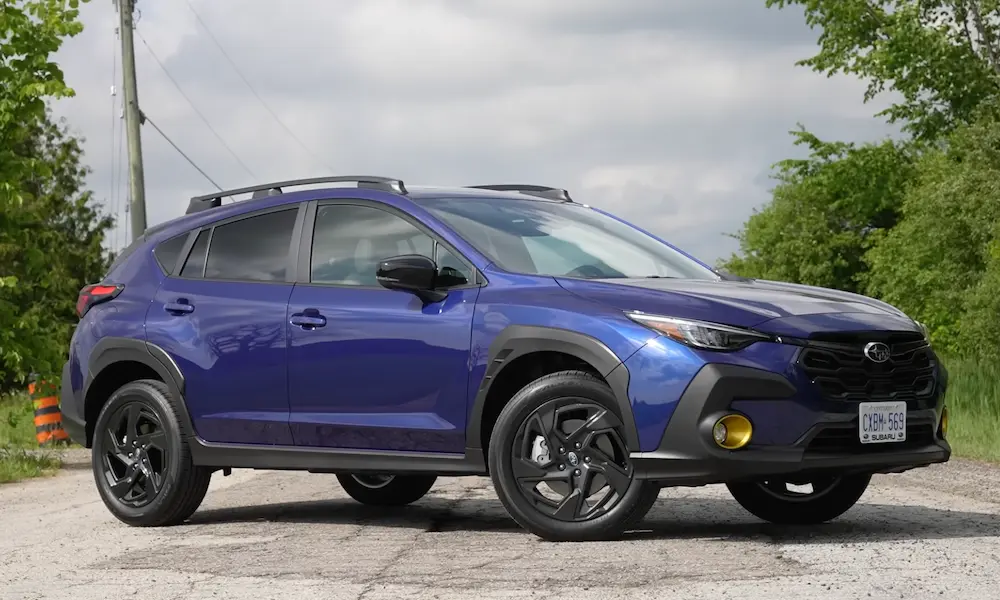
- 2021 Crosstrek
- 2020-2022 Legacy and Outback
These vehicles use part numbers 21319AA010 and 21319AA040 for the thermo control valve assembly.
Extended Warranty Coverage:
Subaru has dramatically increased the warranty coverage from the original 5 years/60,000 miles to an impressive 15 years/150,000 miles. For vehicles certified in PZEV (Partial Zero Emission Vehicle) states, the original coverage was 7 years/70,000 miles before the extension.
This extended coverage applies retroactively, meaning if you’ve already paid for repairs, you might be eligible for reimbursement – even if your original warranty had expired.
Warning Signs Your Thermo Control Valve is Failing
If your Subaru’s thermo control valve is failing, you’ll likely notice several symptoms:
- Check Engine Light – This will typically be the first indication something’s wrong.
- Disabled EyeSight System – When the TCV fails, your car’s safety systems shut down, including pre-collision braking, lane keep assist, and adaptive cruise control.
- No Cabin Heat – The engine can’t reach proper operating temperature, resulting in cold or lukewarm air from your vents.
- Blue Temperature Light Stays On – This indicates your engine isn’t reaching the correct operating temperature.
- Sport Mode Disabled – Your vehicle will disable certain performance features to protect the engine.
- Poor Fuel Economy – Without proper temperature regulation, your engine runs less efficiently.
- Potential Overheating – If the valve fails in the closed position (less common), your engine could overheat, requiring immediate attention.
The Evolution of the TCV Problem
The thermo control valve issue didn’t appear overnight. Here’s how the situation developed:
2019: Subaru introduces the electronic TCV system in new models to improve efficiency and emissions.
2020: Widespread failures begin occurring, prompting numerous complaints to Subaru and NHTSA.
February 2022: Subaru issues Technical Service Bulletin 09-80-21, announcing a design change to address the failures.
November 2023: A class action lawsuit (Austermann et al. v. Subaru of America, Inc.) is filed, alleging Subaru knew about the defect since at least 2021 but failed to adequately address it.
April 2024: Subaru implements the comprehensive warranty extension through TSB 09-119-24, covering affected vehicles for 15 years/150,000 miles.
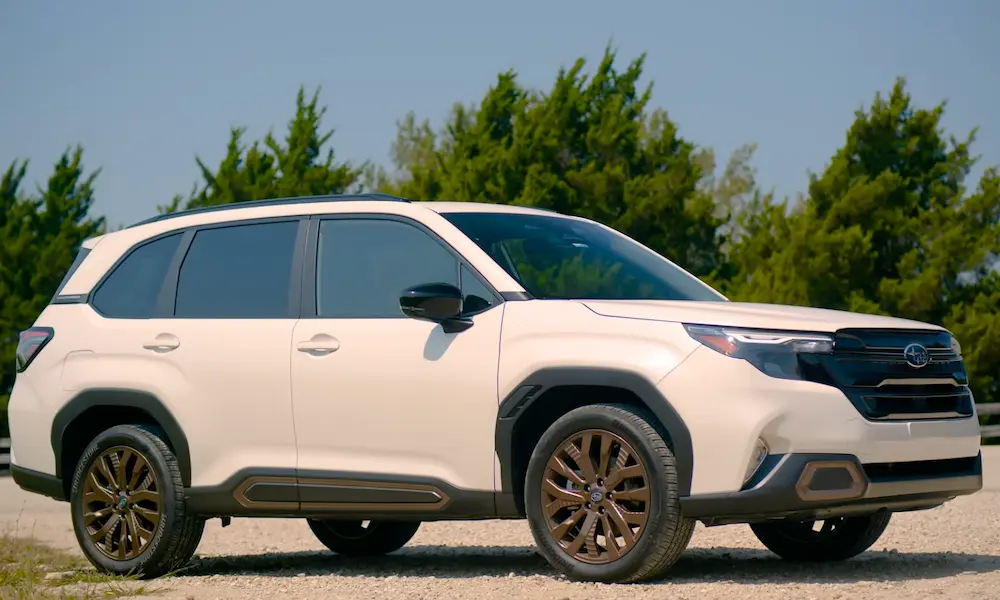
2025 Models: Subaru has abandoned the electronic TCV design in the 2025 Forester, returning to a traditional mechanical thermostat – a tacit acknowledgment that the electronic design was problematic.
How to Get Your TCV Repaired Under Warranty
If you’re experiencing symptoms of TCV failure, here’s what to do:
- Visit an authorized Subaru dealership – They’ll perform diagnostic tests to confirm the issue is related to the thermo control valve.
- Provide your vehicle information – The dealer will check your VIN to verify coverage under the extended warranty program.
- Authorized repair – If covered, the dealer will replace your faulty TCV with the improved design (part number 21319AA040) at no cost to you.
The repair itself is quite involved, as the TCV is located under the intake manifold. The procedure typically takes 2-3 hours for an experienced technician.
Already Paid for Repairs? Here’s How to Get Reimbursed
If you previously paid for TCV repairs out-of-pocket, Subaru has established a reimbursement program:
Eligibility Requirements:
- Your vehicle is one of the affected models
- You paid for TCV repairs after your original warranty expired but before the announcement of the warranty extension
- You have documentation of the repairs
How to Apply:
- Complete an online claim form at subaruclaims.autosolutionteam.com
- Provide required documentation:
- Repair invoice showing VIN, repair costs, date, and facility
- Proof of payment (canceled checks, bank statements, or credit card receipts)
Alternatively, mail your claim:
Thermal Control Valve Claims Department
P.O. Box 9103
Camden, NJ 08103
Subaru typically processes reimbursement claims within 45 days. If you received partial coverage from an extended warranty, you’re eligible for reimbursement of the uncovered portion.
Technical Improvements to the TCV Design
Subaru has made several improvements to address the reliability issues with the thermo control valve:
Original Design (Part #21319AA010):
- Plastic housing prone to cracking
- Limited waterproofing for electronic sensors
- Vulnerable to coolant vapor intrusion
Improved Design (Part #21319AA040):
- Enhanced stainless steel internal shaft for improved durability
- Advanced waterproofing for sensor components
- Revised resin molding process to reduce housing cracking
All replacement parts currently supplied through Subaru’s service network use the improved design. However, for the 2025 Forester, Subaru has abandoned the electronic TCV entirely in favor of a traditional mechanical thermostat.
The Legal Battle Over Thermo Control Valve Failures
The ongoing class action lawsuit represents significant legal pressure on Subaru regarding this issue. Filed in the U.S. District Court for the District of New Jersey, the lawsuit seeks class certification for owners of affected vehicles.
Key Claims in the Lawsuit:
- Violations of the Magnuson-Moss Warranty Act
- State consumer fraud violations
- Unfair competition law violations
The plaintiffs allege Subaru engaged in deceptive practices by failing to disclose the known defect and avoiding warranty obligations. They seek remedies including:
- A formal recall or replacement program
- Vehicle buybacks
- Restitution for repair costs
- Attorney fees
The case remains active as of late 2024, with potential implications for thousands of affected vehicle owners.
Key Differences Between a Recall and Warranty Extension
Many owners refer to the TCV issue as a “recall,” but there are important distinctions:
| Safety Recall | Warranty Extension |
|---|---|
| Mandated by NHTSA for safety-critical issues | Voluntary action by manufacturer |
| Requires notification of all affected owners | Often communicated through dealer networks |
| No time or mileage limits | Specific time and mileage limits apply |
| Must be performed free of charge | Free within specified limits |
| Public database tracking | Limited public documentation |
While not a formal safety recall, Subaru’s warranty extension is unusually comprehensive, extending coverage to 15 years or 150,000 miles – well beyond industry standards for similar issues.
Preventing Future TCV Issues
While the improved TCV design is more reliable, some owners may want to take additional preventive measures:
- Regular Coolant Maintenance – Follow Subaru’s recommended coolant change intervals and use only Subaru Super Coolant or equivalent.
- Address Check Engine Lights Promptly – Early intervention can prevent cascading failures.
- Consider Aftermarket Solutions – Some independent shops offer modifications to install traditional mechanical thermostats in place of the electronic TCV, though this may affect warranty coverage on other components.
- Monitor Operating Temperature – Keep an eye on your temperature gauge during regular driving.
For 2025 model year vehicles, Subaru has already made the decision to return to traditional mechanical thermostats, effectively acknowledging the inherent reliability issues with the electronic TCV design.
What to Consider When Buying a Used Subaru
If you’re shopping for a used Subaru from the affected model years, the TCV issue should factor into your decision:
- Check Service Records – Look for documentation showing if the TCV has already been replaced with the improved design.
- Vehicle History Report – Check for related repair entries that might indicate TCV failure.
- Pre-Purchase Inspection – Have a knowledgeable mechanic specifically check the TCV and cooling system.
- Warranty Status – Verify the vehicle falls within the extended warranty period (15 years/150,000 miles from original purchase).
- Diagnostic Scan – Have the vehicle computer scanned for any stored codes related to the TCV (P2682, P26A3, P26A5, P0128).
The extended warranty provides significant protection for buyers, but the potential inconvenience of failure should still be considered.
Subaru’s Response and Future Direction
Subaru’s response to the TCV issue has evolved significantly:
Initially, the company issued technical service bulletins with design improvements but didn’t extend warranty coverage. As complaints mounted and legal action began, Subaru implemented the comprehensive warranty extension program.
For future models, Subaru has made the decisive shift back to mechanical thermostats in the 2025 Forester, signaling the company’s recognition that the electronic TCV concept had fundamental reliability issues.
This pattern reflects how manufacturers typically respond to significant design problems:
- Initial design improvements
- Extended warranty coverage
- Fundamental redesign for future models
Taking Action as an Affected Owner
If you own an affected Subaru model, here’s what you should do now:
- Check for Symptoms – Be alert for any signs of TCV failure, including check engine lights, disabled EyeSight systems, or heating issues.
- Document Everything – Keep detailed records of any repairs, symptoms, or communications with dealers regarding the TCV.
- Get Diagnostic Confirmation – If you suspect an issue, have your vehicle properly diagnosed at an authorized Subaru dealership.
- Apply for Reimbursement – If you’ve already paid for TCV repairs, submit your claim through Subaru’s reimbursement program.
- Stay Informed – Monitor updates on the class action lawsuit and any additional coverage Subaru may offer.
The thermo control valve issue highlights the complexity of modern automotive systems, where electronic components can sometimes prove less reliable than the mechanical systems they replace. Subaru’s extensive warranty extension provides important protection, but affected owners should remain vigilant about symptoms and their rights under the program.