Got an SRS warning light and a “PASSENGER AIR BAG OFF” message staring back at you? The Toyota B1650 code is almost certainly the culprit. This guide breaks down exactly what’s happening, what caused it, and what it takes to fix it — so keep reading.
What Is the Toyota B1650 Code?
The Toyota B1650 is a Diagnostic Trouble Code (DTC) that flags a malfunction in the Occupant Classification System (OCS). In plain English? Your car can’t figure out who (or what) is sitting in the front passenger seat.
That matters more than you might think. The OCS feeds data directly to your airbag control module. When it fails, your vehicle can’t make smart decisions about whether to deploy the passenger-side airbag — so it shuts it off entirely as a precaution.
The official Toyota RAV4 repair manual confirms: B1650 sets when the Center Airbag Sensor Assembly loses communication with the OCS ECU for two seconds or more.
Which Toyota Models Get the B1650 Code?
This code appears across a wide range of Toyota and Lexus vehicles. You’ll commonly see it on:
- Trucks & SUVs: Tacoma, Tundra, 4Runner, FJ Cruiser, RAV4, Highlander
- Sedans & hybrids: Camry, Corolla, Prius, Avalon
- Luxury models: Lexus RX350, Lexus LX
If your vehicle falls between 2007 and 2024, there’s a real chance your platform uses one of the sensor types listed below.
How the Occupant Classification System Actually Works
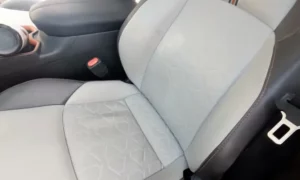
Your passenger seat isn’t just a seat. It’s a sensor platform. The OCS uses one of several detection technologies depending on your model year and vehicle type.
| Sensor Type | How It Works | Common Models |
|---|---|---|
| Load Cell Array | Four strain gauges measure weight at each seat corner | Tacoma, Tundra, 4Runner, FJ Cruiser |
| Gel-Filled Bladder | Silicone mat with pressure transducer reads fluid displacement | Early RAV4, Camry, Corolla |
| Capacitive Strips | Metal strips detect changes in electric field from human body | Prius, late hybrid platforms |
| Force-Sensing Resistor | Pressure mat changes resistance based on occupant profile | Various sedans and hybrid models |
The load cell array system can even calculate your center of gravity — handy for detecting a leaning occupant. The capacitive strip system, on the other hand, distinguishes a human from a heavy gym bag based on dielectric properties.
Both the OCS ECU (under the seat) and the Center Airbag Sensor Assembly (the master controller) must talk to each other via CAN or LIN bus. Break that communication, and B1650 fires.
What Triggers the Toyota B1650 Code?
B1650 is a system-level fault. The master airbag controller detected something wrong in the OCS circuit. Here are the four electrical conditions that set it:
- Line short — Signal lines FSR+ and FSR- are directly connected
- Open circuit — A wire break somewhere in the seat harness
- Short to ground — A signal wire contacts the seat frame or chassis
- Short to B+ — A pinched wire touching positive battery voltage
Beyond electrical faults, sub-codes stored in the OCS ECU point to the specific location of the problem:
| OCS Sub-Code | What It Means |
|---|---|
| B1760 | General sensor failure or moisture interference |
| B1771 | Seat belt buckle switch circuit fault |
| B1780 | Left-side load cell or sensor failure |
| B1785 | Zero-point calibration incomplete |
| B1795 | Internal OCS ECU failure |
Pro tip: If you see B1771 and B1795 together, fix B1771 first. A buckle switch fault can create a cascading ECU error that clears itself once the root cause is addressed.
Moisture: The Sneaky Cause Nobody Expects
Here’s something that surprises a lot of people — a spilled coffee or a car wash with the windows cracked can trigger the Toyota B1650 code.
According to a Toyota service bulletin from NHTSA, moisture saturating the seat cushion foam changes the dielectric constant of the material. The OCS ECU reads this as an electrical anomaly and logs B1650 or B1760.
Common culprits:
- Spilled drinks on the passenger seat
- Professional interior cleaning
- Rain entering through an open window
The Right Way to Dry a Wet Seat
If moisture is the issue, don’t reach for a heat gun. The service bulletin is explicit:
- ✅ Park the vehicle in sun with windows slightly open — natural evaporation is the preferred method
- ✅ Use A/C on max fan speed directed at the seat cushion if you need faster results
- ❌ Never use heat guns or hair dryers — they permanently damage the sensor mat and adhesive layers
Once the seat is fully dry, clear the DTC and perform a zero-point calibration. You may have just saved yourself a $500+ parts bill.
Step-by-Step: How Technicians Diagnose Toyota B1650
Safety First — Always De-Energize the SRS
Before touching anything near the seat, follow these three steps:
- Turn the ignition to the LOCK (OFF) position
- Disconnect the negative (-) battery terminal
- Wait at least 90 seconds — this lets the airbag capacitors fully discharge
Skipping the wait is not a shortcut. It’s a gamble with pyrotechnic components.
Testing the Floor Harness
The FJ Cruiser repair manual identifies the “Floor Wire No. 2” as a common failure point. This harness flexes every time someone adjusts the seat, making it vulnerable to fatigue breaks and pinching.
| Test | Expected Result | Fault Sign |
|---|---|---|
| Open circuit (FSR+ to FSR- with service wire) | Below 1Ω | High resistance = wire break |
| Short to ground (FSR+ to body ground) | 1 MΩ or higher | Low resistance = insulation damage |
| Short to B+ (FSR+ to ground, IG ON) | Below 1V | Voltage present = short to power |
| Line-to-line short (FSR+ to FSR-) | 1 MΩ or higher | Low resistance = signal lines touching |
If the wiring checks out, test the center airbag sensor with a known-good unit. If B1650 clears, the original sensor had an internal failure. If not, the OCS ECU itself is likely defective.
Zero-Point Calibration: Why It’s Non-Negotiable
Zero-point calibration sets the “empty seat” baseline. Without it, the OCS ECU doesn’t know how much the seat itself weighs — so it can’t accurately measure an occupant’s weight on top of it.
You Must Recalibrate After Any of These:
- Replacing the OCS ECU
- Removing or loosening the passenger seat mounting bolts
- Installing seat covers or seatback organizers
- Any collision, even with no airbag deployment
- “PASSENGER AIR BAG OFF” light on with an empty seat
Calibration Environment Requirements
Get this wrong, and your airbag system gets a bad baseline — which can affect deployment force in a crash.
- Vehicle must be on a surface inclined less than 1 degree
- Passenger seat must be completely empty
- Seat adjusted to neutral position: fully rearward, seatback upright, headrest at lowest setting, seat height at lowest (if equipped)
- Zero movement or vibration during the process
Manual Calibration via the DLC3 Port
No Techstream scan tool handy? The Toyota zero-point calibration guide outlines the jumper wire method:
- Connect terminals Ts (Pin 13) and CG (Pin 4) of the DLC3 using a jumper wire or SST 09843-18040
- Turn ignition ON
- Bridge and open the Ts-CG connection four or more times within eight seconds
- VSC/ABS warning light blinks — existing zero-point memory erased
- Turn ignition OFF, then back ON to enter Test Mode
- Successful calibration = rapid rhythmic blinking (approx. 0.13-second intervals)
Sensitivity Check: Verifying the Repair Worked
After calibration, you need to confirm the sensors read weight accurately. Use a solid metal weight — not a jug of water, which shifts and skews readings.
- Test weight: 30 kg (66.14 lbs)
- Acceptable detection range: 27–33 kg (59.52–72.75 lbs)
If the reading falls outside that 10% tolerance band, you likely have a mechanical issue — over-torqued seat bolts pre-loading the strain gauges or a warped seat rail. Loosen the bolts, re-torque to factory spec (typically around 27 ft-lbs), and recalibrate.
Active Recalls Linked to Toyota B1650
This isn’t always your fault — or your mechanic’s fault. Toyota has issued multiple recalls directly tied to OCS failures that trigger B1650.
Recall 23TA12: PCB Capacitor Failure (2020–2022 Models)
This recall covers approximately 1 million vehicles, including the Camry, RAV4, Corolla, and Highlander. The cause? A production error left PCBs slightly deformed, cracking onboard capacitors. Moisture seeped in, caused internal shorts, and disabled the OCS — triggering B1650 and deactivating passenger-side restraints.
Recall 22TA08: Seat Frame Interference (2022 RAV4)
Internal seat frame components pressed against OCS sensors, causing inaccurate weight readings. RepairPal documents this recall as creating a risk of unexpected airbag deployment or deactivation. Dealers replaced affected seat assemblies with redesigned parts.
| Recall ID | Units Affected | Vehicles | Root Cause |
|---|---|---|---|
| 23TA12 | ~1,000,000 | 2020–2022 Camry, RAV4, Corolla, Avalon, RX350 | Cracked PCB capacitors, moisture ingress |
| 22TA08 | 3,533 | 2022 RAV4 & RAV4 Prime | Mechanical seat frame interference |
| 26TA02 | 15,300 | 2022–2024 Lexus LX | OCS calibration noncompliance |
| F0C | — | 2014–2015 Prius V | Improper factory calibration |
Check your VIN at NHTSA’s recall database before spending a dime on repairs. If your vehicle is on this list, the fix is free.
What Aftermarket Accessories Do to Your OCS
The OCS tolerates only a ±7 lb error margin at zero-point. That’s surprisingly tight — and easy to upset.
- Thick seat covers distribute weight unevenly across sensor mats, causing misclassification
- Heavy seatback organizers add static load to load cell arrays, shifting the baseline
- High-powered electronics placed on the seat interfere with capacitive sensors, triggering phantom occupancy readings
Any of these can set B1650 even with a perfectly healthy sensor. The tolerance-stack.com analysis of Toyota truck OCS systems explains this pre-load effect in detail — and it’s a surprisingly common cause of “unexplained” SRS warning lights.
What Does It Cost to Fix Toyota B1650?
Repair costs vary significantly by what failed. Here’s a realistic breakdown:
| Component | Estimated Part Cost | Estimated Labor |
|---|---|---|
| Standalone OCS Sensor | $479 | $131–$192 |
| Seat Cushion Foam (with sensor) | $328–$580 | $200–$350 |
| Seat Frame Assembly | $450–$760 | $300–$500 |
| OCS ECU | $500–$1,000 | $150–$250 |
The labor cost often runs high because accessing the internal sensors requires stripping the seat upholstery entirely. On top of that, zero-point calibration typically requires Toyota Techstream — which pushes most owners toward dealership service rather than independent shops.
Before paying for any of those repairs, though, check for open recalls and check for moisture. Both are free fixes that could resolve B1650 without touching a sensor.