Got a P2716 code on your Toyota and no idea where to start? This post breaks down exactly what’s going on inside your transmission, which vehicles are most affected, and what you’ll realistically pay to fix it. Stick around — the answer might surprise you.
What Is the Toyota P2716 Code?
The Toyota P2716 code means “Pressure Control Solenoid D Electrical.” It tells you the Engine Control Module (ECM) or Transmission Control Module (TCM) detected an electrical fault in the SLT solenoid circuit — the component responsible for regulating hydraulic pressure inside your transmission.
Think of the SLT solenoid as the pressure manager of your gearbox. It adjusts how hard the transmission clamps down on its clutches based on throttle position and engine load. When this solenoid loses its electrical signal, the whole pressure regulation system falls apart.
This isn’t just a “check engine” nuisance. A P2716 fault can cause serious drivability issues and — if ignored — real internal damage.
How the SLT Solenoid Actually Works
The SLT solenoid isn’t a simple on/off switch. It’s a Pulse Width Modulated (PWM) linear actuator, meaning the ECM sends rapid electrical pulses to control exactly how much hydraulic pressure flows through the transmission.
During easy cruising, the ECM dials down the duty cycle to keep pressure low — smooth, gentle shifts. Under heavy acceleration or towing, it ramps pressure up to clamp the clutches firmly and prevent slipping.
When the ECM detects a constant 0V or full battery voltage (12V) on the SLT circuit for more than one second, it stores P2716 immediately. Toyota uses 1-trip detection logic here — no second-chance driving cycle. The MIL lights up on the spot.
SLT Solenoid Electrical Specs
| Parameter | Specification |
|---|---|
| Coil Resistance | 5.0 – 5.6 Ω at 20°C (68°F) |
| Insulation to Ground | 1 MΩ or higher |
| Control Type | PWM (Pulse Width Modulation) |
| Terminal Labels | SLT+ and SLT- |
These specs are consistent across Toyota’s U-series transaxles (Camry, RAV4) and A-series transmissions (4Runner, Tacoma, FJ Cruiser).
What You’ll Feel When P2716 Hits
The symptoms of a Toyota P2716 code aren’t subtle. Here’s what drivers typically report:
- Harsh, banging shifts — especially during 2-3 and 3-4 upshifts, or engaging Drive/Reverse from a stop
- Transmission slipping — engine RPMs climb while the car barely accelerates
- Shuddering under load — clutch packs struggling to maintain grip
- Burnt transmission fluid smell — a sign of overheating friction material
- Limp mode — the transmission locks into 3rd gear to protect itself
- Worse fuel economy — the engine revs higher than normal to compensate
Here’s the logic behind the harsh shifts: when the SLT solenoid loses power, the system defaults to maximum line pressure. That protects the clutches from slipping, but it makes every gear change feel like a kick in the back.
Slipping is the more dangerous scenario. The heat generated by slipping clutches oxidizes the fluid fast — turning it dark brown or black. If you see that, stop driving and get it diagnosed immediately.
P2716 vs. P2714: Know the Difference
These two codes involve the same solenoid, but they’re not the same problem.
| Code | Meaning | Likely Cause |
|---|---|---|
| P2716 | Electrical circuit failure | Solenoid, wiring, ECM |
| P2714 | Performance/Stuck Off | Low fluid, clogged filter, valve body |
P2716 is strictly electrical — the solenoid can’t receive the TCM’s signal. P2714 means the solenoid is electrically fine, but the hydraulic result isn’t what the ECM expected. Different root cause, different repair path. Don’t let a shop treat them the same way.
The 2005–2008 Corolla and Matrix ECM Crisis
This is the most important section if you own one of these vehicles. The P2716 code on a 2005–2008 Toyota Corolla or Matrix was almost never caused by a bad solenoid. It was caused by a cracked circuit board inside the ECM.
What Went Wrong
The ECMs in these vehicles — supplied by Delphi — developed microscopic cracks at solder points and on varistors (voltage-spike protection components). Heat cycles in the engine bay made these cracks worse over time. When a crack hit the circuit trace controlling the SLT solenoid driver, P2716 would appear — along with violent harsh shifts.
Toyota issued Recall 10V384, covering over 1.1 million vehicles. The NHTSA campaign (A0J) flagged not just the shifting issue, but also engine stalling and no-start conditions caused by the same board cracks.
Recall Details at a Glance
| Factor | Detail |
|---|---|
| Vehicles Affected | 1.13 million Corolla and Matrix units |
| Model Years | 2005 through 2008 |
| Engine | 1ZZ-FE, 2WD only |
| Fix | Inspect and replace ECM (updated part number) |
| TSB Reference | TC014-06 |
Here’s the critical lesson: P2716 tells you where the fault is, not what failed. Mechanics who replaced solenoids in these Corollas watched the code come straight back — because the ECM was the actual culprit. Even on vehicles outside the recall window, the ECM is still the first suspect on this generation of Corolla.
Which Toyota Models Get P2716 Most Often
Camry and RAV4 (U-Series Transaxles)
In the Camry (2007–2015) and RAV4 (2006–2012), the actual SLT solenoid is the more common failure point. These vehicles run the U151E and U660E transmission families. Degraded fluid is usually the trigger — sludge builds up around the solenoid plunger, causes an electrical overload, and the coil eventually fails.
Regular fluid changes go a long way on these platforms.
4Runner, Tacoma, and FJ Cruiser (A750F Transmission)
These trucks use the A750F 5-speed automatic. Heat is the biggest enemy here — especially for owners who tow or off-road regularly. The SLT solenoid’s coil insulation breaks down under sustained high temperatures.
The external wiring harness is also a known failure point on these platforms. Road debris, moisture, and salt corrode the connector pins over time. Always inspect the harness before condemning the solenoid.
How to Diagnose Toyota P2716 the Right Way
Don’t throw parts at this code. A systematic approach saves money and catches the real culprit.
Step 1: Check the Fluid
Pull the dipstick (or check the inspection plug) and look at the fluid. Fresh, healthy ATF is pink or light red. Brown or black fluid with a burnt smell means internal damage has already started. Also check the level — low fluid can cause pressure problems that overlap with P2716 symptoms.
Step 2: Inspect the External Harness
Look at the wiring harness running from the ECM to the transmission connector. Check for bent pins, corrosion, cracked insulation, or oil intrusion. On trucks especially, this catches a lot of P2716 cases before you even need a multimeter.
Step 3: Resistance Testing with a Multimeter
This is the definitive electrical test. Measure at two points:
- At the ECM connector — checks the entire circuit including harness and solenoid. Expect 5.0–5.6 Ω.
- At the transmission connector — isolates the solenoid itself. If the solenoid reads 5.2 Ω but the ECM end reads 100 Ω, the wiring harness is the problem.
- Insulation test — measure resistance from SLT terminals to chassis ground. Anything below 1 MΩ means a short to ground that can destroy the ECM’s solenoid driver circuit.
Step 4: Live Data and Active Testing
A professional scan tool with Toyota-specific access lets you monitor “SLT Current” during gear changes. You can see whether the ECM is sending the command at all. Most tools also support an Active Test — manually cycling the solenoid. A working solenoid makes a faint click in a quiet shop. If the scanner shows the command was sent but no current flows, the circuit is open.
What It Costs to Fix Toyota P2716
Here’s the honest breakdown. Don’t let anyone quote you a full transmission replacement without ruling out the cheaper fixes first.
| Repair Type | Estimated Cost | Best For |
|---|---|---|
| Wiring Harness Repair | $100 – $300 | 4Runner, Tacoma, FJ Cruiser |
| ECM Repair (Board Rework) | $150 – $300 | 2005–2008 Corolla, Matrix |
| SLT Solenoid Replacement | $500 – $900 | Camry, RAV4 |
| ECM Replacement (New) | $1,000 – $2,500 | Severely damaged ECMs |
| Full Transmission Rebuild | $4,000 – $6,000 | Only with confirmed internal damage |
The solenoid itself — OEM Toyota part — costs $80 to $250 depending on the model. Labor to drop the pan and access the valve body runs 3 to 5 hours. Add fluid and a new filter, and you’re looking at $500–$900 total at a shop.
For 2005–2008 Corollas, ECM board repair services run $150–$300 and come with a warranty. That’s far better value than a $1,500 dealer ECM on a 15-year-old car.
A full transmission replacement is only appropriate if the fluid is loaded with metal debris — a sign of clutch pack or gear damage. P2716 is an electrical fault. The mechanical hardware is usually fine.
Transmission Fluid: The Prevention Side of P2716
Keeping the SLT solenoid alive long-term comes down to fluid quality and maintenance intervals.
Type T-IV vs. WS Fluid
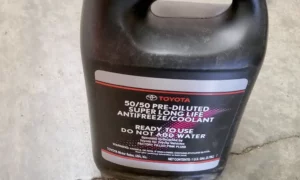
Toyota made a significant shift from mineral-based Type T-IV fluid to synthetic World Standard (WS) fluid. Here’s what matters:
- Type T-IV: Requires service every 30,000–60,000 miles. More prone to thermal breakdown.
- WS Fluid: Synthetic, low-viscosity. Designed for 100,000 miles under normal conditions.
For vehicles prone to P2716 — especially those used for towing or stop-and-go driving — don’t rely on “lifetime” fluid claims. Change it more often. Fresh fluid keeps solenoid ports clean and prevents the abrasive sludge buildup that causes electrical stress.
One firm rule: never mix fluid types. Using WS in a T-IV transmission causes erratic line pressure and can make shifting problems worse.
Keep the Temperature Down
ATF runs best between 175°F and 225°F. Above that, the fluid oxidizes and the SLT solenoid’s coil insulation starts breaking down. If you tow regularly or live somewhere hot, an external transmission oil cooler is a worthwhile investment. It’s far cheaper than a solenoid replacement — let alone a transmission rebuild.
The One Rule That Saves You Money
P2716 on a Toyota is fixable without replacing the whole transmission in the vast majority of cases. The code points to an electrical problem — not a mechanical one. Test the circuit methodically, check the fluid, inspect the harness, and measure the solenoid resistance before anyone starts pulling the transmission.
And if you own a 2005–2008 Corolla or Matrix? Check the NHTSA recall database first. Your ECM might be the issue, and the fix might cost a fraction of what a solenoid job would run. Always start with the brain before blaming the muscle.