Got a check engine light and a P0010 code staring back at you? You’re probably wondering if it’s serious, expensive, or something you can tackle yourself. This guide breaks down exactly what Toyota P0010 means, why it happens, and how to fix it — step by step. Stick around, because the real cause might surprise you.
What Is the Toyota P0010 Code?
Toyota P0010 means the Engine Control Module (ECM) found a problem with the “A” Camshaft Position Actuator Circuit on Bank 1. In plain English, the computer can’t properly control the Oil Control Valve (OCV) that manages your intake camshaft timing.
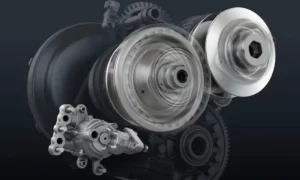
This ties directly into Toyota’s Variable Valve Timing-intelligent (VVT-i) system. The VVT-i system uses oil pressure to shift camshaft timing in real time. When the ECM loses control of that process electrically, it logs P0010 and lights up your check engine light immediately — Toyota uses 1-trip detection logic, so the warning appears on the very first fault detected.
What Does “Bank 1” and “A” Camshaft Mean?
- Bank 1 = the cylinder bank containing cylinder #1. On V6 engines like the 2GR-FE, that’s the rear bank closest to the firewall. On inline-4 engines like the 2AZ-FE, there’s only one bank — so it’s always Bank 1.
- “A” Camshaft = the intake camshaft. Always.
So P0010 targets one specific component: the intake OCV circuit on Bank 1.
How P0010 Differs From Related Codes
Don’t confuse P0010 with its close relatives. Here’s a quick breakdown:
| Code | Component | Problem Type |
|---|---|---|
| P0010 | Bank 1 Intake | Electrical circuit failure |
| P0011 | Bank 1 Intake | Camshaft over-advanced |
| P0012 | Bank 1 Intake | Camshaft over-retarded |
| P0013 | Bank 1 Exhaust | Electrical circuit failure |
| P0020 | Bank 2 Intake | Electrical circuit failure (V6 only) |
P0010 is purely an electrical code. The ECM isn’t complaining about where the camshaft ended up — it’s saying the circuit controlling the OCV isn’t behaving correctly.
What Causes Toyota P0010?
There are three main culprits: bad wiring, a failed OCV, or oil-related issues. Let’s break each one down.
Wiring and Connector Problems
Since P0010 is a circuit code, electrical failures are the most common cause. The OCV sits in a hot, vibration-heavy environment, and the wiring takes a beating over time.
- Cracked or frayed wires can short against the engine block
- Corroded terminals at the OCV connector increase resistance and distort the signal
- Internal coil shorts inside the solenoid can damage the ECM driver circuit
Faulty Oil Control Valve (OCV)
The OCV is an electromagnetic solenoid that directs pressurized oil into the VVT phaser. If its internal coil burns out or the spool valve jams, the ECM can’t control camshaft timing and logs the fault.
A stuck spool valve is sneaky — the ECM ramps the duty cycle to 100% trying to force it open, which eventually triggers the circuit threshold.
Oil-Related Failures
The VVT-i system is a hydraulic machine. Bad oil is a silent killer for these systems, especially on high-mileage Toyotas.
- Engine sludge blocks the tiny oil galleries feeding the OCV
- Clogged VVT filter screen (located behind a banjo bolt) starves the system of oil volume
- Wrong oil viscosity — using 10W-40 in a system designed for 0W-20 prevents proper hydraulic pressure
Symptoms of Toyota P0010
You’ll notice more than just a check engine light. Here’s what to watch for:
- Rough or surging idle — VVT-i normally retards intake timing at idle. Without it, idle stability suffers.
- Weak acceleration — the intake valves don’t advance at high RPM, so cylinder filling drops
- Engine rattling or clacking — sounds like a diesel? That’s a VVT phaser failing to lock into its base position
- Worse fuel economy — the ECM compensates with fuel trims, often running richer
- Traction and stability control disabled — VSC and TRAC systems require precise torque control, which P0010 prevents
How to Diagnose Toyota P0010
Work through this in order. Don’t replace parts before testing — that gets expensive fast.
Step 1: Read the Freeze Frame Data
Plug in a scan tool and pull the freeze frame snapshot. This tells you the engine temperature, RPM, and load when the fault triggered. A Toyota Techstream gives you the most detail, but any capable OBD-II scanner works.
Next, run a bidirectional active test. Command the OCV to 100% duty cycle while the engine idles.
- ✅ Engine stumbles or stalls → OCV is responding electrically
- ❌ Nothing changes → electrical disconnect or completely blocked oil path
Step 2: Test the OCV Electrically
Disconnect the OCV connector and grab a multimeter.
| Test | Expected Value |
|---|---|
| OCV coil resistance | 6.9 – 7.9 Ω at room temperature |
| Wire harness continuity to ECM | Less than 1 Ω |
| Harness to engine block (ground short) | Infinite (OL) |
A reading below 6.9 Ω points to an internal short. Infinite (OL) means an open circuit — the coil is dead.
If you want to go deeper, use an oscilloscope to view the PWM square wave signal. A missing waveform signals a failed ECM driver or a broken signal wire.
Step 3: Check the Oil System
If the electrical side checks out, the problem is hydraulic.
- Remove the OCV and inspect the spool valve for scoring, debris, or a broken return spring
- Find and clean the VVT filter screen — it’s behind the banjo bolt on the oil feed line. Use brake cleaner and compressed air to clear it, or just replace it
- Check the oil — pull the filler cap and look inside. Black varnish coating everything? That’s sludge, and it’s almost certainly your root cause
How to Fix Toyota P0010
Replace the Oil Control Valve
On most Toyota engines, this is a simple swap. The OCV bolts in with a single 10mm bolt and uses a nitrile O-ring seal. Torque specs for the OCV mounting bolt are 9.0 N·m (80 in·lbf).
Before installing the new OCV, wipe the bore in the cylinder head clean with a lint-free cloth. Lightly coat the new O-ring with fresh engine oil before seating it.
Clean or Replace the VVT Filter Screen
This step is non-negotiable in any VVT-i repair. Skip it and the new OCV will clog right back up.
- Remove the banjo bolt on the VVT oil feed line (typically 14mm or 17mm)
- Extract the mesh screen
- Clean it thoroughly with brake cleaner and compressed air, or replace it outright
- The banjo bolt torque spec is 30 N·m (22 ft·lbf)
Here’s a helpful visual walkthrough of VVT filter cleaning on the 2AZ-FE if you need to see the process in action.
Flush the Lubrication System
If sludge caused the failure, you need a full oil flush. Swap the filter, drain the old oil, and refill with the correct high-detergency synthetic. Use the right viscosity — typically 0W-20 or 5W-30 depending on your engine spec. Running the wrong weight delays phaser movement or drops the hydraulic pressure needed to release the locking pin.
Engine-Specific Notes
2AZ-FE (2.4L Inline-4 — Camry, RAV4 2002–2011)
The OCV sits on the passenger side of the cylinder head. This engine has one VVT actuator. It’s highly prone to oil consumption and sludge buildup when oil changes get skipped — the VVT filter clogs quickly as a result.
2GR-FE (3.5L V6 — Highlander, Sienna, Lexus RX350)
This engine runs four separate OCVs with Dual VVT-i. Bank 1 is at the rear of the engine bay. Replacing the Bank 1 intake OCV on transverse models often means pulling the wiper cowl and intake plenum for clearance.
Also worth knowing: early 2GR-FE engines had a rubber VVT oil line that could rupture. It won’t directly cause a P0010 circuit code, but inspect that line any time you’re working on this engine’s VVT system.
Prevent P0010 From Coming Back
The VVT-i system has tolerances measured in microns. Even tiny carbon particles cause problems. Here’s how to protect it long-term:
- Change oil every 5,000 miles — even if your manual says 10,000. Short-trip driving qualifies as severe service and accelerates sludge buildup
- Always use the correct viscosity — check your oil cap or owner’s manual
- Use a quality filter — cheap filters let contaminants through that the OCV screen wasn’t designed to catch alone
- Don’t ignore early symptoms — a rough idle or slight rattle caught early is a $15 OCV filter clean, not a $400 phaser replacement
Toyota’s VVT-i system is genuinely clever engineering. Keep the oil clean and it’ll run reliably for a very long time.