Worried your Toyota’s engine or transmission might die the moment your warranty expires? You’re probably not reading the fine print closely enough. The Toyota powertrain warranty is more detailed than most owners realize — and knowing what it covers (and what voids it) could save you thousands. Read this all the way through before you sign anything or skip a service.
What Is the Toyota Powertrain Warranty?
The Toyota powertrain warranty is one layer in a tiered protection system that comes with every new Toyota. It’s not the same as the bumper-to-bumper basic warranty. It specifically covers the mechanical systems that make your car move: the engine, transmission, and drivetrain.
Here’s how the full factory warranty stacks up:
| Coverage Type | Duration | Mileage | What It Covers |
|---|---|---|---|
| Basic (Bumper-to-Bumper) | 36 months | 36,000 miles | Nearly all components |
| Powertrain Limited Warranty | 60 months | 60,000 miles | Engine, transmission, drivetrain |
| Hybrid Battery (2020+) | 120 months | 150,000 miles | High-voltage battery pack |
| Hybrid System Components | 96 months | 100,000 miles | Inverter, control modules |
| Rust-Through Perforation | 60 months | Unlimited | Sheet metal corrosion |
| Federal Emissions | 96 months | 80,000 miles | Catalytic converter and more |
The clock starts on your vehicle’s in-service date — the day it’s first delivered to you, leased, or put into service as a demo or company car. That’s your “zero point” for every time and mileage calculation.
The 5-year/60,000-mile powertrain window isn’t random. It targets the period when manufacturing defects in major mechanical systems are most likely to show up after the initial break-in phase.
What Does the Toyota Powertrain Warranty Cover?
Engine Coverage
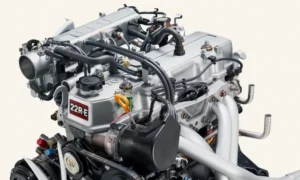
The engine is the most expensive thing under your hood. Toyota’s powertrain warranty covers it thoroughly — but only the parts listed in your warranty booklet.
Here’s what’s included:
| Engine Sub-System | Covered Parts |
|---|---|
| Structural | Cylinder block, cylinder heads |
| Rotating Assembly | Pistons, rings, crankshaft, main bearings, connecting rods |
| Valvetrain | Camshafts, rocker arms, hydraulic lifters, valves |
| Timing System | Timing chain or belt, gears, chain cover, gaskets |
| Lubrication & Cooling | Oil pump, water pump, thermostat |
| Induction & Exhaust | Intake manifold, exhaust manifold, factory turbo or supercharger |
| Fuel & Support | Fuel pump, flywheel, engine mounts, engine control computer |
One thing that surprises most people: the engine control computer counts as a powertrain component. That’s because a modern engine literally can’t run without it. Toyota recognizes that mechanical and electronic systems are inseparable in today’s vehicles.
The timing belt is covered against manufacturing defects. But if you skip your scheduled replacement interval and it snaps? That’s on you.
Transmission Coverage
Whether you drive an automatic, manual, CVT, or the e-CVT in a hybrid, your transmission falls under the 5-year/60,000-mile powertrain protection.
| Transmission Type | What’s Covered |
|---|---|
| Automatic | Case, internal parts, torque converter, transmission mounts |
| Manual | Case, gears, shafts, bearings, synchronizer hubs |
| Transfer Case (4WD/AWD) | Case, all internal lubricated parts, shift motor |
Important exclusion for manual transmission drivers: The clutch disc, pressure plate, and throw-out bearing are NOT covered. Toyota classifies them as wear items — just like brake pads. How long they last depends almost entirely on how you drive. That’s a maintenance cost, not a warranty repair.
Drivetrain and Axle Coverage
The drivetrain connects engine power to your wheels. For Tacoma and Tundra owners, this section matters a lot.
| Drive System | Covered Components |
|---|---|
| Front-Wheel Drive | Final drive housing, axle shafts, CV joints, front wheel bearings |
| Rear-Wheel Drive | Drive axle, drive shaft, differentials, rear wheel bearings |
| 4WD / AWD | Transfer case, locking hubs, drive shafts, retainers |
CV joints are covered — but here’s the catch. If a CV boot gets torn by road debris and dirt gets into the joint, Toyota may deny the claim. The failure came from external damage, not a manufacturing defect. Check your CV boots regularly if you drive on rough roads.
Hybrid and Electric Powertrain Coverage
Toyota’s electrified lineup changed everything about how powertrain warranties work. The engine-and-gearbox definition doesn’t cut it anymore.
For 2020 and newer hybrid models, the high-voltage battery warranty is 10 years or 150,000 miles. That’s a massive commitment from Toyota — and it’s intentional. Consumer confidence in hybrid tech depends on long-term reliability assurance.
Here’s how hybrid and EV coverage breaks down:
| Component | Duration | Mileage |
|---|---|---|
| High-Voltage Battery Pack | 10 years | 150,000 miles |
| Inverter, Converter, Control Modules | 8 years | 100,000 miles |
| Electric Drive Motor | 5 years | 60,000 miles |
| EV Transaxle | 5 years | 60,000 miles |
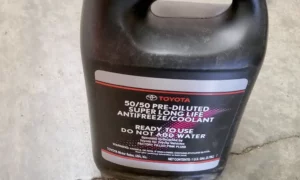
For full EVs like the bZ4X, the focus shifts to the electric motor and transaxle. These vehicles have far fewer moving parts than gas engines, but their warranty still requires proper coolant maintenance for the battery and electronics to stay valid.
Maintenance Is a Contractual Requirement
Here’s the part most Toyota owners gloss over: the Toyota powertrain warranty is conditional. You must follow Toyota’s recommended maintenance schedule, or Toyota can legally deny your claim.
Toyota’s standard service interval is every 5,000 miles or 6 months, whichever comes first. Miss it, and you’re gambling with your coverage.
Oil change intervals vary by engine:
- 0W-20 synthetic oil engines: 10,000 miles or 12 months
- 5W-20 mineral oil engines: 5,000 miles or 6 months
Toyota also defines “Special Driving Conditions” that require more frequent service:
- Dirt or dusty roads — contaminates oil and filters faster
- Towing or heavy loads — extreme thermal stress on transmission and differentials
- Extensive idling — common in delivery or rideshare use
- Frequent short trips in freezing temps — oil never reaches optimal temp, moisture builds up
You don’t have to use a Toyota dealership for oil changes. The Magnuson-Moss Warranty Act prohibits manufacturers from requiring that. But you do need receipts — with the date, your VIN, mileage, and a description of the work done. Keep every single one.
What Voids the Toyota Powertrain Warranty?
The powertrain warranty covers manufacturing defects. It’s not an insurance policy against everything.
| Exclusion Category | Examples |
|---|---|
| Wear Items | Brake pads, clutch disc, filters, spark plugs, wiper blades |
| Environmental Damage | Hail, flood, fire, salt corrosion (unless perforation occurs) |
| Negligence | Driving after an oil pressure or temperature warning light |
| Unauthorized Repairs | Improper repairs or non-equivalent replacement parts |
| Modifications | Aftermarket turbos, performance chips, oversized tires |
| Odometer Tampering | Any disconnected or altered odometer |
The negligence clause is critical. If your oil pressure light comes on and you keep driving until the engine seizes, Toyota may deny the claim — even if the original oil loss was caused by a defective part. You have a duty to stop the vehicle when a warning appears.
Aftermarket modifications that affect powertrain performance — even something like oversized tires that strain your drivetrain — can void coverage for any related component failure.
Does the Warranty Transfer If You Buy Used?
Yes, and this is one of Toyota’s biggest selling points. The factory powertrain warranty transfers automatically and for free. No transfer fee, no reduction in coverage. If a three-year-old Toyota still has time and mileage left on its powertrain warranty, the new owner gets it.
New owners should submit an Owner Information Change Card to Toyota Motor Sales so they receive safety recall notifications.
Toyota Certified Used Vehicles (TCUV): Even Better Protection
Buying a certified used Toyota from a dealer? The TCUV program extends powertrain coverage beyond the factory terms.
| Feature | Gold Certified | Silver Certified |
|---|---|---|
| Powertrain Warranty | 7 years / 100,000 miles | 12 months / 12,000 miles |
| Roadside Assistance | 7 years / 100,000 miles | 12 months / 12,000 miles |
| Comprehensive Warranty | 12 months / 12,000 miles | Not included |
| Deductible | $0 | $0 |
| Travel Protection | Included | Included |
Gold Certified vehicles include Travel Protection — if your car breaks down more than 150 miles from home due to a covered failure, Toyota reimburses lodging and meals up to $50–$100 per day. That’s a genuinely useful perk for road trippers.
Extended Coverage: Toyota Vehicle Service Agreements
If you plan to keep your Toyota past 60,000 miles, Toyota Financial Services offers Vehicle Service Agreements (VSAs) that extend coverage up to 10 years or 125,000 miles.
| VSA Level | Estimated Coverage | Key Inclusions |
|---|---|---|
| Platinum | ~85% of components | Electronics, infotainment, sensors |
| Gold | ~55% of components | Brakes, A/C, steering |
| Powertrain | Core propulsion only | Engine, transmission, axles |
You can buy a VSA at the time of purchase or any time while your vehicle is still within the 3-year/36,000-mile basic warranty window. All repairs use Toyota Genuine Parts at any of 1,400+ Toyota dealerships across the US and Canada. Most VSAs also include a $0 or “disappearing” deductible when you use the selling dealership.
Lifetime Powertrain Warranty: Too Good to Be True?
Some Toyota dealerships offer their own lifetime powertrain warranties with no mileage cap, valid as long as the original buyer owns the vehicle. Sounds incredible — and it can be.
But read the fine print carefully:
- All manufacturer-recommended maintenance must be done at that specific dealership (or an approved partner). One oil change at Jiffy Lube could permanently void the coverage.
- These warranties are non-transferable. The moment you sell the car, the lifetime coverage disappears.
- They’re essentially loyalty programs that keep you coming back to that dealer’s service department.
If you move across the country or switch dealers, you could lose the benefit entirely. Factor that in before you treat it as a primary reason to buy.
How to Dispute a Denied Warranty Claim
If Toyota denies your claim and you think it’s unfair, here’s the process:
- Talk to the dealership’s Service Manager or Customer Relations Manager first. Most issues get resolved here.
- Contact Toyota’s Customer Experience Center at 1-800-331-4331 if the dealer can’t help.
- Request third-party arbitration through the National Center for Dispute Settlement (NCDS). This is free, informal, and available to all Toyota owners. An independent third party reviews both sides — no expensive lawyers required.
The Magnuson-Moss Warranty Act also gives you legal protection. Toyota can’t legally require you to use their branded oil or their dealership for routine maintenance — as long as what you use meets their technical specs.
Keep Your Records, Keep Your Coverage
The Toyota powertrain warranty is genuinely strong coverage — but only if you treat it like the contract it is. Know what’s covered (engine internals, transmission, drivetrain, hybrid batteries). Know what isn’t (clutch, wear items, modifications, negligence). And keep every maintenance receipt with your VIN, date, mileage, and service description on it.
Your documentation is your defense. Without it, even a legitimate claim can get denied.