Picking the wrong transmission fluid can quietly destroy a perfectly good gearbox. This guide breaks down everything you need to know about Dexron 6 vs 3 — the real differences, which vehicles need which, and why mixing them up costs people serious money. Stick around, because the compatibility section alone might save your transmission.
What Are Dexron 3 and Dexron 6?
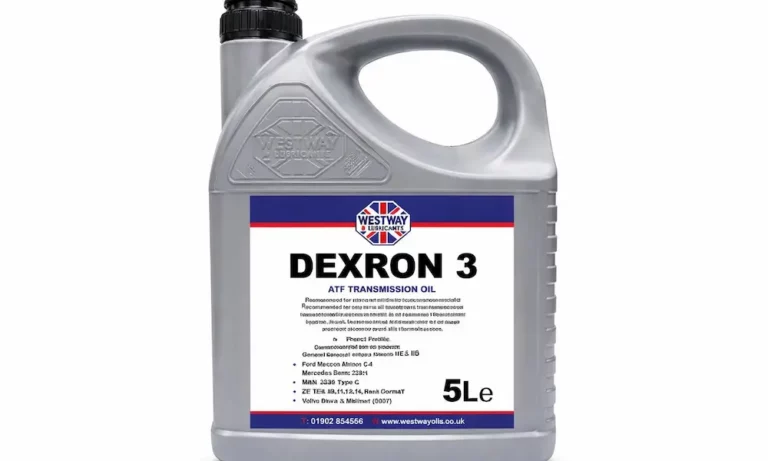
Both are automatic transmission fluid (ATF) specifications created by General Motors. They tell fluid manufacturers exactly what a product must do to protect a GM transmission.
Dexron 3 arrived in the early 1990s and became the standard fluid for a generation of electronically controlled GM transmissions — things like the 4L60E and 4L80E. It went through several updates, wrapping up with Dexron III(H) in 2003.
Dexron 6 launched in 2005 for the 2006 model year. GM needed a better fluid for its new 6-speed transmissions, specifically the 6L80. The old fluid simply couldn’t handle the stress of clutch-to-clutch power transfer in those tighter, faster gearboxes.
Here’s the kicker: GM stopped licensing the Dexron 3 name entirely on December 31, 2006. That means any bottle labeled “Dexron III” today is an unlicensed, unregulated product. Nobody checks whether it actually meets the original spec.
Dexron 6 vs 3: The Core Technical Differences
This is where things get interesting. These two fluids aren’t just different generations — they’re built on completely different engineering philosophies.
Viscosity: Dexron 6 Runs Thinner on Purpose
Dexron 6 is intentionally thinner than Dexron 3. That reduced internal drag directly improves fuel economy — which was a key goal when GM designed its six-speed transmissions.
| Technical Parameter | Dexron 3 (H) | Dexron 6 |
|---|---|---|
| Viscosity @ 100°C (cSt) | 7.0 – 7.5 | 5.8 – 6.4 |
| Viscosity @ 40°C (cSt) | ~33.0 | ~29.5 |
| Brookfield Viscosity @ -40°C (cP) | < 20,000 | < 15,000 |
| Flash Point (°C) | ~180 – 190 | ~206 – 216 |
| Pour Point (°C) | ~ -40 | ~ -50 to -54 |
| Service Life | Standard | Extended (2x Dexron 3) |
Shear Stability: Dexron 3 Thins Out Over Time
Shear stability is how well a fluid holds its viscosity when gears and pumps mechanically grind through it. Dexron 3 fluids use long-chain polymer molecules that physically break apart under stress, causing the fluid to thin out permanently.
That’s a real problem. As the fluid thins, hydraulic pressure drops inside the transmission. Shifts get sluggish. Clutches wear faster. Temperatures climb. Dexron 6 uses superior base oils and advanced viscosity index improvers that resist this shearing action, so it stays in-grade for its entire service life.
Here’s a fact that surprises most people: a high-mileage Dexron 3 fluid that’s sheared down to 5.0 cSt is actually thinner than fresh Dexron 6. So even in older transmissions, Dexron 6 often provides better protection than degraded Dexron 3.
Oxidation Resistance: Dexron 6 Doubles the Protection
Heat is a transmission’s biggest enemy. Oxidation turns fluid into sludge and varnish that clogs valve body passages and sticks solenoids. The Dexron 6 specification requires roughly double the oxidation resistance of Dexron 3(H).
GM validated this through a 4L60E oxidation test — 450 hours at temperatures up to 163°C. Dexron 6 came through clean. Dexron 3 didn’t come close.
Foam Control: More Rigorous Testing
Air bubbles in transmission fluid make it spongy and ineffective at cooling. GM increased the foam control test cycles to 42,000 for the Dexron 6 specification to simulate a full lifetime of use. That’s a massive step up from Dexron 3 testing.
Is Dexron 6 Backward Compatible with Dexron 3?
Yes — for automatic transmissions, Dexron 6 is fully backward compatible. GM officially states that Dexron 6 is the recommended service-fill fluid for all automatic transmissions that previously called for Dexron 3, Dexron 2, or any earlier version.
You can top off a Dexron 3 transmission with Dexron 6 without any chemical reaction or mechanical issue. For the full benefits — better shift quality, improved fuel economy, longer fluid life — a complete fluid exchange is the smarter move.
Many GM owners with older 4L60E-equipped trucks have reported smoother shifts and less noise after switching to Dexron 6. That’s largely because the friction modifiers in Dexron 6 prevent the torque converter clutch shudder that became common in late-1990s and early-2000s GM vehicles as their Dexron 3 degraded.
Where Dexron 6 Is NOT Compatible — Read This Carefully
This section matters more than anything else in this post. Backward compatibility doesn’t mean universal compatibility.
Manual Transmissions and Transfer Cases
This is the most dangerous misconception out there. Just because a manual transmission or transfer case originally used Dexron 3 doesn’t mean Dexron 6 is acceptable. GM specifically warns against using Dexron 6 in manual transmissions or transfer cases previously specced for Dexron 3.
The lower viscosity and different friction chemistry of Dexron 6 can cause poor shift feel, gear grinding, or internal hardware failure in those components. GM introduced a dedicated Manual Transmission and Transfer Case Fluid (Part Number 88861800) for these applications.
Specific GM Vehicle Models
Certain GM vehicles from the mid-2000s used transmissions sourced from Aisin Warner and other external suppliers. These units have unique requirements that Dexron 6 doesn’t meet.
| Manufacturer | Models | Year Range | Reason for Exclusion |
|---|---|---|---|
| Chevrolet | Aveo, Epica, Optra | 2007 and Prior | Aisin/External Design |
| Chevrolet | Equinox | 2005 – 2007 | AF33-5 Transmission |
| Pontiac | Torrent, Vibe, Wave | 2007 and Prior | Toyota/Aisin Influence |
| Saturn | ION | 2003 – 2005 | CVT or AF23 Specifics |
| Saturn | S-Series | 1991 – 2002 | Internal Design Limits |
| Saturn | VUE | 2002 – 2007 | CVT and AF33/5AT Units |
Power Steering Systems
Many older vehicles used Dexron 3 in their power steering systems. Don’t assume Dexron 6 works there too. The lower viscosity can cause pump noise and seal weeping in older power steering racks. For those systems, use GM Power Steering Fluid (Part Number 89020661) or a fluid that specifically meets the Dexron 3 performance criteria.
Allison Transmissions: A Special Case
Allison 1000 and 2000 series transmissions in heavy-duty GM trucks are where Dexron 6 compatibility gets complicated. Early reports found that Dexron 6’s synthetic base stocks were causing seal hardening and leaks in older Allison units.
Allison published specific serial number breakpoints to identify which units can safely use Dexron 6:
| Allison Family | Minimum Serial Number for Dexron 6 |
|---|---|
| 1000 Series | 6310670488 |
| 2000 Series | 6320784373 |
| 3000 Series | 6510717281 |
| 4000 Series | 6610220990 |
Even with compatible serial numbers, Allison now prioritizes its own TES-295 and TES-668 specifications for commercial use. Fluids like Castrol Transynd that meet TES-295 are widely considered superior for Allison units because of their greater thermal stability and seal protection.
Why the Dexron 3 License Expiration Matters for Your Wallet
After GM stopped licensing Dexron 3, the spec became a free-for-all. Any manufacturer can slap “Dexron III” or “Dex/Merc” on a bottle without proving the product meets the original standard. Nobody polices it.
Dexron 6 is completely different. Every bottle of licensed Dexron 6 carries a unique GM license number. That number means the product passed rigorous modern testing. It contains the correct additive package and high-quality Group III synthetic base oils.
When you’re buying transmission fluid, look for that license number on the bottle. No number? You’re gambling with your transmission.
Trusted licensed Dexron 6 brands available in the US:
- ACDelco (GM’s own brand — the safest bet for warranty vehicles)
- Valvoline Full Synthetic Dexron VI
- Pennzoil ATF Dexron VI
- Mobil 1 Synthetic ATF
How Often Should You Change Dexron 6?
GM markets Dexron 6 as a “fill-for-life” fluid. In reality, that only holds up under ideal conditions. Most American driving isn’t ideal.
GM defines severe service as:
- Heavy city traffic
- Outside temperatures above 90°F
- Frequent trailer towing
- Mountain driving
If any of those apply to you — and they apply to most US drivers — a fluid change every 45,000 to 50,000 miles is the right call.
Important note for “sealed” transmissions: Many modern GM transmissions designed for Dexron 6 don’t have a traditional dipstick. Checking the fluid requires a level-set plug on the bottom of the pan, with the vehicle level, engine running, and fluid at a specific temperature — typically between 86°F and 122°F. Checking outside that temperature window causes significant overfill or underfill errors because synthetic fluid expands considerably with heat.
Dexron 6 and the Fluids That Came After It
The success of Dexron 6 pushed GM to develop even more specialized fluids for newer transmissions.
| Fluid Type | Primary Application | Notes |
|---|---|---|
| Dexron 3 (Legacy) | Pre-2006 GM automatics | Unlicensed/unregulated since 2006 |
| Dexron 6 | 2006+ 6-speeds and all legacy automatics | Licensed, synthetic |
| Dexron HP | Performance 8-speeds (Corvette, Camaro) | Specialized for extreme heat |
| Dexron ULV | Modern 10-speed automatics | Ultra-thin, not backward compatible |
Dexron ULV and Dexron HP are not interchangeable with Dexron 6. If your vehicle has a 10-speed and the manual says Dexron ULV, Dexron 6 is the wrong choice. Always check your owner’s manual or the NHTSA service bulletin database for transmission-specific fluid requirements before you buy anything.
The Bottom Line on Dexron 6 vs 3
For automatic transmissions in most GM vehicles, Dexron 6 wins on every technical metric — shear stability, oxidation resistance, cold-weather performance, and service life. It’s also the only option with regulatory teeth behind it, thanks to GM’s licensing program.
The smart move for most owners:
- Older GM automatics (4L60E, 4L80E, etc.): Switch to licensed Dexron 6 at your next service. You’ll likely notice smoother shifts right away.
- Manual transmissions and transfer cases: Don’t touch Dexron 6. Use the dedicated GM fluid or a product that explicitly meets Dexron 3 criteria for those applications.
- Mid-2000s GM vehicles with Aisin-based transmissions: Check the model exclusion table above before buying anything.
- Allison transmissions: Verify your serial number and seriously consider Transynd TES-295 instead.
When you grab a bottle off the shelf, skip anything labeled just “Dex/Merc” without a GM license number. That unregulated fluid is a gamble your transmission doesn’t deserve.