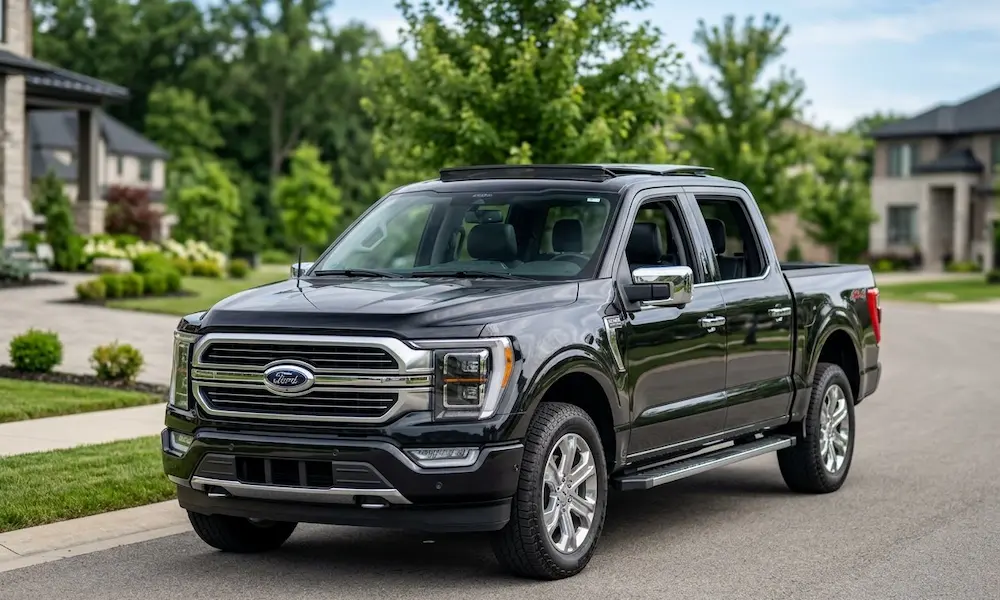
Ever wondered where that rugged F-150 or dependable Super Duty rolling down your street was built? Ford trucks don’t just appear magically at dealerships—they’re crafted across a network of specialized manufacturing plants, most anchored right here in American soil. With production spanning multiple states and even crossing borders, Ford’s truck manufacturing represents a fascinating mix of tradition and innovation.
Ford’s American Truck Manufacturing Footprint
Ford proudly maintains most of its truck production in the United States, with facilities strategically positioned across Michigan, Kentucky, Missouri, and Ohio. This American-focused manufacturing approach isn’t just about patriotic marketing—it’s deeply embedded in Ford’s business strategy and heritage.
The company operates 16 U.S. plants that directly employ over 57,000 American workers while supporting approximately 400,000 indirect jobs through suppliers and related services. Since 2020, Ford has invested $6.6 billion in Michigan plants alone, demonstrating its commitment to domestic manufacturing.
Where Are F-150 Trucks Made?
The iconic F-150—America’s best-selling truck for over four decades—comes primarily from two massive facilities:
Dearborn Truck Plant (Michigan)
Nestled within Ford’s historic Rouge Complex in Dearborn, Michigan, this facility has been central to F-Series production since 1948. Some key facts about this manufacturing powerhouse:
- Spans 4.7 million square feet
- Employs approximately 3,000 workers
- Produced 246,106 gasoline-powered F-150s in 2024
- Reached peak monthly production of 28,534 trucks in May 2024
- Houses the Rouge Electric Vehicle Center dedicated to F-150 Lightning production
The Rouge Complex represents Ford’s manufacturing heritage, operating on the same grounds where Henry Ford revolutionized automotive assembly. Today’s facility, however, bears little resemblance to the original, having been thoroughly modernized with cutting-edge robotics and production techniques.
Kansas City Assembly Plant (Missouri)
Located in Claycomo, Missouri, this facility is the largest automotive manufacturing plant in the United States by production volume:
- Operational since 1951
- Spans 1,269 acres
- Employs over 9,400 hourly workers
- Achieves production rates of 97 vehicles per hour
- Completes each truck within a 20-hour build cycle
- Houses integrated stamping, body assembly, and paint operations
The Kansas City plant’s massive scale allows Ford to meet demand for its best-selling vehicle while maintaining consistent quality across hundreds of thousands of units annually. When you see an F-150 on the road, there’s almost a 50/50 chance it rolled off the line in Missouri.
Where Are Ford Super Duty Trucks Made?
For Ford’s heavy-duty lineup (F-250 through F-550), production is concentrated at one primary location:
Kentucky Truck Plant (Louisville)
This enormous facility serves as the global home for Super Duty trucks:
- Opened in 1969 on a 500-acre campus
- Employs 9,201 workers
- Contains 30 miles of conveyor systems
- Operates two assembly lines producing 97 vehicles hourly
- Manufactures over 200,000 Super Duty trucks annually
- Generates more annual revenue than Southwest Airlines
The Kentucky Truck Plant represents one of Ford’s most valuable manufacturing assets. Its specialized equipment handles the unique requirements of heavy-duty truck production, including robust frames and specialized powertrains like the 6.7L Power Stroke diesel engine.
In 2016, the facility underwent a major transformation to implement aluminum alloy body construction for Super Duty models, reducing vehicle weight by 350 pounds while maintaining the durability customers expect.
Ford’s Mid-Size and Compact Truck Production
Beyond full-size trucks, Ford produces several smaller pickup options at different locations:
Ford Ranger Manufacturing
The mid-size Ford Ranger utilizes dual production sources:
Michigan Assembly Plant (Wayne)
- 5 million square-foot facility
- Employs 2,800 workers
- Shares production lines with the Ford Bronco
- Handles North American Ranger production
Hermosillo Stamping and Assembly Plant (Mexico)
- 1.5 million square-foot facility operational since 1986
- Produces up to 300,000 vehicles annually
- Focuses on North American exports
- Utilizes flexible manufacturing systems
Ford Maverick Production
The compact Maverick pickup is exclusively manufactured in Mexico:
- Built at the Hermosillo plant alongside Bronco Sport
- Despite Mexican assembly, 65% of components come from U.S. suppliers
- Engines sourced from Ohio
- Transmissions manufactured in Michigan
This cross-border production model highlights Ford’s integrated North American manufacturing strategy, balancing costs while maintaining significant American content in the final vehicles.
Commercial Ford Trucks: Transit and E-Series
Ford’s commercial vehicle lineup rounds out its truck manufacturing footprint:
Transit Van Production
The Transit full-size van shares a home with the F-150:
- Produced at Kansas City Assembly Plant
- Uses one dedicated assembly line
- Manufactures over 150,000 units annually
- Features unibody construction with boron steel reinforcements
- Assembled using 780 robotic welders for structural rigidity
Medium-Duty Truck Manufacturing
Heavier commercial vehicles come from Ohio:
- The Ohio Assembly Plant in Avon Lake produces E-Series cutaway chassis
- Also builds F-650/F-750 medium-duty trucks
- Employs 1,773 workers
- Specializes in customizable chassis for vocational applications
- Supports industries from ambulance services to refrigerated transport
The Electric Truck Revolution: Where Ford EVs Are Made
Ford’s electrification strategy is transforming its manufacturing landscape with investments in three key sites:
Rouge Electric Vehicle Center (Michigan)
Located within the Dearborn complex, this facility:
- Produces the F-150 Lightning electric pickup
- Implements specialized assembly for 131 kWh extended-range batteries
- Creates trucks capable of 0-60 mph in 4.0 seconds
- Represents a $700 million investment in EV manufacturing
Kentucky Truck Plant Electrification
The Super Duty plant is also preparing for an electric future:
- Being upgraded for hybrid Super Duty production by 2026
- Receiving significant investment in battery pack assembly
- Will maintain production capacity while adding electrified options
Oakville Assembly (Canada)
Ford’s Canadian operations are undergoing the most dramatic transformation:
- Currently being retooled throughout 2024
- Will become Ford’s first dedicated EV truck plant
- Scheduled to produce electric Super Duty models starting in 2026
- Represents a multi-billion dollar investment in EV manufacturing
Ford’s Manufacturing Technology: How American Trucks Are Built
Modern Ford trucks are built using sophisticated production techniques that blend human craftsmanship with cutting-edge automation:
Aluminum Innovation
Ford revolutionized truck manufacturing in 2014 by introducing aluminum alloy bodies for the F-150:
- Reduced weight by up to 700 pounds per vehicle
- Required complete retooling of assembly plants
- Implemented specialized welding and riveting techniques
- Used 3,000 specialized robots in Dearborn alone
- Later expanded to Super Duty models in 2016
Advanced Robotics and Automation
Ford’s truck plants showcase industrial automation at its finest:
- Body shops use hundreds of robotic welders working with millimeter precision
- Automated guided vehicles (AGVs) transport components through assembly areas
- Vision systems verify quality at multiple stages
- Paint shops apply multiple layers through robotic application
- Human workers and robots collaborate on final assembly
Quality Control Systems
Ford employs multi-layered quality processes throughout production:
- Each truck undergoes over 1,000 quality checks during assembly
- Laser measurement systems verify dimensional accuracy
- Every finished vehicle completes water testing for leak detection
- Random vehicles undergo comprehensive road testing
- Statistical process control monitors for variations in components
The Economics of Ford’s Truck Manufacturing
Ford’s truck production represents a massive economic engine for the American economy:
Employment Impact
The scale of Ford’s truck operations creates substantial employment:
- Direct employment of over 57,000 workers across all U.S. plants
- UAW-represented workforce with competitive wages averaging $32/hour
- Comprehensive benefits packages including healthcare and retirement
- Training programs for advanced manufacturing skills
- Career advancement opportunities within the Ford system
Production Volume and Capacity
The numbers behind Ford’s truck manufacturing are impressive:
| Plant Location | Primary Models | Annual Capacity | Employees |
|---|---|---|---|
| Dearborn, MI | F-150, F-150 Lightning | 250,000+ | 3,000 |
| Kansas City, MO | F-150, Transit | 340,000+ | 9,400 |
| Louisville, KY | Super Duty (F-250-550) | 200,000+ | 9,200 |
| Wayne, MI | Ranger, Bronco | 225,000+ | 2,800 |
| Hermosillo, Mexico | Maverick, Bronco Sport | 300,000+ | 3,650 |
Supply Chain Integration
Ford’s truck production relies on an extensive supplier network:
- Over 10,000 supplier companies contribute components
- 1,400 tier-one suppliers provide direct parts
- Just-in-time delivery systems minimize inventory
- Domestic content averages 65% across truck models
- Engine and transmission manufacturing largely U.S.-based
Future of Ford Truck Manufacturing
Ford’s truck production is evolving rapidly to meet changing market demands:
Expanded Electric Truck Production
Ford is investing heavily in manufacturing capacity for electric trucks:
- Rouge Electric Vehicle Center expansion for increased F-150 Lightning production
- Oakville Assembly conversion to EV-only production
- New battery facilities in Kentucky and Tennessee
- Integration of battery assembly into existing truck plants
Hybrid Manufacturing Systems
Rather than separate lines for different powertrains, Ford is developing flexible systems:
- Plants capable of building ICE, hybrid, and electric versions on the same line
- Adaptable tooling that can adjust to different powertrain configurations
- Cross-training workers for multiple propulsion technologies
- Michigan Assembly already demonstrates this flexibility with varied Ranger powertrains
Advanced Materials and Technologies
Future Ford trucks will incorporate new manufacturing approaches:
- Increased use of carbon fiber components for weight reduction
- 3D-printed parts for low-volume specialized applications
- Advanced computing integration requiring specialized assembly techniques
- Automated driving systems with complex sensor installation requirements
Made in America: The Heritage Behind Ford Trucks
For many buyers, where their truck is manufactured matters significantly:
American Manufacturing Pride
Ford leverages its domestic production as a competitive advantage:
- Marketing emphasizes “Built Ford Tough in America”
- Plant tours and visitor centers showcase American craftsmanship
- Community engagement programs in manufacturing towns
- Support for veterans and first responders tied to American production values
Economic Impact Beyond Manufacturing
Ford’s commitment to American truck production creates ripple effects:
- Local tax bases strengthened in manufacturing communities
- Supplier companies clustered near assembly plants
- Transportation and logistics firms supported by production volume
- Dealerships and service centers employ thousands nationwide
Ford’s American-focused truck manufacturing represents one of the most significant examples of domestic industrial production in the modern economy. While global pressures have pushed many manufacturers overseas, Ford has doubled down on its American heritage for its most profitable product line.
Next time you see an F-150, Super Duty, or Ranger on the road, you’ll know it likely came from Michigan, Kentucky, Missouri, or one of Ford’s other specialized facilities—tangible rolling proof of American manufacturing capability continuing into the 21st century.