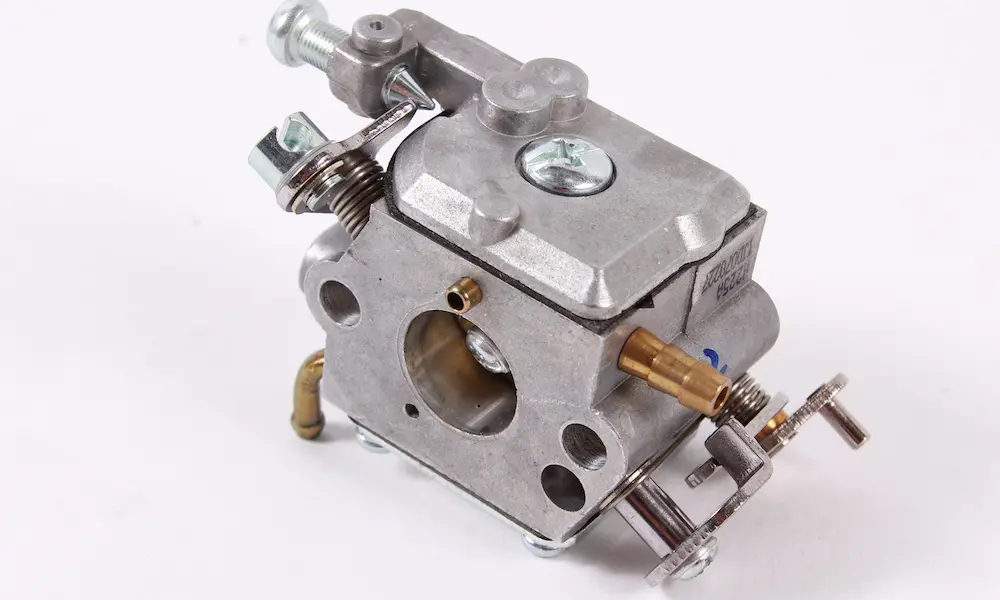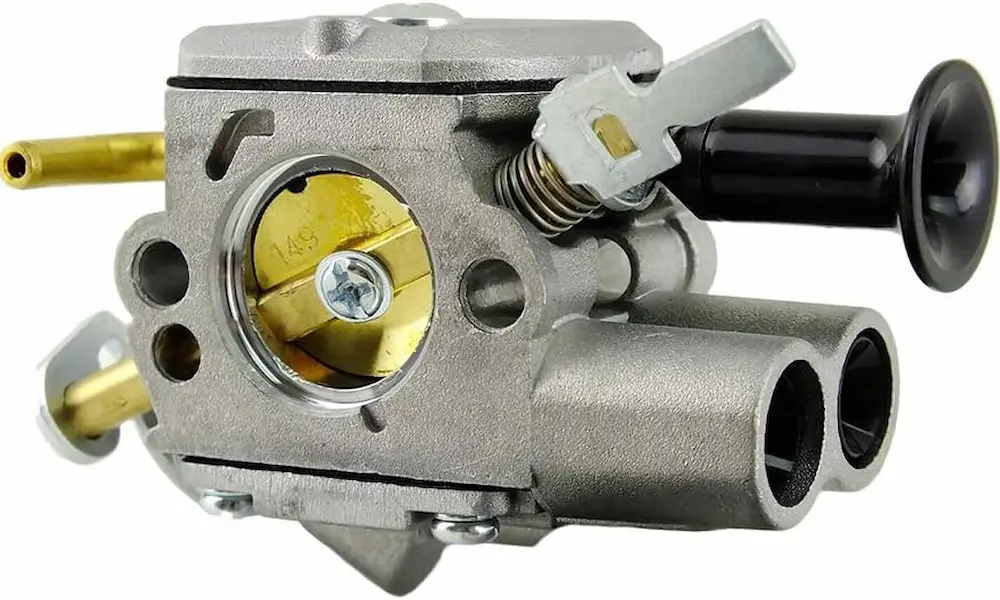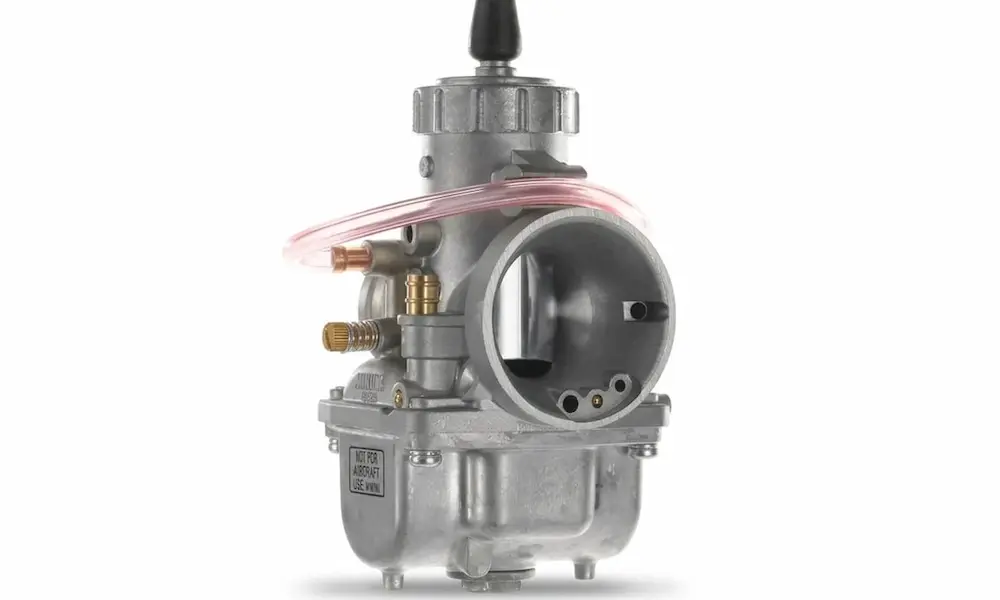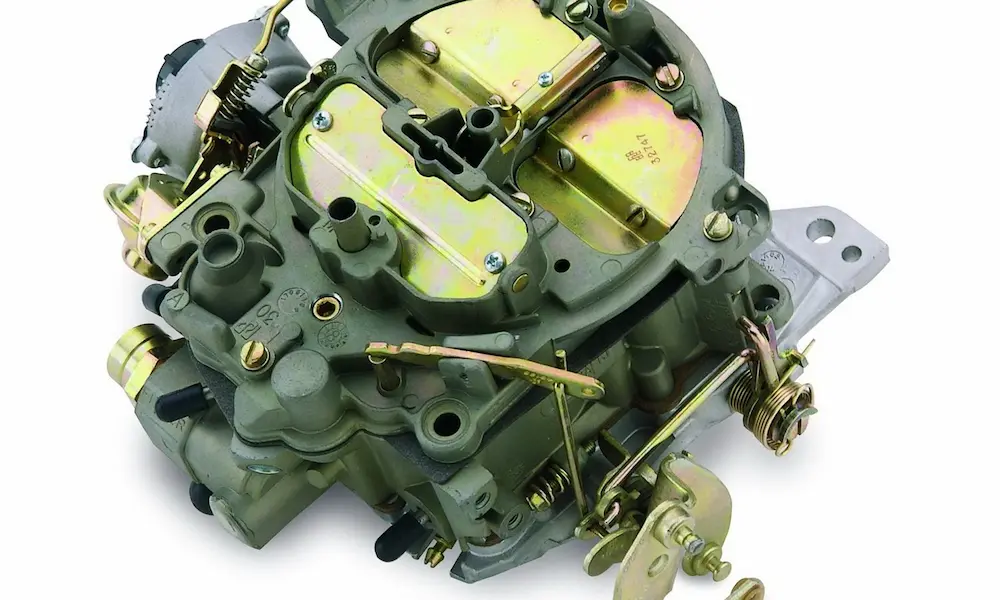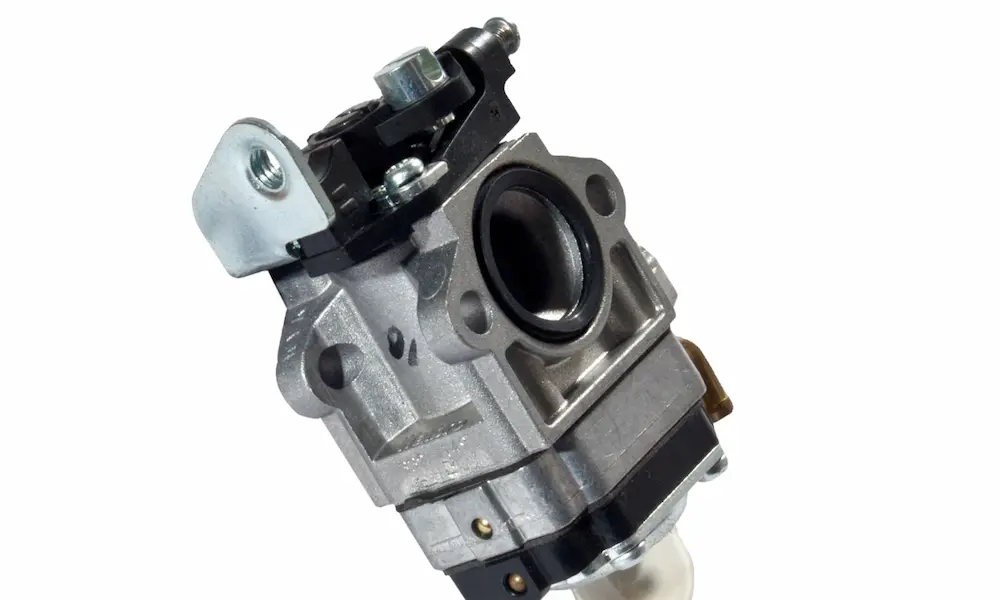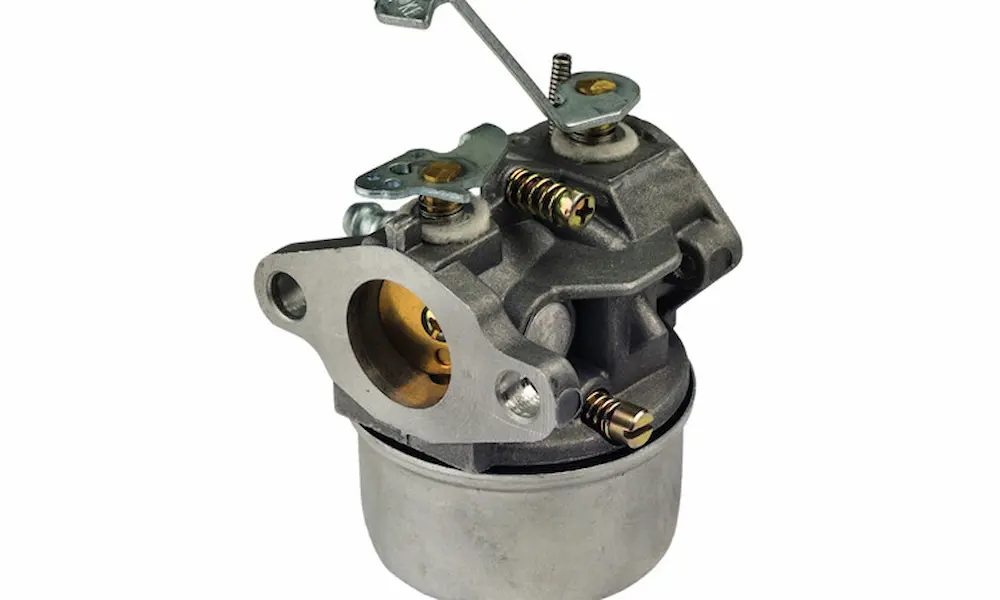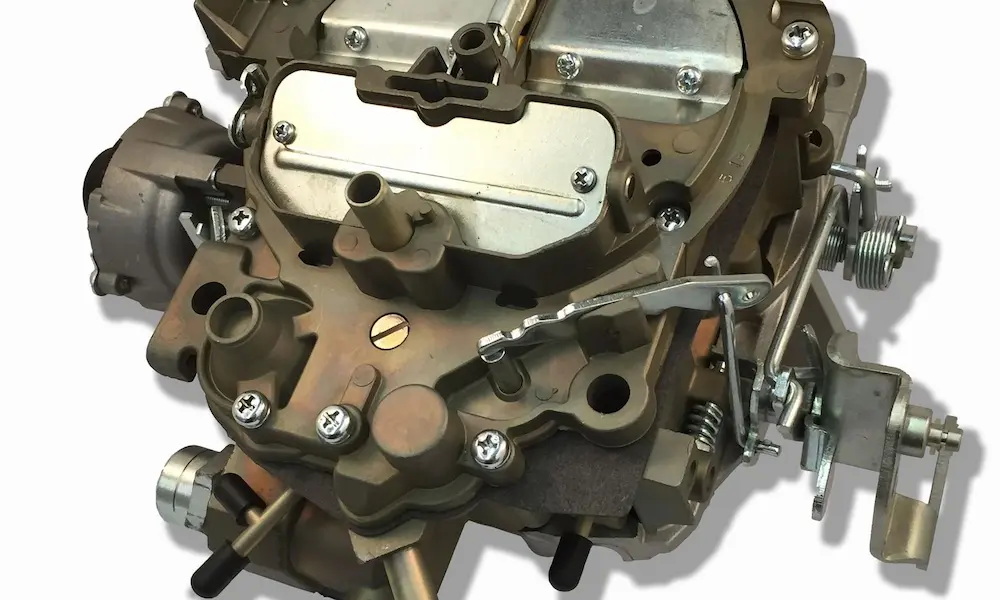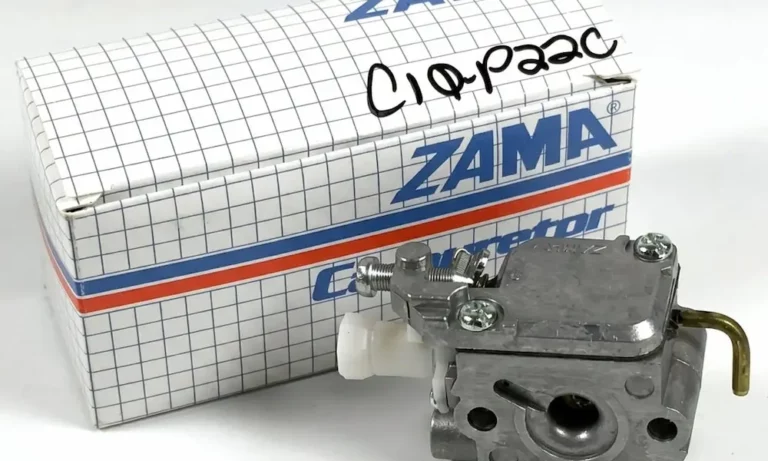
Struggling to figure out which Zama carburetor you’re holding? You’re not the only one staring at a tiny aluminum block wondering where to even start. This guide walks you through every identification method, series code, and rebuild kit match you need — so you can stop guessing and start fixing.
Why Zama Carburetor Identification Matters So Much
Getting the wrong rebuild kit wastes your time and money. Period.
Zama is the world’s leading manufacturer of diaphragm carburetors for handheld outdoor power equipment. Their carburetors show up on Stihl, Echo, Husqvarna, Homelite, McCulloch, and Poulan equipment. That’s a massive range of applications — and each one needs specific parts.
A Zama carburetor on a Stihl MS250 chainsaw uses different internals than one on an Echo SRM-230 trimmer. If you grab the wrong RB or GND kit, your rebuild fails before it starts.
Accurate Zama carburetor identification is the foundation of every successful repair.
Step One: Confirm You Have a Real Zama
Before you decode anything, verify the carburetor is genuine.
The secondary parts market is flooded with counterfeit carburetors that look exactly like Zama units but aren’t. These clones use inferior materials and loose machining tolerances. Even installing a genuine Zama rebuild kit into a clone won’t fix the problem — the venturi tolerances are simply wrong from the factory.
How to spot a genuine Zama:
- The Zama name appears stamped, engraved, or cast directly into the housing or metering cover
- Throttle shafts use solid brass — not plated inferior alloys that rust and seize
- Internal check valves use press-fit brass micro valves that seal instantly under back-pressure
If the name isn’t there, it’s a clone. Industry best practice says save and clean the genuine unit with ultrasonic cavitation rather than replacing it with a cheap aftermarket alternative.
Where to Find the Model Number
This is where most people go wrong. There are two things on every Zama carburetor that look like model numbers — but only one actually is.
The fake number: Raised cast numbers near the mixture adjustment needles. These just identify the raw aluminum casting mold. They’re never the model number.
The real number: Always applied after casting via engraving, laser etching, or ink printing. According to the official Zama Newsletter, the location changes depending on production era.
Three Eras of Zama Numbering Systems
Zama’s identification system has evolved across three distinct periods. Knowing which era your carburetor comes from tells you exactly where to look and how to read the code.
Era 1: Late 1970s to Early 1980s — Engraved Numbers
These vintage carburetors carry mechanically stamped characters on the metering chamber cover or near the choke valve assembly.
The format uses an eight or nine-digit numeric sequence. Here’s the key: only the first four digits identify the actual carburetor model.
Example: A sequence reading 19010803L means you have a model 1901, which belongs to the C2S series family.
Era 2: Mid-Era Alphanumeric System — Most Common Today
This is the format you’ll encounter most often in any repair shop. Look for a laser-etched or black ink-printed block near the fuel line connection fittings.
The code runs in two lines:
- Top line: The carburetor model (e.g., K54A for an Echo application)
- Bottom line: A factory date code showing the year and production week
Example: A date code of 645A means the unit was built in a specific year during week 45.
That date code matters. Equipment manufacturers sometimes push mid-year engineering revisions that change internal channel routing without changing the primary model number on the housing.
Era 3: Modern 12-Digit Nomenclature
Modern Zama carburetors use a standardized 12-digit master number. A full code looks like this: Z-0111-200-6024-A
Because carburetors are small, the physical unit only shows an abbreviated version. That master number above appears printed as Z011/02A. Both formats — abbreviated or full — work in Zama’s digital parts lookup systems.
Decoding the Manufacturer Letter Code
Once you’ve located the model number, the letter embedded in it tells you which equipment brand commissioned that specific carburetor. This is critical for cross-referencing parts.
| Manufacturer Code | Original Equipment Manufacturer | Common US Applications |
|---|---|---|
| S | Stihl | MS250, MS290 chainsaws; FS55, FS120 trimmers. Stihl part 4134-120-0652 maps directly to Zama C1Q-S161; part 1123-120-0603 maps to C1Q-S76G |
| K | Echo / Kioritz | SRM trimmers, PB blowers, CS chainsaws |
| EL | Husqvarna / Jonsered | Professional XP series chainsaws |
| W | Poulan / Weed Eater | Consumer chainsaws, homeowner trimmers |
| H | Homelite | Legacy chainsaws, handheld blowers |
| M | McCulloch | Vintage chainsaws, modern lightweight trimmers |
| DM | Dolmar (Sachs-Dolmar) | Professional logging saws, cut-off machines |
| SK | Shindaiwa / Honda | Low-emission trimmers, hybrid four-stroke engines |
Zama Carburetor Series Explained
The series prefix tells you the internal architecture of the carburetor. Get this wrong, and you’ll grab the wrong kit every time.
C1Q, C1U, and C1M — The Cube Series
These compact units power most modern string trimmers, lightweight chainsaws, and leaf blowers. They pack the fuel pump, metering chamber, and venturi into a tight cuboid aluminum block.
- C1U and C1Q: Standard butterfly throttle valve. Built for fast idle-to-full-throttle transitions.
- C1M: The refined emissions-compliant version. Features throttle bore diameters of 14 or 16mm, Zama’s patented friction bar and ring, tamper-resistant limiter caps, and various primer configurations. Some C1M variants are mirror images of standard C1Q models — the mixture needles and throttle linkages sit on the opposite side to fit specific housing designs.
C2, C3, and C3A — High-Displacement Series
Professional chainsaws and backpack blowers need more airflow than the C1 series can deliver. The C2, C3, and C3A units feature larger throttle bores and reinforced diaphragm assemblies built to handle intense crankcase pulse pressures from large-bore engines.
RB Series — Rotary Barrel
The RB rotary carburetor replaces the flat butterfly valve with a cylindrical barrel that rotates across the air intake passage. At wide-open throttle, the barrel’s internal passage aligns perfectly with the venturi, creating a completely smooth, unobstructed air tunnel.
The result: zero aerodynamic drag, maximum volumetric efficiency, and exceptionally light throttle feel. Micro-roller bushings let the barrel slide smoothly without metal-on-metal galling. Note that rotary carburetors require a Z-type throttle cable end fitting — standard barrel-style ends won’t work.
Telling Zama Apart From Walbro and Tillotson
Many equipment manufacturers source carburetors from multiple vendors. The same chainsaw model might come with either a Zama or a Walbro depending on when it was assembled. You need to tell them apart before you order parts.
Walbro: Two or three letters stamped or deeply cast directly into the aluminum body — usually near the fuel inlet or adjustment needles. If you’re scrubbing grease off raised aluminum lettering that’s part of the main casting, it’s almost certainly a Walbro. Rebuilding one also requires Walbro’s specific metering lever height gauge (part number 500-13-1).
Tillotson: Heavy, robust construction. Common on vintage professional chainsaws and paramotors. Many modern Tillotson variants use a fixed main jet with a secondary trimmer needle for altitude adjustments. More labor-intensive to rebuild than Zama.
Zama: Cleaner external casting. Model numbers are never raised cast lettering — always engraved, etched, or printed. Compact cube designs are common. Well-regarded for primer purge pump efficiency and reliable fuel atomization in cold weather.
RB and GND Rebuild Kits: Which One Do You Need?
Every Zama repair comes down to two kit types. Choose the wrong one and you’ll still have problems after the rebuild.
GND Kit (Gasket and Diaphragm): Contains only soft components — the fuel pump diaphragm, pump gasket, metering diaphragm, and metering chamber gasket. Use this when the carburetor has been sitting with ethanol-blended fuel that stiffened and shrank the diaphragms.
RB Kit (Rebuild Kit): Everything in the GND kit plus all the hard components: inlet needle valve, metering lever, calibrated metering spring, lever hinge pin, and main fuel strainer screen. If your engine floods due to a worn needle tip or a fatigued spring, the RB kit is what you need.
Zama Carburetor to Kit Cross-Reference
| Zama Carburetor Model | RB (Rebuild) Kit | GND (Gasket/Diaphragm) Kit |
|---|---|---|
| C1M-FR1, A-B | RB-70 | GND-43 |
| C1M-K37, A-D | RB-61 | GND-31 |
| C1M-W26 | RB-129 | GND-70 |
| C1Q-DM1 through DM9 | RB-72 | GND-29 |
| C1Q-EL1 through EL10 | RB-45 | GND-33 |
| C1Q-EL11 through EL14 | RB-69 | GND-39 |
| C1Q-H14 / H19 / H27 | RB-39 | GND-27 |
| C1Q-S11C through E | RB-41 | GND-29 |
| C1Q-S34A through H | RB-40 | GND-28 |
| C1Q-S57A | RB-77 | GND-33 |
| C1U-K54A | RB-20 | GND-12 |
| C1U-H60E | RB-29 | GND-12 |
| RB-K75 | RB-75 | GND-47 |
The full granular parts breakdown for specific assemblies — down to individual strainer screens and springs — is available through authorized US distributors including Billiou’s Incorporated, Magneto Power LLC, Edgewater Mower, Marr Brothers Incorporated, and Sunbelt Outdoor Products.
Critical Service Tips You Need to Know
The L Needle Is Always Longer Than the H Needle
On dual-needle Zama carburetors, the H and L needles often share the same thread pitch. Swap them during reassembly and you’ll get catastrophic lean seizure or instant flooding. The universal rule: the Low (L) speed needle is always physically longer than the High (H) speed needle.
Don’t Test Pop-Off Pressure
This is a widespread myth in small engine repair. Zama officially states that testing pop-off pressure is unnecessary and actively harmful for handheld equipment carburetors. Applying excessive pneumatic pressure will over-stretch the pump diaphragm and permanently rupture the pump gasket seal.
Instead, apply exactly 10 PSI of static pressure to the main fuel inlet fitting. A healthy Zama carburetor holds that pressure without drop for a minimum of 15 seconds.
Match Your Diaphragm Material to the Pump Surface
According to the Zama disassembly and service guide, rebuild kits include diaphragms in different materials:
- Clear Mylar diaphragm: Requires a perfectly flat, machine-finished aluminum pump surface to seal correctly
- Thick black Buna rubber diaphragm: Use this when the pump surface is raw, unmachined cast aluminum — the rubber conforms to irregular textures
Using Mylar on an unfinished surface will cause a vacuum leak every time.
Be Careful With Welch Plugs
Before removing a Welch plug, spray carburetor cleaner into the L needle orifice first. If solvent sprays out of the progression holes into the venturi, those channels are clear — don’t touch the Welch plug. Removing it risks puncturing the thin casting wall directly beneath it, which destroys the carburetor body permanently.
Diagnosing Common Running Problems
Match the symptom to the internal component before you start pulling things apart.
- Engine floods or runs rich at idle: Check the inlet needle valve for a worn tip or dirt in the seat, inspect the metering lever height (set too high), or look for a stiff pump diaphragm
- Engine hesitates or runs lean during acceleration: Check for a clogged internal fuel strainer, blocked progression holes, a leaking Welch plug, or a metering lever set too low
- Engine stalls at wide-open throttle: Focus on the high-speed fuel passage, the main nozzle check valve, or the H needle adjustment
Always confirm base engine integrity first. Air leaks around manifold gaskets, low compression, a clogged spark arrestor, or a blocked crankcase pulse passage all mimic carburetor failure.
Identifying Simple Start and No-Prime Carburetors
Zama’s Simple Start system is easy to spot: the choke shaft rotates, but there’s no flat brass butterfly choke valve attached to it.
Instead of a choke plate, these units use a secondary internal pump dedicated to cold starts. It injects raw fuel directly into the venturi via a dedicated orifice. If a unit starts instantly but consistently floods out and dies after 30 seconds, the pulse-shutoff linkage has failed or debris is holding the start pump’s outlet check valve open. Don’t insert wire or drills into the orifice — that permanently destroys the calibration. Replace the entire start pump body if the internal check valves are damaged.
For deeper troubleshooting on no-prime systems, Zama’s advanced newsletter covers specific correction procedures.
Keeping Your Reference Library Current
Zama regularly updates their service documentation. The comprehensive service manual covering more than 50 additional carburetor models carries part number Z000-400-Z000-A. Their carburetor systems and operations document covers fuel pump physics, metering system operation, and primer sequences in full technical detail.
Bookmark the Zama service tips page and check for newsletter updates before tackling any unfamiliar model. The difference between a quick fix and a wasted afternoon is usually just having the right documentation in front of you.