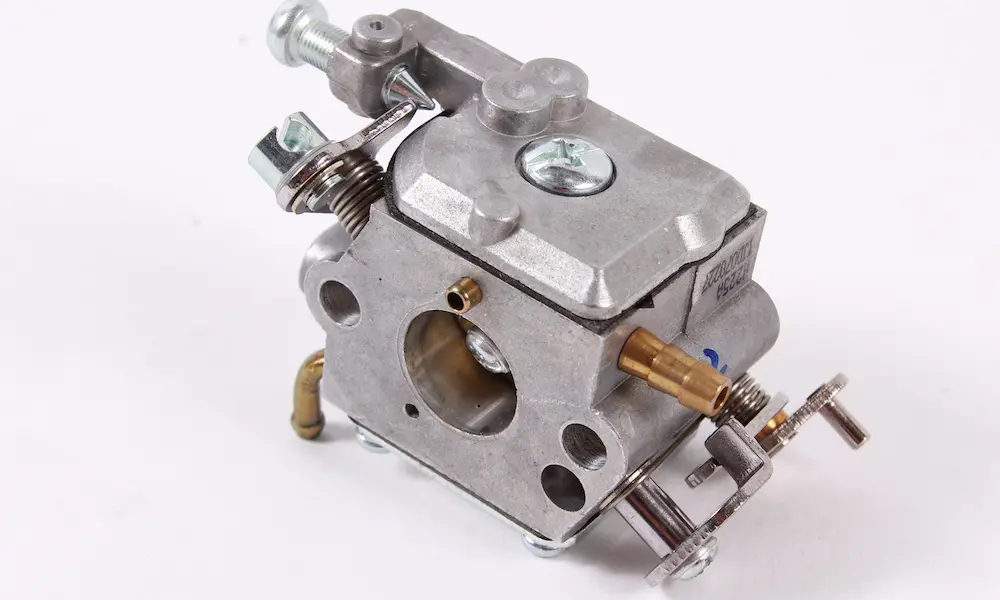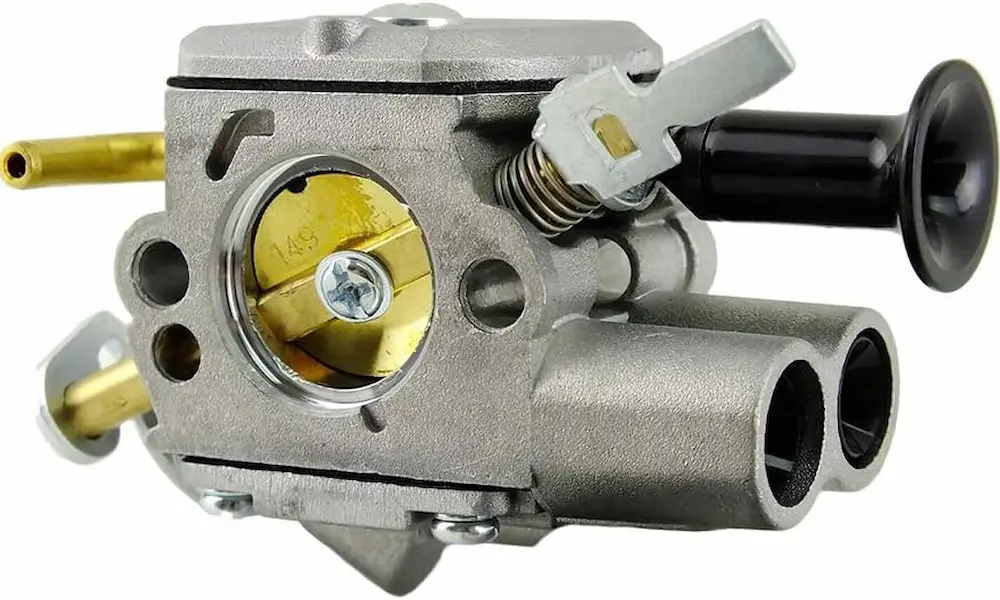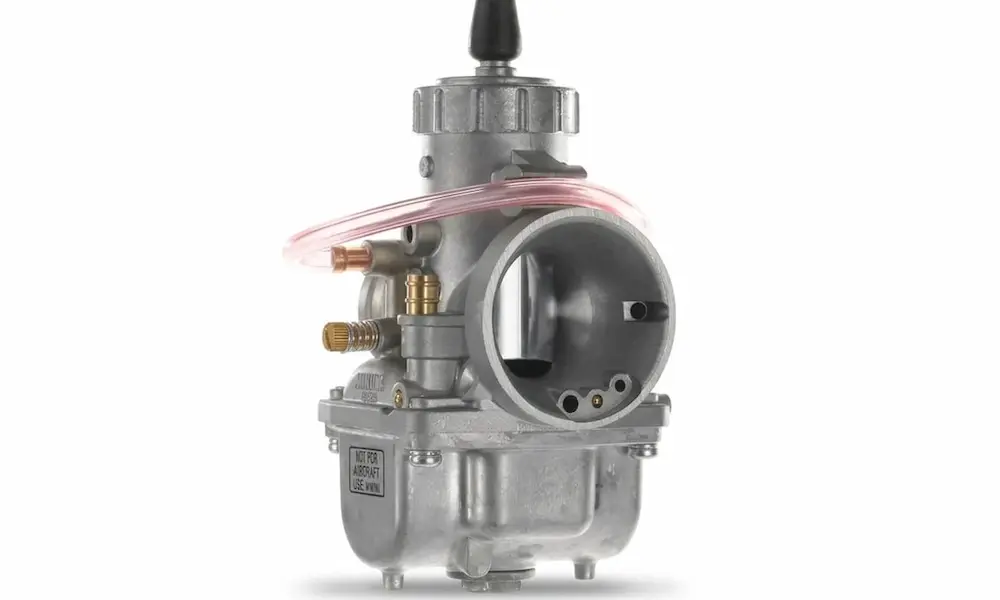
Your chainsaw bogs, your trimmer screams at idle, or your engine just won’t start right. A 2 stroke carburetor adjustment fixes most of these problems. This guide walks you through every step — from diagnosing rich vs. lean to fixing a hanging idle that drives you crazy. Read to the end, because the troubleshooting section alone is worth it.
What Actually Happens Inside a 2 Stroke Carburetor
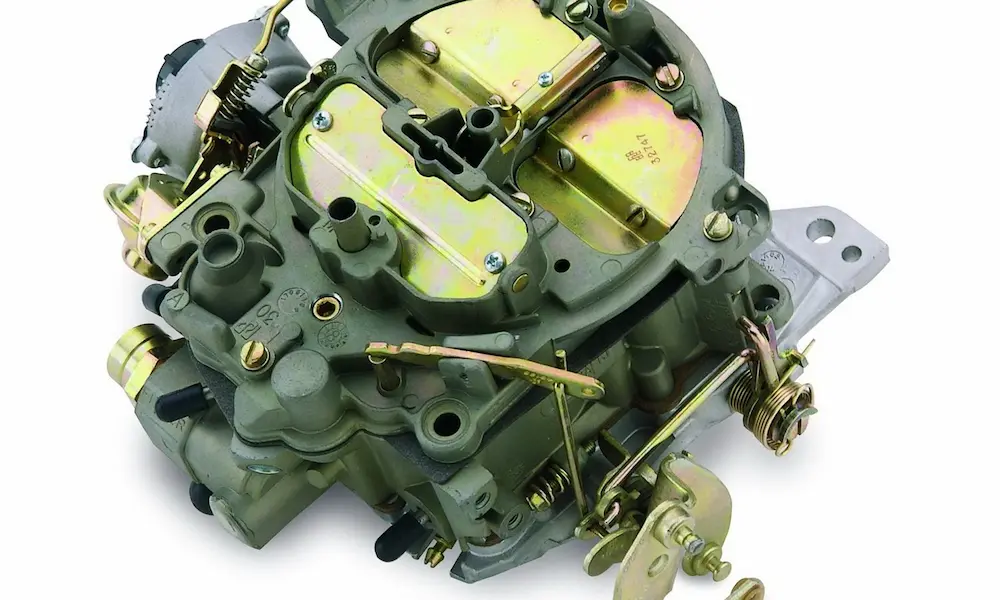
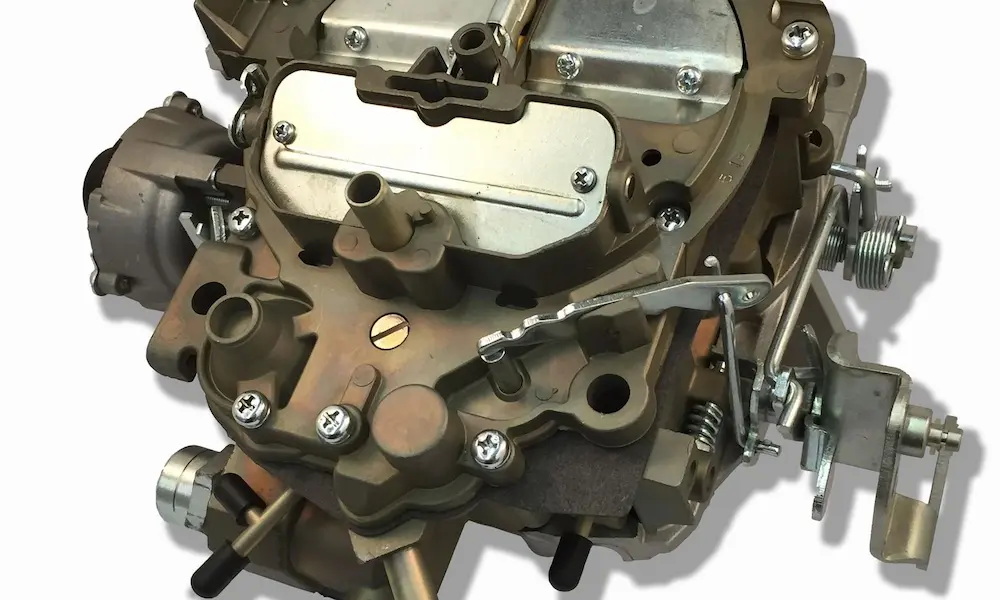
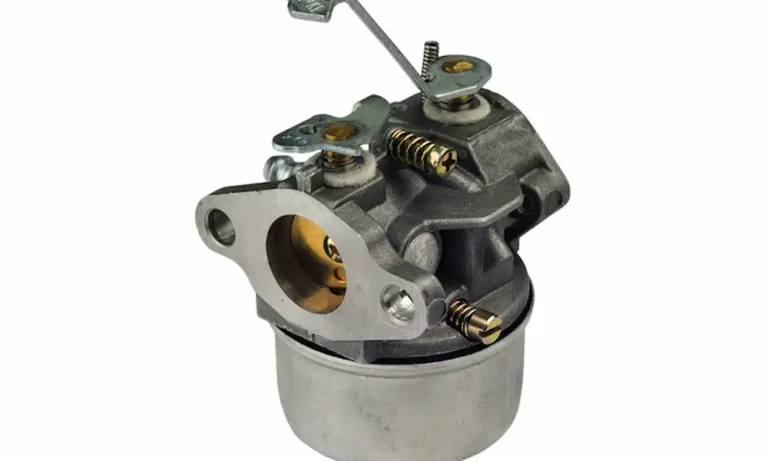
The carburetor’s only job is to mix air and fuel in the right ratio before it enters the engine. It does this through the venturi effect — as air speeds through the narrow throat of the carb, pressure drops, and fuel gets pulled up from the fuel chamber and atomized into a fine mist.
Get that ratio wrong and things go south fast.
There are three states your engine runs in:
- Stoichiometric — the perfect air-to-fuel balance
- Rich — too much fuel, not enough air
- Lean — too much air, not enough fuel
A lean condition is the dangerous one. In a 2 stroke, the fuel-oil mix is the only lubrication those internal bearings and cylinder walls get. Run lean and combustion temps spike, pistons melt, and cylinders seize. A slightly rich mixture runs cooler and is a much safer margin to work within.
Rich vs. Lean: How to Diagnose Your Engine Fast
Before you touch any adjustment screws, know what you’re dealing with. Here’s the full diagnostic breakdown:
| Diagnostic Check | Over-Rich | Over-Lean |
|---|---|---|
| Idle behavior | Rough, loads up, stalls | High-pitched, surges, hangs |
| Throttle response | Sluggish, slow to build speed | Hesitates, bogs, dies immediately |
| Cold start | Easy start, minimal choke | Nearly impossible, needs heavy choke |
| Hot restart | Very hard to restart warm | Restarts easily but runs poorly |
| Exhaust smoke | Thick, dark, smells like fuel | Faint, dry, burnt smell |
| Spark plug | Black, sooty, carbon-coated | White, glazed, or blistered ceramic |
| Altitude effect | Gets worse at higher elevation | Gets worse at sea level |
Check your spark plug first — it’s the quickest read on your engine’s combustion state. A black, velvety plug means rich. A white or blistered plug means lean.
The Tools You Actually Need for 2 Stroke Carburetor Adjustment
Here’s where most people get stuck. Modern outdoor power equipment uses proprietary recessed screw heads specifically to meet EPA emission regulations. You can’t use a standard flathead. Trying to improvise with needle-nose pliers or modified screwdrivers rounds off the soft brass heads and forces a full carburetor replacement.
You need the right specialty driver for your brand:
| Tool Type | Socket Profile | Brands It Fits |
|---|---|---|
| 21-Tooth Spline | 21 internal micro-grooves | Echo, Husqvarna, Poulan, Ryobi, Stihl |
| 7-Tooth Spline | 7 deep splines | Vintage Husqvarna, Ryobi |
| Pac-Man | Circle with single offset internal key | Echo, Ryobi, Craftsman, Homelite |
| Double D | Circle flattened on two opposing walls | Craftsman, Poulan, Weedeater, Toro |
| Single D | Circle flattened on one wall | Craftsman, Poulan, Husqvarna |
| 4mm Hex | Standard six-sided socket | Stihl, Husqvarna, commercial European tools |
A 3-piece kit covering Pac-Man, Double D, and 21-tooth spline handles 90% of US consumer equipment. Buy the right tool. It’s a $10 decision that saves you a $60 carburetor.
Pre-Adjustment Checklist: Do This Before Touching Any Screw
Skipping prep work is the fastest way to nail a bad tune. Run through this list first:
- Remove the cutting head or chain guard if possible — you’ll be running the engine at high speed during testing
- Clean or replace the air filter — a clogged filter mimics a choke condition; tune under those conditions and your engine runs dangerously lean once you install a clean filter
- Fill the fuel tank past halfway — tuning on a near-empty tank creates a false rich reading
- Use fresh, non-ethanol fuel — stale fuel and high-ethanol blends alter combustion density and skew your tune
- Warm the engine for 1-2 minutes — cold adjustments result in an overly rich tune once the engine heats up
How to Reset Your Carburetor to Factory Baseline
If someone’s already butchered the settings or you’ve installed a new carb, start here. This gives you a safe starting point before the engine even runs.
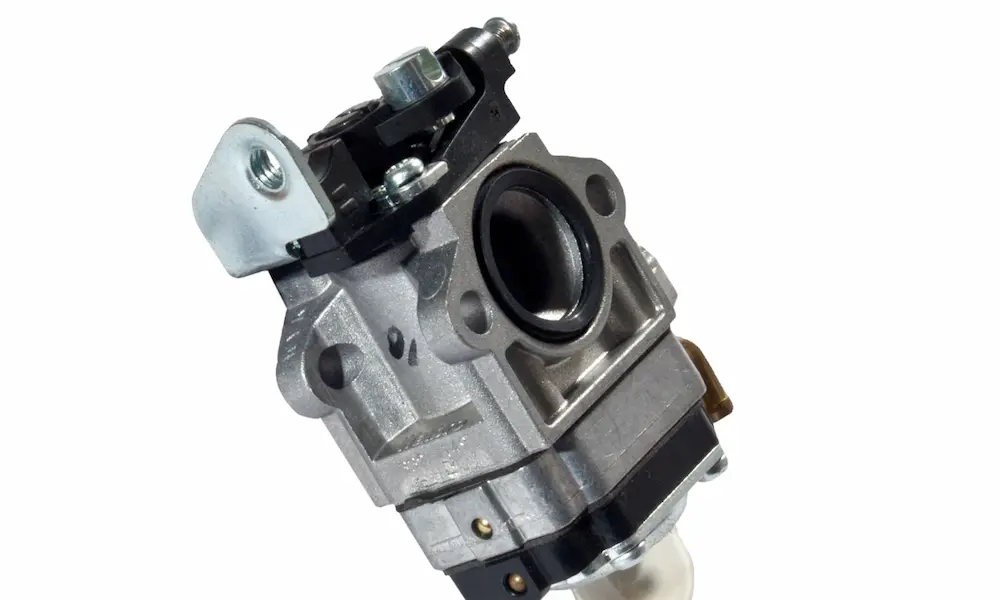
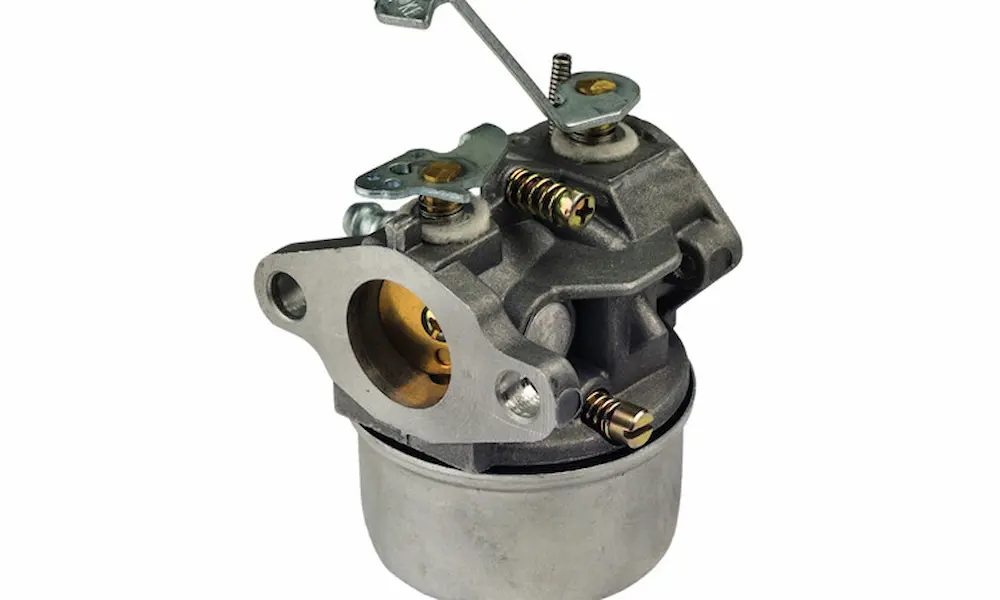
- Find your three adjustment screws: L (low-speed), H (high-speed), and LA or T (idle speed/throttle stop)
- Using your specialty tool, turn the L and H screws clockwise until they’re lightly seated — don’t force them; the brass needles strip easily
- Back both screws counterclockwise one full turn — this opens a slightly rich baseline that lets the engine start safely
- For a Stihl HS45 specifically: back the L screw out ¾ turn and turn the H screw counterclockwise until it hits the physical stop
- Turn the LA or T screw clockwise slightly to prop the throttle butterfly valve open just enough to idle
Adjusting the Low-Speed (L) Screw and Idle
The L screw controls fuel delivery at idle and through the critical transition to full throttle. A bad L setting causes most of the stumbling and bogging people complain about.
- Start the warmed engine and let it idle
- Set the idle speed screw (LA or T) so the engine stays running but the clutch stays disengaged — the chain, blade, or head must not move
- Slowly turn the L screw clockwise (leaner) — engine speed rises, then it starts to surge or stall; note that spot
- Slowly turn the L screw counterclockwise (richer) — it passes through a smooth peak, then loads up and rumbles; note that spot
- Set the L screw midway between those two points — that’s your optimal idle mixture
- Readjust the LA or T screw to bring idle speed back into the right range
- Test the transition: snap the throttle open fast — if the engine hesitates or dies, it’s slightly lean; turn the L screw counterclockwise a quarter-turn to enrich the transition circuit
Adjusting the High-Speed (H) Screw: Two-Stroking vs. Four-Stroking
This is where tuning by ear becomes your most important skill. You’re listening for two very distinct engine sounds:
Four-Stroking (Rich): Turn the H screw counterclockwise. The engine stutters, flutters, and produces a buzzing warble. It’s actually misfiring on alternating strokes because the mixture is too dense to ignite reliably every cycle.
Two-Stroking (Lean): Turn the H screw clockwise. The engine snaps into a clean, screaming whine. Sounds fast and crisp — but this produces dangerous heat and strips lubrication from the piston.
The sweet spot: Set the H screw so the engine four-strokes under no load at wide-open throttle, but instantly cleans up into a crisp two-stroke sound the moment it hits a cut or load. That’s maximum power delivery with thermal protection.
If you use a tachometer: Clip the lead to the spark plug wire, hold the throttle wide-open, and tune to the RPM listed in your service manual. Target 500 RPM below the absolute maximum — that buffer protects against lean conditions caused by a hardening diaphragm or partial fuel filter blockage.
Reference these target RPM ranges:
| Carburetor Type | Idle RPM | High-Speed RPM | Baseline (Turns Open) |
|---|---|---|---|
| Butterfly Valve Diaphragm | 2800–3200 | 10,500–12,500 | L: 1.25–1.75 / H: 1.50–2.00 |
| Rotary Valve Diaphragm | 2800–3200 | 9,000–10,000 | L: 1.00–1.50 / H: 1.25 |
| Stihl HS45 Hedge Trimmer | 2800–3200 | 9,500–10,500 | L: 0.75 / H: CCW to stop |
| Stihl FS76 String Trimmer | 2700–2900 | 10,000–11,500 | L: Best transition / H: Best power |
| Professional Chainsaws | 2500–2700 | 12,500–13,500 | L: 1.25 / H: 1.50 |
Don’t hold the engine at max RPM without a load for more than 5–8 seconds at a time. Unloaded high-speed runs cook bearings fast.
Why Your Engine Has a Hanging Idle (And How to Fix It)
A hanging idle is when you release the throttle and the engine keeps screaming instead of dropping back to idle. It’s almost always a lean condition in the low-speed circuit. Here’s what causes it:
Vacuum leaks (false air): External air sneaks into the engine without passing through the fuel-metering venturi, leaning everything out. Check your intake boot for cracks, loose carburetor mounting clamps, and torn intake gaskets.
Worn throttle shaft felt washers: These seals wear out over time and let air leak past the shaft. Soaking carbs in aggressive solvents destroys them faster.
Missing throttle shaft end plugs: Small metal plugs seal machining ports on the carb body. If they fall out, air bypasses the venturi completely.
Failed crankcase seals: 2 stroke engines pre-compress the fuel charge inside the crankcase. Bad crankshaft seals behind the flywheel or clutch pull in outside air and create a lean condition you can’t adjust your way out of.
High-ethanol fuel: Ethanol contains oxygen. Running 15% ethanol blends leans your mixture chemically. Stick to pure non-ethanol gasoline whenever possible.
Clogged low-speed pilot jet: One piece of debris in that tiny orifice and your idle circuit starves.
How to Pinpoint the Problem
Run these three tests in order:
- Physical throttle return check: With the engine off, snap the throttle and listen for a metal-on-metal click of the shaft hitting the idle stop. No click? Check cable routing, kinks, and linkage debris.
- Flammable spray test: Start the engine at hanging idle. Spray non-chlorinated brake cleaner along intake boot joints, gasket lines, and throttle shaft entry points. If the RPM drops or fluctuates when you hit a spot, you’ve found your vacuum leak.
- Choke override test: While the engine hangs high, partially engage the choke. If idle drops immediately to normal, the hanging idle is lean-based — either the L screw needs backing out counterclockwise or the idle circuit is clogged.
If none of these tests identify the culprit, it’s time to disassemble the carburetor and clear gum or varnish deposits blocking the internal low-speed fuel passages. A carburetor rebuild kit with fresh diaphragms and gaskets typically runs $8–$15 and solves problems no amount of screw-turning will fix.