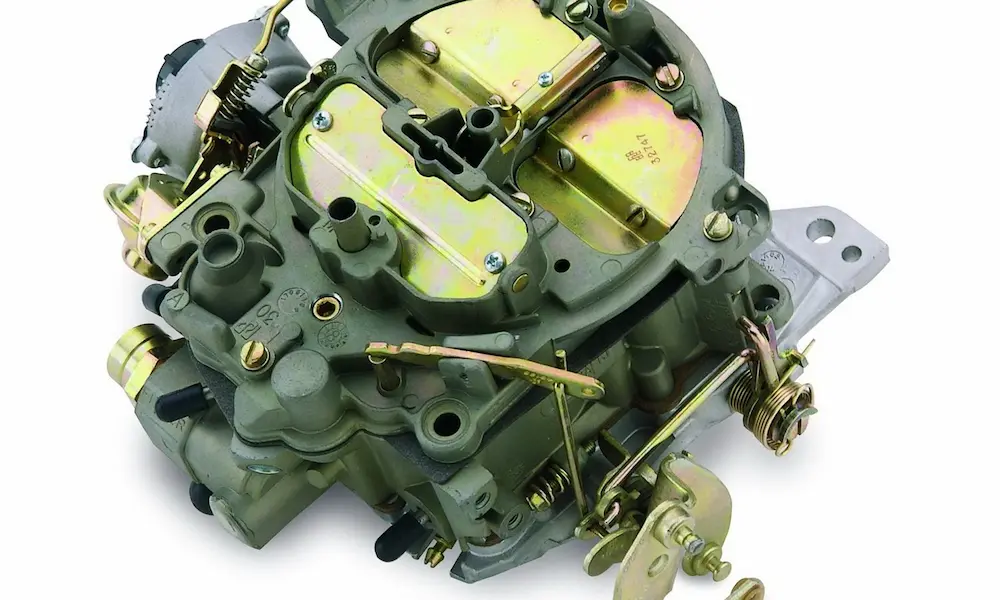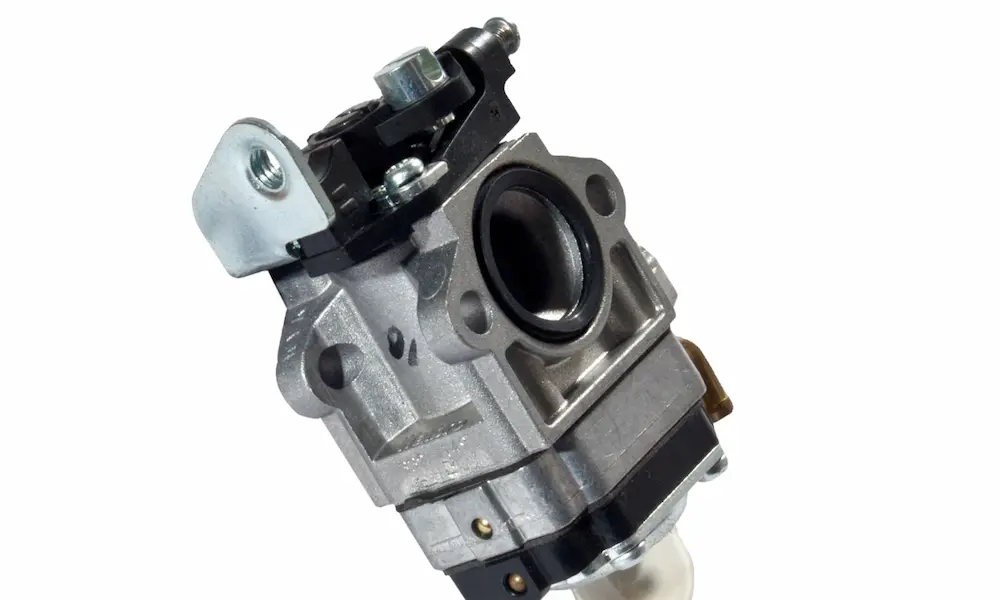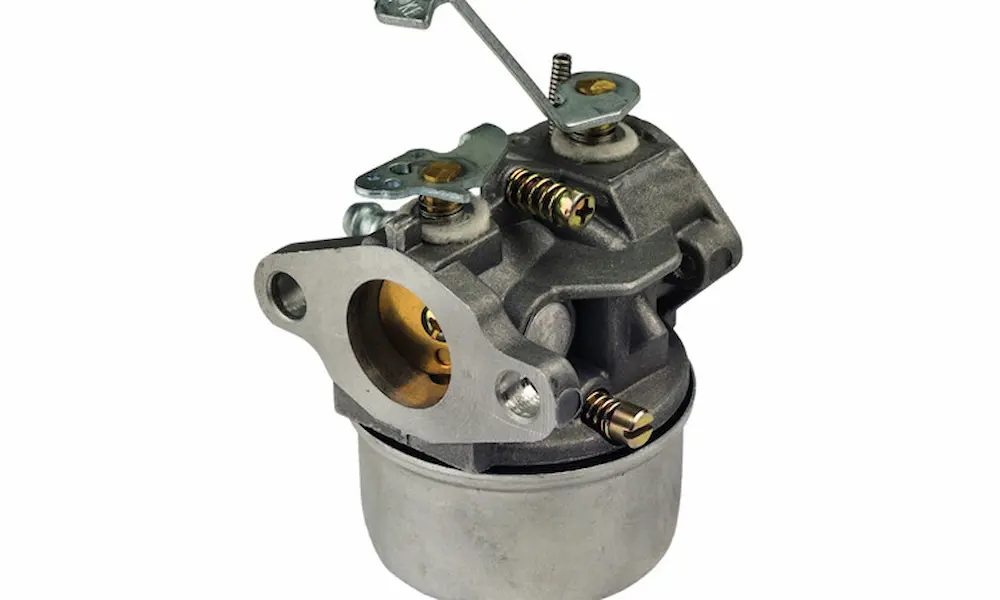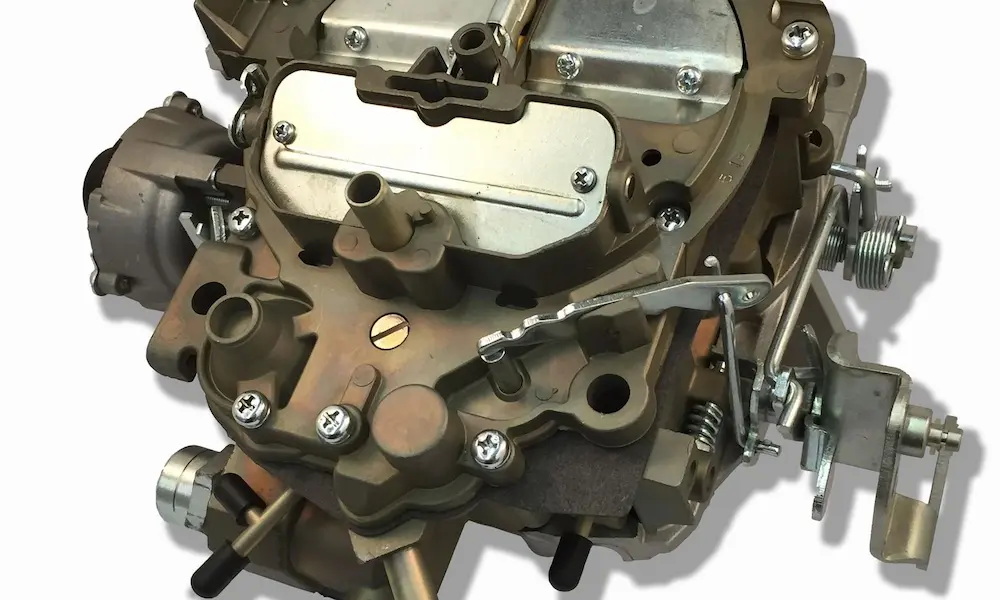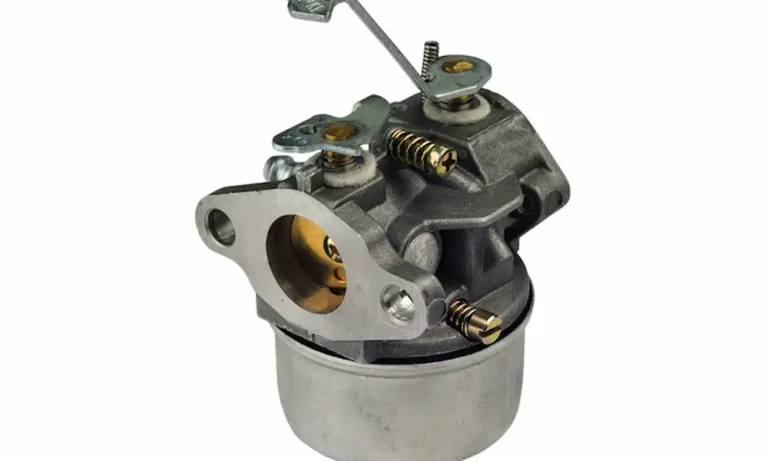
Got a mystery carb on your bench and no idea what it is? This guide breaks down Mikuni carburetor identification from the ground up — series codes, stamping locations, bore measurements, and how to spot a fake. Stick around to the end; the counterfeit section alone could save you a lot of money and frustration.
How Mikuni Carburetors Actually Work
Before you can identify one, it helps to understand what you’re looking at.
Mikuni carburetors use a variable venturi design that speeds up airflow through a narrowed throat, creating a pressure drop that pulls fuel in. A throttle slide crosses the throat to control how much air gets through.
Four circuits handle fuel delivery across the throttle range:
- Pilot system — idle to ¼ throttle
- Slide cutaway — ⅛ to ⅜ throttle transition
- Needle jet and jet needle — ¼ to ¾ throttle
- Main jet — ¾ to wide-open throttle
Each circuit overlaps with the next, so they work as a system, not in isolation. Understanding this makes diagnosis much easier.
OEM vs. Aftermarket: Know the Difference First
This is the most important distinction in Mikuni carburetor identification, and most people skip it entirely.
OEM Carburetors
OEM Mikuni units are built specifically for one vehicle. They might have the idle screw on the left instead of the right, vacuum ports for fuel petcocks, oil-injection nipples for two-stroke systems, or clearance cutouts for tight frame rails.
Mikuni only supplies these carbs and their unique parts through authorized OEM parts networks. You won’t find replacement jets for them at a general retailer.
A classic example: the VM34SS on a Suzuki PE175 looks almost identical to a retail VM34 but has proprietary internal casting and fittings.
Aftermarket Carburetors
Genuine aftermarket Mikunis are standardized units. No standard retail aftermarket carburetor comes with vacuum petcock ports, oil-injection nipples, or complex linkage assemblies.
When swapping an aftermarket carb onto a bike that originally had OEM-specific fittings, you’ll need workarounds — like switching to a manual gravity-feed petcock or converting a two-stroke oil-injection system to premix.
The Four Main Mikuni Series Explained
VM Series (Round Slide)
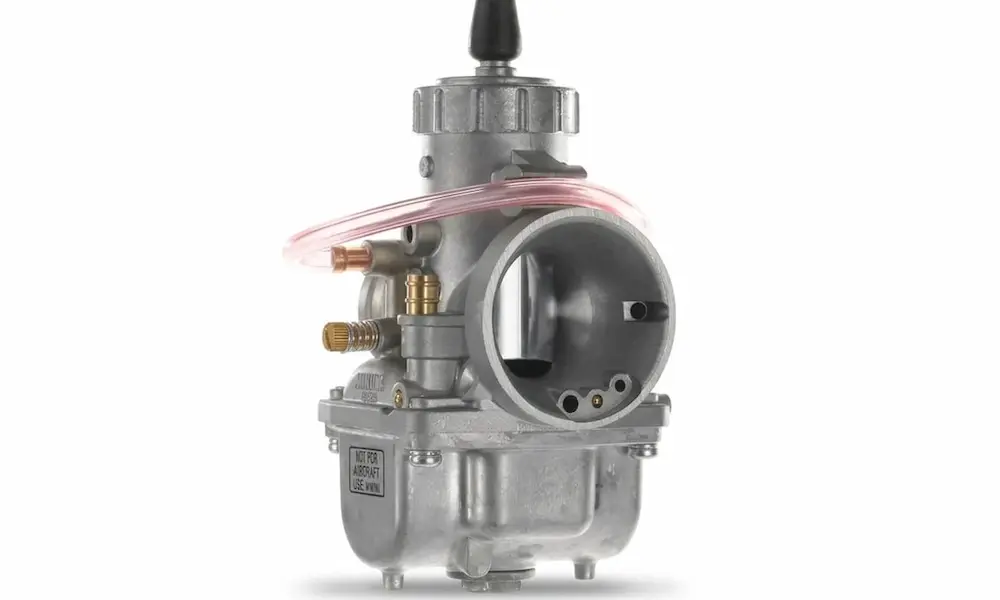
The VM series is the most common replacement carburetor for vintage bikes, snowmobiles, and small agricultural engines. It uses a heavy cylindrical slide and works with both two-stroke and four-stroke engines.
Watch out for sub-variants within the same size. The VM26 comes in two retail versions:
- VM26-606 — short body, side-mounted choke, for mini four-stroke engines
- VM26-8074 — full body, two-stroke configuration, built for performance tuning
Here’s a quick-reference size chart for the VM series:
| Model | Bore | Engine Displacement | Mount Type |
|---|---|---|---|
| VM13SC300 | 13mm | 30–70cc 2-stroke | Clip |
| VM16SC3 | 16mm | 50–80cc 2-stroke | Clip |
| VM24SH100 | 24mm | 100–125cc 2-stroke | Flange |
| VM30SS100 | 30mm | 150–250cc 2-stroke | Spigot |
| VM34SS1 | 34mm | 200–440cc 2-stroke | Spigot |
| VM44SC1 | 44mm | 250–500cc 2-stroke | Spigot |
TM Series (Flat Slide)
The TM series uses a flat throttle valve, which shortens the carb body and reduces intake turbulence. It flows more air than a round-slide carb of equal bore diameter and delivers sharper throttle response.
Originally built for two-stroke motocross and snowmobile engines, models like the TM33, TM36, and TM40 include four-stroke calibrations and secondary accelerator pumps.
| Model | Bore | Main Jet | Pilot Jet | Needle Jet | Jet Needle |
|---|---|---|---|---|---|
| TM32-1 | 32mm | 250 | 45 | 389 Q-2 | 5FP17 |
| TM36-2 | 36mm | 280 | 50 | 389 Q-6 | 6FJ40 |
| TM38-102 | 38mm | 340 | 25 | 389 Q-2 | 6FJ40 |
| TM40-6 | 40mm | 165 | 17.5 | 784-13002 Y-6 | 9DDY01 |
HSR Series (Smoothbore)
The HSR series targets large-displacement air-cooled V-twins — primarily Harley-Davidson applications. The flat slide rides on low-friction roller bearings for a light throttle pull under high engine vacuum.
The smoothbore throat design maximizes airflow. The airflow numbers speak for themselves:
| Model | Throat | Airflow |
|---|---|---|
| Stock CV40 | 40mm | 185 CFM |
| HSR42 | 42mm | 213 CFM |
| HSR45 | 45mm | 237 CFM |
| HSR48 | 48mm | 270 CFM |
BS / BSR / BST Series (Constant Velocity)
These are Mikuni’s constant velocity carburetors. The throttle cable doesn’t connect directly to the slide. Instead, it rotates a butterfly plate that changes engine vacuum, which then moves a rubber diaphragm to raise or lower the slide.
This prevents bogging when you snap the throttle open hard. The BS and BSR models use a round slide; the BST uses a flat slide.
Where to Find the Identification Stampings
VM Series Stamping Locations
Check the machined boss that houses the choke plunger. The venturi size is usually stamped there as a two-digit number — “32” or “34,” for example.
Also check the front of the casting body, just below the choke. You’ll often find a series code lightly etched into the metal, like “1W2” with “00” below it. On vintage VM carbs, look for a flat square boss on the side of the main body with stamped alphanumerics like “Z 4.”
TM Series Stamping Locations
Look near the vacuum take-off port or on the lower casting wall. The stamp usually starts with “T” followed by the throat size — “T34,” “T36,” “T38,” or “T40.”
BST / BSR / BS Stamping Locations
These carbs show numbers stamped on the main aluminum body or on a small metal tag attached to a float bowl screw. Because most were factory-fitted, they often display the vehicle manufacturer’s part number rather than Mikuni’s retail code.
For example, a Suzuki DR650 BST40 carries the Suzuki stamp “32E1” rather than any Mikuni retail designation.
Measuring Bore Size Without a Stamping
If the markings are worn or missing, reach for calipers. The nominal size of any Mikuni carburetor is the inside diameter of the venturi bore, measured on the engine-facing outlet side.
On a VM34, that engine-side inside diameter measures exactly 34mm. Note that constant velocity carbs run a physical throat four to six millimeters larger than an equivalent slide-type carb to achieve similar flow velocities.
Mounting Systems: Spigot, Flange, and Clamp-On
Mikuni carbs attach to engines three ways:
- Spigot mount — a smooth cylindrical sleeve that slides into a rubber adapter boot, secured with a worm-gear clamp
- Flange mount — cast metal ears with bolt holes that mount directly to intake manifold studs
- Clamp-on mount — a split collar that clamps over a rigid intake pipe
For spigot-mount carbs, you must match the spigot outside diameter to the correct rubber mounting flange. Here are key flange specs:
| Flange Part | Bore | Spigot OD | Stud Centers |
|---|---|---|---|
| I-VM30-200-1 | 30mm | 37mm | 57.2mm |
| I-VM34-200-1 | 34mm | 40mm | 60.0mm |
| I-VM38-200-1 | 38mm | 43mm | 74.6mm |
| I-VM44-200-1 | 44mm | 52mm | 84.0mm |
Decoding Jet and Needle Stampings
Main Jets and Pilot Jets
Main jets come in two common shapes: hex-head (series 4/042) and large round-head (series N100.604). Pilot jets most often use the VM28/486 or VM22/210 series designations.
The number stamped on the jet is its flow rating. Bigger number equals bigger orifice equals more fuel.
Needle Jets
Needle jets carry a series code — 159, 166, 224, or 389 — that defines shape and air bleed patterns. An alphanumeric sizing code follows, like “P-4,” “Q-2,” or “AA-5.”
The letter indicates bore diameter in 0.05mm steps. P is leaner than Q, Q is leaner than R. The trailing number adds 0.01mm micro-steps within that range.
Jet Needles
A jet needle stamp like “6DH3” breaks down like this:
- First digit (6) — series number for carburetor throat size range; 6 = 30mm to 34mm carbs
- Letter D — taper angle; each letter = 0.25 degree step, so D = 1 degree
- Letter H — secondary taper; H = 2 degrees farther down the needle
- Final number (3) — manufacturing revision or finish; doesn’t change the physical taper dimensions
A brass “6DP5” and a hard-anodized “6DP17” share the exact same taper profile.
How to Spot a Counterfeit Mikuni
The market is full of cheap clones. Counterfeit Mikunis use poor alloys and loose tolerances that make them nearly impossible to tune properly. Here’s what to check:
- Slide markings — Pull the top cap. A genuine Mikuni has “Mikuni Corp” cast into the metal on the slide. Fakes are blank.
- Body casting — Genuine carbs have “Made in Japan” raised in the casting above the float bowl seam. Some fakes misspell it as “Minkui.”
- Safety decal — Genuine VM round-slide carbs carry a “NOT FOR AIRCRAFT USE” warning decal with specific metal anchor plates. Counterfeits have neither.
- HSR decal — Genuine HSR carbs say “Assembled in Mexico.” Fakes don’t.
- Overflow hoses — Real Mikunis ship with dark pink, temperature-resistant Plas Tech hoses. Fakes use stiff, clear or light-colored vinyl tubing.
- Internal components — Genuine jets show a microscopic square-within-a-square Mikuni logo with clear size numbers. Counterfeit jets are blank or roughly stamped.
Jetting for Altitude, Temperature, and Humidity
Once you’ve confirmed what you have, calibration comes next. Environmental conditions directly affect air density, which changes how much fuel the engine needs.
- Altitude — Drop one main jet size for every 2,000 feet of elevation gain. Thinner air needs less fuel.
- Cold temperatures — Denser cold air needs richer jetting to avoid a dangerous lean condition.
- Hot temperatures — Thinner hot air needs leaner jetting.
- High humidity — Water vapor displaces oxygen, so humid conditions call for slightly leaner jetting.
Systematic Tuning: Isolate Each Circuit
Don’t tune by guessing. The Mikunioz tuning guide recommends using throttle-position witness marks — tape on the throttle housing with marks at closed, ¼, ½, ¾, and full open — to pinpoint exactly which circuit is active during any problem.
Pilot circuit first: With the engine at operating temp, slow the idle slightly. Turn the idle mixture screw in until the engine stumbles, then back it out and count the turns until it stumbles the other way. Set it exactly halfway. If the sweet spot is under one turn out, fit a richer pilot jet. If it’s over two turns out, go leaner.
Main jet check: Do a full-throttle plug chop — hit the kill switch and pull the clutch simultaneously at wide-open throttle, then read the plug color. Caramel or light tan is perfect. Sooty black means too rich. White or light gray means dangerously lean — fix this immediately.
Multi-carb sync: Slide a 10mm drill bit shank under the primary carburetor slide. Adjust cable tensioners until every slide in the array shows the same drag against the pin. This guarantees balanced lift across all carbs.
Get the identification right first, then the tuning follows logically. Once you know exactly what series and size you’re working with, every jet number, needle code, and mounting dimension falls into place.