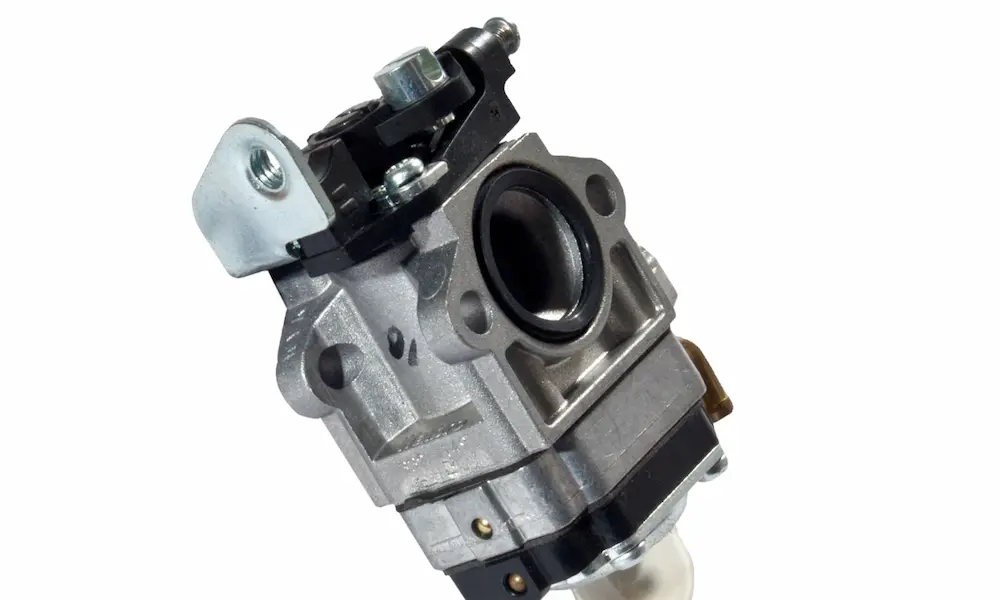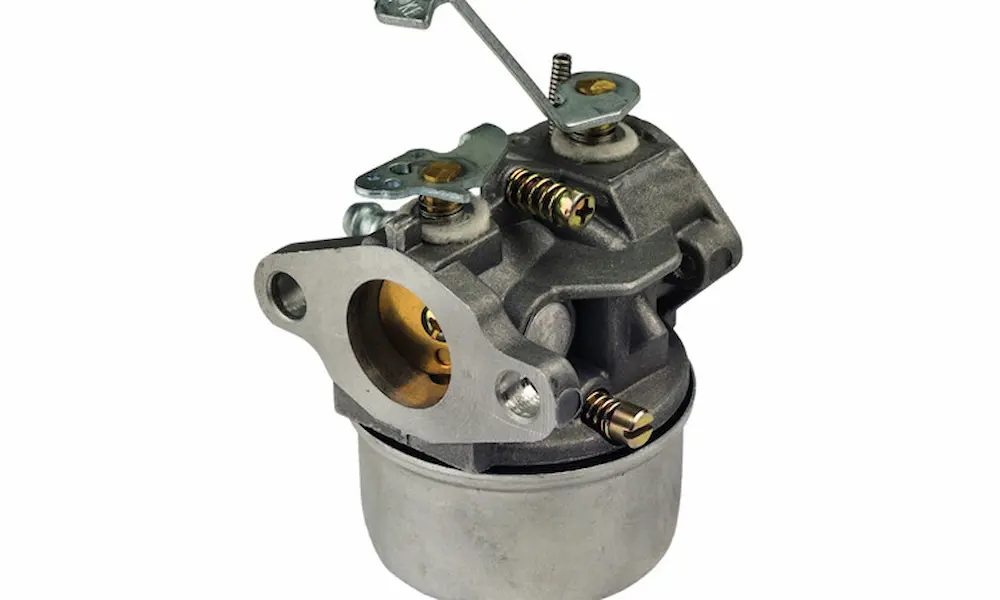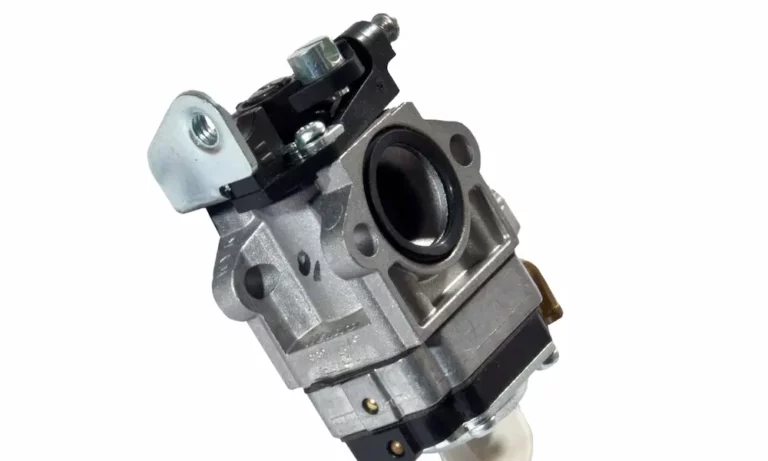
Your chainsaw bogs down, screams at full throttle, or dies mid-cut. Nine times out of ten, the carburetor needs adjusting. This guide walks you through exactly how to adjust a chainsaw carburetor — safely, correctly, and without wrecking your engine. Stick around for the brand-specific steps and the diagnostic tests at the end.
What Those Three Screws Actually Do
Before you touch anything, you need to know what you’re adjusting.
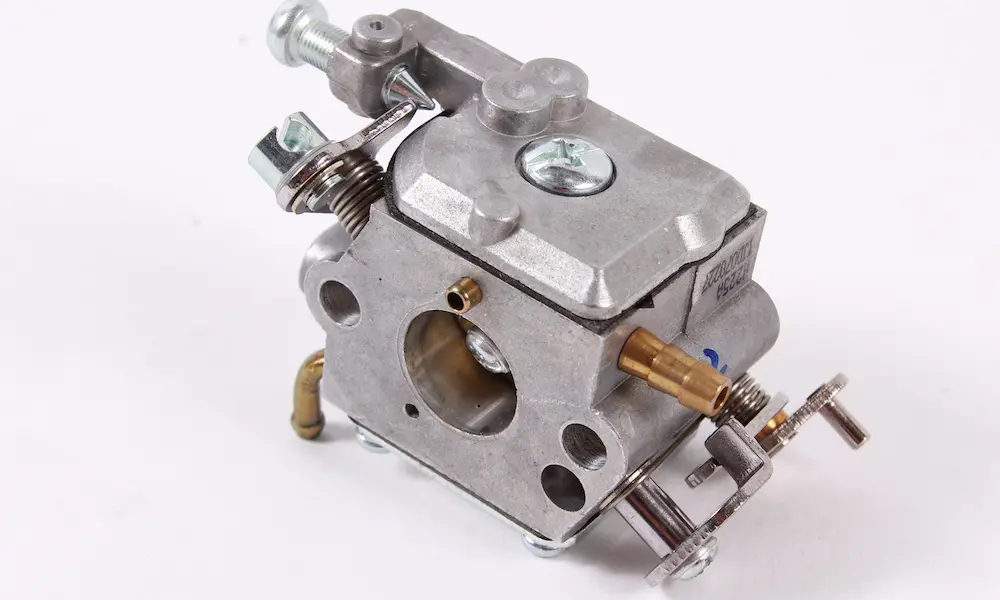
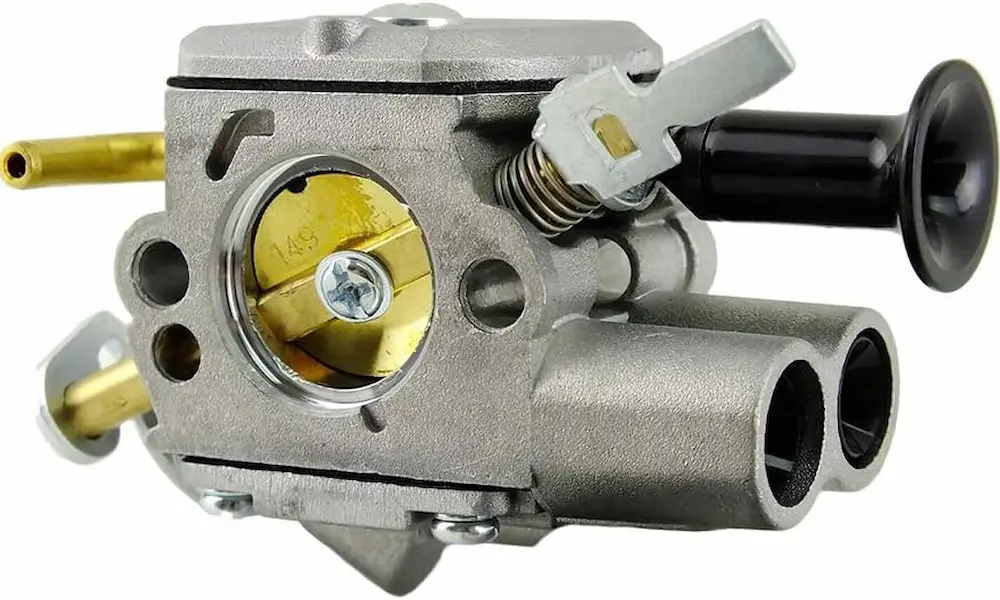
Every chainsaw carburetor has three control points:
- L (Low-Speed Jet): Controls the fuel mix at idle and low throttle. Too rich and the engine loads up and smokes. Too lean and it surges, bogs, or stalls.
- H (High-Speed Jet): Controls the mix at full throttle under load. A lean H setting is the fastest way to destroy an engine — it starves the cylinder of fuel and lubricating oil simultaneously.
- LA / T / S (Idle Speed Screw): Doesn’t change the fuel mix. It just sets how far the throttle valve stays open at rest. This screw keeps your engine running at idle without spinning the chain.
Two-stroke chainsaws carry their lubricating oil in the fuel mixture. So when you lean out the H screw, you’re not just cutting fuel — you’re cutting lubrication. That’s why a lean high-speed setting causes piston scoring and engine seizure within seconds of wide-open throttle operation.
The Tool You Actually Need
Standard flathead screwdrivers won’t work on most modern chainsaws. EPA regulations require manufacturers to fit plastic limiter caps over the L and H screws, which restrict rotation to about half a turn. Those caps require specialty drivers.
Here’s a quick reference for which tool fits which brand:
| Driver Type | Compatible Brands | Notes |
|---|---|---|
| 21-Teeth Spline | Husqvarna, Stihl, Zama, Poulan | Most common; fits EPA-compliant Zama carbs |
| 7-Teeth Spline | Husqvarna, Poulan, Homelite | For larger screws needing more torque |
| Pac-Man | Homelite, Ryobi, Poulan | Circular face with a single flat notch |
| Micro Pac-Man | Ryobi, Homelite, Ruxing | Scaled-down version for narrow recesses |
| Single/Double D | Craftsman, Poulan, Husqvarna | Flat driving edge for D-shaped needle heads |
| 4mm Hexagon | Stihl, Husqvarna | Removes or adjusts recessed limiter caps |
Stihl chainsaws often need the dedicated Stihl limiter cap tool (part #5910 890 4500), which pops the caps off cleanly without cracking the carburetor body. On Husqvarna models like the 372XP, a splined screwdriver can push the limiter cap into its unlocked position without removing it entirely.
Do These Checks Before You Adjust Anything
Adjusting a carburetor on a saw with underlying problems gives you bad results. Fix the saw first, then tune it.
Clean or replace the air filter. A clogged filter artificially richens the mixture by restricting airflow. If you tune the carb with a dirty filter, the mixture goes dangerously lean the moment you install a clean one. Paper filters need warm soapy water and full drying time. Wire-mesh or nylon filters clean up with fresh chainsaw gasoline and don’t need to dry before reinstallation.
Set the chain tension correctly. Loosen the bar nuts to finger-tight, turn the tensioning screw clockwise until the chain sits snug against the bar rail, lift the bar tip, then tighten the nuts. The chain shouldn’t sag below the bar, but you should be able to pull it around the bar by hand. A chain that’s too tight loads the engine during tuning and throws your readings off.
Check the fuel pickup inside the tank. Some chainsaws ship with fuel lines that are cut too long, which pins the pickup filter against the tank wall. Tilt the saw in multiple directions. If the pickup doesn’t drop freely to the lowest point, pull the line out slightly and trim it to length.
Inspect the carburetor jets. Old fuel leaves a gummy residue that blocks the tiny jet orifices. Remove the carburetor cover, diaphragm, and needles, then spray all internal passages with pressurized carb cleaner. Check the fuel line and intake boot for cracks — any air leak creates a lean condition you can’t tune around.
Warm the engine up. Start the saw and let it run several minutes before touching any screws. Cold engines run differently. Tune a warm engine, always.
Factory Baseline Settings by Brand
Before fine-tuning, reset both screws to their factory baseline. Turn each screw clockwise until it lightly seats — don’t force it — then back out by the number of turns shown below.
| Brand / Model | L Baseline | H Baseline |
|---|---|---|
| Stihl (standard) | 1 full turn open | 1 full turn open |
| Stihl (limiter-capped) | 3/4 turn open | Counterclockwise to stop |
| Husqvarna (standard) | 1.5 turns open | 1.5 turns open |
| Husqvarna (EPA-regulated) | 1/2 turn open | 1/2 turn open |
| Poulan (standard) | 1.25 turns open | 1.25 turns open |
| Poulan (high-capacity) | 1.5 turns open | 1.5 turns open |
How to Adjust a Chainsaw Carburetor: Step-by-Step by Brand
Stihl (LA, L, H)
Start with the L screw. With the engine warm and idling, turn the L screw clockwise slowly. The idle speed rises, peaks, then starts to drop. Note that point. Now turn it counterclockwise — the speed rises again, peaks, then drops as the engine floods. Set the L screw at the midpoint between those two drop-off points.
Next, set the idle speed. Turn the LA screw counterclockwise until the chain stops rotating, then back it off an additional quarter to half turn for a safe margin.
For the H screw, squeeze the throttle to wide-open. Turn the H screw clockwise until the engine hits maximum RPM, then back it off counterclockwise by about a quarter turn. You’re listening for a slight flutter in the exhaust note at full throttle. That flutter confirms the engine is getting enough fuel and oil. A clean, screaming high note means it’s running lean — back the H screw out more.
At high altitude, perform the standard tune, then turn the H screw slightly clockwise — leaner — but never past the physical stop.
Husqvarna (T, L, H)
Start the engine and turn the T screw clockwise until the chain rotates, then back it counterclockwise until the chain stops. That gives you the right idle speed range to work with.
Adjust the L screw using the same peak-finding method as Stihl. Turn it clockwise until idle peaks, then counterclockwise until it begins to drop, and set it at the midpoint. Test the transition by snapping the throttle. If it hesitates, turn the L screw counterclockwise in small increments until the engine accelerates cleanly.
For the H screw, connect a tachometer to the spark plug lead. Squeeze the throttle and adjust the H screw until the engine speed matches the manufacturer’s spec — typically around 8,400 RPM for most models. Set it about 500 RPM below the maximum limit to keep a safe fuel and oil margin. Press the limiter cap back onto the needle in its richest (fully counterclockwise) position.
Poulan (T, L, H)
Turn the L screw clockwise until the engine nearly stalls from fuel starvation, then counterclockwise until it nearly stalls from flooding. Set it at the midpoint. Then adjust the T screw until the engine idles smoothly between 2,500 and 3,000 RPM with the chain completely still.
For the H screw, squeeze to wide-open throttle and turn the H screw counterclockwise until the engine bogs slightly — that confirms a rich mixture. Then slowly turn it clockwise until the engine pulls clean and strong. Never turn the H screw more than one full turn from its seat. Going past that point starves the piston of oil and causes seizure.
Diagnostic Tests That Confirm Your Tune Is Right
Adjusting the screws is only half the job. These field tests tell you if the tune actually holds up under real conditions.
The Tip Test: Let the saw idle for 30 seconds, then tilt it forward so the bar points straight down. If the engine stalls, the L mixture is too rich. Turn the L screw clockwise in small increments until the engine idles steadily in all positions.
The Transition Test: Snap the throttle from idle to full. Any hesitation or bog means the L mixture is too lean. Turn the L screw counterclockwise in small increments until the engine accelerates immediately without stumbling.
The High-Speed Rev Test: Hold the throttle wide open for about five seconds and listen. A high-pitched scream means a dangerously lean H setting. Loosen the H screw counterclockwise until you hear a slight flutter at full throttle. Don’t rev without a load for longer than ten seconds — it can cause engine damage.
Chain-at-Idle Check: Watch the chain while the engine idles. If it moves, the idle speed is too high. Back the idle screw (LA/T/S) off counterclockwise until the chain stops completely.
Here’s a quick troubleshooting reference for the most common symptoms:
| Symptom | Likely Cause | Fix |
|---|---|---|
| Engine stalls when tilted forward | L mixture too rich | Turn L screw clockwise |
| Hesitation on throttle snap | L mixture too lean | Turn L screw counterclockwise |
| Heavy smoke at full throttle | H mixture too rich | Turn H screw clockwise |
| Chain spins at idle | Idle speed set too high | Turn idle screw counterclockwise |
| High-pitched scream at full throttle | H mixture dangerously lean | Turn H screw counterclockwise immediately |
| Loss of power + running hot | H mixture lean | Turn H screw counterclockwise |
What Happens When You Get It Wrong
A lean H setting doesn’t just hurt performance — it destroys the engine fast. Without sufficient fuel to carry oil to the cylinder walls and absorb combustion heat, the aluminum piston expands faster than the cylinder bore. Metal contacts metal, the walls score, and the engine seizes. This can happen within seconds of wide-open throttle operation.
Running too rich is less dangerous, but it’s not harmless. Unburnt fuel and oil build up as carbon deposits on the spark plug, piston crown, exhaust ports, and spark arrestor screen. Over time that carbon plugs the exhaust system, bridges the spark plug gap, and kills ignition entirely. The saw gets harder to start, loses power, and eventually stops running.
Get the mixture right — slightly rich rather than lean — and your engine runs cool, starts easily, and lasts for years.