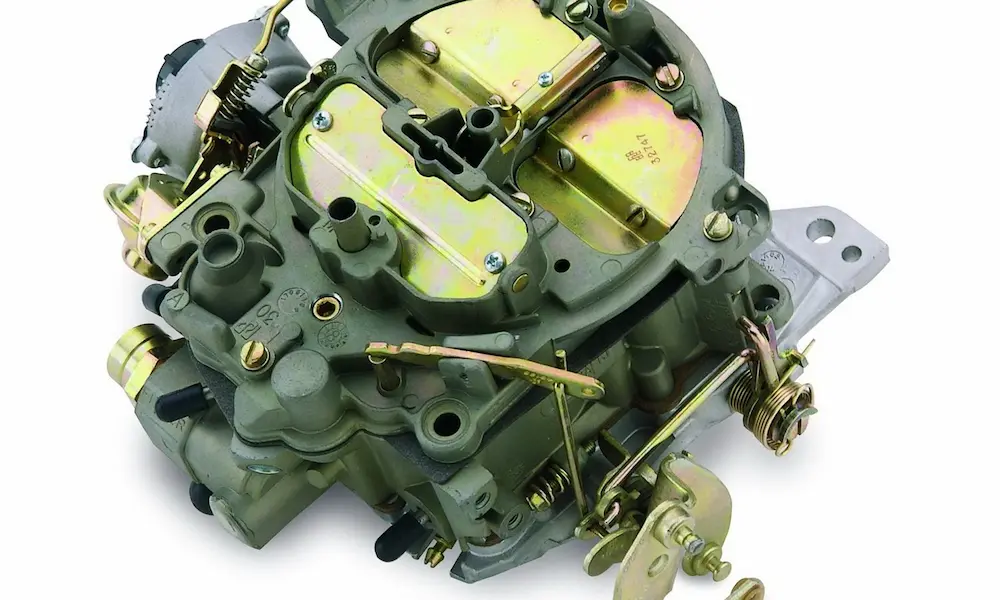
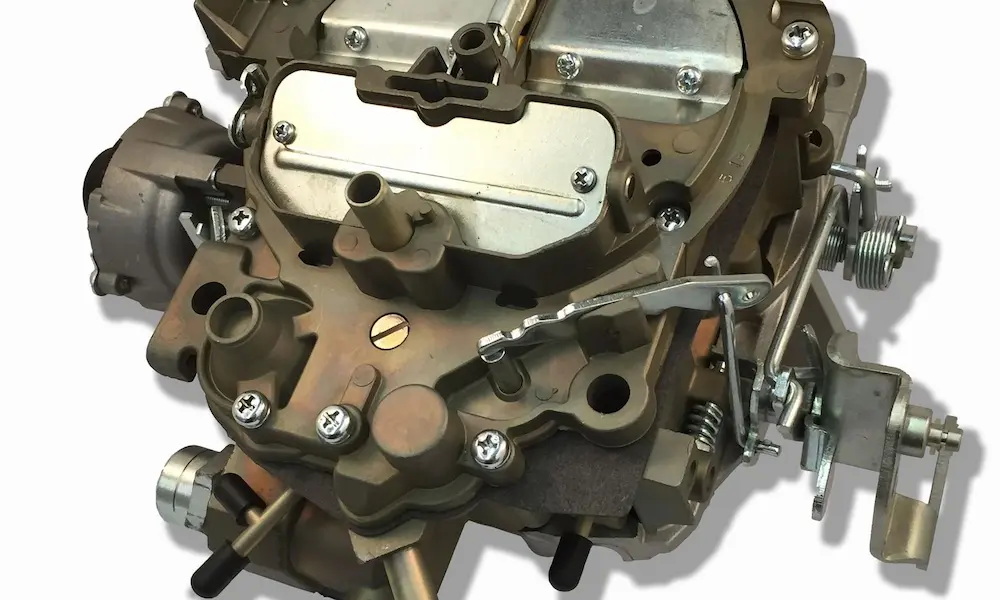
Staring at an old Rochester carburetor with no idea what you’ve got? You’re probably one wrong rebuild kit away from a very expensive mistake. Rochester carburetor identification isn’t just trivia — it’s the difference between a perfectly tuned engine and a frustrating pile of mismatched parts. Stick around, because this guide covers everything from tags to stamps to decoding every digit in that part number.
Why Rochester Carburetor Identification Actually Matters
Rochester carburetors weren’t one-size-fits-all. Different engines, transmissions, and emission standards all demanded specific internal calibrations — different jets, metering rod tapers, and venturi sizes.
Bolt the wrong carb onto your engine and you’ll deal with:
- Poor fuel economy
- Rough idle and hesitation
- Failed emissions tests
- Potential engine damage from running lean or rich
Getting the identification right from the start saves you time, money, and a lot of frustration.
Where to Find the Identification Number
Before you decode anything, you need to find the number. Rochester used two methods depending on the era.
Metal Tags (1949–1968)
Early Rochester carburetors didn’t have numbers stamped directly into the casting. Instead, they used attached metal tags.
- Brass tags: Used from 1949 until late 1956
- Aluminum tags: Introduced in late 1956 or early 1957
These aluminum tags were often color-anodized so assembly line workers could quickly verify the right carb was going on the right engine. Unfortunately, engine heat and carburetor cleaner stripped that color off decades ago on most survivors.
Tag shapes varied by model:
| Tag Shape | Carburetor Models | Location |
|---|---|---|
| Triangular | BB, 2G, 4G, H, R series | Under a primary screw securing the air horn to the float bowl |
| Round disc | Quadrajet (1965+) | Pressed into a cast circular indent on the driver’s side of the float bowl |
If the tag is missing, you’re left measuring internal orifices and throttle linkage configurations — a slow, painstaking process.
Direct Roll Stamping (Mid-1968 and Newer)
Rochester switched to roll stamping mid-way through 1968. The part number and date code are recessed directly into the metal — not raised, but pressed in.
Where to look:
- Quadrajet: Driver’s side of the float bowl, near the secondary throttle linkage, running vertically
- Monojet and two-barrel: Along a flat boss on the side of the float bowl near the fuel inlet
Don’t confuse roll stamps with raised casting numbers. Raised numbers identify raw casting blanks before final machining — they can’t tell you what the finished carburetor actually is. A single casting blank could become dozens of different finished part numbers.
Decoding the 7-Digit Part Number (1963–1975)
This is where Rochester carburetor identification gets genuinely useful. Every digit tells you something specific.
Digits 1, 2, and 3: The Prefix Code
The first three digits reveal the decade and production type.
| Prefix | Era | Notes |
|---|---|---|
| 702 | 1960s production | Standard original equipment |
| 703 | 1960s emissions/service | Denotes early emission control engines; also used heavily for service replacement units |
| 704 | 1970–1975 | Standard original equipment for the early 1970s |
A note on the 701 prefix: Rochester used “701” for original equipment from 1957 through 1961. The problem? GM continued using “701” for dealership service replacement carbs well into the late 1960s. If you have a 701-prefix unit, there’s virtually no way to confirm whether it’s an original factory installation or an over-the-counter replacement without cross-referencing factory literature.
Digit 4: Year of Production
The fourth digit tells you the specific year within the decade set by the prefix.
- In a 702 or 703 carburetor, a fourth digit of 8 means 1968
- In a 704 carburetor, a fourth digit of 2 means 1972, and 5 means 1975
Digit 5: Carburetor Model and Emission Standard
This digit identifies both the barrel configuration and the emissions calibration:
| Digit | Configuration | Standard |
|---|---|---|
| 0 | Monojet (1-barrel) | Federal |
| 1 | Two-Jet (2-barrel) | Federal |
| 2 | Quadrajet (4-barrel) | Federal |
| 3 | Monojet (1-barrel) | California |
| 4 | Two-Jet (2-barrel) | California |
| 5 | Quadrajet (4-barrel) | California |
| 6 | Varajet (2-barrel) | Federal |
California-spec carburetors have different internal calibrations. Don’t swap them onto a Federal-spec engine and expect correct air-fuel ratios.
Digit 6: GM Division
This digit identifies which GM division originally used the carburetor. A Pontiac carb won’t deliver optimal air-fuel ratios on a Chevrolet engine without recalibration — their vacuum profiles and idle requirements are genuinely different.
| Digit | Division |
|---|---|
| 0, 1, 2 | Chevrolet / GMC Trucks |
| 3 | Cadillac |
| 4 | Buick |
| 5 | Oldsmobile |
| 6, 7 | Pontiac |
| 8 | Holden (Australian export) / Marine |
Digit 7: Transmission Type
The final digit tells you whether the carb was built for an automatic or manual transmission — which affects idle speed circuitry and throttle dashpot specs.
- Even numbers (0, 2, 4, 6, 8): Automatic transmission
- Odd numbers (1, 3, 5, 7, 9): Manual transmission
- Exception: Cadillac applications don’t follow this rule
The 8-Digit System (1976 and Newer)
Starting in 1976, Rochester expanded to an eight-digit number. All carbs from this era start with the prefix 170.
- 1705: 1976–1979 production
- 1708: 1980s production
The fifth digit identifies the specific year within that decade. For example:
- 17058 = 1978
- 17082 = 1982
Digits 6, 7, and 8 follow the exact same logic as digits 5, 6, and 7 in the earlier system — barrel configuration, GM division, and transmission type.
Reading the Date Code
The date code tells you exactly when the carb was built. It also reveals whether Rochester built it — or Carter did.
Rochester Julian Date Codes
Rochester-built carbs use a four-digit Julian date code stamped right next to the part number.
- Digits 1, 2, 3: The sequential day of the year (001 through 365)
- Digit 4: The final digit of the production year
Example: A date code of 2709 means the 270th day of 1969. A code of 0828 means the 82nd day of 1968.
Since the last digit only shows one number, you always cross-reference it with the part number prefix to confirm the correct decade. An “8” could mean 1968, 1978, or 1988.
Carter-Built Quadrajets
Rochester couldn’t keep up with demand during the muscle car era, so GM licensed Carter Carburetor Company to build millions of Quadrajets. Carter units use the same internal architecture and parts — fully interchangeable — but their date codes look completely different.
Carter codes use letters and numbers:
- Letter: Month of assembly (A = January, B = February… L = December)
- Number: Last digit of the year
Example: C1 = March 1971
Carter also produced aftermarket service replacement Quadrajets with a standard four-digit Carter part number followed by the letter “S” (like 4675S). These often shipped with triangular identification tags.
Decoding the Model Name
The model name tells you the barrel count and the choke type at a glance.
Barrel Count Prefixes
- No prefix or “1” = Single-barrel (Monojet)
- “2” = Two-barrel (2G Two-Jet, 2M Dualjet)
- “4” = Four-barrel (4G, Quadrajet)
Choke Suffix Letters
The letters after the barrel number — like the V in 4MV or the C in M4MC — define how the choke operates:
| Letter | Choke Type | How It Works |
|---|---|---|
| V | Manifold-mounted (divorced) choke | Bimetal coil sits in the intake manifold; mechanical rod connects it to the carb |
| C | Integral hot-air choke | Coil mounts on the carb body; heated air from the exhaust manifold opens it |
| E | Integral electric choke | Coil mounts on the carb body; a 12-volt heating element opens it |
| M | Manual choke | Driver-operated pull cable |
Prefix Letters for Technological Generations
Two important prefix letters appear on later Rochester carbs:
- “M” (Modified): Introduced in 1975 on the M4MC. These castings have longer throttle shafts, altered airhorn designs, and primary metering rods that are physically incompatible with pre-1975 models. Don’t mix them.
- “E” (Electronic): Introduced in the late 1970s on models like the E4ME. These carbs interface with GM’s Computer Command Control (CCC) system and use an electronic mixture control solenoid instead of a mechanical power piston.
Quick Visual Identification Checks
Sometimes you want a fast answer before you even look for a stamp. These visual clues narrow things down quickly.
Quadrajet 750 CFM vs. 800 CFM:
Flip the carb over and look inside the primary throttle bores with the blades held open. The 800 CFM units have a pronounced cast-in bulge on the outer wall at roughly the 4 o’clock and 8 o’clock positions. The 750 CFM castings have smooth, uniform walls.
2G carburetor era check:
Pre-1971 units use smaller 1-1/4 inch bores and mount with a thin two-hole base gasket. Post-1971 units use larger bores and mount with a thick insulator gasket — over 1/4 inch — featuring a single elongated oval hole.
Electronic E4-series carbs:
Look for a blue electronic connector plug protruding from the top of the air horn and a straight-in front fuel inlet. Earlier mechanical models use a 90-degree side inlet.
Putting It All Together: A Real Decode Example
Say you find a carburetor stamped 7042251.
Breaking it down:
- 704: 1970s original equipment production
- 2: Year — 1972
- 2: Quadrajet, Federal emissions
- 5: Oldsmobile
- 1: Manual transmission
You’ve got a 1972 Quadrajet built for a Federal-emissions Oldsmobile V8 with a manual transmission. Now you know exactly which rebuild kit, jets, and metering rods belong inside it — and which Holley rebuild kit to put back on the shelf.
Getting Rochester carburetor identification right doesn’t require guesswork. With the right part number location, a grasp of the digit-by-digit decoding system, and a few quick visual checks, you can accurately identify virtually any Rochester carb ever produced — from a 1949 B-series to a 1988 E4ME — in minutes.