Ever wondered what makes the 5.7 Hemi engine such a legendary powerplant in the Dodge, Chrysler, and Jeep lineups? Whether you’re shopping for a vehicle with this iconic V8 or just curious about what’s under the hood of that rumbling Challenger, you’ll find everything you need right here.
The 5.7 Hemi combines old-school American muscle with modern engineering to deliver impressive performance while still meeting today’s efficiency demands. Let’s dive into what makes this engine tick.
What Exactly Is a 5.7 Hemi Engine?
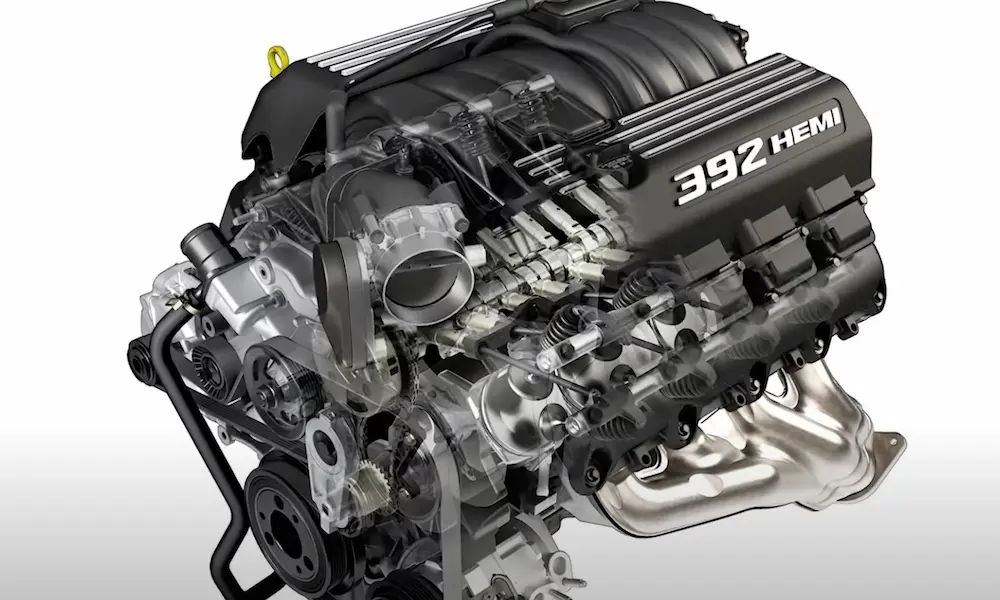
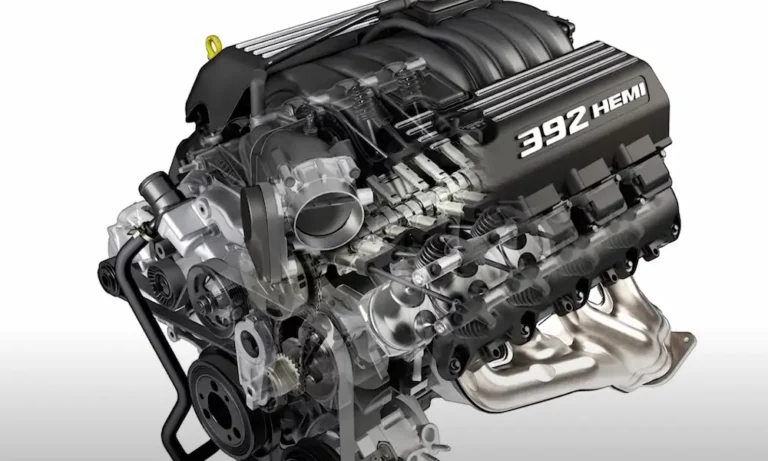
The 5.7L Hemi is a 90-degree V8 engine with 345 cubic inches of displacement. It’s the third generation of Chrysler’s famous Hemi engine family, introduced in 2003 to replace the aging 5.9-liter Magnum engines.
The “Hemi” name comes from the hemispherical combustion chamber design used in earlier versions. While the modern 5.7L engine has a slightly modified chamber design, it still maintains some hemispherical characteristics that help it breathe better and produce more power.
This engine is manufactured at Chrysler’s Saltillo Engine plant in Mexico and has become a staple option across numerous vehicles in the Chrysler family.
Core Engine Specifications
Let’s break down the essential specs of the 5.7 Hemi:
| Specification | Details |
|---|---|
| Engine Type | 90-degree pushrod V8 |
| Displacement | 5.7 liters (345 cubic inches) |
| Bore | 3.917 inches (99.49 mm) |
| Stroke | 3.578 inches (90.88 mm) |
| Block Material | Cast iron with deep-skirt design |
| Cylinder Heads | Cast aluminum |
| Compression Ratio | 9.6:1 (2003-2008), 10.5:1 (2009+) |
| Valve Configuration | 2 valves per cylinder (16 valves total) |
| Firing Order | 1-8-4-3-6-5-7-2 |
The engine features a slightly oversquare design (bore larger than stroke), which favors higher-RPM power production. The cast-iron block provides excellent durability and rigidity, while the aluminum heads help reduce weight.
Internal components include a nodular iron crankshaft with four bolts per main bearing, powdered metal connecting rods, and lightweight aluminum pistons with special skirt coatings to reduce friction.
Horsepower and Torque Output
One of the most important aspects of any engine is its power output, and the 5.7 Hemi doesn’t disappoint. However, the numbers vary depending on the model year and vehicle application:
- Initial versions (2003): 345 horsepower and 375 lb-ft of torque in Ram trucks
- Early car applications: 340 horsepower and 390 lb-ft in vehicles like the 300C and Magnum R/T
- Post-2009 update: 357-395 horsepower and 389-410 lb-ft of torque (vehicle dependent)
- 2021 models: Up to 395 horsepower and 410 lb-ft of torque
- 2024 projections: Expected to reach up to 420 horsepower while maintaining 410 lb-ft of torque
The engine’s torque curve peaks at relatively higher RPMs compared to some competing V8s, which gives it excellent top-end power. The trade-off is that you need to rev it a bit more to access its full potential—something to consider if you’re looking at a truck application where low-end torque is often preferred for towing.
Innovative Technologies
What truly sets the 5.7 Hemi apart from other pushrod V8s is its clever use of modern technologies to improve performance, efficiency, and emissions:
Multi-Displacement System (MDS)
Perhaps the most significant fuel-saving feature is the Multi-Displacement System, which can deactivate cylinders 1, 4, 6, and 7 under light load conditions. This effectively turns the V8 into a more efficient V4 during highway cruising, significantly improving fuel economy without sacrificing the ability to access full power immediately when needed.
It’s worth noting that MDS isn’t included on engines paired with manual transmissions or in certain heavy-duty applications where consistent power delivery takes priority over fuel economy.
Dual Spark Plugs
The 5.7 Hemi features two spark plugs per cylinder that fire sequentially. This unique design ensures complete combustion and addresses flame propagation challenges inherent to the hemispherical-inspired combustion chamber design.
Variable Valve Timing (VVT)
Added during the 2009 update, VVT optimizes valve events across the RPM range, improving both power delivery and efficiency.
Active Intake Manifold
The engine employs a dual-runner intake design that can switch between long intake runners (for better low-end torque) and short runners (for enhanced top-end power). At low engine speeds, the short runners are blocked off to prioritize torque production, while at higher RPMs, these runners open to maximize airflow and horsepower.
Vehicles That Use the 5.7 Hemi
The versatility of the 5.7 Hemi is evident in its wide range of applications across multiple brands:
Dodge:
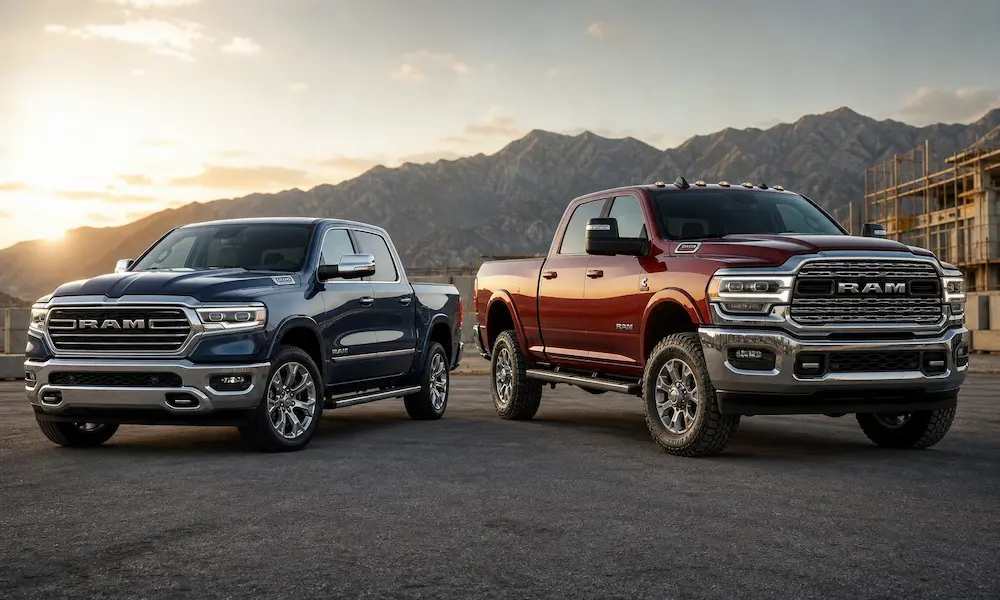
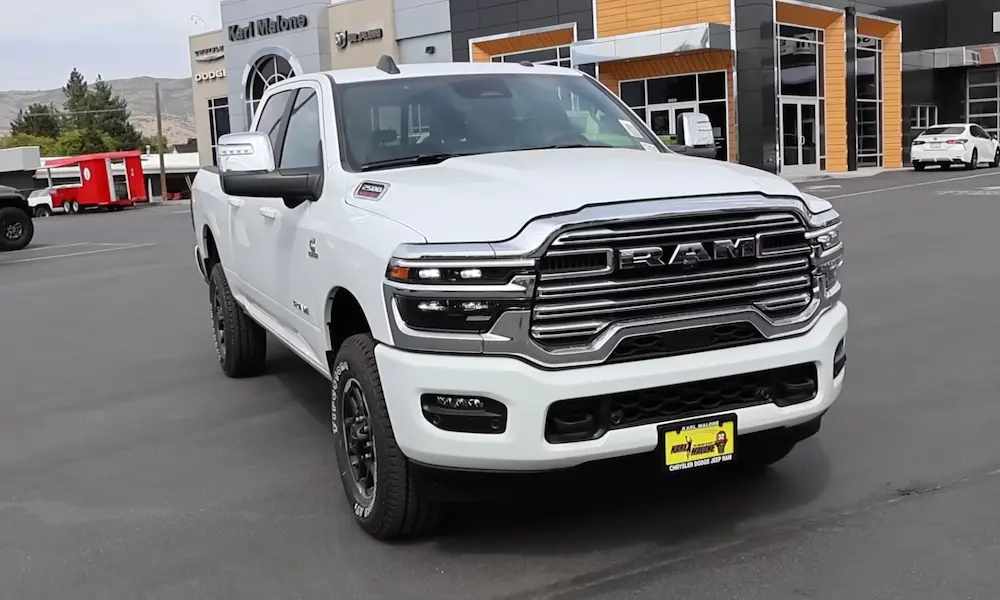
- Ram 1500/2500/3500 (2003+)
- Charger R/T (2006+)
- Challenger R/T (2009+)
- Durango (2004+)
- Magnum R/T (2005-2008)
Chrysler:
- 300C (2005+)
- Aspen (2007-2009)
Jeep:
- Grand Cherokee (2005+)
- Commander (2006-2010)
- Wagoneer (2022+)
For truck applications, the 5.7 Hemi was the only available gasoline engine in the Ram Heavy Duty models from 2004 to 2013, highlighting its capability in demanding work applications.
Major Engine Updates
The 5.7 Hemi has evolved significantly since its introduction, with the most substantial update occurring for the 2009 model year. This revision included:
- Increased compression ratio from 9.6:1 to 10.5:1
- Addition of Variable Valve Timing
- Implementation of five distinct camshaft profiles for different applications
- Narrower piston rings (1.20/1.20/2.0 mm vs. earlier 1.50/1.50/3.0 mm) to reduce friction
- Improved active intake manifold design
These changes resulted in approximately 4% better fuel economy while simultaneously increasing power output—a win-win that demonstrates the effectiveness of the technological improvements.
Advantages of the 5.7 Hemi
The 5.7 Hemi offers several notable benefits that have contributed to its popularity:
- Impressive Power-to-Displacement Ratio: The engine delivers strong performance for its size.
- Proven Durability: The cast-iron block provides a sturdy foundation for long-term reliability.
- Fuel-Saving Technology: The MDS system helps improve efficiency when all that power isn’t needed.
- Serviceability: With fewer moving parts than some competing designs, maintenance can be more straightforward.
- Distinctive Sound: Let’s be honest—the characteristic Hemi rumble is part of the appeal.
Potential Limitations
No engine is perfect, and the 5.7 Hemi does have a few considerations to keep in mind:
- Torque Delivery: The relatively high-RPM torque peak means you need to rev it more for maximum pulling power compared to some competitors.
- Fuel Economy: While the MDS helps, it’s still a large V8 engine that will consume more fuel than smaller options.
- Oil Consumption: Some owners report higher-than-expected oil consumption, particularly in earlier versions.
- Lifter Issues: Certain model years have experienced problems with lifters or the MDS system.
How the 5.7 Hemi Compares to Competitors
When stacked against other V8 engines in its class, the 5.7 Hemi holds up well:
- Compared to Ford’s 5.0L Coyote V8, the Hemi typically offers more low-end torque but less high-end horsepower.
- Against GM’s 5.3L V8, the Hemi generally delivers more peak power but with a different torque curve.
- Compared to Toyota’s 5.7L i-FORCE V8, the Hemi offers more advanced fuel-saving technologies.
Common Questions About the 5.7 Hemi
Is the 5.7 Hemi reliable?
Generally, yes. The engine has proven to be quite durable, with many examples easily surpassing 200,000 miles with proper maintenance. The cast-iron block is particularly robust, though some model years have had specific issues that are worth researching if you’re considering a used vehicle.
How much horsepower does a stock 5.7 Hemi make?
As mentioned earlier, it depends on the year and application. Current models produce between 370-395 horsepower, with 2024 models expected to reach up to 420 horsepower.
What kind of gas mileage can I expect?
This varies widely depending on the vehicle and driving conditions, but most 5.7 Hemi-equipped vehicles average between 15-17 mpg combined. Highway cruising, where the MDS system can operate, will yield better results than city driving.
Can you modify a 5.7 Hemi for more power?
Absolutely. The 5.7 Hemi responds well to modifications, with simple upgrades like cold air intakes, exhaust systems, and tuners often adding 20-40 horsepower. More extensive modifications such as camshafts, headers, and forced induction can yield significantly more power.
The Future of the 5.7 Hemi
As the automotive industry moves toward electrification, the fate of the 5.7 Hemi remains uncertain. While still offered in numerous models for 2024, there are indications that Stellantis (the parent company of Dodge, Chrysler, and Jeep) may be phasing out this legendary engine in favor of more efficient options and electric powertrains.
For now, though, the 5.7 Hemi continues to provide a compelling blend of power, character, and reasonable efficiency that appeals to drivers who appreciate a traditional American V8 with modern enhancements.
Maintaining Your 5.7 Hemi for Longevity
If you own or plan to own a vehicle with this engine, here are some maintenance tips to keep it running strong:
- Regular Oil Changes: Use the manufacturer-recommended oil grade (typically 5W-20) and change it every 5,000-8,000 miles.
- Monitor Oil Consumption: Check your oil level regularly, especially in models known for using oil.
- Keep the Cooling System Healthy: These V8s generate significant heat, so maintaining the cooling system is crucial.
- Quality Fuel: While regular unleaded is acceptable, higher octane fuels (91-93) can improve performance, especially in newer models with the higher compression ratio.
- Address Ticking Sounds: If you notice a ticking sound, don’t ignore it—it could indicate a lifter issue that should be addressed before it causes more significant problems.
The 5.7 Hemi stands as an impressive achievement in American engine design, successfully bridging traditional pushrod V8 architecture with modern technological innovations. Whether you’re drawn to its distinctive rumble, impressive power, or the heritage of the Hemi name, this engine remains one of the most recognizable and respected powerplants on the road today.