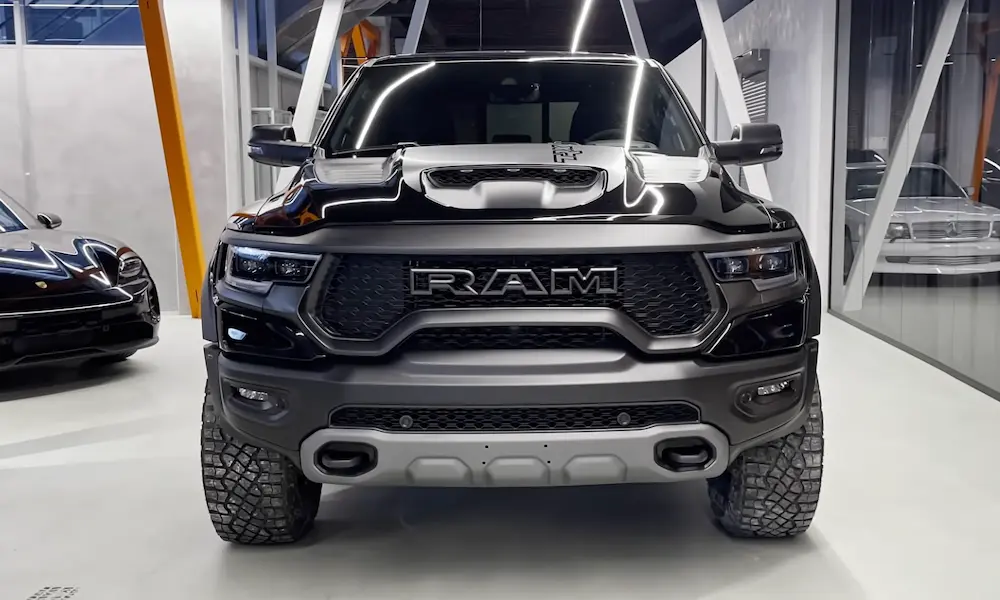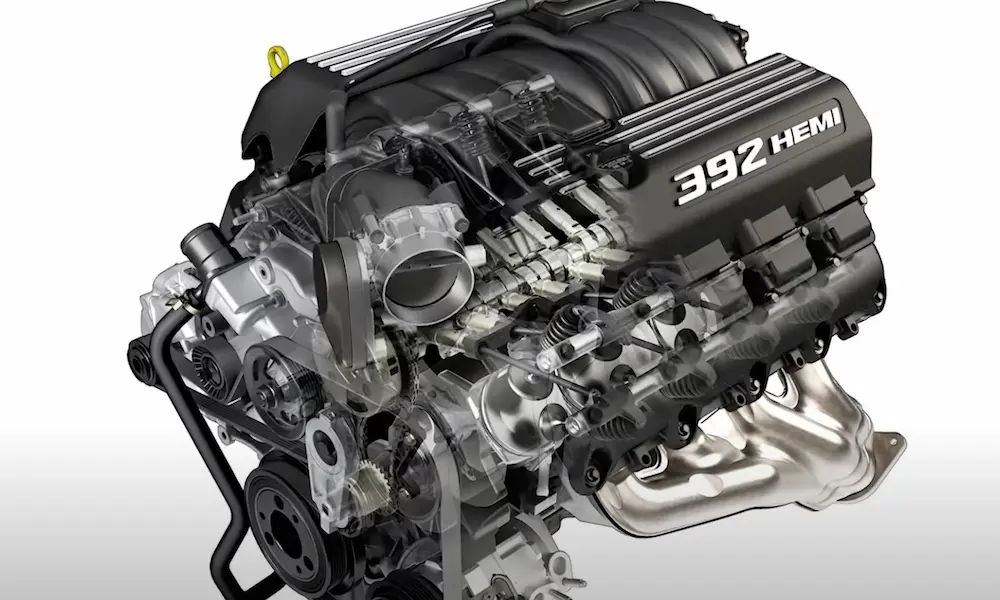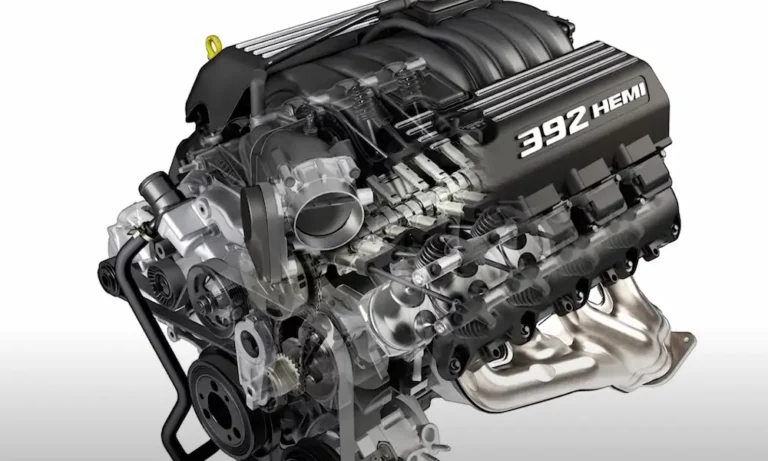
You’re staring at rows of oil bottles, wondering which one won’t trash your 5.7 Hemi’s lifters. Smart thinking. The wrong oil choice—or worse, the wrong change schedule—can turn that legendary V8 into an expensive ticking time bomb. Let’s cut through the marketing nonsense and get to what actually works.
What Oil Does the 5.7 Hemi Require?
Your 5.7 Hemi needs SAE 5W-20 full synthetic oil that meets Chrysler’s MS-6395 specification. That’s the factory standard for nearly every Ram 1500, Dodge Durango, and Chrysler 300 equipped with this engine from 2003 through 2020.
But there’s a twist.
If you’re driving a 2021 or newer Ram 1500, the spec changed to 0W-20 full synthetic. Don’t panic—it’s still the same MS-6395 quality standard, just with better cold-start flow.
And if you’re hauling serious weight in a Ram 2500 or 3500 (anything over 14,000 pounds combined weight), you need 5W-30 instead. The heavier workload generates more heat and stress, requiring thicker oil protection.
Here’s what those numbers actually mean: The “W” stands for winter, not weight. The first number (5 or 0) shows how easily oil flows when it’s freezing outside. Lower numbers flow better during cold starts—critical for protecting your engine first thing in the morning. The second number (20 or 30) indicates thickness at normal operating temperature. Higher numbers mean thicker protection under heat and load.
How Much Oil Does a 5.7 Hemi Hold?
Your engine holds seven quarts total, including what’s in the oil filter.
Don’t dump all seven quarts in at once, though. Add about six to six-and-a-half quarts initially, fire up the engine to circulate oil through the system, then check your dipstick. Top off to the full line.
This two-step approach prevents overfilling, which causes its own problems—foaming, increased pressure, and potential seal damage.
5W-20 vs 5W-30: Does It Actually Matter?
Here’s where things get interesting. Both oils behave identically during cold starts (that’s the 5W part), but they’re completely different once your engine hits operating temperature.
5W-20 stays thinner when hot. It circulates faster, reduces friction, and improves fuel economy. That’s why manufacturers love it—better MPG numbers and easier emissions compliance.
5W-30 stays thicker when hot. It creates a more robust protective film between moving parts, especially under extreme heat, heavy loads, or sustained high RPMs.
That’s exactly why Ram specifies 5W-30 for heavy-duty trucks. More weight means more stress means more heat means you need thicker protection. It’s not rocket science.
YouTube automotive educator Colin7761 points out that the 5W-20 recommendation serves economic and emissions purposes first, not absolute maximum protection. He’s not wrong—manufacturers balance multiple priorities, and your engine’s ultimate longevity isn’t always number one.
For most daily-driver Ram 1500s doing normal truck stuff, 5W-20 works fine. But if you’re towing regularly, running modified power levels, or just want extra insurance, 5W-30 won’t hurt anything. It absolutely won’t interfere with your MDS (Multiple Displacement System) either, despite what internet forums claim.
Best Oil Brands for 5.7 Hemi Protection
The aftermarket offers plenty of options, and enthusiasts argue endlessly about which prevents the dreaded Hemi tick best. Here’s the breakdown:
Mobil 1 represents the safe, widely-available choice. Full synthetic, meets all OEM specs, solid cold-flow characteristics. You’ll find it everywhere from Walmart to your dealer.
Pennzoil Platinum and Ultra were factory fill for many Hemis. The Ultra version specifically targets better lifter protection. Interestingly, Pennzoil shows up frequently in lifter failure discussions—whether that’s because it’s genuinely problematic or just statistically overrepresented due to popularity remains debated.
Redline 5W-30 enjoys legendary status among Hemi owners. Forum users consistently report reduced cold-start tapping and noticeably quieter idle after switching. The catch? It’ll cost you $35-50 per quart. You’re paying for exceptional additive packages designed for demanding applications.
Royal Purple delivers similar premium protection. Owners frequently mention quieter valve train operation and excellent soot suspension during extended intervals. Like Redline, you’re paying premium prices.
Amsoil sits at the top tier, offering extended drain intervals and superior thermal stability. Owners running Amsoil report success well past 200,000 miles when paired with disciplined maintenance.
Valvoline SynPower provides solid synthetic performance at mid-range pricing. It’s a reasonable middle ground if premium brands feel excessive.
Your choice ultimately depends on budget and maintenance philosophy. Running Mobil 1 or Pennzoil with religious 5,000-mile changes works. Running Redline or Amsoil gives you additional protection insurance—whether you actually need it is another question.
| Oil Brand | Price Tier | Best For | Key Benefit |
|---|---|---|---|
| Mobil 1 | Budget-Friendly | Daily drivers, standard maintenance | Wide availability, meets all specs |
| Pennzoil Platinum/Ultra | Mid-Range | OEM preference, standard use | Factory fill heritage, good protection |
| Valvoline SynPower | Mid-Range | Value seekers | Solid synthetic performance without premium pricing |
| Royal Purple | Premium | Enthusiasts, performance builds | Quieter operation, excellent soot suspension |
| Redline | Premium | Maximum protection, tick prevention | Superior lifter protection, high-temp stability |
| Amsoil | Premium | Extended intervals, high mileage | Exceptional longevity, proven 200k+ mile track record |
How Often Should You Change 5.7 Hemi Oil?
Modern Rams feature an onboard Oil Change Indicator monitoring temperature, RPM, driving time, and fuel quality to calculate optimal service intervals. When that orange “OIL CHANGE REQUIRED” light appears, you’ve got roughly 15% oil life remaining.
Manufacturer recommendations say 7,500 to 10,000 miles for light-duty driving. Light towing drops that to 5,000-8,000 miles. Heavy towing, off-roading, or performance driving requires changes every 3,000-5,000 miles.
Here’s the problem: enthusiast experience diverges sharply from factory recommendations.
Experienced Hemi owners advocate for 5,000-mile maximum intervals regardless of what the computer says. The logic is simple—replacing oil costs maybe $50-80. Replacing lifters, a camshaft, or worse runs thousands of dollars. The math isn’t complicated.
YouTube maintenance educators consistently recommend 5,000-mile maximums for daily-driver Hemi trucks, with even shorter 3,000-mile intervals for high-performance variants or hard-use scenarios.
Why the conservative approach? The Hemi’s idle oil pressure characteristics leave lifters marginally lubricated during extended idle periods. Degraded oil can’t maintain the protective film necessary to prevent metal-on-metal contact. Even full synthetic formulations experience oxidation, additive depletion, and contamination over time.
Owners reporting extreme mileage success—approaching 200,000 to 240,000 miles—invariably credit religiously maintained 5,000-mile intervals combined with premium synthetics.
Your engine, your choice. But if you’re planning to keep your truck long-term, shorter intervals represent cheap insurance.
| Driving Condition | Factory Interval | Enthusiast Recommendation |
|---|---|---|
| Light duty, highway miles | 7,500-10,000 miles | 5,000 miles max |
| Light towing | 5,000-8,000 miles | 4,000-5,000 miles |
| Heavy towing, performance driving | 3,000-5,000 miles | 3,000 miles |
| Extreme conditions, modified engines | Not specified | 2,500-3,000 miles |
Understanding MDS and Oil Selection
The Multiple Displacement System shuts down four cylinders during light-load cruising to improve fuel economy. It requires pressurized oil to collapse the lifter pins responsible for cylinder deactivation.
When oil ages or becomes too thin, insufficient pressure reaches the MDS solenoids. That triggers malfunction codes or system failures.
Here’s what matters: switching to 5W-30 won’t break your MDS, despite internet claims. Colin7761 runs 5W-30 and even 0W-40 in his Hemi without MDS issues. The misconception stems from the fact that extremely thick oils or improperly sized oil pumps can exceed safe pressure ranges. Responsibly selected higher-viscosity oils present zero MDS compatibility concerns.
The actual MDS problem originates from inadequate oil pressure at idle, when the oil pump rotates slowest and MDS solenoid spools sit farthest from activation thresholds. That’s a design characteristic, not an oil-viscosity problem.
Maintaining strong idle oil pressure through consistent high-quality synthetic changes matters more than obsessing over viscosity selection. Some owners install high-volume oil pumps for additional idle-time protection, though that requires addressing oil pressure sensor calibration to prevent MDS codes from excessive pressure.
What Causes Hemi Tick and Can Oil Fix It?
The infamous “Hemi tick” comes from hydraulic lifter starvation when oil pressure drops below the threshold required to maintain full lifter pre-load. The lifter plunger partially collapses, creating audible valve train chatter.
Here’s the truth: oil selection alone doesn’t prevent lifter failure. Oil change frequency and engine idle discipline represent primary factors. However, premium oils with superior viscosity index, oxidation resistance, and additive longevity provide measurably better protection against oil degradation that accelerates lifter wear.
Real-world data from experienced technicians suggests oil type matters less than oil change discipline, idle minimization, and avoiding extended periods between services. One user reported 240,000 miles on a 2006 Hemi, crediting proper maintenance at suggested intervals plus switching to 5W-30 at 150,000 miles. Another hit 175,000 miles using factory-spec oils changed every 5,000 miles.
Premium oil selection provides insurance and peace of mind rather than representing a mandatory requirement. But if you’re already hearing ticking, switching to Redline or Royal Purple might quiet things down—just don’t expect miracles if the damage is already done.
Preventing Sludge and Meeting Quality Standards
Engine sludge forms when motor oil degrades into thick, gel-like deposits accumulating on valve covers, lifters, timing components, and oil galleries. The Hemi’s high operating temperatures—particularly in performance variants or heavy-towing applications—accelerate oil oxidation and sludge formation when maintenance intervals stretch or low-quality oils get used.
Full synthetic oils resist sludge formation far better than conventional or synthetic-blend oils. Their superior oxidation stability and reduced impurities justify the cost premium for owners prioritizing engine protection.
When shopping for oil, verify bottles display “MEETS OR EXCEEDS MS-6395” rather than simply showing “5W-20” or “5W-30.” Not all oils meeting viscosity grades simultaneously achieve the quality specification standard.
The MS-6395 spec establishes minimum requirements for viscosity index (how well oil maintains viscosity across temperature ranges), oxidation resistance (preventing sludge formation), foam suppression, and additive package integrity.
For owners in extreme climates, the newer 0W-20 specification introduced in 2021 offers measurable advantages over traditional 5W-20. The “0W” rating ensures superior oil flow at temperatures far below freezing, benefiting northern climates or frequent sub-zero starts. In moderate climates, quality 5W-20 synthetics achieve equivalent protection, and the performance difference becomes negligible once engines reach operating temperature.
The Bottom Line on 5.7 Hemi Oil
Forget the brand obsession. Your Hemi needs consistency, quality, and frequency more than it needs expensive boutique oil.
Factory-specification full synthetic 5W-20 (or 0W-20 on 2021+ models) from reputable brands like Mobil 1, Pennzoil, or Valvoline provides adequate protection when changed at 5,000-mile intervals maximum. That’s the foundation.
Want additional insurance against lifter tick? Consider Redline, Amsoil, or Royal Purple. Just understand the benefit comes through superior additive packages and viscosity stability, not fundamentally different magic.
The most important practice involves minimizing idle time and religiously maintaining 5,000-mile service intervals, particularly as mileage climbs. Pair a quality oil filter (Wix or Mahle) with premium synthetic oil and solid maintenance discipline.
That’s the formula for Hemis achieving 200,000+ miles with minimal internal work. The distinction between 150,000-mile engines and 250,000-mile engines typically reflects maintenance discipline, not inherent engine failures. Your 5.7 Hemi is remarkably durable when treated with proper respect.
Don’t overthink it. Pick quality oil meeting MS-6395 specs, change it regularly, and your engine will reward you with hundreds of thousands of reliable miles.