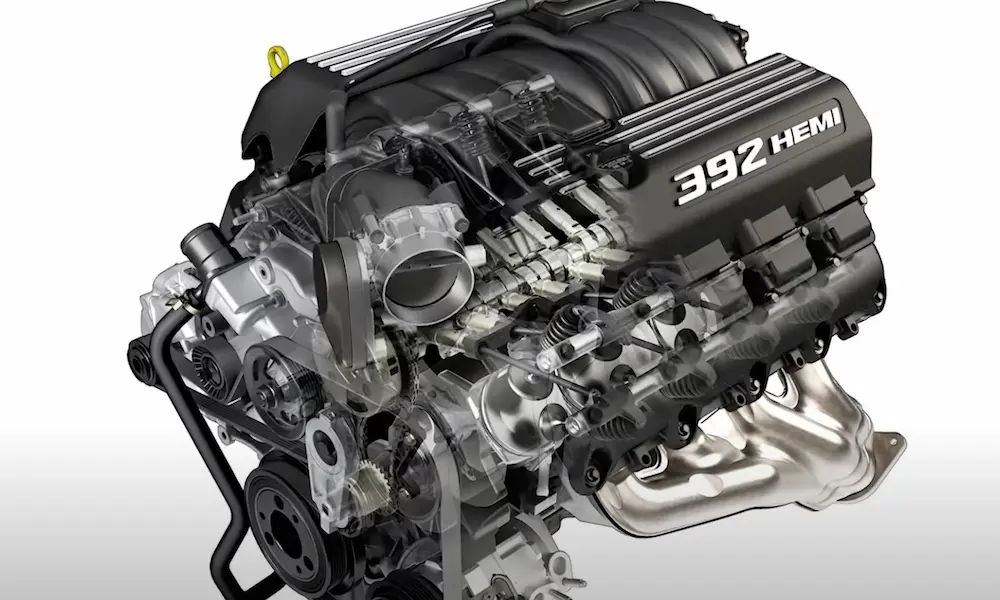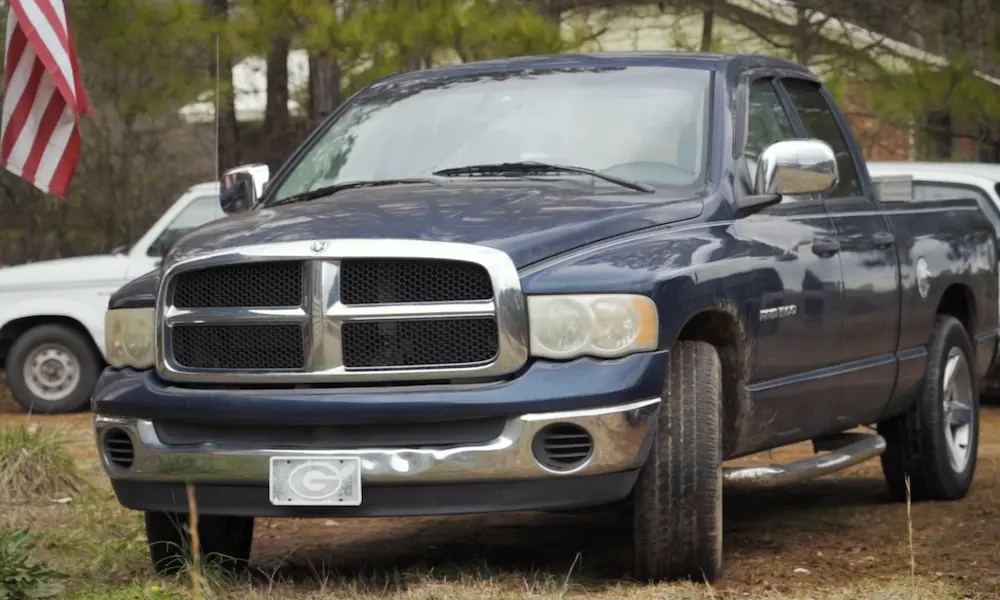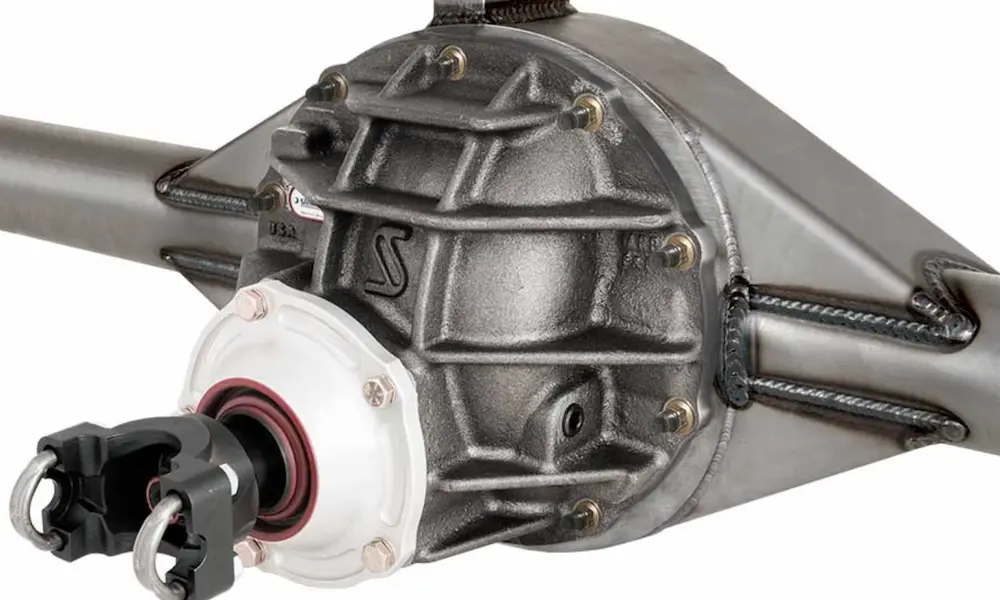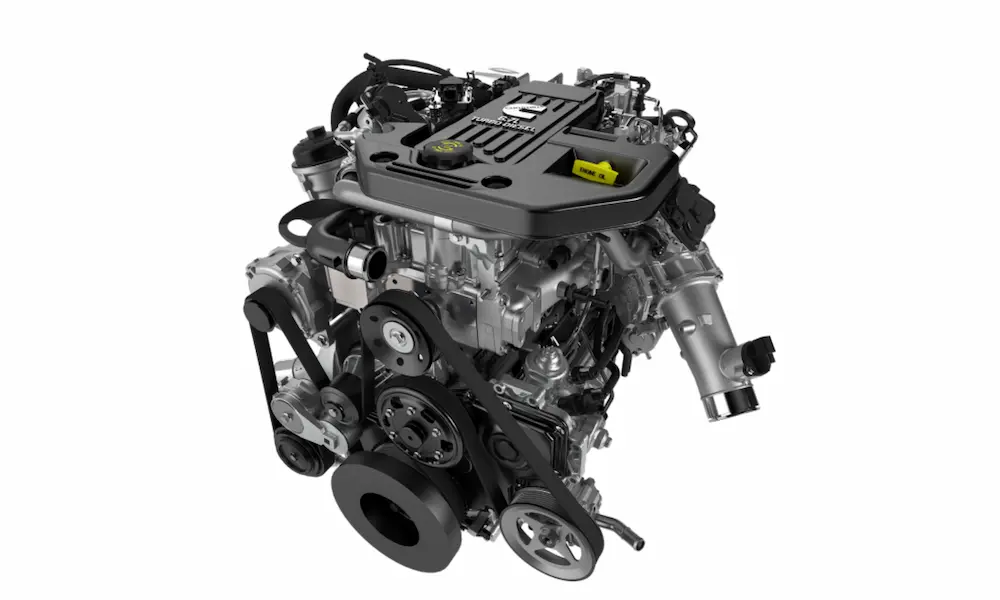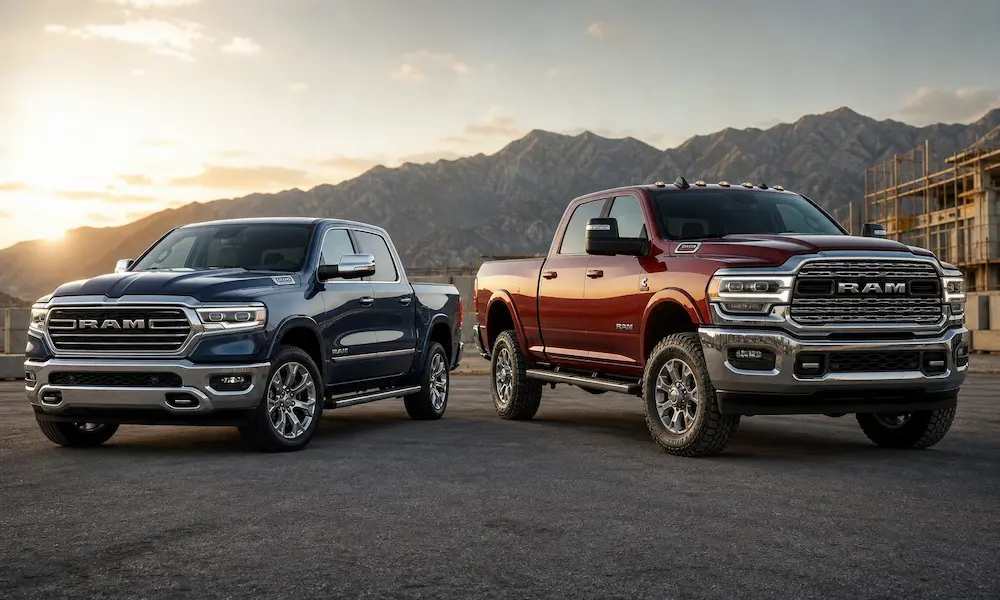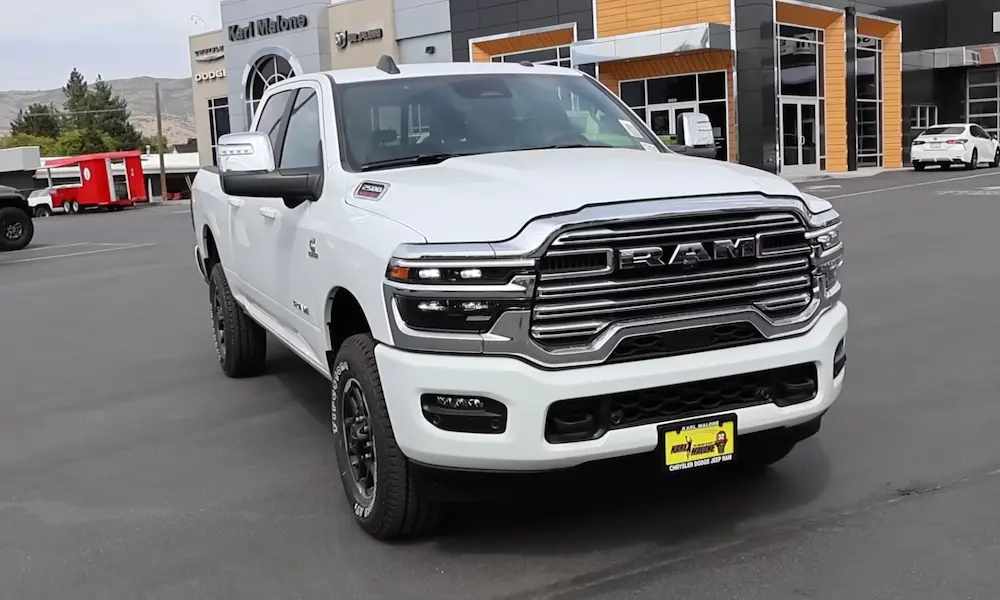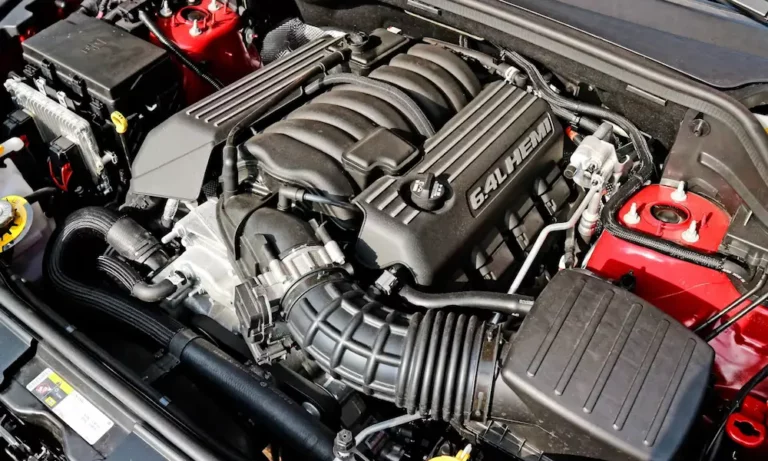
The 6.4 Hemi is one of the most versatile V8 engines ever bolted into an American vehicle. Whether it’s pushing a Challenger Scat Pack to 60 mph in 4.3 seconds or hauling 18,000 pounds behind a Ram 3500, this engine does it all. If you want the full breakdown of 6.4 Hemi engine specs — dimensions, power ratings, oiling, cooling, and more — you’re in the right place. Read to the end.
What Is the 6.4 Hemi Engine?
Chrysler introduced the 6.4-liter Hemi in 2011 as a replacement for the outgoing 6.1-liter unit. It displaced 392 cubic inches — a deliberate nod to the legendary late-1950s Hemi engines, though it shares zero physical parts with its ancestor. This is a modern overhead-valve, 16-valve V8 packed with electronic management systems.
Within the Stellantis lineup, it slots between the everyday 5.7-liter V8 and the supercharged 6.2-liter Hellcat engine. It’s powerful enough for serious performance, yet durable enough for commercial work.
The engine actually splits into two distinct variants:
- Apache — Performance-tuned for muscle cars and SUVs
- Big Gas Engine (BGE) — Heavy-duty spec for Ram trucks
Both share the same basic architecture, but differ significantly in block metallurgy, compression ratio, camshaft profile, and fuel delivery.
Core 6.4 Hemi Engine Specs: Dimensions and Geometry
The 6.4 Hemi is an oversquare engine, meaning the bore diameter is larger than the stroke length. This geometry helps the engine breathe efficiently at higher RPMs and leaves room for large intake and exhaust valves.
| Geometric Specification | Measurement |
|---|---|
| Cylinder Bore | 4.090 inches |
| Piston Stroke | 3.720 inches |
| Displacement | 392 cubic inches (6,417 cc) |
| Bore Spacing | 4.460 inches |
| Deck Height | 9.280 inches |
| Engine Configuration | 90-Degree V8 |
| Redline | 6,400 RPM |
These dimensions make the 6.4 one of the most buildable V8 platforms in the aftermarket community. The wide bore spacing and tall deck height leave plenty of room for stroked cranks and large-bore pistons.
Block Construction: Iron, Nickel, and Serious Engineering
The foundation of the 6.4 Hemi’s block is deep-skirt cast iron. That’s not an accident. Iron handles high combustion pressures without distorting, which is exactly what you need in a high-torque engine expected to last hundreds of thousands of miles in a work truck.
The BGE variant goes further with a higher-nickel iron alloy. More nickel means better tensile strength and superior resistance to the fatigue that comes from constant thermal cycling — think towing a loaded trailer through mountain passes every single day.
| Structural Feature | Apache (Early) | BGE / Late Apache |
|---|---|---|
| Block Material | Cast Iron | High-Nickel Cast Iron |
| Main Bearing Caps | 4-Bolt Cross-Bolted | 4-Bolt Cross-Bolted |
| Water Jacket Design | Standard Length | Shorter/Deeper |
| Internal Webbing | Standard | Reinforced |
| Casting Number | 5037473BE | 5037473BG |
Every 6.4 Hemi uses a cross-bolted main bearing cap design. Each of the five main bearings gets two vertical bolts plus two lateral cross-bolts that thread through the block’s sides. This locks the bottom end together so tightly that “main cap walk” — where crankshaft vibration shakes the caps loose — simply can’t happen. It’s also a big reason why the 6.4 handles significant aftermarket power additions so well.
Crankshaft, Rods, and Pistons
The crankshaft is forged steel, part number 5038339AG. Forging aligns the metal’s grain structure during manufacturing, making it dramatically stronger than a cast crank. Under the violent loads of combustion, this crank doesn’t bend or crack.
The connecting rods are powdered metal I-beam units. They’re perfectly consistent in weight and balance, which is great for a stock naturally aspirated engine. However, if you’re planning to add a turbo or supercharger, these are the first components you’ll want to swap for fully forged aftermarket rods.
Pistons and Compression Ratios
The 6.4 uses hypereutectic aluminum pistons — an alloy loaded with silicon that barely expands when hot. Tighter piston-to-wall clearances mean better efficiency, lower emissions, and no cold-start piston slap.
The compression ratio is where the Apache and BGE diverge most dramatically:
| Compression Metric | Performance Apache | Heavy Duty BGE |
|---|---|---|
| Compression Ratio | 10.9:1 | 10.0:1 |
| Required Fuel Grade | 91-Octane Premium | 87-Octane Regular |
| Piston Pin Design | Floating Pin | Floating Pin |
| Piston Cooling | Oil Squirters | Oil Squirters |
The Apache’s higher 10.9:1 ratio extracts more energy per combustion event, which is how you get 485 hp from a naturally aspirated V8. The BGE’s 10.0:1 ratio trades peak power for the ability to run on regular 87-octane fuel — a real advantage for fleet operators buying thousands of gallons of gas per year.
Both variants use oil squirter nozzles at the base of each cylinder that spray engine oil directly onto the underside of the pistons, carrying away heat and lubricating the wrist pins continuously.
Valvetrain: Cams, VVT, and MDS
The name “Hemi” comes from the hemispherical combustion chamber shape. Modern heads aren’t a perfect hemisphere, but the concept remains — large valves, central spark plug placement, and excellent flow.
The 6.4 uses a single in-block camshaft with pushrods and rocker arms. Old-school? Sure. But the overhead-valve layout keeps the engine compact and produces excellent low-RPM torque.
Camshaft Specs
| Valvetrain Metric | Apache Performance Spec |
|---|---|
| Intake Duration (at .050 lift) | 286 degrees |
| Exhaust Duration (at .050 lift) | 288 degrees |
| Intake Valve Lift | .571 inches |
| Exhaust Valve Lift | .536 inches |
A Variable Valve Timing system uses a hydraulic cam phaser to advance or retard timing based on load and engine speed. This lets the engine idle smoothly while still making maximum power at high RPMs. The BGE gets a different cam grind entirely — profiled for maximum low-end torque, which is exactly what you need when pulling an 18,000-pound trailer from a dead stop.
Multi-Displacement System (MDS)
The MDS is the 6.4’s fuel economy trick. Under light load, it shuts down four of eight cylinders — specifically cylinders 1, 4, 6, and 7 — by collapsing their hydraulic lifters via oil pressure. The closed valves trap exhaust gas, which acts as a spring, cutting pumping losses dramatically.
This system only works on automatic transmission models. Manual transmission Challengers skip MDS entirely because the mechanical engagement of a clutch makes the V8-to-V4 transition feel jerky and unpleasant to the driver.
Cylinder Head Details
The heads are aluminum — T356 alloy in the BGE for extra heat resistance. Each cylinder gets two spark plugs for a fast, complete burn.
| Valve Specification | Measurement | Detail |
|---|---|---|
| Intake Valve Diameter | 2.14 inches | Hollow-stem steel |
| Exhaust Valve Diameter | 1.65 inches | Sodium-filled steel |
| Combustion Chamber | 74 cubic centimeters | Hemispherical-style |
Those sodium-filled exhaust valves deserve attention. The sodium liquefies at operating temperature and sloshes around inside the valve stem as it opens and closes. This transfers heat away from the valve face into the stem and guide, where the cooling system can handle it. You typically find this feature in racing engines and heavy-duty commercial applications — not economy cars.
Induction and Fuel System Specs
The 6.4 uses a composite “active” intake manifold with internal flaps that change runner length based on engine speed:
- Low RPM: Air routes through longer runners, using inertia to pack more air into the cylinder — boosting torque
- High RPM: Flaps open for shorter, direct flow — reducing restriction and maximizing horsepower
The truck manifold uses a top-feed throttle body. The car manifold uses a 45-degree side-mounted throttle body. The truck version is specifically tuned to peak between 3,600 and 5,000 RPM — exactly where a loaded truck spends most of its time.
| Fueling Component | Passenger Car / SUV | Heavy Duty Truck |
|---|---|---|
| Fuel Injector Flow | 27 lbs/hour | 31 lbs/hour |
| Fuel Pressure | 58 PSI | 58 PSI |
| Throttle Body Size | 80mm (stock) | 80mm (stock) |
| Spark Plugs | 16 Platinum/Iridium | 16 Platinum/Iridium |
| Plug Gap | 0.044 inches | 0.044 inches |
The truck’s larger 31 lb/hr injectors feed the engine the fuel it needs under constant heavy-load operation. Factory iridium spark plugs last up to 96,000–100,000 miles. Copper plugs are cheaper but wear out around 30,000 miles — don’t waste your time with them.
Power Output by Vehicle
The 6.4 Hemi engine specs translate into very different numbers depending on the vehicle it’s tuned for.
Performance Cars and SUVs
| Vehicle | Horsepower | Torque | 0-60 MPH |
|---|---|---|---|
| Dodge Challenger Scat Pack | 485 hp | 475 lb-ft | 4.3 seconds |
| Dodge Charger Scat Pack | 485 hp | 475 lb-ft | 4.5 seconds |
| Dodge Durango SRT 392 | 475 hp | 470 lb-ft | 4.4 seconds |
| Jeep Grand Cherokee SRT | 475 hp | 470 lb-ft | 4.4 seconds |
| Jeep Wrangler Rubicon 392 | 470 hp | 470 lb-ft | 4.5 seconds |
The Jeep Wrangler 392 gets a unique “Hydro-Guide” hood induction system that separates up to 15 gallons of water per minute from the intake air — keeping the Hemi breathing clean while the Jeep fords rivers.
Heavy Duty Trucks (BGE)
| Ram Model | Horsepower | Torque | Max Towing |
|---|---|---|---|
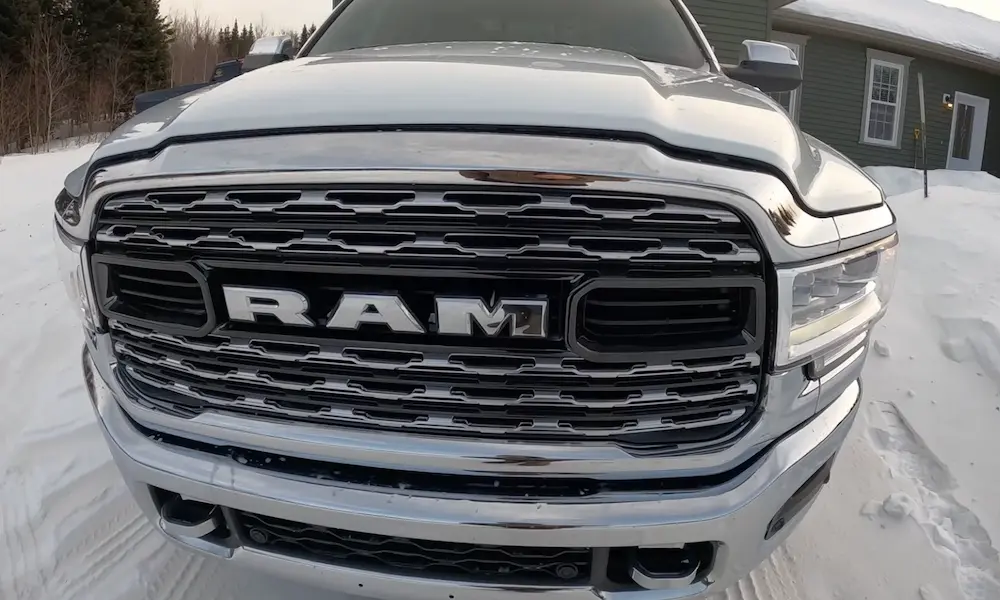
| Ram 2500 Pickup | 410 hp | 429 lb-ft | 17,730 lbs |
| Ram 3500 Pickup | 410 hp | 429 lb-ft | 18,210 lbs |
| Ram 3500 Chassis Cab | 370 hp | 429 lb-ft | Varies |
| Ram 4500/5500 | 370 hp | 429 lb-ft | Commercial Grade |
The Chassis Cab models intentionally run lower peak power — 370 hp instead of 410 hp. That’s not a mistake. These trucks work at high loads for hours at a time, and the reduced calibration keeps temperatures and mechanical stresses within safe margins for the long haul.
Oil and Lubrication Specs
The MDS and VVT systems are both hydraulically operated, which makes the 6.4 Hemi extremely sensitive to oil viscosity. Use the wrong oil and things go wrong fast.
| Lubrication Metric | Requirement |
|---|---|
| Viscosity (Standard) | 0W-40 Full Synthetic |
| Viscosity (Heavy Duty) | 5W-40 Full Synthetic (hot climates) |
| Oil Capacity | 7.0 quarts (with filter) |
| Standard Drain Interval | 8,000 miles |
| Severe Duty Interval | 4,000 miles |
| Specification Standard | MS-12633 |
Don’t run 5W-20 or 5W-30 in this engine. The MDS lifter pins rely on precise oil pressure to lock and unlock. Wrong viscosity means misfires at best, and shredded valvetrain components at worst. Brands like Pennzoil Ultra Platinum, Mobil 1, and Amsoil all have 0W-40 options that meet the MS-12633 standard.
Cooling System Specs
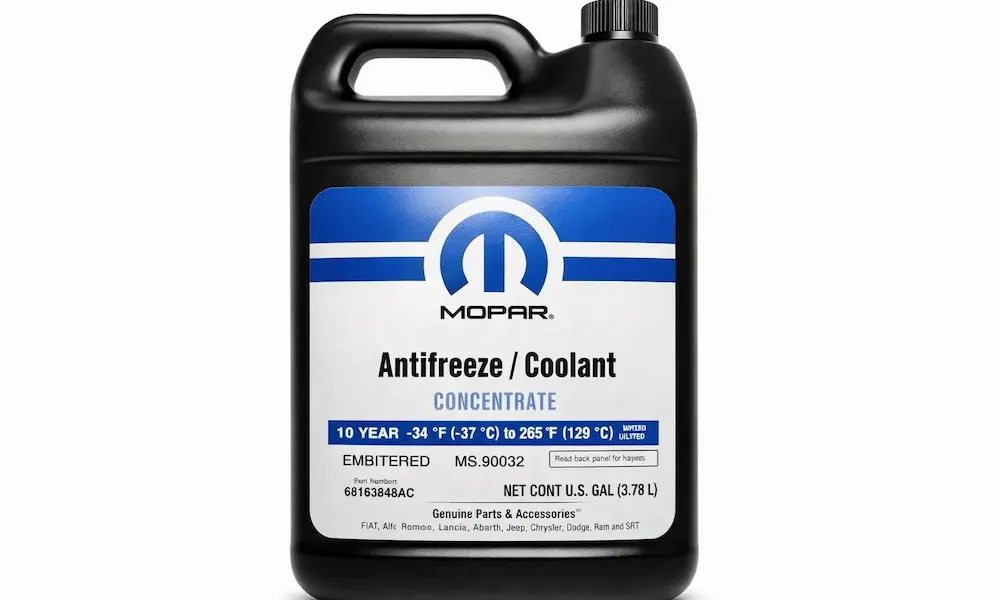
The 6.4 runs OAT (Organic Acid Technology) coolant — pink or red in color, conforming to Mopar spec MS-90032. Its service life is 10 years or 150,000 miles.
- Cooling system capacity: ~16.6 quarts
- Standard thermostat: 203°F
- Performance thermostat option: 180°F (reduces heat soak during track use)
Critical warning: Never mix the pink OAT coolant with older orange or green coolants. The chemical reaction produces a thick sludge that clogs the radiator and heater core — and that turns into an expensive repair fast.
Transmission Pairings
The 6.4 Hemi almost always ships with the ZF 8-speed automatic, marketed as the TorqueFlite 8.
| Transmission | Application | Feature |
|---|---|---|
| ZF 8HP70 | Challenger/Charger Scat Pack | Fast shifts, performance calibration |
| ZF 8HP75 | Ram 2500/3500 Pickup | Reinforced for towing loads |
| ZF 8HP90 | High-output/track use | Highest torque capacity |
| Aisin AS66RC | Ram 4500/5500 Chassis Cab | Commercial 6-speed, extreme durability |
The 8-speed’s low first-gear ratio makes it effortless to pull heavy trailers off the line. The two overdrive gears keep RPMs low on the highway. It’s one of the best transmission pairings you’ll find on any production V8.
Common Issues to Know About
The Hemi Tick
Two things cause the infamous Hemi tick:
- Exhaust manifold bolt failure — Heat cycles snap the steel bolts threading into the aluminum head. This creates a small exhaust leak that sounds like a metallic tick, especially when cold. It’s annoying but manageable.
- Lifter and camshaft wear — When a hydraulic lifter’s roller bearing fails, it starts eating into the camshaft lobe. This requires a full top-end teardown. Running the correct 0W-40 oil and avoiding excessive idle time are your best defenses.
Idle Time and Camshaft Wear
Commercial truck owners need to pay attention to this one. The oil pump is driven by the crankshaft, so oil pressure at idle is significantly lower than at highway speeds. If your truck idles for hours on a job site, follow the severe duty maintenance schedule and cut your oil change interval to 4,000 miles.
Spark Plug Replacement Tips
Changing all 16 plugs on a 6.4 Hemi isn’t a quick job. The rear cylinders — especially the driver’s side near the brake booster — need swivel sockets and extensions just to reach them.
- Torque spec: No more than 15 lb-ft — aluminum heads strip easily
- Thread first: Always hand-thread plugs to avoid cross-threading
- Use iridium or platinum only: Copper plugs wear out at 30,000 miles; iridium lasts close to 100,000
Where the 6.4 Hemi Goes From Here
Stellantis is shifting toward the Hurricane twin-turbocharged inline-six family, which puts out more power with better fuel efficiency. On paper, it makes sense. But the 6.4 Hemi stays in production for the Ram Heavy Duty lineup because commercial customers value simplicity. A large, naturally aspirated V8 with a proven track record is hard to walk away from when your livelihood depends on it.
The 6.4 Hemi engine specs tell the story of an engine that does everything well — it pulls hard, revs freely, survives abuse, and responds to modifications. That combination doesn’t go out of style quickly.