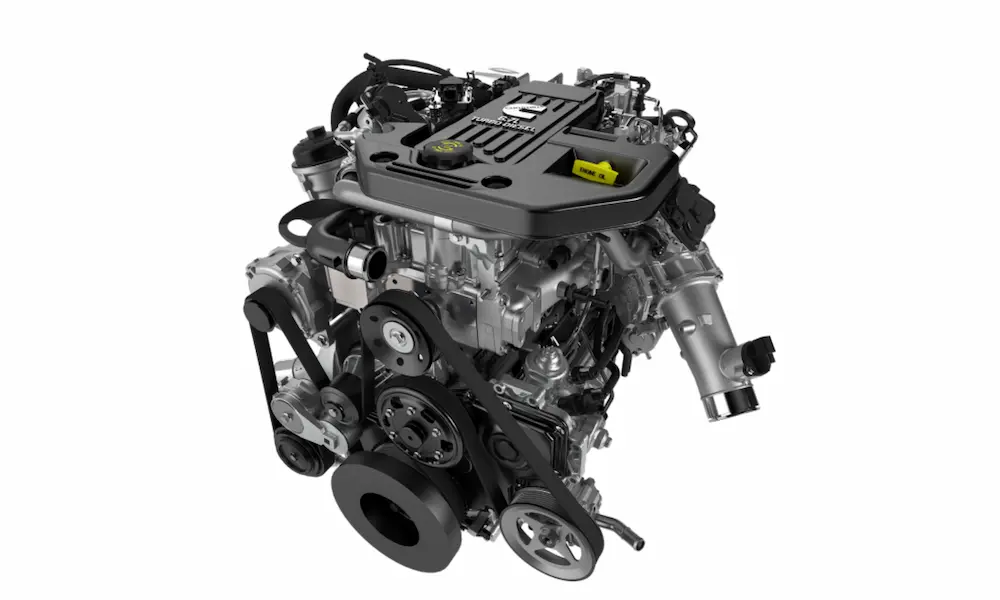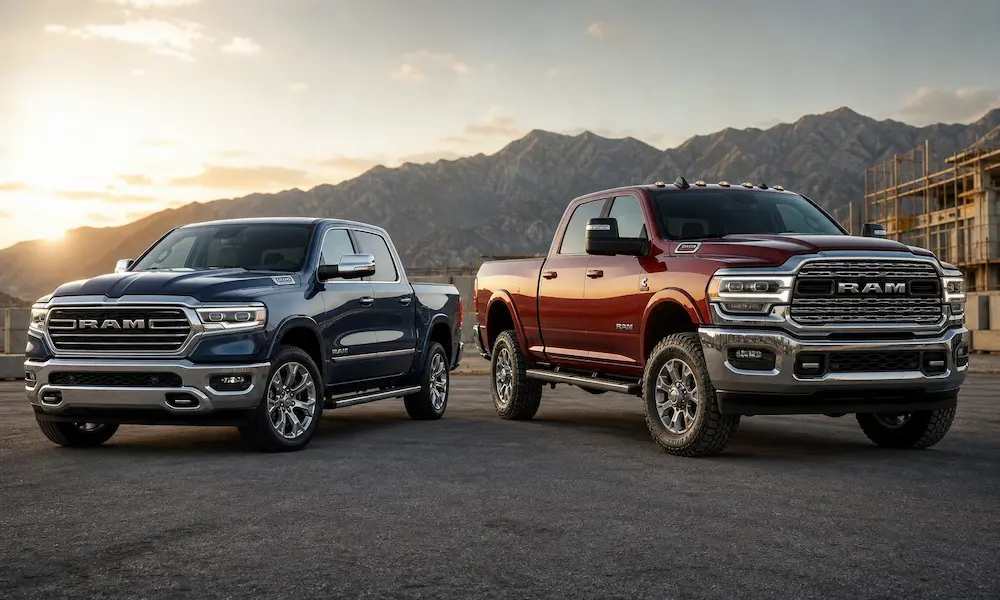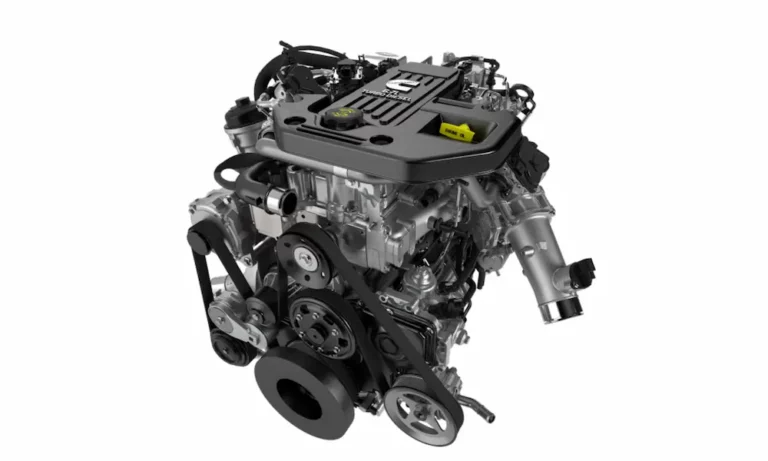
You’ve got a 6.7 Cummins, and you want more out of it. Whether you’re towing heavy, chasing horsepower, or just tired of feeling like you’re leaving power on the table — this guide covers every upgrade worth your money. Stick around, because the order you do these mods matters more than most people think.
Start Here: Why a Tune Is Your Best First Mod
Before you buy a single bolt-on part, get a tune. It’s the single most impactful 6.7 Cummins performance upgrade you can make, and the numbers back it up — a good tune delivers 50 to 200 horsepower depending on your setup.
The ECM controls everything: fuel timing, boost curves, and injection pulse width. Once you unlock that, every other mod you add multiplies in effectiveness.
Custom Tune vs. Canned Tune: Don’t Cheap Out Here
Pre-loaded (canned) tunes are conservative by design. They have to account for every possible truck in every possible condition. Custom calibrations are written specifically for your VIN, your altitude, your mods. That’s the difference between okay results and great ones.
Another huge perk? Switch-on-the-Fly (SOTF) capability. You toggle between tow, street, and performance maps while driving — no pulling over, no laptop.
Which Tuning Platform Should You Choose?
Here’s a quick breakdown of the most popular tuning platforms right now:
| Platform | Best For | Year Range | Key Perk |
|---|---|---|---|
| EZ LYNK AutoAgent 3.0 | 2019+ RAM owners | 2013–2024 | Cloud-based remote tune updates |
| EFI Live (AutoCal V3) | Serious builders | 2006–2021 | Maximum ECM/TCM control |
| MM3 Tuner | Daily drivers who love data | 2007.5–2024 | Built-in high-res gauge display |
| HP Tuners (MPVI3) | Compliance-focused builds | Up to 2026 | Industry standard for custom work |
| H&S Mini Maxx | Budget-friendly older trucks | 2006–2021 | Simple plug-and-play setup |
EZ LYNK’s Auto Agent 3.0 is the go-to for 2019+ trucks. Your tuner reviews your datalogs remotely and pushes updated files straight to your phone — no shipping, no hassle.
Don’t Forget Your Transmission Tune
This part trips people up constantly. If you’ve got a 68RFE, tuning the TCM isn’t optional — it’s mechanical necessity. Factory line pressure sits around 160 PSI. A proper TCM tune pushes that to 225 PSI, which keeps your clutch packs from burning up under torque. Skip this and your transmission becomes the weakest link in your build.
Airflow Upgrades: Feed the Engine What It Needs
Your 6.7 Cummins is a volumetric efficiency machine. More cool, dense air equals more power and lower exhaust gas temps (EGTs). Once your tune starts pushing boost, the stock intake system starts to choke things.
Cold Air Intake: Your First Bolt-On Mod
High-flow intakes from brands like S&B, K&N, or Banks Power replace the restrictive factory airbox with a smooth-bore tube and a large conical filter. The gains are modest on paper — 5 to 15 HP — but the real-world feel is immediate. Faster spool, sharper throttle response, and a noticeable bump in fuel economy during highway driving.
Here’s what each intake component actually does:
| Component | What It Does | Gain |
|---|---|---|
| High-flow air filter | Reduces inlet restriction | 5–15 HP, 10–30 lb-ft |
| Smooth-bore intake tube | Reduces turbulence at compressor inlet | Improved throttle response |
| Sealed cold air box | Keeps hot engine bay air out | 1–2 MPG improvement |
| Intake horn/elbow | Reduces pressure drop into cylinder head | 5–10 HP |
Intercooler Upgrade: Kill Those EGTs
The factory intercooler — especially on 2013+ trucks — uses plastic end tanks that crack under sustained high-boost conditions. That’s not a great design for a tow rig. Upgraded units like the Banks Techni-Cooler or the Mishimoto Performance intercooler use full aluminum construction with a much larger core.
The engineering principle is simple: every 10°F drop in intake air temp increases air density enough to support more complete combustion. High-end intercoolers like the Wagner Tuning Evo Competition have shown EGT reductions of up to 160°F under load. That’s a meaningful safety buffer for your turbo and exhaust valves.
Turbocharger Upgrades: Where Power Really Lives
The factory Holset VGT is clever engineering. Variable vanes give you strong low-end torque and a built-in exhaust brake. But that same vane mechanism is a restriction at higher power levels and a known failure point.
Drop-In Performance VGTs
If you want more power without losing the exhaust brake, drop-in performance VGTs are the move. The Diesel Power Source Turbonator fits the stock location but uses aerospace-grade stator technology to improve spool by 200–400 RPM and widens the power band significantly. You get the feel of a small turbo in the city and a large turbo on the highway — all in one unit.
The 2nd Gen Swap: Fixed Geometry Done Right
Swapping the VGT for a fixed-geometry S300 or S400 turbo on a T3/T4 manifold is one of the most popular mods for higher-power builds. Fixed turbos are simpler, more robust, and handle extreme boost without the vane failure risk. The trade-off? You lose the factory exhaust brake. You’ll need an aftermarket inline exhaust brake if towing safety matters to you.
Here’s how the turbo stages stack up:
| Stage | Setup | HP Support | Best Use |
|---|---|---|---|
| Stage 1.5 | S362/68/.70 | 450 HP | Daily driving / light towing |
| Stage 3 | S363/68/.70 | 500 HP | Heavy towing / workhorse |
| Stage 7 | S366/73/.80 | 650 HP | Hot street / occasional racing |
| Stage 10 | S467.7/83 | 800 HP | Competition / high-power street |
| Stage 11 | S472/83 | 1,000 HP | Full race / sled pull / drag |
For a tow-focused build, the S363SX-E hits the sweet spot — enough airflow for 500+ HP with enough low-end response that you won’t feel the lag when you pull away with a trailer.
Compound Turbocharging: The No-Compromise Setup
Want the best of everything? Compound (twin) turbo setups use a small high-pressure turbo for quick spool and a large low-pressure turbo for top-end flow. The result is a massive, linear power band that no single turbo can match. It’s the pinnacle of 6.7 Cummins performance upgrades for serious towing and competition.
Fueling System Upgrades: Don’t Starve Your Engine
More air and more boost means you need more fuel to match. The common-rail system on the 6.7 fires at pressures exceeding 29,000 PSI — but the stock components have limits.
2019–2020 RAM Owners: Fix the CP4.2 Now
This is urgent. The Bosch CP4.2 injection pump in 2019–2020 RAMs relies on fuel lubricity to prevent internal wear. Ultra-low sulfur diesel (ULSD) doesn’t provide enough of it. When a CP4.2 fails, it grenades the entire fuel system — injectors, lines, rails, everything. Replacements can run $15,000 to $30,000.
The fix is a CP3 conversion kit. S&S Diesel’s no-tune-required kit is a direct mechanical swap that doesn’t touch your calibration. Do it before it becomes an emergency.
Lift Pumps: Give Your Injection Pump Clean Fuel
As tune-driven fuel demand climbs, the factory in-tank pump can starve the high-pressure pump, causing cavitation and premature wear. External systems from FASS or AirDog deliver a consistent, air-free fuel supply with filtration down to 2 microns. That’s critical protection for precision injectors that cannot tolerate contamination.
Stroker Pumps and High-Flow Injectors for Big Power
Beyond 600–700 HP, you need more fuel volume than a stock CP3 can provide. Stroker CP3 pumps — 10mm or 12mm — increase pump displacement to maintain rail pressure under heavy injector demand. For competition builds, dual CP3 setups mount a second pump on the engine, effectively doubling capacity while spreading mechanical load.
| Fueling Stage | HP Limit | Core Component | Support Needed |
|---|---|---|---|
| Stock | ~500 HP | OEM CP3 / CP4.2 | None |
| Stage 1 | 600–700 HP | 33% Over CP3 | High-flow lift pump |
| Stage 2 | 700–900 HP | 10mm Stroker CP3 | 50–100% over injectors |
| Competition | 1,000+ HP | Dual CP3 / 14mm pump | 200+ GPH lift pump |
Transmission Builds: Don’t Let the Weak Link Break You
The 6.7 makes so much low-end torque that even a mild tune can overwhelm a stock transmission. This is where builds often go wrong.
Building the 68RFE
The 68RFE is capable but fragile without reinforcement. Building it in stages makes sense:
- Stage 1 (up to 550 HP): Triple-disc torque converter, billet valve body, upgraded clutch material
- Stage 2 (up to 700 HP): Billet input shaft, reinforced clutch housings
- Stage 3 (850+ HP): Billet input, intermediate, and output shafts with high-capacity drums
The Aisin AS69RC: Tough but Stubborn
The Aisin is physically stronger than the 68RFE and handles higher torque loads with better factory cooling. The problem has always been its locked-down TCM. Recent breakthroughs from HP Tuners and PPEI have finally cracked that open, improving shift quality significantly. For builds pushing past 1,000 HP, Randy’s Transmissions offers Stage 2 Aisin builds with billet hubs and 5-disc converters.
The Allison Swap: Money Well Spent for the Right Build
If budget allows and you want the most reliable drivetrain solution possible, an Allison LCT-1000 conversion via ATS Diesel installs a medium-duty commercial-grade transmission with factory RAM electronics integration. It’s expensive. It’s also bulletproof.
G56 Manual: Reinforce the Case
The G56 is a favorite for the engagement it delivers, but its aluminum case flexes under high torque — and that leads to gear misalignment and failure. A torque shield from Lazarsmith or PPE prevents case flex. Pair it with a South Bend or Valair dual-disc clutch and you’ve got a manual setup that holds its own.
Internal Engine Protection: Lock Down the Top End
The 6.7’s bottom end is famously strong. But push boost past 40–45 PSI without addressing the top end, and you’re gambling.
ARP Head Studs: Non-Negotiable Above 500 HP
Factory head bolts are designed to stretch — that’s how they work. Under extreme boost, the cylinder head can lift off the block and blow combustion gases into the cooling system. ARP head studs are made from high-tensile alloys that don’t stretch. They maintain clamping force where the factory bolts simply can’t.
Valve Springs and Pushrods: Control the Valvetrain
At high boost and RPM, intake boost pressure can actually force the intake valves open during the exhaust stroke — that’s called reversion, and it kills power fast. Hamilton 103# or 110# valve springs provide enough seat pressure to control the valves past 4,500 RPM. Pair them with heavy-duty pushrods to prevent buckling under the increased spring load.
| Component | Threshold | Benefit |
|---|---|---|
| ARP2000 Head Studs | 500+ HP / 40+ PSI | Prevents head lift and gasket failure |
| 103# Valve Springs | 600+ HP / 3,500+ RPM | Stops valve float and reversion |
| Extreme Duty Pushrods | 500–1,000+ HP | Stabilizes valvetrain under pressure |
| Performance Camshaft | 750+ HP | Lowers EGTs, improves flow efficiency |
The “Killer Bolt” Problem: Fix This Before It Costs You an Engine
This is one of the most overlooked reliability issues on 2007–2024 RAM 6.7 Cummins trucks. The intake grid heater uses a small bolt inside the intake manifold to secure a high-amperage electrical connection. Heat cycling weakens that bolt over time. When it breaks, the nut drops straight into cylinder #6. Engine over. Bill: up to $30,000.
The fix options are straightforward:
- Grid heater delete plate — Best for warm climates where cold-start heating isn’t critical
- BD Diesel Killer Grid Heater kit — Relocates the electrical connection to a safe location
- Banks Monster Ram — High-flow intake manifold that eliminates the grid heater entirely
Don’t wait on this one. It’s a cheap fix compared to the alternative.
Monitoring and Oil Filtration: Protect What You’ve Built
A tuned truck needs to be watched. The Edge Insight CTS3 gives you real-time readouts on rail pressure, EGTs, and transmission temp. Those numbers tell you when something’s wrong before it becomes catastrophic.
For long-term engine protection, a bypass oil filtration system from AMSOIL or Glacier Diesel filters oil down to 2 microns — versus the 20-micron threshold of a standard full-flow filter. Diesel soot accumulates fast in a high-output engine. Keeping the oil cleaner dramatically extends engine life and lets you safely stretch oil change intervals.
Your Build Roadmap: Match Mods to Your Goals
Here’s how to prioritize based on what you actually need:
For towing: Custom tune focused on torque and heat management → high-flow intake → intercooler → lift pump. In that order.
For daily performance: Performance tune → cold air intake → 4-inch exhaust. Best power-per-dollar ratio without sacrificing drivability.
For competition or high power: 2nd Gen turbo swap → dual CP3 fueling → fully built transmission with billet shafts → reinforced valvetrain with ARP studs and upgraded springs.
The 6.7 Cummins platform rewards a disciplined, staged approach. Fix the known weak points — the 68RFE clutch packs, the grid heater bolt, the CP4.2 pump — and then build power on top of a reliable foundation. Do it backwards, and you’ll be replacing expensive parts instead of enjoying the truck you built.