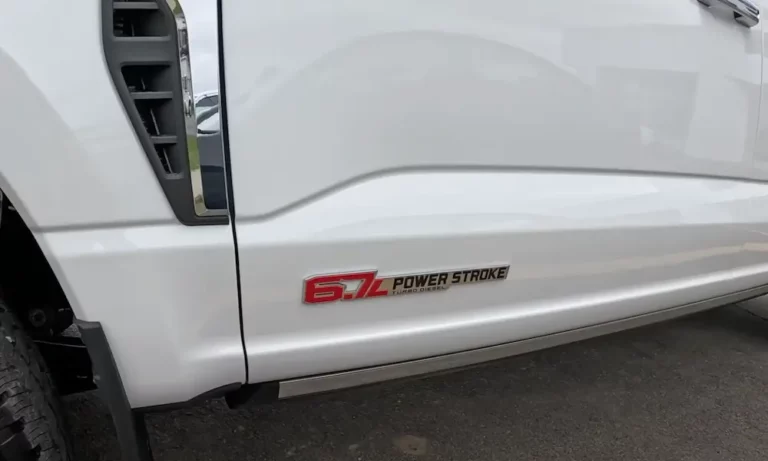
Looking to understand the raw power behind Ford’s legendary diesel engine? The 6.7 Powerstroke has transformed from an impressive powerplant to a torque monster over the years. Whether you’re shopping for a used Super Duty or considering a new purchase, knowing the power differences between model years can help you make the right choice for your needs.
The Current 6.7 Powerstroke Power Specs (2025)
The latest 6.7 Powerstroke offers two distinct power levels, giving buyers options based on their towing and hauling requirements.
Standard Output Configuration
The standard 6.7 Powerstroke delivers impressive numbers that handle most heavy-duty needs:
- Horsepower: 475 HP @ 2,600 RPM
- Torque: 1,050 lb-ft @ 1,600 RPM
High-Output Configuration
For those needing maximum capability, the high-output variant pushes the boundaries of diesel power:
- Horsepower: 500 HP @ 2,600 RPM
- Torque: 1,200 lb-ft @ 1,600 RPM
This high-output version represents the most powerful Ford Super Duty ever produced, giving owners bragging rights and exceptional towing capacity of up to 40,000 pounds when properly equipped.
The Power Evolution: From 2011 to Present
The 6.7 Powerstroke’s power growth shows Ford’s commitment to continuous improvement. Here’s how the engine has evolved over three generations:
First Generation (2011-2014)
The first-gen Powerstroke started strong but quickly got better:
- 2011 Initial Release: 390 HP / 735 lb-ft
- 2011 Update: 400 HP / 800 lb-ft
- 2012-2014: Maintained 400 HP / 800 lb-ft
This mid-year update in 2011 happened because Ford needed to stay competitive with GM’s Duramax. Even after launch, Ford was working to make this engine better.
Second Generation (2015-2019)
The second generation brought significant power increases:
- 2015-2016: 440 HP / 860 lb-ft
- 2017: 440 HP / 925 lb-ft
- 2018-2019: 450 HP / 935 lb-ft
These gains came from improved turbocharger and fuel system designs, allowing the engine to create more power without sacrificing reliability.
Third Generation (2020-Present)
The current generation broke new ground for Ford diesel power:
- 2020-2022: 475 HP / 1,050 lb-ft
- 2023-2025 Standard: 475 HP / 1,050 lb-ft
- 2023-2025 High-Output: 500 HP / 1,200 lb-ft
This generation marked Ford’s first diesel to break the 1,000 lb-ft torque barrier, putting it in elite company among production vehicles.
Power Progression Comparison Table
| Generation | Model Years | Horsepower | Torque (lb-ft) | Key Improvements |
|---|---|---|---|---|
| First Gen | 2011 (initial) | 390 | 735 | First in-house design |
| First Gen | 2011 (updated) | 400 | 800 | Calibration update |
| First Gen | 2012-2014 | 400 | 800 | Reliability refinements |
| Second Gen | 2015-2016 | 440 | 860 | New turbocharger |
| Second Gen | 2017 | 440 | 925 | Torque increase |
| Second Gen | 2018-2019 | 450 | 935 | Further power tuning |
| Third Gen | 2020-2022 | 475 | 1,050 | Steel pistons, new turbo |
| Third Gen | 2023-2025 (std) | 475 | 1,050 | Dual power options |
| Third Gen | 2023-2025 (H.O.) | 500 | 1,200 | Class-leading power |
What Makes The 6.7 Powerstroke Special?
Understanding the engine’s design helps explain why it can handle so much power.
Innovative Reverse-Flow Design
The 6.7 Powerstroke uses a unique layout that’s completely different from other diesels. Ford placed the exhaust manifolds in the valley between cylinder banks (inside the “V”) and moved the intake manifolds to the outside.
This reverse-flow design offers real advantages:
- Shorter exhaust routing to the turbocharger
- Reduced turbo lag for better responsiveness
- Improved thermal efficiency
Core Engine Specifications
The 6.7 Powerstroke’s basic architecture provides a solid foundation:
- Displacement: 6.7 liters (406 cubic inches)
- Configuration: V8 with 90-degree angle
- Bore x Stroke: 99mm x 108mm (3.90″ x 4.25″)
- Compression Ratio: 16.2:1 (2011-2019), 15.8:1 (2020-present)
- Firing Order: 1-3-7-2-6-5-4-8
Built for Strength
The 6.7 Powerstroke uses premium materials that help it handle enormous power:
- Compacted Graphite Iron (CGI) block that’s 75% stronger than traditional cast iron
- Deep-skirt design with six bolts per main bearing cap
- Forged steel crankshaft for maximum durability
- Powdered metal connecting rods
- Cast aluminum pistons (2011-2019), upgraded to stronger steel pistons (2020-present)
These premium components explain why the engine has become popular for both stock and modified applications.
Advanced Engine Technology
The 6.7 Powerstroke combines several cutting-edge systems to produce its impressive power numbers.
Fuel System Evolution
The injection system has been continuously improved:
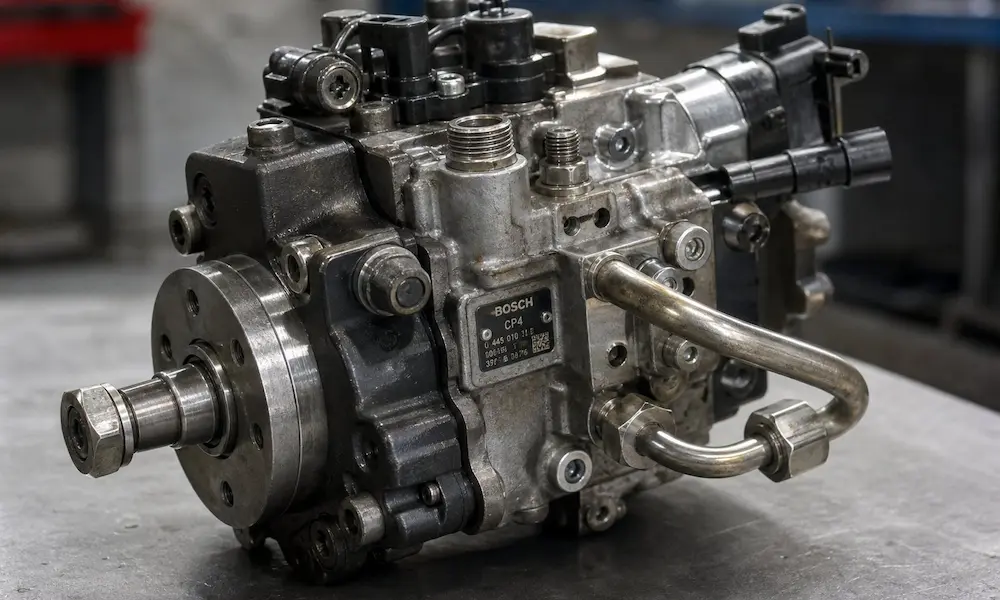
- High-pressure common rail with Bosch CP4.2 injection pump
- Piezoelectric injectors capable of up to 8 injections per combustion cycle
- System pressure: 30,000 PSI (2011-2019), increased to 36,000 PSI (2020-present)
These precise injectors allow for extremely accurate fuel delivery, improving both power and efficiency.
Turbocharger Progression
The turbocharger has evolved with each generation:
- 2011-2014: Garrett GT32 SST with dual back-to-back 46mm compressor wheels
- 2015-2019: Garrett GT37 journal bearing VGT with single 61mm compressor wheel
- 2020-Present: Garrett ball bearing VGT with 54mm compressor wheel
The high-output variant uses unique turbocharger calibration and upgraded exhaust manifolds to achieve its additional 25 horsepower and 150 lb-ft of torque.
Reliability Considerations by Generation
While the 6.7 Powerstroke has a good overall reputation, each generation has specific strengths and weaknesses.
First Generation (2011-2014) Reliability
Early models had several issues to watch for:
- Turbocharger failures due to ceramic ball bearings
- Exhaust valve cracking
- NOx sensor problems
- Initial EGR cooling system concerns
These first-gen engines are generally reliable when properly maintained, but they do have more potential trouble spots than later versions.
Second Generation (2015-2019) Reliability
The second generation addressed many early concerns:
- Improved turbocharger design with fewer failures
- Better EGR system durability
- Enhanced emissions component reliability
- More refined calibration
This generation is considered more reliable, though EGR cooler flow and fan clutch problems can still occur.
Third Generation (2020-Present) Reliability
The current generation offers the best reliability yet:
- Steel pistons provide greater strength
- Improved fuel system durability
- Enhanced turbocharger reliability
- Better thermal management
Most diesel experts consider this generation the most reliable 6.7 Powerstroke yet, though it hasn’t been on the market as long as earlier versions.
Common Issues Across All Generations
While reliability improves with each generation, some concerns affect most 6.7 Powerstroke engines:
CP4.2 Fuel Pump Failure
The most serious issue is failure of the high-pressure fuel pump, which can cause catastrophic fuel system contamination with repair costs exceeding $10,000. Metal debris from the pump can spread throughout the entire fuel system.
Cold-Side Intercooler Pipe Failures
The factory plastic intercooler pipes are prone to cracking under boost pressure, causing immediate power loss. Many owners replace these with aftermarket metal versions as a preventative measure.
Emissions System Complexity
Like all modern diesels, the extensive emissions equipment (EGR, DPF, SCR) adds complexity and potential failure points. Regular driving patterns that allow for complete regeneration cycles help prevent problems.
Performance Potential
One reason the 6.7 Powerstroke is popular is its substantial performance potential beyond stock levels.
Tuning Capabilities
With proper tuning and supporting modifications, the 6.7 Powerstroke can achieve impressive gains:
- Basic tuning can add 75-150 horsepower and 150-250 lb-ft of torque
- The factory fuel injectors can support up to 700 rear-wheel horsepower
- The CGI block provides excellent strength for high-power applications
The engine’s robust architecture makes it a favorite for performance enthusiasts who need both power and durability.
Modification Path
Most performance builds follow this progression:
- Engine tuning
- Cold air intake and exhaust upgrades
- Fuel system improvements
- Turbocharger modifications
- Internal engine reinforcements (for extreme power)
Each step builds on the previous modifications to create a balanced, reliable power increase.
Commercial Applications
Interestingly, the 6.7 Powerstroke in F-650/F-750 commercial trucks produces different power figures:
- Horsepower: 270-330 HP
- Torque: 700-750 lb-ft
This derating for commercial applications prioritizes longevity and reliability over peak performance, allowing the engine to handle the demanding duty cycles of commercial work.
Choosing the Right Model Year
Based on power and reliability, here are some guidelines for choosing a used 6.7 Powerstroke:
Best for Budget Buyers
2015-2016 models offer a good balance of power (440 HP/860 lb-ft) and improved reliability over first-gen engines, often at more affordable prices than newer models.
Best for Reliability
2020-2022 models feature significant durability improvements including steel pistons while delivering excellent power (475 HP/1,050 lb-ft).
Best for Maximum Power
2023-2025 high-output models provide the ultimate in factory performance with 500 HP and 1,200 lb-ft of torque, though at a premium price point.
How the 6.7 Powerstroke Compares to Competitors
Ford’s 6.7 Powerstroke currently leads the class in maximum torque output:
| Engine | Current Horsepower | Current Torque | Notable Features |
|---|---|---|---|
| Ford 6.7 Powerstroke HO | 500 HP | 1,200 lb-ft | Reverse-flow design, steel pistons |
| Ram 6.7 Cummins HO | 420 HP | 1,075 lb-ft | Inline-6 design, simplicity |
| GM 6.6 Duramax | 470 HP | 975 lb-ft | Allison transmission pairing |
This competitive positioning shows why Ford continues to invest in the 6.7 Powerstroke’s development.
The Future of the 6.7 Powerstroke
While Ford hasn’t announced specific future plans, industry trends suggest:
- Further refinement of the dual-power strategy
- Continued emissions improvements
- Potential hybrid integration in future generations
- Enhanced thermal management for better efficiency
With Ford’s commitment to truck leadership, expect the 6.7 Powerstroke to remain competitive for years to come.
The 6.7 Powerstroke represents a significant engineering achievement as Ford’s first entirely in-house diesel engine design. Its power evolution from 390 HP/735 lb-ft to today’s 500 HP/1,200 lb-ft demonstrates Ford’s commitment to continuous improvement. Whether you’re towing heavy loads or simply want the capability to do so, the 6.7 Powerstroke delivers impressive performance that continues to set benchmarks in the heavy-duty truck segment.