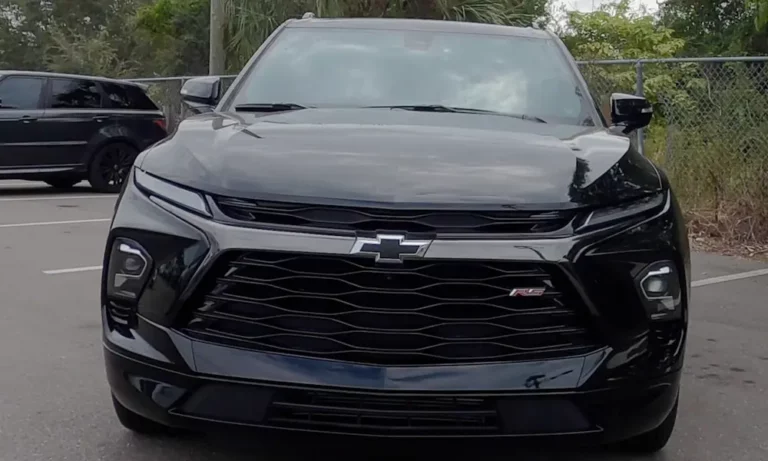
Thinking about getting a Chevy Blazer but worried about reliability? You’re smart to do your homework. The Blazer’s sporty styling and impressive handling might catch your eye at the dealership, but what happens after you drive it home? Let’s cut through the marketing hype and look at what owners and experts actually say about Chevy Blazer reliability.
Chevy Blazer Reliability Ratings: Mixed Messages
The reliability picture for the Chevy Blazer isn’t exactly crystal clear. Consumer Reports expects the 2025 Chevrolet Blazer to be less reliable than the average new car. But then J.D. Power contradicts this by placing the Blazer in the top three midsize SUVs for dependability.
Why the difference? Consumer Reports bases their prediction on data from 2022-2024 models plus Chevrolet’s overall brand reliability. J.D. Power focuses more on specific problems reported by owners.
RepairPal doesn’t even have enough data to give the Blazer a proper rating. That’s not necessarily bad news, but it doesn’t help clear things up either.
Here’s what we know for sure:
- The modern Blazer (reintroduced in 2019) has below-average reliability according to most major testing organizations
- Consumer feedback varies dramatically between very satisfied and extremely frustrated
- The vehicle excels in performance and handling but struggles with quality control
Maintenance Costs: Higher Than Average
One area where the data is more definitive: owning a Blazer will likely cost you more in maintenance than comparable SUVs.
CarEdge estimates that a Blazer will cost about $9,406 for maintenance and repairs during its first 10 years of service. That’s $1,198 more than the industry average for popular SUVs.
Even more concerning, there’s a 26.91% chance of requiring a major repair during that decade—2.32% worse than similar vehicles.
Here’s how the maintenance costs typically break down:
| Year | Estimated Cost | Major Repair Probability |
|---|---|---|
| 1 | $390 | 2.66% |
| 3 | $591 | 7.79% |
| 5 | $861 | 12.58% |
| 10 | $1,254 | 26.91% |
These higher costs reflect some of the recurring issues that plague the Blazer, which we’ll get into next.
Common Chevy Blazer Problems You Should Know About
Electrical System Nightmares
The electrical system represents the biggest reliability headache for modern Blazer owners. The 2022 model year is particularly notorious for:
- Dashboard and driver information center failures
- Screens freezing or going black
- Car alarm system malfunctions
- Computer-related defects
Perhaps most concerning are the electrical fires reported by some owners, with documented cases of vehicles spontaneously combusting while parked. That’s definitely not a feature you want in your family SUV.
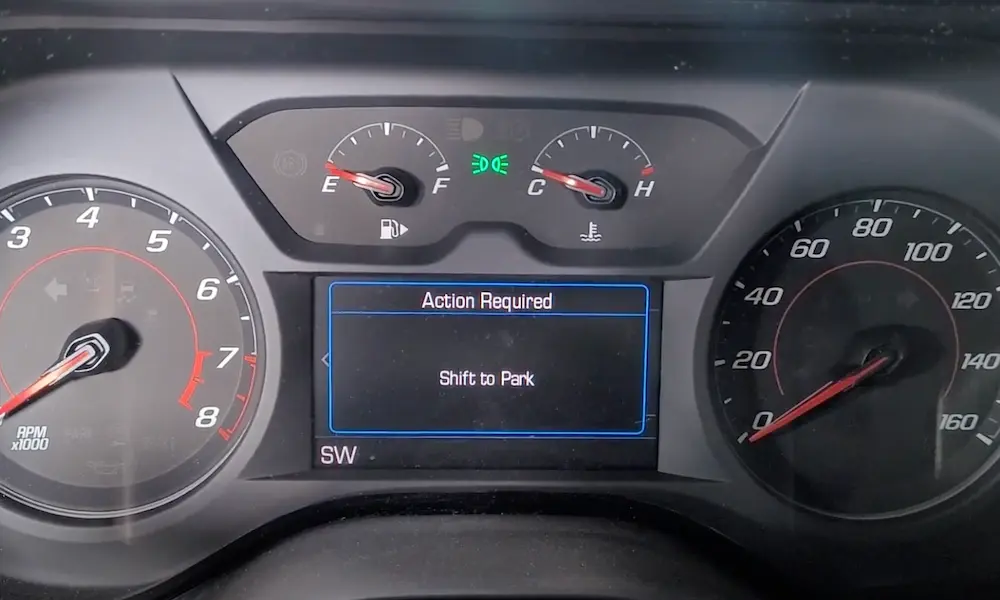
The infamous “Shift to Park” error message frequently appears on 2019 models even when the vehicle is properly parked. This typically comes with fun extras like activated horns and defective door locks.
Transmission Troubles
Transmission issues plague the Blazer with alarming frequency. Some owners report complete transmission failures as early as 2,000 miles, requiring full rebuilds or replacements.
One 2024 Blazer owner discovered their transmission had already been rebuilt before purchase—after it failed again just 2,000 miles later. That’s not exactly confidence-inspiring.
These transmission problems aren’t new. The 2000 Chevrolet Blazer experienced severe issues including:
- Gear slippage
- Failure to engage reverse
- Strange noises
- Complete transmission shutdowns
The persistence of these issues across different model years suggests Chevrolet hasn’t fully resolved these powertrain reliability challenges.
Brake System Concerns
Modern Blazers exhibit some worrying brake system problems. The 2022 model shows:
- Unexpected loss of brake pressure
- Brake service light activation
- Front brake problems highlighted in technical service bulletins
Anti-lock brake system (ABS) control module failures have affected multiple model years, preventing proper brake engagement even when the wheel speed sensors work correctly. When it comes to safety systems like brakes, reliability isn’t just about convenience—it’s critical.
Engine and Cooling System Issues
While less common in newer models, the Blazer’s history includes significant engine-related problems:
- Fuel pump failures causing stalling or no-start conditions
- Distributor defects affecting engine operation
- Inaccurate fuel gauges due to failing sensors
- Intake manifold gasket failures causing coolant leaks
Left unaddressed, these problems led to poor performance, reduced acceleration, and engine backfiring in older models.
How Does the Blazer Compare to Competitors?
Honda Passport: The Reliability Winner
The Honda Passport consistently outperforms the Chevrolet Blazer in reliability metrics. Consumer Reports recommends the Passport based on reliability, safety, and performance while specifically noting that the Blazer is not recommended.
What makes the Passport more reliable? It uses a proven naturally aspirated 3.5-liter V6 engine that Honda has refined since the 1990s. The simpler engine design means fewer potential failure points and easier maintenance compared to the Blazer’s more complex powertrains.
Toyota Highlander: Exceptional Dependability
Toyota Highlander models, particularly the hybrid variants, significantly outperform the Blazer in reliability. The Highlander Hybrid uses Toyota’s well-proven hybrid powertrain technology that has been perfected over decades.
Industry surveys consistently rank Toyota vehicles among the most reliable, with the Highlander frequently topping reliability charts for midsize SUVs.
Competitive Disadvantage
While Car and Driver praised the Blazer’s driving dynamics and handling characteristics, reliability concerns limit its competitiveness against established rivals. The focus on sporty performance seems to come at the expense of proven reliability.
Recalls and Safety Concerns
Recent Recall Activity
Safety recalls affect multiple recent Blazer model years:
- The 2025 Chevrolet Blazer has been recalled for door striker issues where improperly heat-treated strikers can break, causing doors to open unexpectedly
- The 2024 Chevrolet Blazer experienced recalls for similar door striker fractures
- Over 40,000 electric Blazer EVs were recalled in 2025 due to parking brake wiring harness problems
In total, the Chevrolet Blazer has accumulated 33 known recalls across its production history, indicating ongoing quality control challenges.
Real Owners Speak: Mixed Experiences
The Good
Some owners report exceptional satisfaction. One 2023 Blazer 3LT V6 owner stated after more than a year: “absolutely no problems, mechanical or otherwise, and it’s great to drive.” They praised the vehicle’s handling, power, prompt dealership service, and comprehensive features.
When the Blazer works as intended, owners generally love:
- Sporty handling and responsive steering
- Strong acceleration from V6 models
- Distinctive styling that stands out
- Tech features when functioning properly
The Bad
Unfortunately, severe reliability problems generate significant frustration for many owners. Multiple owners report extensive electrical system failures within the first few thousand miles.
One 2023 Blazer RS owner experienced non-functional cruise control, anti-lock brakes, traction control, and safety systems after only 3,000 miles. Parts availability issues made things worse, with Chevrolet lacking necessary components for repairs.
The Ugly
Early transmission failures create major dissatisfaction. One owner reported transmission failure at just 8 months, followed by another failure 6 months after repair.
Build quality issues consistently appear in owner reviews. One noted: “best driving SUV in its class regardless of what people say, but my blazer has hands down the cheapest quality everything. The car dents when it goes over a tough bump, that’s how cheap the metal is.”
Long-Term Ownership Considerations
Depreciation Hits Hard
The Blazer experiences higher than average depreciation rates. CarEdge estimates a depreciation of $22,983 after five years, representing significant value loss from the typical $44,995 purchase price.
This steep depreciation partially reflects the reliability concerns that impact resale values compared to more dependable competitors like Honda and Toyota.
Extended Warranty: Probably Worth It
Industry experts strongly recommend extended warranty coverage for Blazer ownership. CarEdge specifically advises that “an extended warranty is recommended” due to the vehicle’s higher than average repair probability and costs.
With a 26.91% chance of major repairs during the first decade, extended coverage makes financial sense for most owners.
Maintenance Schedule: Stay On Top Of It
The Blazer requires frequent maintenance intervals that increase ownership complexity:
- Basic maintenance every 7,500 miles
- Major services at 30,000, 60,000, and 90,000-mile intervals
- Differential and gear oil replacements
- Transmission fluid services
- Transfer case fluid replacements
Skipping these services will only compound the vehicle’s existing reliability challenges.
The Blazer EV: New Technology, New Problems
The all-electric Blazer EV faces unique reliability challenges. GM recalled over 40,000 electric Blazer vehicles due to parking brake wiring harness problems that could become damaged or corroded, causing unintended parking brake activation while driving or complete parking brake failure.
Early adopters of the Blazer EV have reported software glitches and charging issues that required dealer intervention. As with many first-generation EVs, the technology is still maturing.
Is the Chevy Blazer Right for You?
The Chevrolet Blazer presents a compelling driving experience undermined by below-average reliability. While it excels in performance, handling, and styling, it struggles with electrical system problems, transmission issues, and build quality concerns.
You might consider a Chevy Blazer if:
- You prioritize driving dynamics and style over reliability
- You plan to lease rather than buy long-term
- You have a reliable Chevrolet dealer nearby
- You’re willing to purchase extended warranty coverage
You should probably look elsewhere if:
- Long-term reliability is your top priority
- You plan to keep your vehicle beyond the warranty period
- You want to minimize maintenance costs
- You need dependable transportation for critical daily needs
For buyers prioritizing reliability, established competitors like the Honda Passport and Toyota Highlander offer superior long-term dependability. These vehicles sacrifice some of the Blazer’s sporty characteristics but provide proven reliability that translates to lower ownership costs and fewer unexpected repairs.
The Blazer’s strong performance capabilities and distinctive styling may justify ownership for buyers willing to accept higher maintenance costs and potential reliability challenges in exchange for a more engaging driving experience. Just go in with your eyes open about what to expect.