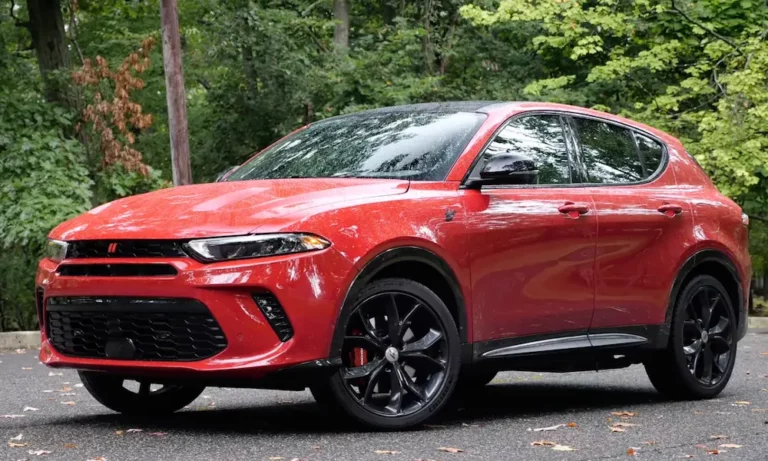
You’re considering a Dodge Hornet and wondering if it’s a smart buy. With its sporty look and performance-oriented marketing, it’s easy to get excited about this compact SUV. But before you sign on the dotted line, you need to know: are Dodge Hornets reliable? I’ve dug through owner reports, reliability data, and expert analyses to give you the straight facts about this relatively new vehicle’s dependability.
The Dodge Hornet’s Reliability Track Record So Far
The Dodge Hornet, introduced as a 2023 model, has accumulated a concerning reliability record in its short time on the market. As a rebadged version of the Alfa Romeo Tonale built in Italy, the Hornet inherited some significant quality control challenges.
Consumer Reports predicts below-average reliability for the Hornet, based partly on Dodge’s overall brand history and early owner feedback. This isn’t just speculation—the data shows some genuine concerns that potential buyers should consider.
Major Reliability Issues Plaguing the Dodge Hornet
Electrical System Failures
The most frequent and serious reliability issue with the Dodge Hornet involves comprehensive electrical system failures. Multiple owners report nearly identical symptoms: attempting to start the vehicle results in a completely dead car with all dashboard warning lights illuminating simultaneously.
These failures often occur on vehicles with extremely low mileage—sometimes even brand-new units. The electrical problems manifest in several concerning ways:
- Complete system shutdowns requiring towing
- Parasitic battery drain preventing the vehicle from holding a charge for more than a week
- Repeated 12V battery failures even after dealer replacement
- Multiple control module malfunctions requiring extensive software updates
One owner shared: “My 2024 Hornet has been at the dealership for 30+ days with electrical issues. The car completely died while driving with less than 1,000 miles on it.”
Battery and Charging Problems
Owners consistently report chronic 12V battery issues, with some vehicles requiring multiple battery replacements within months of purchase. Stellantis representatives have acknowledged that the Hornet’s complex electronic systems create significant battery drain, with vehicles potentially failing to start after just one week of non-use.
A common complaint on Hornet owner forums describes batteries that drain completely when the vehicle sits for just a few days, requiring jump starts or towing.
Technical Service Bulletins and Software Issues
The Dodge Hornet has accumulated 69 Technical Service Bulletins (TSBs) for the 2024 model year alone, indicating widespread technical problems that dealers need guidance to address. Common issues documented in these TSBs include:
- Hybrid system coordination problems causing jerking at highway speeds
- Adaptive cruise control failures with radar sensor blindness
- Traffic sign recognition malfunctions reading incorrect speed limits
- Interior lighting failures requiring wiring harness installation
- Transmission fluid leaks from cooling system components
Dodge Hornet Recalls: A Growing Concern
The Hornet has been subject to six major safety recalls in its brief production history, which is concerning for a vehicle with such a short time on the market:
- Rearview camera failure affecting 48,494 vehicles (2023-2025)
- Brake pedal collapse risk affecting 2024-2025 models
- Fire risk from improperly tightened battery cables in plug-in hybrid models
- Pedestrian alert system failure in PHEV variants
- Additional electrical system recalls for various control modules
The NHTSA database shows these recalls impact significant percentages of Hornets on the road, suggesting quality control issues during manufacturing.
Market Performance: What Sales Tell Us About Reliability
The Dodge Hornet’s reliability problems are reflected in its poor sales performance. The vehicle consistently ranks as one of the slowest-selling vehicles in America, with:
- 480+ day inventory supply compared to the industry average of 40 days
- Only 9,314 units sold in all of 2023
- 45% sales decline in Q1 2025 versus the prior year
- Massive dealer discounts of up to $19,000+ off MSRP to move inventory
This sluggish sales performance suggests that consumers are voting with their wallets after hearing about the vehicle’s reliability concerns.
What Hornet Owners Are Saying
Negative Experiences Dominate Owner Feedback
Owner forums and review sites reveal predominantly negative experiences. Common themes include:
- Extended dealership stays lasting 30+ days without resolution
- Multiple towing incidents for the same electrical failures
- Lemon law proceedings initiated by frustrated owners
- Poor dealer support and parts availability issues
One owner on Reddit shared: “My 2024 Hornet has needed 3 battery replacements in 4 months. The dealer can’t figure out what’s causing the drain, and Dodge doesn’t seem to have a solution.”
The Few Positive Reports
A small minority of owners report satisfactory experiences, particularly those with higher-mileage vehicles that have received multiple software updates. However, these positive reports are significantly outnumbered by negative experiences and often come from owners who acknowledge ongoing concerns about long-term reliability.
| Owner Survey Category | Percentage Reporting Issues | Most Common Problems |
|---|---|---|
| Electrical System | 68% | Battery drain, complete system failures |
| Engine | 23% | Stalling, rough idle |
| Infotainment | 42% | Screen freezing, connectivity issues |
| Transmission | 18% | Jerky shifts, hesitation |
| Body/Interior | 27% | Rattles, poor panel alignment |
How the Hornet Compares to Competitors
When compared to segment leaders like the Honda CR-V, Mazda CX-5, and Toyota RAV4, the Hornet underperforms in reliability metrics:
Reliability Comparison Table
| Vehicle Model | Predicted Reliability | Common Issues | Average Days in Shop Per Year |
|---|---|---|---|
| Dodge Hornet | Below Average | Electrical system, battery | 12+ days |
| Honda CR-V | Above Average | Minor infotainment | 2-3 days |
| Mazda CX-5 | Excellent | Few reported issues | 1-2 days |
| Toyota RAV4 | Excellent | Minor transmission | 1-2 days |
Beyond reliability, the Hornet also lags in:
- Fuel Economy: The Hornet achieves 21/29 MPG compared to competitors’ 26-28/31-35 MPG
- Cargo Space: With only 27 cubic feet, the Hornet offers less space than the CX-5’s 31 cubic feet or CR-V’s 76.5 cubic feet
- Resale Value: The Hornet loses 43.5% of its value in five years compared to competitors’ 35-42% depreciation
Recent Improvements: Has the 2025 Hornet Fixed the Problems?
Stellantis Quality Initiative
Stellantis has made efforts to address quality concerns, with Dodge improving 24 positions in the 2025 J.D. Power Initial Quality Study. However, this improvement comes from an extremely low baseline and doesn’t specifically address the Hornet’s chronic electrical issues.
Limited 2025 Model Changes
The 2025 Dodge Hornet receives minimal updates, primarily adding paddle shifters to GT models with the Track Pack option. No significant reliability improvements or electrical system redesigns have been announced for the 2025 model year.
Despite claims of improvement, recent owner reports from 2024 and 2025 model years continue to show the same electrical problems, suggesting that fundamental design issues remain unresolved.
Warranty Coverage and What It Really Means
The Dodge Hornet comes with a 3-year/36,000-mile basic warranty and 5-year/60,000-mile powertrain warranty. However, owners report significant challenges with warranty service:
- Extended repair times due to parts shortages and complex diagnosis requirements
- Multiple failed repair attempts for the same electrical issues
- Poor communication between dealers and Stellantis technical support
- Inconsistent repair quality across different dealerships
Having a warranty is valuable, but if your vehicle spends weeks or months at the dealership, the warranty’s practical value diminishes significantly.
The Financial Reality of Owning a Dodge Hornet
Current Pricing Advantages
The Hornet’s poor market performance has created substantial discount opportunities, with some 2024 models available for $20,000+ below original MSRP. While this represents significant value from a purchase price perspective, buyers must weigh these savings against:
- Higher maintenance costs from frequent repairs
- Poor resale value due to reliability reputation
- Potential lemon law scenarios requiring legal intervention
- Lost time and convenience from repeated service visits
One owner commented: “I saved $15,000 on my Hornet purchase, but have spent countless hours dealing with repairs and being without my car. The savings weren’t worth the headache.”
Should You Buy a Dodge Hornet?
Based on the comprehensive evidence of electrical system failures, poor build quality, and inconsistent dealer support, the Dodge Hornet cannot be recommended as a reliable vehicle choice. While the vehicle offers competitive performance and features, these advantages are overshadowed by fundamental reliability problems that have persisted across multiple model years.
For Reliability-Conscious Buyers
Avoid the Dodge Hornet and consider proven alternatives like the Honda CR-V, Mazda CX-5, or Toyota RAV4, which offer superior reliability, better fuel economy, more practical space, and stronger resale values.
For Performance-Oriented Buyers
If you’re attracted to the Hornet’s 268-horsepower engine and sporty handling, consider waiting until Stellantis demonstrates sustained reliability improvements across multiple model years and production cycles.
For Value Seekers
While current discounts make the Hornet financially attractive upfront, the total cost of ownership including repairs, depreciation, and potential replacement under lemon laws likely exceeds the savings from reduced purchase price.
The Bottom Line on Dodge Hornet Reliability
The Dodge Hornet represents a high-risk purchase with documented reliability problems, poor market acceptance, and uncertain long-term support. Despite its attractive styling and performance, the current evidence suggests that the Hornet falls short in the reliability department.
If you’re still interested in the Hornet despite these concerns, consider leasing rather than buying to limit your long-term exposure to reliability issues, or wait for Stellantis to demonstrate meaningful improvements in future model years.