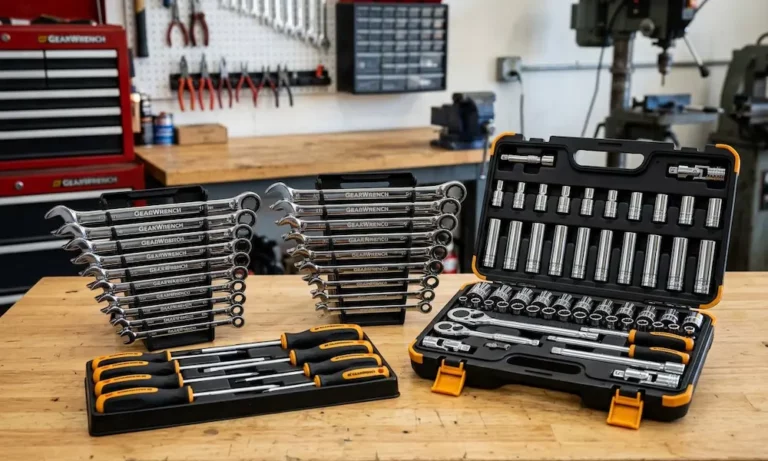
Got a wrench that keeps slipping? Or maybe you’re staring at a wall of tools at Home Depot wondering where to put your money. GearWrench keeps coming up — but are they actually worth it? This post digs into the real story: the history, the quality, the competition, and whether GearWrench tools deserve a spot in your toolbox.
Where GearWrench Came From (And Why It Matters)
GearWrench didn’t start as another generic tool brand. Back in 1995, a Taiwanese manufacturer called Lea Way Hand Tool Corporation identified a real problem: ratcheting combination wrenches were either too thick, too weak, or both.
Their fix? A forged beam with a precision metal-injection-molded pawl mechanism that delivered a five-degree swing arc. That was genuinely new. By 1996, GearWrench had partnered with the Danaher Tool Group and started selling in the US.
Today, the brand sits under the Apex Tool Group, which was formed in 2010 as a joint venture between Cooper Industries and Danaher Corporation. Bain Capital acquired Apex in 2012 for around $1.6 billion. That’s the company behind GearWrench — and it gives the brand serious resources for R&D and manufacturing.
Here’s how the parent company stacks up against competitors:
| Company / Brand | Parent Group | Est. Annual Revenue | Primary Market |
|---|---|---|---|
| GearWrench | Apex Tool Group | $1.6 Billion | Professional Automotive & Industrial |
| Snap-on | Snap-on Inc. | $4.7 Billion | Premium Tool Truck |
| Stanley Black & Decker | Stanley Black & Decker | $15.8 Billion | Consumer, DIY & Industrial |
| Harbor Freight | Central Purchasing | $8.0 Billion | Budget to Pro-sumer Retail |
Are GearWrench Tools Made Well?
The Taiwan vs. China Question
This is where most people’s eyebrows go up. GearWrench built its reputation on Taiwanese manufacturing, which the tool industry widely respects for tighter tolerances and better metallurgy.
But here’s the honest answer: production has shifted. A big chunk of high-volume items — standard chrome socket sets, some combination wrenches — now comes from mainland China. The more specialized stuff, like the 120XP ratchets, still largely comes from Taiwan.
Professionals on forums have noted that Taiwanese-made tools tend to have a fuller, more durable polish finish. The Chinese-made versions can show minor inconsistencies in finish quality, though most report they still perform well in the field.
Here’s a breakdown by product line:
| Product Line | Primary Origin | Professional Perception |
|---|---|---|
| 120XP Ratchets | Taiwan | Highly regarded for precision and finish |
| Ratcheting Wrenches | Taiwan / China | Taiwanese versions preferred for tighter tolerances |
| Impact Sockets | China / Taiwan | Generally viewed as extremely durable |
| Diagnostic Tools | Taiwan / Global | High-tech; involves global electronics supply chain |
| Specialty Tools (Bolt Biter) | Taiwan / China | Innovative designs; performance is generally consistent |
What Makes the 120XP Ratchet Special?
If you’ve heard one thing about GearWrench, it’s probably the 120XP. The “120” refers to 120 positions in the ratcheting gear. That gives you a three-degree swing arc — meaning you only need three degrees of movement to advance the ratchet one click.
Why does that matter? Modern engine bays are tight. Clearance is minimal. A standard ratchet might need 5-10 degrees of arc to function. In a cramped space, that extra movement simply isn’t there.
GearWrench solved the usual tradeoff — where more teeth means weaker teeth — by using a double-stacked pawl design. Two pawls alternate engagement on a 60-tooth gear, giving you 120 effective positions without sacrificing tooth strength.
Here’s how it compares to the competition:
| Feature | GearWrench 120XP | Typical Mid-Tier | Premium Tool Truck |
|---|---|---|---|
| Swing Arc | 3 Degrees | 4 to 5 Degrees | 4.5 Degrees |
| Tooth Count | 120 Positions | 72 to 90 Positions | 80 to 100 Positions |
| Head Profile | Low Profile Teardrop | Standard Teardrop | Ultra-Low Profile |
| Mechanism | Double-Stacked Pawl | Single Pawl | High-Precision Single or Dual Pawl |
One real drawback worth mentioning: some users report higher backdrag on 120XP ratchets. Backdrag is the resistance you feel when the ratchet spins in the non-driving direction. When it’s too high, a loose fastener can spin instead of the ratchet clicking past it. It’s not a deal-breaker for most work, but Snap-on still edges ahead here.
How Do GearWrench Tools Hold Up in Real Use?
Daily Professional Use
Many mechanics report using GearWrench ratchets and wrenches daily for years without any mechanical failure. That’s a strong signal for a brand sitting at this price point.
- Automotive techs love the access and the price-to-performance ratio
- Diesel mechanics appreciate the heavy-duty impact socket sets and the long handles for leverage — though very high torque can occasionally break internal gears on fine-tooth ratchets
- DIY enthusiasts get complete sets with no skipped sizes, plus wide availability at Home Depot and Lowe’s
The Bolt Biter Series
One of GearWrench’s most practical specialty tools is the Bolt Biter line. Traditional extractor sockets dig sharp flutes into a rounded bolt, which can cause it to shear off completely. The Bolt Biter uses a tapered internal geometry that grips tighter as you apply more torque.
It works on bolts up to 90% rounded off. It works in both tightening and loosening directions. For anyone doing rust-belt repairs or working on older vehicles, this tool pays for itself fast.
Professional Sentiment Summary
| Segment | Primary Advantages | Reported Issues |
|---|---|---|
| Automotive Techs | High access; excellent quality-to-price ratio; wide specialty tool range | Occasional backdrag; flex-head tension can go limp over time |
| Diesel Mechanics | Strong enough for heavy equipment; good impact socket sets | High-torque use can break internal gears on fine-tooth ratchets |
| DIY Enthusiasts | Complete sets; affordable; widely available | Higher price than basic house brands; storage cases can be fragile |
The Warranty: What GearWrench Actually Covers
GearWrench offers a full lifetime warranty on mechanics’ hand tools, covering defects in materials and workmanship for the life of the original purchaser.
The EZ Warranty system is the brand’s biggest improvement in customer support. You submit a claim online, upload a photo of the damaged tool, and they ship a replacement — often within a week. That’s a big deal if you’re a working tech who can’t afford downtime.
Here’s the full warranty breakdown by product category:
| Category | Warranty Duration | Service Mechanism |
|---|---|---|
| Mechanics Hand Tools | Lifetime | EZ Warranty (Online) or Retail Swap |
| Torque Products | 1 Year (Mechanical) | Authorized Service Center Evaluation |
| Calibration | 90 Days | Must be sent to specialized repair centers |
| Diagnostic Tools | 2 Years | Software and Hardware support channels |
| Tool Storage | 3 Years | Replacement parts or exchange |
| Tool Carts | 5 Years | Structural support and hardware replacement |
One catch: retail warranty experiences aren’t always consistent. Home Depot and Lowe’s don’t always allow individual tool swaps, especially if the tool was part of a set. The EZ Warranty online route is more reliable.
GearWrench Torque Tools: Are They Accurate Enough?
GearWrench’s torque wrench lineup meets or exceeds ASME standards. Their range covers micrometer click-style, electronic, and digital-angle varieties.
The 120XP micrometer torque wrench brings that same three-degree swing arc to torque work, with ±3% clockwise accuracy. For even higher-stakes jobs, the E-Spec series offers ±1.5% torque accuracy and ±1% angle accuracy, plus data logging for quality control documentation.
| Tool Type | Accuracy Rating | Key Benefit |
|---|---|---|
| 120XP Micrometer | ±3% | Exceptional access in tight engine compartments |
| Electronic Torque | ±2% | Multi-sensory alerts (vibration, sound, light) |
| Digital Angle | ±2% Torque / ±1% Angle | Critical for torque-to-yield fasteners |
| E-Spec Connected | ±1.5% | High-level precision with digital data logging |
One important note: GearWrench recommends annual recalibration or service after 5,000 cycles. Torque tools aren’t eligible for over-the-counter swaps — they go to authorized centers for inspection. The 90-day calibration guarantee is notably shorter than the one-year mechanical warranty, so treat these as precision instruments, not throw-around tools.
GearWrench vs. the Competition
GearWrench vs. Snap-on
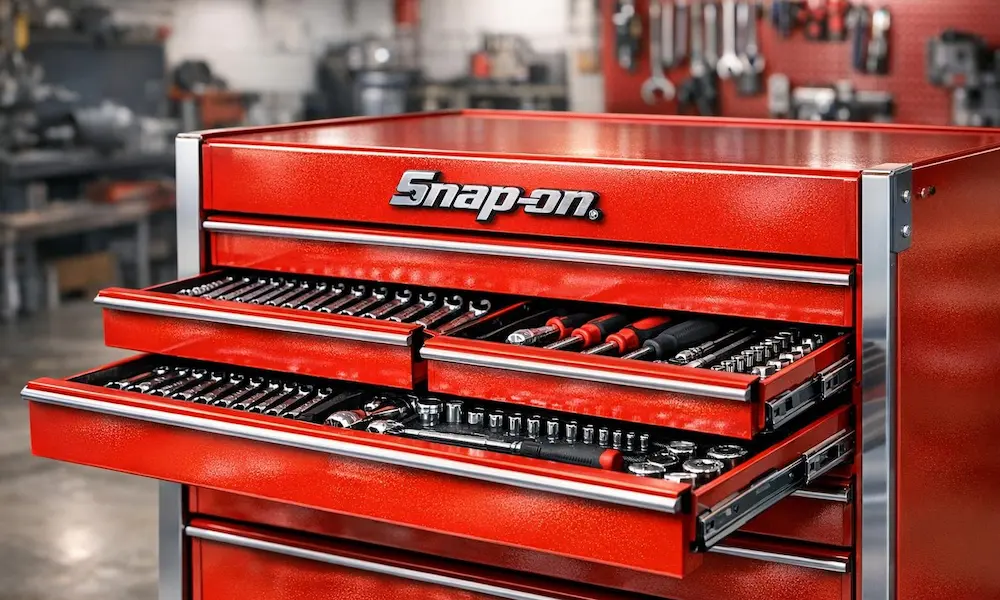
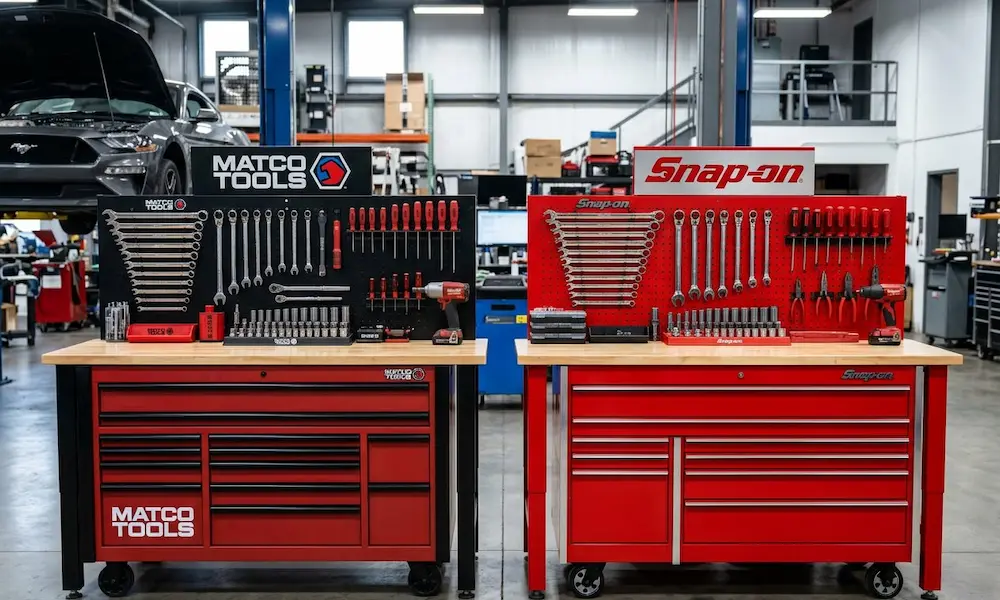
Snap-on is still the industry benchmark. Their tools often have better metallurgy, lower backdrag, and the convenience of a tool truck that visits your shop weekly.
But here’s the math: a single Snap-on ratcheting wrench can cost $40. A comparable GearWrench runs about $9 when bought in a set. For most technicians, the marginal performance difference doesn’t justify the cost gap — especially for tools that get lost or stolen.
GearWrench vs. Tekton
Tekton competes hard on direct-to-consumer sales and an extremely fast warranty process. Many users prefer Tekton’s warranty experience — it’s often called the easiest in the business. Tekton also gets praise for high-contrast markings and truly complete size ranges.
GearWrench counters with the 120XP’s superior access geometry and a much wider specialty tool lineup.
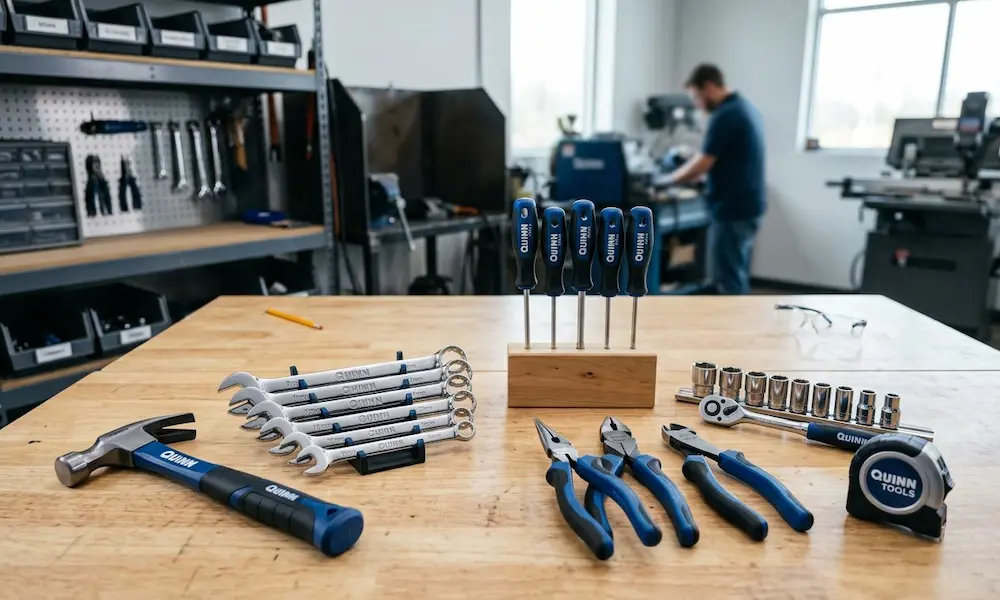
GearWrench vs. Icon and Quinn (Harbor Freight)
Harbor Freight’s Icon line is a direct shot at GearWrench’s mid-tier spot. It’s modeled after Snap-on designs, and the in-store warranty is simple.
Here’s a surprising fact: full teardown comparisons have found Quinn 90-tooth ratchets to be virtually identical to GearWrench’s 90-tooth models internally — suggesting shared Taiwanese manufacturing facilities. GearWrench needs its 120XP and Bolt Biter innovations to stay distinct in this space, and currently, they do.
GearWrench’s Move Into Diagnostics
GearWrench isn’t just wrenches anymore. In early 2026, the brand launched a new series of bi-directional diagnostic tablets, including the GWSMART10. These perform full system scans, topology mapping, and complex reset functions across vehicle systems.
This is a smart move. As EVs and hybrid drivetrains grow, mechanics need electronic diagnostic tools alongside traditional hand tools. GearWrench is positioning itself as a one-stop shop for the next generation of technicians — not just the ones working on carbureted engines.
The Bottom Line on GearWrench Tools
So, are GearWrench tools good? Here’s the short answer: yes, for most people and most tasks, they’re excellent.
The genuine strengths:
- The 120XP’s three-degree swing arc solves real access problems in crowded engine bays
- The Bolt Biter series handles damaged fasteners better than traditional tools
- You build a complete, professional-grade toolkit for a fraction of tool-truck prices
- The EZ Warranty system actually works and minimizes downtime
The honest trade-offs:
- Some product lines show minor inconsistencies as Chinese manufacturing has expanded
- High-tooth-count ratchets can produce more backdrag than premium competitors
- Torque tool servicing requires more effort than a simple swap
GearWrench fills the gap between hardware store bargain bins and $40-per-wrench tool trucks. If you’re a working tech, a serious DIYer, or building a first professional set, GearWrench delivers performance that punches well above its price. The 120XP line alone justifies the brand’s reputation. And for the money, it’s hard to argue with that.