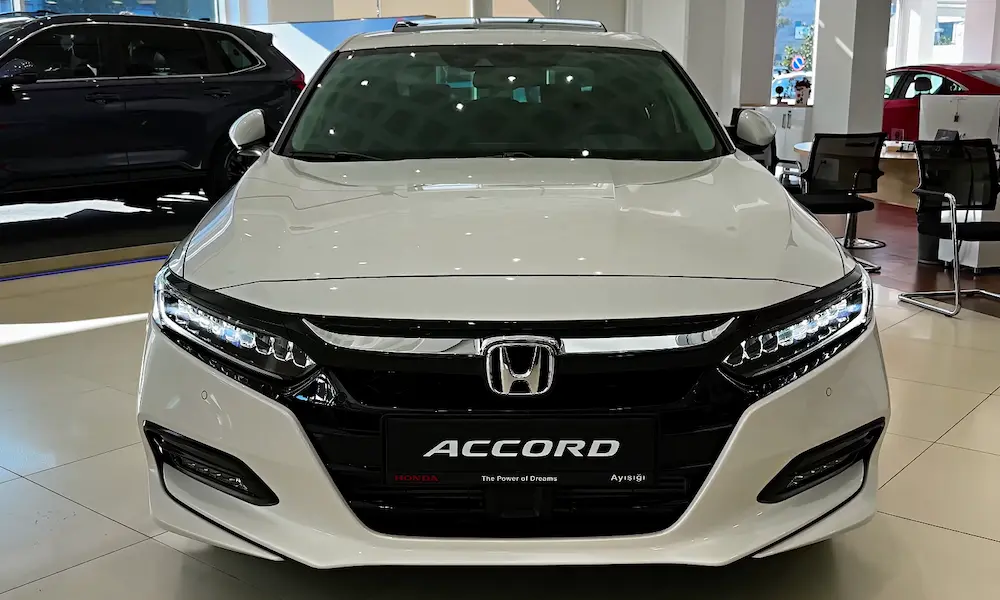
Thinking about buying a Honda Accord but not sure if it’ll hold up long-term? The reputation says yes — but the full story is more nuanced than that. Some generations are rock solid. Others have specific weak spots that’ll cost you. Read to the end and you’ll know exactly what to look for.
The Short Answer: Yes, But It Depends on the Year
Honda Accords are reliable — genuinely so. RepairPal gives the Accord a 4.5 out of 5.0 reliability rating, ranking it first out of 24 midsize cars. Its average annual repair cost sits at just $400, compared to $652 for all vehicles across the industry.
But “Honda Accord” covers 40+ years of cars. And not every generation earned that reputation equally. A few specific model years can burn a hole in your wallet if you don’t know what to avoid.
Here’s the full picture, generation by generation.
Reliability by Generation: What the Data Actually Shows
7th Gen (2003–2007): Watch Out for the V6 Transmission
The 2003 and 2004 V6 Accords have a well-documented 5-speed automatic transmission problem. Owners reported slipping gears, delayed engagement, and complete transmission failure — often before 100,000 miles.
The cause? Inadequate cooling inside the transmission’s clutch packs. They’d overheat and break down under load. Honda issued extended warranties and service bulletins, but this failure pattern remains a real risk for used car buyers.
The good news: the 4-cylinder models in this generation used a different transmission and didn’t share the same failure rates. So trim level matters here.
8th Gen (2008–2012): Oil Consumption and Brake Wear
The 8th gen had two recurring headaches:
- Excessive oil consumption — particularly in 2008–2010 four-cylinder models. Some owners added oil every 1,000–2,000 miles due to sticking piston rings.
- Premature rear brake wear — many owners needed new rear brake pads by 20,000 miles, caused by a brake bias setup that leaned heavily on the rear calipers to reduce nose-dive.
Neither issue is catastrophic, but both add up if you’re not expecting them.
9th Gen (2013–2017): CVT Growing Pains, Then a Turnaround
The 2013 Accord introduced a CVT (Continuously Variable Transmission) to the four-cylinder lineup. Early versions had a “rubber-band” feel, hesitation under acceleration, and shuddering under load.
By 2016–2017, Honda had refined the CVT software and internals significantly. Late 9th gen cars — especially 2016 and 2017 — are some of the most reliable Accords ever built. If you’re shopping used, those two years are a sweet spot.
10th Gen (2018–2022): Turbos Arrive, New Problems Follow
This is where things get interesting. Honda dropped all naturally aspirated engines and the V6 in 2018, replacing them with two turbocharged four-cylinders: a 1.5-liter and a 2.0-liter.
The 1.5T Engine: Two Problems You Need to Know
The 1.5-liter turbo has attracted the most scrutiny of any modern Accord engine.
Problem 1: Oil dilution. Unburned fuel seeps into the crankcase and mixes with the engine oil. This happens most in cold climates and short trips, where the engine never gets hot enough to burn it off. Over time, diluted oil loses its lubricating properties, accelerating wear on bearings and turbochargers.
Problem 2: Head gasket failure. A pattern of head gasket failures has emerged in 1.5T engines, typically between 80,000 and 120,000 miles. Cooling channels in the engine block may compromise the gasket’s seal under high turbo pressure. This has triggered class-action lawsuits in both Canada and the United States.
Here’s a quick look at the main 10th gen problem areas:
| Problem | Years Affected | Symptoms | Root Cause |
|---|---|---|---|
| Head Gasket (1.5T) | 2018–2022 | Misfires, coolant loss, white smoke | Cooling channel design under high pressure |
| Fuel Injectors | 2018–2021 | Check engine light, rough idle | Internal wear, improper installation |
| A/C Condenser | 2018–2020 | Loss of cooling, refrigerant leaks | Manufacturing defect in tube walls |
| Fuel Pump | 2017–2020 | No-start, stalling | Low-density impeller deformation |
The 2.0T Engine: A Different Story
The 2.0-liter turbo — paired with a 10-speed automatic — tells a completely different reliability story. Long-term owners report engines routinely surpassing 190,000 miles with minimal issues, provided regular transmission fluid changes happen every 30,000–40,000 miles.
The 10-speed automatic gets praised for its smoothness and durability — no CVT drone, no hesitation. Honda discontinued the 2.0T with the 11th gen, which makes clean used examples highly sought-after.
11th Gen (2023–Present): The Hybrid Era Begins
The current Accord leans heavily into Honda’s fourth-generation two-motor hybrid system (i-MMD). It skips a traditional transmission entirely, using an electric motor to drive the wheels most of the time. At highway speeds, a lock-up clutch lets the engine drive directly.
KBB consumer reviews for the 2025 Accord average 4.6 out of 5.0, with 83% of owners recommending it. J.D. Power gives the 2025 model an 82 out of 100.
That said, a few recalls have come up for 2023–2024 models you should know about:
- Seat cushion frames — driver’s seat frames weren’t properly tightened (Recall 24V-859)
- High-pressure fuel pump — could crack and leak fuel, creating a fire risk (Recall 24V-763)
- Seat belt pretensioners — some units missing a critical rivet (Recall MG7/NG5)
You can verify active recalls directly through NHTSA before buying any used Accord.
There’s also a 1.7-million-vehicle steering recall affecting 2022–2025 Honda vehicles (primarily Civic and CR-V). Some 11th gen Accord owners have reported similar “sticky steering” — traced to a swelling worm wheel in the steering gearbox. Car and Driver covered the details of the recall here.
How Does the Accord Stack Up Against the Camry and Altima?
Reliability shopping always comes back to this comparison. Here’s how the numbers break down:
| Feature | Honda Accord | Toyota Camry | Nissan Altima |
|---|---|---|---|
| RepairPal Rating | 4.5 / 5.0 | ~4.2 / 5.0 | ~3.5 / 5.0 |
| Annual Repair Cost | $400 | $388 | $483 |
| Repair Severity | 9% | 11% | Higher |
| Combined MPG (Hybrid) | 48 MPG | 51–52 MPG | N/A |
| 5-Year Ownership Cost | $41,483 | $39,162 | Moderate-High |
The Camry edges out the Accord on raw annual cost ($388 vs. $400), but when repairs do happen, they tend to be more serious — 11% severity versus 9% for the Accord.
The Altima costs the most to maintain at $483/year and has historically struggled with CVT reliability. It’s the budget pick upfront, but it costs more to keep.
The Hybrid Powertrain: Is It More Reliable Long-Term?
Possibly — and here’s why. The i-MMD system removes several mechanical failure points that gas-only cars carry:
- No starter motor or alternator — fewer parts to fail
- Regenerative braking reduces friction brake wear — pads and rotors can last 100,000 miles or more
- No traditional transmission — the system uses a lock-up clutch instead
The high-voltage battery carries an 8-year/100,000-mile warranty (extended to 10 years/150,000 miles in California-emissions states). Real-world battery lifespan runs 8 to 15 years depending on climate and driving habits. Heat is the biggest enemy — it accelerates cell degradation faster than cold weather.
If you drive lots of short trips in a hot climate, that’s worth factoring in.
Can a Honda Accord Really Hit 200,000 Miles?
Yes — and the data backs it up. According to iSeeCars, the Accord has a 26.1% chance of reaching 200,000 miles, well above the industry average.
The most famous example: Joe LoCicero drove his 1990 Accord to one million miles. It took 600+ oil changes and meticulous maintenance — but the engine and transmission were original.
That’s an outlier, but it shows what the platform can do when you take care of it.
Maintenance Schedule That Actually Gets You There
Don’t just follow the Maintenance Minder blindly. Mechanics who’ve seen high-mileage Accords recommend these intervals:
- Oil changes: Every 5,000 miles (not 10,000, especially for 1.5T owners)
- Transmission fluid: Every 30,000–45,000 miles for CVTs and the 10-speed automatic
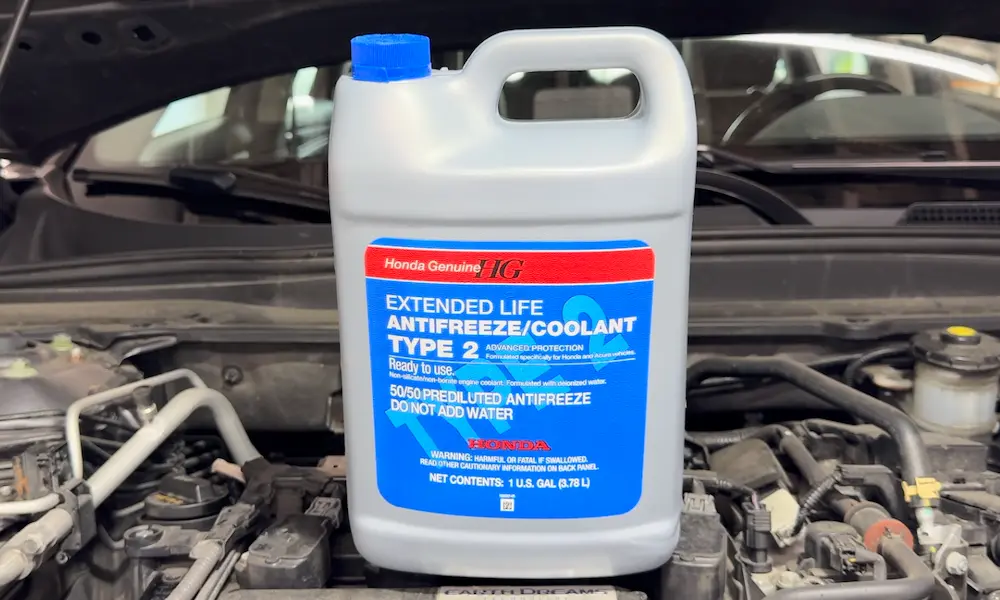
- Coolant: Every 50,000 miles — critical for 1.5T engines prone to head gasket issues
- Valve adjustments: Every 100,000 miles on older V6 and 2.4-liter engines
The timing belt on 9th gen V6 models needs replacement every 7 years or 100,000 miles — usually $800–$1,200 with water pump and tensioner included. Skip it and you risk catastrophic engine failure. All newer four-cylinder and hybrid models use timing chains, so that’s one less thing to budget for.
Does the Accord Hold Its Value?
Strong reliability and strong resale value go hand in hand. The Accord loses just 36% of its value over five years — well below the 45–50% that many competitors drop.
| Trim (2025) | Original Price | 1-Year Used Price | Depreciation |
|---|---|---|---|
| LX (Base) | $28,295 | $25,560 | 9.7% |
| Sport Hybrid | $33,655 | $28,820 | 14.4% |
| Touring Hybrid | $39,300 | $32,990 | 16.0% |
The base LX holds its value best. If you’re buying used, a one-to-two-year-old LX gives you most of the car at a noticeably lower price — and avoids the steepest part of the depreciation curve.
The Bottom Line on Honda Accord Reliability
The Honda Accord earns its reliable reputation — but it’s not a blanket statement that covers every model year equally. Here’s a quick cheat sheet:
Best bets for reliability:
- 2016–2017 (refined 9th gen, proven CVT)
- 2018–2022 with the 2.0T engine
- 2023–present Hybrid (fewest mechanical failure points)
Approach with caution:
- 2003–2004 V6 (transmission issues)
- 2008–2010 four-cylinder (oil consumption)
- 2018–2022 with the 1.5T (oil dilution, head gasket risk)
At $400/year in average maintenance costs, a first-place reliability ranking among midsize sedans, and a real shot at 200,000+ miles, the Accord remains one of the smartest buys in its class. You just need to pick the right year.