Spending serious money on a tool box is a big deal. You want something that handles real shop life — not just looks good in a YouTube video. This post breaks down whether Icon tool boxes actually hold up, how they compare to the big names, and whether the price makes sense for your situation. Read to the end before you swipe your card.
What Makes a Tool Box “Professional Grade”?
Before answering are Icon tool boxes good, you need to know what separates a professional box from a hobbyist one.
It comes down to three things:
- Steel gauge — thicker steel means a stiffer, more durable frame
- Drawer slide rating — heavier ratings mean drawers don’t rack under load
- Caster quality — cheap casters fail when you’re moving 1,000+ pounds of tools
Icon checks all three boxes. Let’s dig into the specifics.
How Icon Tool Boxes Are Built
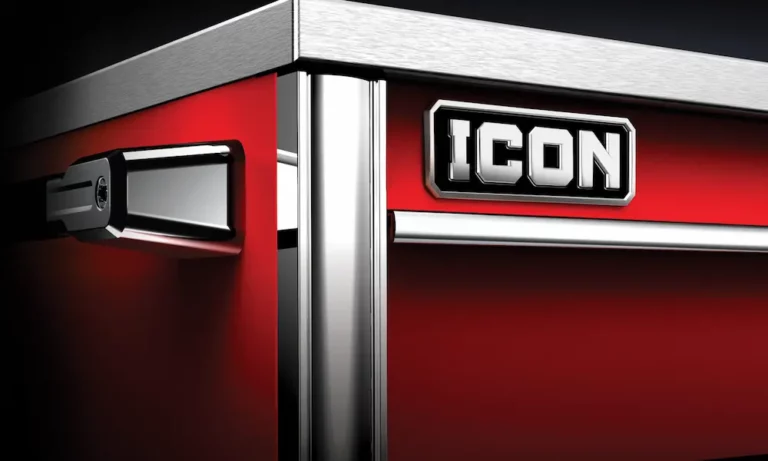
Icon uses a double-wall steel frame as the core structure. This isn’t just marketing talk. The double wall creates a rigid cage that protects the drawer slides from impacts on the outside shell.
The base of every roll cab uses 14-gauge steel U-channels. These spread the weight evenly across the frame. Without them, a fully loaded cabinet sags and racks — meaning drawers bind, stick, or won’t latch properly.
Here’s a quick breakdown of what Icon uses where:
| Structural Component | Material | Why It Matters |
|---|---|---|
| Bottom reinforcement | 14-gauge U-channels | Prevents frame sagging under heavy loads |
| Exterior shell | 16-gauge double-wall steel | Resists dents; keeps the frame rigid |
| Top work surface | 16-gauge steel | Handles transmissions, cylinder heads, and more |
| Drawer bodies | 18-gauge steel | Strong but not unnecessarily heavy |
| Optional work top | 16-gauge stainless steel | Resists chemicals and heat |
The 73-inch Icon roll cab weighs around 900 pounds empty. That’s nearly double the weight of the comparable U.S. General model — and that extra weight is all thicker steel and reinforcements.
Do the Drawers Actually Hold Up?
This is where a lot of cheaper boxes fall apart — literally.
Icon uses ball-bearing drawer slides rated at 265 pounds per set. For wider and deeper drawers, they run double slides, pushing the capacity to 530 pounds. That’s more than enough for a drawer packed with impacts, sockets, and air tools.
All drawers extend fully. That means no dead zones in the back where tools go missing for three weeks.
| Slide Configuration | Weight Capacity | Best For |
|---|---|---|
| Single pair | 265 lbs | Wrenches, screwdrivers, small sockets |
| Double pair | 530 lbs | Wide top drawers, heavy power tools |
| Latch system | Adjustable | Customizes pull resistance by preference |
One thing worth knowing: new Icon boxes can feel stiff at first. That’s normal. The detents and grease need a break-in period before everything settles in. Give it a few weeks of daily use.
By comparison, U.S. General slides tend to rack and bind when you push them to max load. Icon slides stay smooth. Techs on Reddit regularly describe them as “buttery” — comparable to boxes costing four times more.
How Does Icon Handle Moving a 1,000-Pound Cabinet?
The casters on Icon boxes are rated at 2,000 pounds each. The total system — roll cab, hutch, and top chest — handles up to 8,000 pounds. They’re not standard wheels either. They use a spring-loaded suspension system that absorbs shocks as you roll over uneven floors, shop debris, or expansion joints.
That matters if you keep sensitive diagnostic electronics or precision measuring tools in the box. Every time you hit a bump without suspension, those tools take a hit too.
Each roll cab gets two swivel locking casters and two rigid casters. The easy-lock foot pedal secures the box in place fast — critical in any shop with a sloped floor or drainage system.
What’s Inside: Organization and Power Features
Modern shops run on cordless tools. Icon built for that reality.
The power charging drawer sits inside the box and includes:
- Six 110V outlets
- Two 2.1A fast-charging USB ports
No more chargers cluttering the work surface. The power tool drawer includes six adjustable-height holsters so impacts and drills stand upright, ready to grab. That vertical setup saves serious drawer space compared to laying them flat.
Every drawer ships with non-slip liners. They’re chemical-resistant and keep your tools from shifting every time you open a drawer fast. There’s also a writing tray in most configurations — useful when you’re reviewing a service manual mid-job without clearing everything off the top.
Icon vs. Snap-On, Matco, and Mac Tools
This is the question every tech asks. Here’s an honest answer.
| Model | Storage (cu. in.) | Est. Price |
|---|---|---|
| Icon 73″ Roll Cab | 33,874 | ~$2,999 |
| Snap-on Epiq 68″ | 45,500 | ~$16,345 |
| Snap-on Masters 54″ | 34,600 | ~$11,300 |
| Matco RevelX 77″ | 38,987 | $11,000+ |
| Macsimizer 88″ | 30″ depth | $12,000+ |
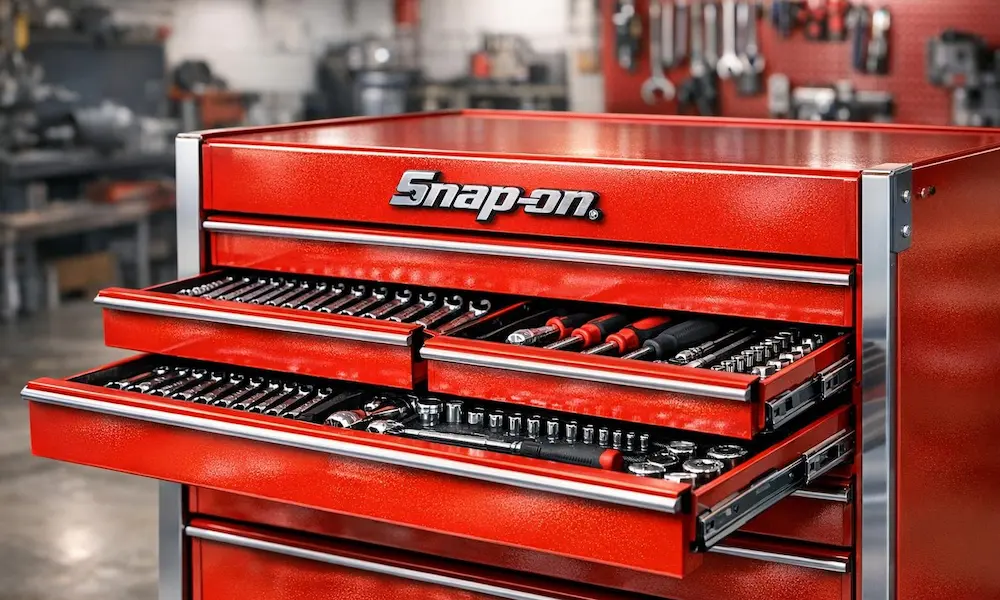
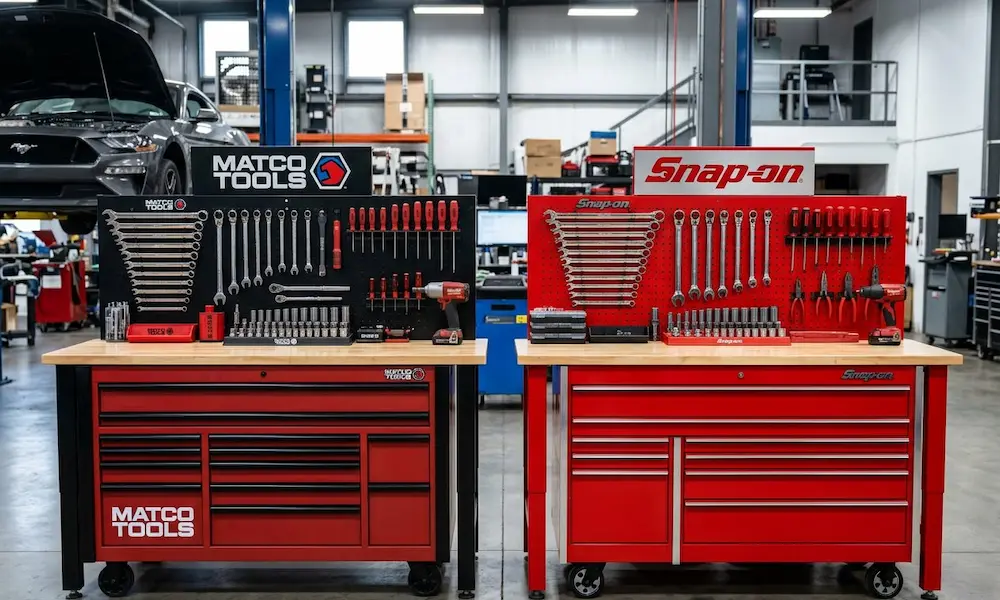
Snap-on still wins on brand prestige and resale value. Their Epiq and Masters series have exceptional fit and finish. But the raw specs? The gap isn’t as wide as the price suggests. Most working techs say Icon delivers about 90% of the performance at roughly 25% of the cost.
Matco’s RevelX looks great, but its warranty doesn’t transfer to second-hand buyers. Mac’s Macsimizer goes deeper at 30 inches and uses 14-gauge steel throughout, but the price reflects that. The Icon can’t match those dimensions yet — though the G2 is changing that (more on that below).
One veteran mechanic summed it up well on Reddit: “Boxes don’t make you money; organization and good tools do.” The Icon gives you the organization at a price that doesn’t put you in debt.
Icon vs. U.S. General: What’s the Actual Difference?
Both are Harbor Freight brands. But they’re built for different users.
| Feature | Icon | U.S. General Series 3 |
|---|---|---|
| Depth | 25 inches | 22 inches |
| Slide rating | 265 / 530 lbs | 120 / 240 lbs |
| Caster type | 2,000 lb suspension | Standard solid |
| Steel thickness | 14/16 gauge | Lighter gauge |
| Warranty | Lifetime | 90 days |
That three-inch depth difference is bigger than it sounds. It opens up room for large diagnostic cases, long pry bars, and bulkier tool sets. The security locks on Icon are also significantly harder to defeat. Some techs have reported being able to pry open a locked U.S. General drawer with a bar. That’s not a risk you want at a busy shop.
U.S. General is a solid box for home use. Icon is built for full-time professional environments.
The Warranty: What You Need to Know
The Icon lifetime warranty covers defects in materials and workmanship. But the experience differs from a tool truck visit.
The good part: It’s a no-questions-asked replacement for most items. Hand over the broken tool, get a new one.
The frustrating part: Icon’s popularity creates stock problems. Some stores run out of individual sockets or ratchets, forcing you to wait for a shipment or drive to another location. There are also reports of managers requiring you to return a full set to replace one broken piece when they lack open stock. Harbor Freight has added individual replacement parts online, which helps — but it’s not as seamless as a truck dealer handing you a new tool at your bay.
For the tool boxes themselves, you won’t be hauling a 900-pound cabinet to the store. Harbor Freight ships replacement parts — slides, locks, handles — directly to your shop for free through their dedicated support line. Free door-to-door delivery is also included on box purchases, with freight carriers who unbox and inspect on arrival.
What’s Coming: Icon G2 in 2027
Harbor Freight revealed the Icon G2 at SEMA 2025. The upgrades directly target the reasons some techs still chose Snap-on or Mac over Icon.
| G2 Feature | What It Does |
|---|---|
| 30-inch depth | Closes the gap with Epiq and Macsimizer |
| Self-closing slides | Ensures drawers close completely every time |
| Ultrawide top drawers | Fits diagnostic tablets and oversized wrench sets |
| Security-milled key cores | Interchangeable across modular workstation setups |
| New color options | Green and Slate Gray address the biggest aesthetic complaint |
The G2 isn’t just an upgrade — it’s Icon competing directly with the top shelf, not just offering a budget alternative to it.
The Real Financial Case for Icon
Young techs often enter serious debt buying tool truck storage. A full Snap-on setup can hit $25,000 or more. A comparable Icon 73-inch setup with hutch and lockers runs around $5,000.
| Financial Factor | Icon 73″ Setup | Premium Truck Brand |
|---|---|---|
| Initial cost | ~$5,000 | ~$25,000+ |
| Financing method | Credit card or cash | Tool truck account |
| Opportunity cost | Low — frees money for better tools | High — debt limits tool budget |
| Resale value | Moderate | High, but large initial depreciation |
That $20,000 difference buys a lot of diagnostic equipment, specialty tools, or retirement savings. The Icon modular system also grows with you — starting with a single roll cab and expanding into hutches, lockers, and end cabinets as your career develops, without replacing your entire setup.
Are Icon Tool Boxes Good Enough for Full-Time Professionals?
Yes — and the data backs that up. The double-wall construction, 265-pound drawer slides, 2,000-pound suspension casters, and integrated power features deliver real professional performance at a retail price. The hand tools that fill those boxes — particularly the Gen 2 ratchets — hold their own against Snap-on’s Dual-80 series according to full-time mechanics who use them daily.
The warranty has quirks, and the box still trails Snap-on on depth and resale prestige. But for a technician who wants a durable, modular, professionally equipped storage system without financing it like a car — Icon is the smartest buy in the market right now.