Got a “Service StabiliTrak” light staring you down along with the Chevy C0045 code? This code points directly at your left rear wheel speed sensor — and ignoring it puts your ABS, traction control, and stability systems all offline. This guide breaks down exactly what’s happening, why it happened, and how to fix it without throwing parts at the problem blindly.
What Is the Chevy C0045 Code?
The Chevy C0045 code means your Electronic Brake Control Module (EBCM) detected a problem with the left rear wheel speed sensor circuit. The signal coming back from that corner is either missing, erratic, or way off compared to the other three sensors.
This isn’t just an annoying dashboard light. Your ABS, StabiliTrak (GM’s Electronic Stability Control), and Traction Control all rely on this sensor. Without clean data from the left rear wheel, the EBCM shuts those systems down to avoid unpredictable behavior during braking.
What You’ll See on Your Dashboard
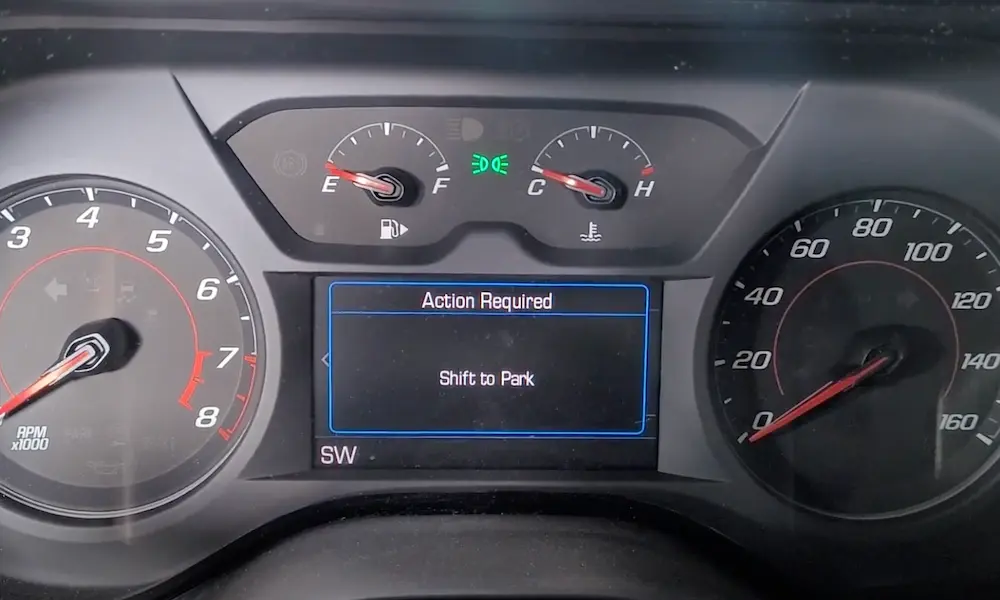
When C0045 sets, your Chevy will typically show one or more of these alerts:
- Service StabiliTrak
- Service Traction Control
- Service Brake Assist
- Service Trailer Brake (trucks with trailer braking)
On vehicles with electric power steering (EPS) that reads vehicle speed, you might also see a “Service Steering” message pop up. Steering will feel noticeably heavier, especially at low speeds or when parking.
Beyond warning lights, watch for these physical symptoms:
- Pulsating brake pedal during normal stops on dry pavement
- Clicking, ratcheting, or grinding noise from the ABS pump
- Erratic shifting or hard shifts (the transmission uses wheel speed data too)
- Vehicle pulling to one side, especially in 4WD or Auto mode between 41–60 mph
Understanding the Sub-Codes (Symptom Bytes)
The base C0045 code often comes with a two-digit suffix that tells you how the circuit is failing. These symptom bytes are critical — they separate a cut wire from a dirty encoder ring.
| Symptom Byte | What It Means | Likely Cause |
|---|---|---|
| 00 | No sub-type info | General signal loss or complete circuit failure |
| 06 | Short to ground or open | Cut harness, disconnected sensor, or internal open |
| 0F | Erratic signal | Metallic debris on encoder ring or loose bearing |
| 18 | Signal below threshold | Large air gap, rust jacking, or weak magnet |
| 5A | Invalid signal | Wrong tire size or missing encoder segments |
Codes with 0F, 18, or 5A often mean the sensor itself is electrically fine — it’s a mechanical or contamination issue causing the bad reading. Don’t replace the sensor until you’ve checked those things first.
Two Types of Wheel Speed Sensors — Know Which One You Have
Your diagnostic approach depends entirely on which sensor type your Chevy uses.
Passive (Variable Reluctance) Sensors
Found on older GMT800 trucks like the 1999–2006 Silverado, Tahoe, and Suburban. These generate their own AC voltage signal as teeth on a tone ring spin past a magnetic coil. They don’t need power from the EBCM, but they lose signal accuracy below about 3–5 mph.
Active (Magnetoresistive) Sensors
Found on newer trucks, Equinox, Cruze, Malibu, and most modern GM platforms. These need a reference voltage from the EBCM and interact with a magnetic encoder ring built into the wheel bearing seal. They read accurately all the way down to zero mph and output a digital square wave instead of an analog sine wave.
| Feature | Passive Sensor | Active Sensor |
|---|---|---|
| Power Required | None (self-generating) | Reference voltage (5V–12V) |
| Signal Type | Analog AC sine wave | Digital DC square wave |
| Low-Speed Accuracy | Poor (drops out below 5 mph) | Excellent (reads to 0 mph) |
| How to Test | Resistance (800–1,200 ohms) | Current (mA) / duty cycle |
| Common Failure | Air gap / corrosion | Debris / magnetic ring damage |
Important: Never test an active sensor with a standard ohmmeter. The current from the meter can fry the internal semiconductor.
Why the Chevy C0045 Code Sets — Common Causes
Metallic Debris on the Magnetic Encoder Ring
This is the most common “non-failure” cause on newer GM vehicles. The magnetic encoder ring naturally attracts fine ferrous particles from brake rotor dust and road debris. When that debris builds up on the nitrile rubber ring surface, it distorts the magnetic field and the EBCM can’t read the signal properly. This typically triggers symptom bytes 0F or 5A.
Wheel Bearing Failure
On modern Chevys, the wheel speed sensor often sits inside the hub and bearing assembly. As the bearing wears internally, the hub develops play — even a little wobble changes the air gap between the sensor and encoder ring enough to cause erratic readings. In severe cases, the encoder ring physically contacts the sensor and destroys both.
Wiring Harness Damage
The harness running to the left rear sensor deals with constant suspension movement, road salt, moisture, and heat. On Impala and Malibu models, the harness can rub against the CV axle or trailing arm if the retaining clips break — this wears through the insulation and creates an intermittent short.
On Equinox and Terrain models, there’s a documented issue where connector terminals lose tension or seat improperly, causing intermittent signal dropouts and the StabiliTrak light.
Rust Jacking (Older Trucks)
On 1999–2002 Silverados, rust builds up at the sensor mounting surface on the hub. That rust physically pushes the sensor further away from the reluctor ring, increasing the air gap past the usable threshold. This specific failure was serious enough that GM issued safety recall 05068C because it caused unwanted ABS activation and longer stopping distances.
Bad Sensor Internally
Thermal cycling from the brakes can crack fine windings inside a passive sensor, creating an open circuit. Moisture and brake dust can corrode the sensor housing. A nearby dragging brake caliper can melt plastic sensor components. These are all legitimate sensor failures — but rule out the harness and encoder ring first.
How to Diagnose It Step by Step
Step 1: Pull the Full Code with a Scan Tool
Don’t just clear it and drive. Read the freeze frame data to see when it set — high-speed failures (60+ mph) often point to encoder ring issues, while low-speed failures suggest air gap problems or debris. Then go to live data and watch all four wheel speeds simultaneously while driving straight on a smooth road.
- Left rear reads 0 mph while others read 25 mph → Open circuit or dead sensor
- Left rear jumps erratically → Debris on encoder or worn bearing
Step 2: Check the Electrical Circuit
For active sensors: Disconnect the sensor and check the harness side for reference voltage from the EBCM. No voltage means a harness or EBCM problem, not a sensor problem.
For passive sensors: Check resistance across the sensor terminals. A good passive sensor reads 800–1,200 ohms. Way outside that range? Replace the sensor.
Do a wiggle test on the harness while watching the scan tool or a multimeter. Intermittent breaks often only show up when the suspension moves — you won’t catch them with a static test.
Step 3: Inspect the Mechanical Side
Jack up the left rear. Grab the tire at 12 and 6 o’clock and try to rock it. Any play at all means the bearing is on its way out. Visually inspect the magnetic encoder ring for rust bubbling under the surface, missing segments, or physical scoring. Check the sensor tip for metallic debris.
How to Clean a Magnetic Encoder Ring
If debris is your culprit (symptom bytes 0F, 18, or 5A), follow these steps exactly:
- Confirm debris visually on the encoder ring or sensor tip
- Remove the hub and bearing if needed for access to the inboard side
- Use a dry nylon soft-bristle brush to gently sweep off particles
- If debris remains, clean with mild soap and water, then dry completely
- Never use a magnetic pickup tool or any magnet near the ring — external magnets permanently damage the alternating poles and you’ll need a full hub replacement
- Check the bearing seal for damage before reinstalling
Platform-Specific Issues to Know
Silverado/Sierra (2017–2020): A software flaw meant a failed wheel speed sensor could cause unintended braking and vehicle pull in 4WD mode. The fix is an EBCM software update — check if your VIN is covered before doing anything else. You can check for open recalls here.
Equinox/Terrain (2010–2017): Intermittent C0045 is frequently a connector-level problem. Service bulletin PIC5428 covers this — GM even released a harness connector repair kit (Part No. 13586115) specifically for this issue.
Malibu/Impala: Focus on harness routing first. Corroded pins in the hub connector (green or white residue) cause the 0F erratic signal code more often than actual sensor failure.
Cruze: Check for brake dust on the sensor tip and test for any bearing play. Even minor wobble on the Cruze’s compact rear hub triggers C0045 reliably.
What Does It Cost to Fix?
Repair costs vary by what actually failed. Here’s a realistic breakdown:
| Vehicle | Sensor Repair Estimate | Hub Assembly Estimate |
|---|---|---|
| Silverado 1500 | $176–$247 | $342–$500 |
| Malibu | $133–$187 | $589–$851 |
| Cruze | $99–$139 | $557–$796 |
| Equinox | $182–$253 | $433–$609 |
| Tahoe | $179–$251 | $268–$401 |
| Trailblazer (2024) | N/A | $824–$1,200 |
Estimates include parts and labor. Diagnostic fees typically run $87–$128/hour and aren’t included.
Before you pay for anything, run your VIN through NHTSA’s recall database. Plenty of Chevy trucks and SUVs have open wheel speed sensor recalls that cover the repair for free at the dealer.