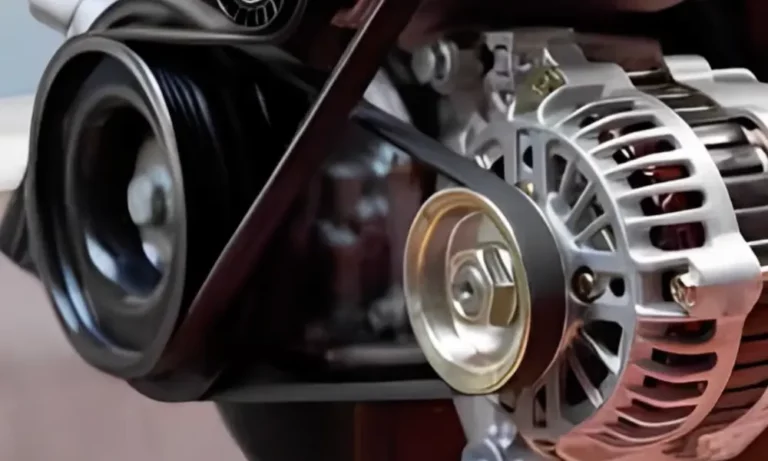
Does your Chevy Cruze have the 1.8L engine? Then timing belt replacement isn’t optional — it’s the one job that stands between you and a very expensive paperweight. Skip it, and you’re looking at a bent valve situation that costs more than the car’s worth. Read to the end, and you’ll know exactly what to do, when to do it, and what it’ll cost.
Does Your Chevy Cruze Even Have a Timing Belt?
Not every Cruze needs a timing belt replacement — and this is where a lot of owners get confused.
The Chevy Cruze came with two engine options:
- 1.4L turbocharged engine → timing chain (no scheduled replacement needed)
- 1.8L naturally aspirated engine → timing belt (must be replaced on schedule)
Here’s a quick breakdown of why the two systems are so different:
| Feature | Timing Belt (1.8L) | Timing Chain (1.4L) |
|---|---|---|
| Material | Reinforced rubber | High-strength metal |
| Noise level | Quieter operation | Louder, mechanical |
| Lubrication | Dry environment | Needs constant oil |
| Replacement interval | 97,500 miles / 10 years | Lifetime (unless stretched) |
| Failure style | Sudden snap, no warning | Gradual rattle before failure |
| Failure consequence | Catastrophic engine damage | Performance loss, error codes |
The rubber belt design keeps things quieter and lighter, but it ages whether you drive it or not. That’s the trade-off.
Check your window sticker or the VIN decoder if you’re not sure which engine you have. If it says 1.8L, keep reading.
Why This Job Is Non-Negotiable
The 1.8L Ecotec is an interference engine. That term matters a lot here.
In an interference design, the valves and pistons share the same physical space — just at different moments in the engine cycle. The timing belt is what keeps them from crashing into each other. If the belt snaps, the crankshaft keeps spinning (momentum doesn’t care), but the camshafts stop. Valves freeze mid-travel. Pistons keep moving. Metal meets metal.
The result? Bent valves, cracked pistons, and potential destruction of the cylinder head. Sometimes the entire engine block.
That repair bill lands anywhere from $2,500 to $5,000+. On a car that might be worth $6,000. You can see why skipping this service isn’t a gamble worth taking.
When to Replace the Timing Belt on a Chevy Cruze 1.8L
GM’s official spec is 97,500 miles or 10 years — whichever comes first. But most experienced techs recommend being more conservative than that.
Here’s a more practical service schedule:
| Service Level | Mileage | Time |
|---|---|---|
| GM manufacturer spec | 97,500 miles | 10 years |
| Proactive/professional standard | 80,000–90,000 miles | 7 years |
| Severe duty or extreme climate | 60,000 miles | 5–6 years |
| Visual inspection interval | Every 30,000 miles | Annually after year 5 |
Age matters as much as mileage. Rubber dries out and becomes brittle over time, even if the car sits in a garage. A 10-year-old belt with 40,000 miles is often at higher failure risk than a 3-year-old belt with 70,000 miles.
If you drive in hot climates — think Texas, Arizona, or Florida summers — bump that interval down. Heat accelerates rubber degradation faster than anything else.
Warning Signs Your Timing Belt Is Failing
Here’s the frustrating truth: timing belts usually don’t give you much warning before they snap. But there are some clues worth watching for.
Sounds to listen for:
- High-pitched whining or chirping near the passenger side of the engine → likely a failing tensioner or idler pulley bearing
- Rhythmic thumping or slapping from behind the timing cover → belt has too much slack and is hitting the plastic cover
- Ticking that increases with RPM → tensioner losing spring pressure
Performance symptoms:
- Rough idle or engine misfires
- Loss of power under acceleration
- Worse fuel economy than usual
- Check engine light with codes related to camshaft/crankshaft correlation (P0016, P0017)
Visual warning signs (requires removing the upper timing cover):
- Cracking on the belt surface or at the base of the teeth
- Fraying or peeling at the belt edges
- Glossy, hardened appearance on the back of the belt (glazing from heat)
- Oil or coolant contamination on the belt — this softens the rubber and causes teeth to shear
If you see any of these, don’t delay. Schedule the replacement immediately.
What the Chevy Cruze Timing Belt Replacement Actually Involves
This isn’t a simple swap. The timing system sits on the passenger side of the engine, buried behind several layers of components. Here’s what a proper job looks like from start to finish.
Getting Access
To reach the timing belt, a technician has to:
- Disconnect the battery and drain the coolant (if replacing the water pump — which you should)
- Remove the air cleaner housing and intake ducting
- Pull the front passenger wheel and inner wheelhouse liner
- Support the engine with a floor jack, then remove the passenger-side engine mount
- Remove the serpentine belt and its tensioner
It’s a lot of teardown before you even see the belt.
Locking the Engine at Top Dead Center
Before the old belt comes off, the engine must be locked at Top Dead Center (TDC) for cylinder one. This is the critical step that keeps everything synchronized.
The 1.8L requires specialized locking tools — and this is where DIYers often run into trouble.
| Tool | Function |
|---|---|
| EN-6340 Camshaft Lock | Secures both camshaft sprockets to prevent rotation |
| EN-6625 Crankshaft Pin | Locks the crankshaft at TDC |
| EN-6333 Tensioner Pin | Holds the tensioner compressed during belt swap |
| KM-6628-A Alignment Bar | Verifies absolute camshaft alignment |
| E-Torx Sockets | Required for engine mount and cover fasteners |
The camshaft locking tools are non-negotiable. Without them, the camshafts rotate freely the moment belt tension releases, and you’ll never get timing back on track without starting over completely.
Replacing the Belt (and Everything Around It)
Once TDC is established and the locking tools are in place:
- The harmonic balancer is removed (always use a new crankshaft bolt — it’s a torque-to-yield fastener and can’t be reused safely)
- The lower timing cover comes off
- The tensioner is compressed and pinned, releasing belt tension
- The old belt slides off the sprockets
Then the new belt gets routed starting at the crankshaft sprocket, then the idler pulley, then both camshaft sprockets, then the water pump pulley, and finally the tensioner. The tension side (between the crank and intake cam) must stay tight during installation.
Always Replace These Parts at the Same Time
Never replace just the belt. The labor to access the timing system is the same regardless of what you replace. So it makes zero financial sense to skip these:
- Timing belt tensioner pulley — same bearing wear as the belt
- Idler pulley — same issue
- Water pump — it’s driven by the timing belt and sits right there behind the covers. If it fails 20,000 miles later, you’re paying for the same labor all over again
A complete timing belt kit with water pump from brands like Gates or Continental is the right way to do this job.
Verification Before Reassembly
After the new belt is installed and the tensioner pin is removed, the locking tools come off. Then the engine is rotated two full turns by hand (720 degrees). After those two rotations, every timing mark must return to its exact original position.
If anything is off — or if you feel any resistance during the rotation (piston-to-valve contact) — stop immediately. Pull the belt and reset the timing before the engine ever starts.
This 720-degree verification step takes five minutes and can save you thousands.
Torque Specs for Reassembly
Get these wrong and you’ll be back under the hood sooner than you want.
| Component | Torque | Additional Angle |
|---|---|---|
| Crankshaft balancer bolt | 111 ft-lbs | + 45–60° |
| Timing belt tensioner bolt | 15 ft-lbs | + 135° |
| Timing belt idler pulley bolt | 37 ft-lbs | — |
| Timing belt cover bolts | ~4.5 ft-lbs (53 lb-in) | — |
| Engine mount to block bolts | 37 ft-lbs | + 60–70° |
| Wheel lug nuts | 103 ft-lbs | — |
What Does Chevy Cruze Timing Belt Replacement Cost?
Here’s the honest breakdown of what you’re looking at:
| Service | Parts | Labor | Total |
|---|---|---|---|
| Timing belt kit (basic) | ~$144 | $244–$358 | $388–$502 |
| Full kit with water pump | $290–$333 | $360–$800 | $650–$1,135 |
| DIY with proper tooling | $50–$150 | Your time | $200–$450 |
| Engine repair after belt failure | $1,000–$2,000 | $1,500–$3,000 | $2,500–$5,000+ |
KBB estimates and RepairPal data both put professional service in the $388–$502 range for a basic replacement, rising with the full water pump kit. The DIY route saves real money — but only if you have the right tools and follow the process exactly.
Post-Service Problems to Watch For
Even after a good install, keep your ears open for the first few days.
- Whining that increases with RPM → belt may be too tight or a pulley is misaligned
- Slapping or flapping at idle → belt is too loose; the tensioner may not have engaged correctly
- Rough running or loss of power → the belt likely jumped a tooth during installation; the timing is off and the job needs to be redone
Any of these symptoms after a Chevy Cruze timing belt replacement means the covers need to come back off for a timing recheck.
Refilling the Cooling System
If you replaced the water pump (and you should have), the cooling system needs to be properly bled.
Fill with a 50/50 mix of approved orange-colored (DEX-COOL) antifreeze and deionized water. The Cruze has an air vent screw on the top right of the radiator — loosen it while filling to let trapped air escape. Start the engine, let it reach operating temperature, then check and top off the coolant level once it cools down.
Air pockets in the cooling system cause localized overheating that can damage the new water pump seal — so don’t skip this step.
The Bottom Line
Chevy Cruze timing belt replacement on the 1.8L engine is one of those jobs where doing it right — and on time — keeps your car running for years. Ignoring it turns a $650–$1,100 service into a potential total loss. Stick to the intervals, replace the full kit including the water pump, use the proper locking tools, and always verify timing before you fire the engine back up.
That’s the whole game.