Is your Chevy Malibu refusing to start while the security light flashes menacingly on your dashboard? You’re facing the dreaded theft deterrent system malfunction – an issue that leaves countless Malibu owners stranded in parking lots and driveways every day. The good news? Most theft deterrent problems can be fixed without expensive dealer visits, and I’ll show you exactly how.
What is the Chevy Malibu Theft Deterrent System?
Your Malibu’s theft deterrent system is designed to prevent car theft by disabling the engine if it doesn’t recognize your key. Depending on your model year, Chevrolet has used different anti-theft technologies:
- Passlock (early models)
- Passkey (mid-generation models)
- VATS (Vehicle Anti-Theft System)
- Immobilizer systems (newer models)
When working correctly, these systems verify your key before allowing the engine to start. When they malfunction, they can’t recognize even legitimate keys and leave you stranded.
How to Identify a Theft Deterrent System Problem
Your Malibu will give you clear signs when the theft deterrent system is acting up:
- Security light blinking continuously on your dashboard
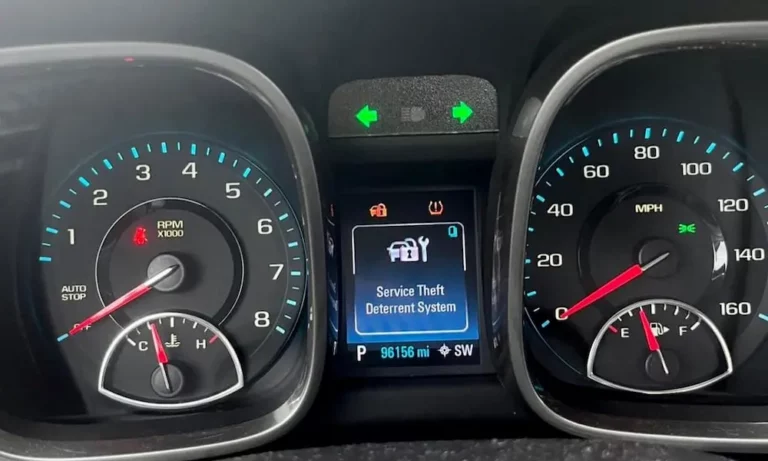
- “Service Theft Deterrent System” message displayed
- Engine cranks but won’t start
- Intermittent starting issues that get worse over time
- Problems appearing after battery replacement or key changes
The security light is your main indicator – when it’s flashing and your car won’t start, your theft deterrent system has likely activated incorrectly.
The 10-Minute Reset Procedure (Works for Most Models)
Before spending money on repairs, try this reset procedure that works for roughly 80% of theft deterrent issues on 1997-2012 Malibu models:
- Insert your key in the ignition
- Turn to the ON position (don’t start the engine)
- Wait exactly 10 minutes while the security light blinks
- When the security light stops blinking (either turns solid or off)
- Turn the key to OFF and wait 30 seconds
- Repeat this process two more times (total of 30 minutes)
- After the third cycle, try starting your car normally
This procedure gives the system time to “relearn” your key signature. It’s tedious but worth trying before paying for repairs.
Quick Troubleshooting Steps to Try First
Before diving into more complex solutions, try these simple fixes:
- Try your spare key – Sometimes the primary key’s chip fails while the spare still works
- Check battery voltage – Low voltage (below 12.4V) can trigger false theft deterrent alarms
- Look for loose connections – Check that battery terminals are clean and tight
- Check for related trouble codes – If you have a code reader, scan for diagnostic codes
These simple checks can save you hours of troubleshooting and prevent unnecessary parts replacement.
System Variations by Malibu Model Year
The theft deterrent system in your Malibu varies significantly based on its age:
1997-2003 Models: Passlock I System
These older Malibus use a Hall effect sensor in the ignition cylinder that reads a magnet in the key. Common problems include:
- Sensor degradation after 100,000+ miles
- Ignition cylinder wear causing inconsistent readings
- Wiring issues between the sensor and the computer
The passlock sensor replacement typically costs $150-200 including labor.
2004-2012 Models: Passlock II/III Systems
Mid-generation Malibus introduced transponder chip keys and more sophisticated computer integration. These systems commonly fail due to:
- Body Control Module (BCM) communication errors
- Transponder chip failure in keys
- Wiring harness issues under the steering column
These models often require professional diagnostic equipment for proper repair.
2013+ Models: Advanced Immobilizer Systems
Newer Malibus employ rolling code transponders and may include proximity key technology. When these systems fail, they typically require:
- Dealer-level programming equipment
- Key relearning procedures
- Possible BCM replacement (costing $500-1000+)
These sophisticated systems are the least DIY-friendly of all Malibu generations.
Passlock Sensor Replacement Guide
If your Malibu is from the 1997-2003 era and the reset procedure doesn’t work, you likely need a passlock sensor replacement. Here’s what to expect:
Tools Needed:
- Socket set and screwdrivers
- Torx bits (T15 and T20)
- Replacement passlock sensor ($124-172 for aftermarket, $150-200 for OEM)
Replacement Steps:
- Disconnect the negative battery terminal
- Remove the lower dash panel and knee bolster
- Remove the ignition switch mounting screws
- Disconnect the electrical connectors
- Install the new passlock sensor
- Reassemble components in reverse order
- Perform the 10-minute reset procedure three times
If you’re not comfortable with this procedure, professional installation costs $100-200 for labor.
Body Control Module (BCM) Issues
The BCM is the brain behind your Malibu’s electrical systems, including the theft deterrent system. BCM failures account for 15-20% of persistent theft deterrent problems.
Signs of BCM Failure:
- Multiple electrical systems malfunctioning simultaneously
- Security light stays on constantly (not blinking)
- Key fob functions stop working
- Random warning lights appearing on dashboard
BCM Replacement Requirements:
- Vehicle-specific programming is mandatory
- Theft deterrent relearn must be performed
- All vehicle keys must be reprogrammed
- Costs $300-600 for complete professional service
Due to the programming requirements, BCM replacement is rarely a DIY-friendly job.
How Model Year Affects Repair Approach
| Model Year | System Type | Common Issues | DIY Difficulty | Average Repair Cost |
|---|---|---|---|---|
| 1997-2003 | Passlock I | Sensor failure, ignition wear | Moderate | $150-300 |
| 2004-2012 | Passlock II/III | BCM issues, key problems | Moderate-High | $200-500 |
| 2013+ | Advanced Immobilizer | Programming issues, complex electronics | Very High | $300-1000+ |
Ignition Switch and Cylinder Replacement
Sometimes the problem isn’t the theft deterrent electronics but the ignition mechanical components. When the ignition cylinder or switch fails, you’ll notice:
- Physical key damage or excessive wear
- Ignition cylinder looseness or binding
- Intermittent electrical connections
- Key that’s difficult to turn
Professional ignition replacement ranges from $200-500 depending on your model year and labor rates. While DIY replacement is possible on older models, the required theft deterrent relearn procedure makes professional installation worth considering.
When to Replace Your Keys
Key problems can trigger theft deterrent malfunctions, especially in newer models with transponder technology. Consider key replacement if:
- Your key shows physical damage or wear
- You’ve recently had a battery replacement and now have starting issues
- The key works intermittently in the ignition
- Your spare key works but your primary doesn’t
New keys for older Malibus (pre-2010) can often be cut at local hardware stores for $20-50. Newer models require dealer programming and can cost $150-300 per key.
DIY vs. Professional Repair
Some theft deterrent issues are DIY-friendly, while others require professional help:
DIY-Friendly Repairs:
- Manual reset procedures (80% success rate)
- Basic key replacement for older models
- Battery and fuse inspection
- Simple passlock sensor replacement (1997-2003 models)
When to Call a Professional:
- When manual reset procedures fail after multiple attempts
- For BCM programming and installation
- When multiple diagnostic codes are present
- For advanced key programming with rolling codes (2013+ models)
- When intermittent issues persist despite basic repairs
The diagnostic cost of $60-90 for professional assessment is often worthwhile to avoid unnecessary parts replacement.
Dealing with Recurring Problems
If your theft deterrent system issues keep coming back after repairs:
- Check for Technical Service Bulletins (TSBs) – Some model years have known issues that GM has addressed with specific repair procedures. The NHTSA website can help identify if your vehicle has applicable TSBs.
- Consider a bypass module – For older vehicles, aftermarket bypass modules can permanently disable the troublesome theft deterrent system.
- Address underlying electrical issues – Poor grounds, battery problems, or alternator issues can cause theft deterrent malfunctions that appear fixed but keep returning.
- Document everything – Keep detailed records of when problems occur and under what conditions to help technicians diagnose intermittent issues.
The Complete Bypass Option (Older Models Only)
For 1997-2005 Malibus with persistent theft deterrent problems, a permanent bypass might be the most cost-effective solution. This involves:
- Identifying the yellow Passlock wire at the ignition harness
- Installing a resistor of specific value (typically 1.0k to 2.2k ohm)
- Performing a specific relearn procedure
This modification essentially “tricks” the system into always seeing a valid key, but it should only be considered for vehicles with persistent issues where standard repairs haven’t worked. For detailed instructions, several helpful YouTube guides walk through the process.
Final Thoughts
The Chevy Malibu theft deterrent system, while effective at preventing theft, can become incredibly frustrating when it malfunctions. The good news is that most issues can be resolved with the simple reset procedure or basic component replacement.
Understanding your specific model year’s system, following proper diagnostic steps, and knowing when to attempt DIY repairs versus seeking professional help will save you time, money, and frustration. With the right approach, you can get back on the road quickly and avoid future theft deterrent headaches.
Remember to always start with the simplest solutions – try the 10-minute reset procedure first, check your battery health, and attempt using your spare key before moving to more complex and expensive repairs.