Your Chevy’s check engine light just came on, and your scan tool pulled a P0014 code. Before you panic or start throwing parts at it, this guide breaks down exactly what’s happening inside your engine — and how to fix it the right way.
What Is the Chevy P0014 Code?
The Chevy P0014 code means your engine’s exhaust camshaft (Bank 1) is sitting too far ahead of where the computer told it to be. In plain English, the exhaust valves are opening and closing too early.
Your engine’s computer — the ECM — constantly adjusts camshaft timing using a system called Variable Valve Timing (VVT). When the exhaust cam drifts past its target position and stays there, the ECM logs P0014 and lights up your check engine light.
The “B” in the code refers to the exhaust camshaft. Bank 1 is the side of the engine that contains cylinder number one. On inline engines like the 2.4L Ecotec, there’s only one bank, so Bank 1 covers the whole engine.
| Engine Type | Bank 1 Location | What “B” Camshaft Means |
|---|---|---|
| Inline 4 (2.4L Ecotec) | Entire engine | Exhaust camshaft |
| V6 (3.6L High Feature) | Cylinder #1 side | Exhaust cam, Bank 1 |
| V8 (5.3L / 6.2L) | Driver’s side (typically) | Exhaust cam or single cam (OHV) |
What Does an Over-Advanced Exhaust Cam Actually Do?
When the exhaust cam runs too advanced, the exhaust valves open and close earlier than they should. This disrupts a process called scavenging — where outgoing exhaust gases help pull fresh air into the cylinder.
At idle, too much exhaust gas stays trapped in the cylinder. Think of it as your engine accidentally recycling its own fumes. That causes rough, choppy idling and in bad cases, stalling at stops.
At higher RPMs, the exhaust valves open while the pistons are still making useful power. You lose torque, acceleration feels sluggish, and your fuel economy drops — sometimes noticeably. The ECM scrambles to compensate, which only burns more fuel.
The Real Cause of P0014: It’s Usually About Your Oil
Here’s something most people miss. The VVT system doesn’t run on electricity alone — it runs on oil pressure. Engine oil acts as the hydraulic fluid that physically moves the camshaft phaser forward or backward.
That means dirty oil, low oil, or the wrong oil type directly causes P0014 failures. In fact, most P0014 codes on Chevys trace back to a lubrication problem, not a failed sensor.
| Lubrication Problem | What It Does to VVT | How It Triggers P0014 |
|---|---|---|
| Low oil level | Drops hydraulic pressure | Phaser can’t hold or return to position |
| Dirty / sludged oil | Clogs solenoid screens | Oil flow restricts; solenoid sticks |
| Wrong oil viscosity | Slows phaser response | Timing lags or overshoots the target |
| Clogged oil filter | Starves cylinder head galleries | Phaser doesn’t get enough oil to move |
Air in the oil makes things worse. If your oil level is too high, or the pickup tube has issues, air bubbles mix into the oil. Since air compresses and oil doesn’t, those bubbles act like tiny springs in the hydraulic circuit — preventing the precise phaser movement the ECM needs.
The VVT Solenoid: Where Electronics Meet Hydraulics
The Oil Control Valve (OCV) — also called the VVT solenoid — is the link between your ECM’s commands and the physical movement of the camshaft. The ECM sends a pulsing electrical signal to the solenoid, which moves a small plunger that directs oil into either the advance or retard chambers inside the phaser.
These solenoids have incredibly tight tolerances. A tiny piece of carbon or metal debris can jam the spool valve in the “advance” position. When that happens, the camshaft stays over-advanced no matter what the ECM commands — and P0014 gets logged every time.
How to Test the Solenoid
A quick resistance test tells you if the solenoid’s coil is electrically healthy. For most Chevys, a good solenoid reads between 5 and 15 ohms. The 2.4L Ecotec has a tighter spec: 8 to 13 ohms.
But here’s the catch — a solenoid can pass the resistance test and still fail mechanically. That’s why a bi-directional scan tool is worth its weight in gold here. You can manually command the solenoid to different positions while the engine runs and watch whether the “actual” camshaft angle tracks the “desired” angle. If it doesn’t, you’ve found your problem.
Physical inspection matters too. Pull the solenoid out and look at the screen. Carbon grit on the screen means a cleaning might fix it. Metallic glitter on the screen is a red flag — that points to internal engine wear, and replacing the solenoid alone won’t solve anything long-term.
How Your ECM Actually Detects the Problem
Your ECM can’t directly see the camshaft. It figures out camshaft position by comparing signals from two sensors working together: the Camshaft Position (CMP) sensor and the Crankshaft Position (CKP) sensor.
The CKP sensor tracks where the pistons are. The CMP sensor tracks where the camshaft is. The ECM compares both signals and calculates the gap between where the camshaft is and where it should be.
If the CMP sensor sends a slightly shifted signal — due to internal resistance, a damaged reluctor wheel, or corroded wiring — the ECM might think timing is off when it’s actually fine. That’s a false P0014. Always check wiring and connectors before condemning a phaser or solenoid.
Timing Chain Wear: A Hidden P0014 Trigger
The timing chain sets the baseline relationship between the crankshaft and the camshafts. When the chain wears — and “chain stretch” is really pin and bushing wear adding up across 100+ links — the camshafts drift out of sync with the crankshaft.
The VVT system tries to compensate for that slack. But sometimes it overcorrects, or gets trapped at its adjustment limit, and P0014 triggers. If the timing chain tensioner fails and the chain jumps a tooth in the advance direction, P0014 appears immediately — alongside serious performance issues.
| Timing Component | Failure Mode | What You’ll Notice |
|---|---|---|
| Timing chain | Pin/bushing wear | Rattling noise; high cam variance readings |
| Chain tensioner | Spring fatigue or seal failure | Cold-start rattling that fades |
| Chain guides | Plastic wear or cracks | Plastic debris on solenoid screens |
| Camshaft phaser | Vane wear or lock-pin failure | Cam won’t return to home position |
The 2.4L Ecotec and early 3.6L V6 engines are especially prone to timing chain issues. Extended oil change intervals accelerate wear because degraded oil can’t properly lubricate the chain’s high-friction joints.
Symptoms You’ll Actually Notice Behind the Wheel
The check engine light usually comes first. But the driving experience changes too:
- Rough idle or stalling — excessive exhaust gas trapped in the cylinders makes it hard to hold steady RPM
- Flat spots during acceleration — the engine’s airflow is calibrated for a different cam position than it’s actually running
- Worse fuel economy — the ECM richens the fuel mix to stabilize combustion
- Rattling or “marbles in a can” sound from the front of the engine — phasers not locking properly, or a loose timing chain hitting the guides
- Flashing check engine light — this means an active misfire; the timing is so far off that combustion is breaking down
How to Diagnose Chevy P0014 the Right Way
Throwing parts at a P0014 is expensive and usually fails. Here’s the systematic approach that actually works.
Step 1 — Check the oil first. Pull the dipstick. Check the level, color, and smell. Top it off if it’s low, clear the code, and test drive it. Restoring oil pressure sometimes resolves the issue immediately.
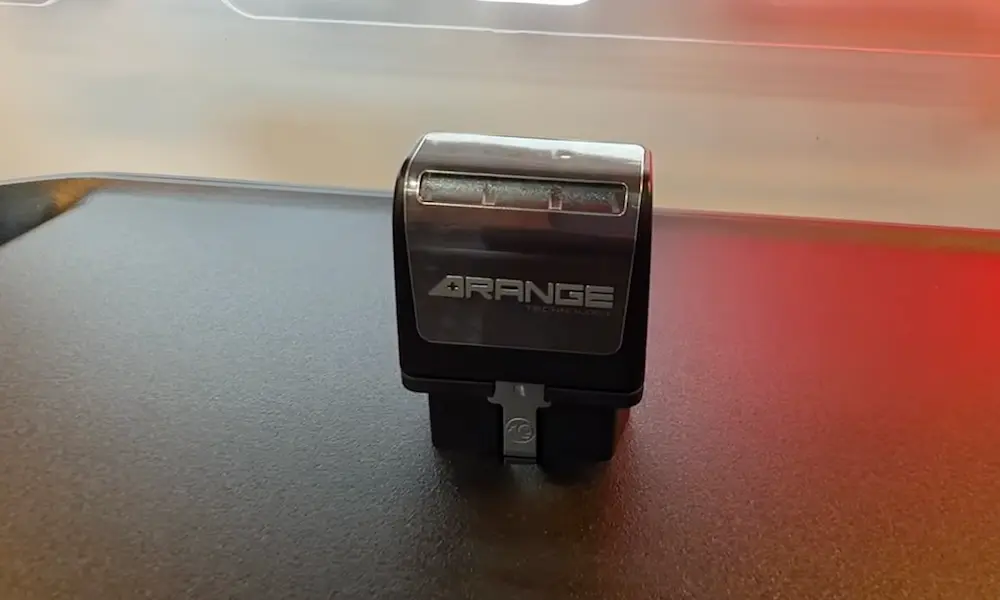
Step 2 — Plug in a scan tool. Look at all stored and pending codes together. P0014 alongside P0011 (intake cam, Bank 1) suggests a shared oil pressure problem to that cylinder head. P0014 with misfire codes means timing is severely off. In Live Data, watch “Desired” vs. “Actual” camshaft position while revving the engine.
Step 3 — Test and inspect the solenoid. Measure resistance, inspect the screens, and use a scan tool to command the solenoid manually. If the screen is clogged with carbon, clean it with brake cleaner and retest before buying a new one.
Step 4 — Check oil pressure at the head. A mechanical gauge tells you if oil is actually reaching the VVT components. Pressure might be fine at the block but blocked before it reaches the phaser.
Step 5 — Check timing marks. Remove the valve cover, rotate the engine to TDC, and verify that all timing marks align. Even half a tooth of misalignment confirms a stretched or jumped chain — and that means a full timing set replacement.
The Chevy Equinox and TSB 17-NA-098
If you own a 2010–2017 Chevy Equinox with the 2.4L engine, you’re in good company — and not in a good way. These vehicles saw such widespread VVT failures that GM issued Technical Service Bulletin 17-NA-098 specifically addressing rough running, hesitation, stalling, and codes P0010, P0011, P0013, and P0014.
GM’s repair protocol under this bulletin requires:
- Replacing both intake and exhaust solenoids as a pair — if one failed, the other is close behind
- Updating the ECM software — calibration updates reduce false codes from minor engine wear
These engines also burn oil due to clogged PCV orifices or worn piston rings. A vehicle burning oil between changes is constantly at risk of starving the VVT system — which loops right back to more P0014 codes.
What Does It Cost to Fix Chevy P0014?
Repair costs vary based on the root cause and which Chevy engine you have.
| Repair | Parts Cost | Labor Cost | Total Estimate |
|---|---|---|---|
| Oil and filter change | $40–$70 | $30–$80 | $70–$150 |
| VVT solenoid (one) | $50–$150 | $75–$150 | $125–$300 |
| VVT solenoids (pair per TSB) | $100–$250 | $100–$200 | $200–$450 |
| Camshaft position sensor | $50–$120 | $75–$150 | $125–$270 |
| Camshaft phaser / actuator | $150–$400 | $400–$800 | $550–$1,200 |
| Full timing chain set | $250–$600 | $700–$2,000 | $950–$2,600+ |
The 3.6L V6 timing chain job lands at the expensive end. That engine runs three chains and four phasers, and often needs to be partially lowered or removed for proper access.
Why You Shouldn’t Ignore This Code
Most modern Chevy engines are interference engines. That means the valves and pistons share the same space in the combustion chamber — separated only by perfect timing. If a worn tensioner lets the chain jump, pistons hit valves. The result is bent valves, cracked pistons, and often a full engine replacement.
There’s also the catalytic converter to think about. An over-advanced exhaust cam causes incomplete combustion, dumping unburned fuel into the exhaust. That fuel burns on the surface of the catalytic converter’s substrate, overheats it, and destroys the internal honeycomb. A new cat on a Chevy runs $800–$2,000. That’s a steep price for ignoring a $150 solenoid.
How to Keep P0014 From Coming Back
Oil maintenance is everything with VVT engines. These tips keep the system healthy long-term:
- Change oil every 5,000 miles — city driving and short trips contaminate oil faster than the Oil Life Monitor assumes
- Use Dexos-certified full synthetic oil — Chevy VVT systems need the specific detergent packages and shear stability that Dexos-spec oils provide; bargain oils form varnish on solenoid spool valves
- Use a quality oil filter — the VVT solenoid screens depend on the filter catching microscopic debris first; stick with AC Delco or a premium aftermarket filter with high efficiency ratings
- Don’t ignore new noises — a clicking, tapping, or rattling sound from the front of the engine deserves immediate attention; catching a failing tensioner early costs a fraction of a full timing job
The Chevy P0014 code is one of those faults that tells a bigger story about your engine’s internal health. Treat it as early data, not just a warning light — and your engine will thank you for it.