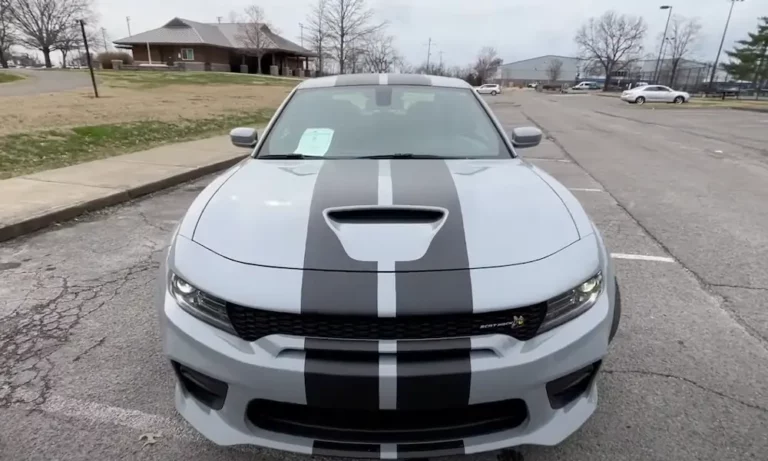
Can’t find your Dodge Charger’s battery? You’re probably staring at an empty engine bay wondering if it fell out. It didn’t. Dodge hid it on purpose — and there’s a smart reason why. This guide covers every generation’s dodge charger battery location, how to access it, and how to jump-start the car safely. Read to the end — the newer models have a twist you’ll want to know about.
Why the Dodge Charger Battery Isn’t Under the Hood
Dodge put the battery in the trunk — not to confuse you, but to improve handling.
A standard car battery weighs 40 to 60 pounds. Moving that weight to the rear helps the Charger get closer to a 50/50 front-to-rear weight split. That matters a lot in a rear-wheel-drive performance car. Better balance means better traction, better cornering, and a more planted feel at speed.
There’s another bonus: the trunk is cooler than the engine bay. Heat is the number one killer of batteries. By keeping the battery away from engine heat cycles, Dodge extends its lifespan — especially important in states with brutal summer temperatures.
This rear-placement philosophy has held strong across every Charger generation, from the 2006 LX platform all the way through the 2025 Sixpack and Daytona EV.
2006–2010 Dodge Charger Battery Location (LX Platform)
Pop the trunk. The battery is hiding under the floor.
In these early models, the 12-volt battery sits in a recessed compartment next to the spare tire, on the passenger side of the trunk. You’ll need to lift the carpeted load floor panel to see it. Once you do, it’s right there — no digging required.
The battery uses a steel hold-down bracket secured with a single bolt at the base. It also has a small plastic vent tube running from the battery’s side port to the outside of the car. That tube vents hydrogen gas produced during charging. Never skip reconnecting it — hydrogen buildup in a sealed trunk is a serious fire risk.
| Model Year | Battery Location | Battery Type |
|---|---|---|
| 2006 | Trunk, beside spare tire (passenger side) | Flooded Lead-Acid or AGM |
| 2007 | Trunk, beside spare tire (passenger side) | Flooded Lead-Acid or AGM |
| 2008 | Trunk, beside spare tire (passenger side) | Flooded Lead-Acid or AGM |
| 2009 | Trunk, beside spare tire (passenger side) | Flooded Lead-Acid or AGM |
| 2010 | Trunk, beside spare tire (passenger side) | Flooded Lead-Acid or AGM |
This generation shares its battery setup with the Dodge Magnum and Chrysler 300, so those guides apply here too. A visual walkthrough for the 2006 Charger R/T shows the full process if you want to follow along.
2011–2023 Dodge Charger Battery Location (LD Platform)
Same spot. Better battery.
The LD platform kept the battery in the trunk, right of the spare tire, under the load floor. But this generation moved to AGM (Absorbed Glass Mat) batteries — especially in performance trims like the Scat Pack and Hellcat. AGM batteries hold up better under heavy vibration and high electrical demand. They’re also sealed, so no acid spills if the car gets sideways on a ramp.
The 2011–2023 battery replacement process is well documented. Lift the trunk floor, locate the battery to the right of the spare, and you’ll see a metal hold-down bracket. You need a 13mm socket to remove it.
Starting around 2015, Dodge added an Intelligent Battery Sensor (IBS) — a small device clamped to the negative terminal. It tracks voltage, temperature, and current in real time. The car’s computer uses this data to optimize how the alternator charges the battery.
Important: if you replace the battery, the IBS may need a reset. Without it, the system might charge your new battery using the old battery’s wear profile. That’s not great for longevity.
| Model Years | Access Method | Key Feature |
|---|---|---|
| 2011–2014 | Lift load floor, 13mm bracket bolt | Standard terminals |
| 2015–2020 | Lift load floor, 13mm bracket bolt | Intelligent Battery Sensor (IBS) |
| 2021–2023 | Lift load floor, 13mm bracket bolt | IBS + updated fuse routing |
You can find a full video covering the fuse box and terminal locations for these model years if you want a visual reference.
2024–2025 Dodge Charger Battery Location (STLA Large Platform)
This is where things get interesting.
The eighth-gen Charger comes in two flavors: the fully electric Daytona and the twin-turbo gas-powered Sixpack. Both still use a rear-mounted 12-volt battery — but the setup is more complex than ever before.
Charger Daytona EV Battery Location
The Daytona EV has two energy systems:
- A 400-volt lithium-ion traction pack mounted under the floor of the passenger compartment — this powers the motors
- A 12-volt auxiliary battery in the rear hatch area — this keeps the computers, lights, and safety systems running
The 12-volt battery is located under a cover in the rear hatch, accessible after lifting the liftback. According to the 2025 Charger owner’s handbook, the remote jump posts are now on the right side of the engine bay, not the left like in older models.
There’s also a first responder cut-loop. It’s behind an access panel in the left quarter trim of the rear cargo area, marked with an emergency helmet icon. Cutting the marked cable disables the high-voltage system in emergencies. The 2024–2025 Daytona Emergency Response Guide from Mopar covers this in full detail.
Charger Sixpack Gas Battery Location
The Sixpack follows the same rear-access philosophy. Its 12-volt battery sits in the rear cargo area under the load floor or hatch cover — consistent with previous generations. The under-hood jump posts are on the right side of the engine bay, matching the Daytona layout.
| Component | Daytona (EV) | Sixpack (Gas) |
|---|---|---|
| 12V Battery | Rear hatch, left quarter area | Rear trunk / hatch floor |
| Traction Battery | Underbody chassis (400V) | Not applicable |
| Remote Jump Posts | Engine bay, right side | Engine bay, right side |
| Emergency Disconnect | Left quarter trim cut-loop | Manual terminal removal |
How to Access and Replace the Battery (2006–2023 Step-by-Step)
Here’s the straightforward version:
- Park the car and turn it off. If the battery is completely dead, you’ll need to power the car via the under-hood jump posts to release the trunk electronically — or use the manual emergency pull inside the trunk
- Open the trunk and remove floor mats or cargo items
- Lift the carpeted load floor panel. Many 2011+ models have a hook on the underside to hold the panel up while you work
- Locate the battery to the right of the spare tire
- Remove the negative terminal first using a 10mm wrench — loosen the nut, pull the clamp away, and keep it from touching metal
- Remove the positive terminal the same way
- Remove the hold-down bracket with a 13mm socket and extension
- Lift out the battery carefully — these units can weigh up to 60 pounds
Installation is the reverse. Always connect the positive terminal first when putting the new battery in.
For a full visual walkthrough of the 2006–2020 Charger battery swap, this video covers the process clearly.
How to Jump-Start a Dodge Charger (All Years)
Here’s the key thing to know: don’t jump-start from the trunk battery directly.
When you make that final connection and create a spark, you don’t want it near the battery. Hydrogen gas can accumulate around the terminals, especially in a confined trunk space. Instead, use the remote jump posts under the hood — that’s exactly what they’re there for.
For 2006–2023 models, the remote positive post is on the driver’s side of the engine bay, integrated into the power distribution center (fuse box), under a red cap marked with a “+” sign. The negative connection is a bare grounding stud on the strut tower or near the engine block.
For 2024–2025 models, both posts moved to the right side of the engine bay, behind the under-hood fuse box.
Follow this order every time, this sequence as the safest approach:
- Connect red clamp → dead Charger’s remote positive post
- Connect red clamp → booster battery’s positive terminal
- Connect black clamp → booster battery’s negative terminal
- Connect black clamp → grounding stud on the dead Charger (not the battery)
- Start the booster car, wait 2–3 minutes
- Start the Charger (or for Daytona EV, watch for charging indicators to activate)
- Remove cables in exact reverse order
For the Daytona EV specifically, this official disconnect and charging video walks through the process safely.
One more note on the Daytona: if both the 12-volt and the high-voltage pack are dead, you won’t be able to open the doors electronically. Use the mechanical key hidden inside the key fob to unlock the driver’s door, then use the manual hood release cable to pop the hood and access the jump posts.
Battery Safety and Disposal
A few quick but important points:
- Always wear gloves and safety glasses when handling lead-acid batteries. Sulfuric acid burns skin and eyes fast
- Never remove the vent tube on trunk-mounted batteries — it routes hydrogen gas outside the vehicle
- Don’t work near open flames or sparks near any battery
- High-voltage EV components in the 2024–2025 Daytona should only be touched by certified technicians with proper high-voltage training. Your interaction with that system starts and ends at the charging port on the driver’s side rear fender
When it’s time to swap the old battery, don’t just throw it in the trash. Lead-acid batteries are one of the most recycled products in the US — nearly 99% of materials get reclaimed. Most auto parts stores give you a core charge refund when you bring the old one in. For Daytona EV lithium-ion packs, disposal goes through the dealership network.
Quick Reference: Dodge Charger Battery Location by Model
| Model | 12V Battery Location | Remote Jump Posts | Key Access Tool |
|---|---|---|---|
| 2006–2010 R/T | Trunk, right of spare tire | Engine bay, driver’s side | 10mm wrench |
| 2011–2023 SXT / R/T | Trunk, right of spare tire | Engine bay, driver’s side | 10mm + 13mm socket |
| 2015–2023 Hellcat / Scat Pack | Trunk, right of spare tire | Engine bay, driver’s side | 10mm + 13mm socket |
| 2024–2025 Daytona EV | Rear hatch, left quarter area | Engine bay, passenger side | Panel removal tool |
| 2025 Sixpack | Rear hatch / trunk floor | Engine bay, passenger side | 10mm wrench |
The dodge charger battery location has stayed in the rear through nearly 20 years of production — different platforms, different powertrains, same core idea. Once you know where to look and how to access it safely, it’s a straightforward job that saves you a tow truck call and a dealer service visit.