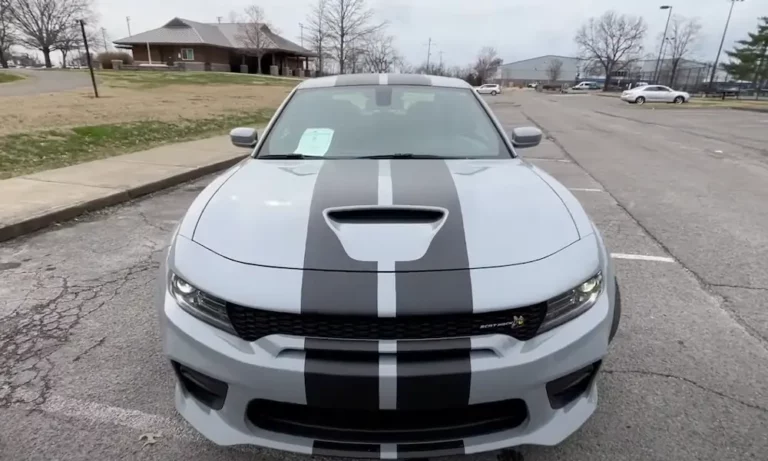
You turn the key, and nothing happens. Or maybe your Dodge Charger cranks but won’t fire up. Few things are more frustrating than a car that refuses to start, especially when you’re running late. Whether you’ve owned your Charger for years or just picked one up, starting problems can happen to anyone at any time.
This guide breaks down every possible reason your Dodge Charger won’t start, from simple fixes you can handle yourself to more complex issues that might require professional help. We’ll walk through diagnosis steps and solutions for both no-crank and crank-no-start situations.
Is It a Crank or No-Crank Problem?
Before diving into specific issues, you need to determine whether your Charger is cranking or not when you try to start it. This fundamental distinction will point you in the right direction for troubleshooting.
When you turn the key or push the start button:
- No-crank: Nothing happens, or you hear just a click
- Crank but no start: The engine turns over but doesn’t fire up
This distinction is crucial because it immediately narrows down the potential problems. Let’s tackle each scenario.
No-Crank Troubleshooting: When Your Charger Sits Silent
Dead Battery: The Most Common Culprit
A dead or failing battery is the leading cause of no-crank conditions in Dodge Chargers. Your battery needs at least 12.6 volts at rest to properly power the starting system.
How to check your battery:
- Look for obvious signs like dim headlights or interior lights
- Check for corrosion on battery terminals (a white or greenish powder)
- Test battery voltage with a multimeter (should read 12.6V or higher)
- Have the battery load-tested at an auto parts store
Even a new battery can fail if terminals are corroded or loose. Clean the terminals with a wire brush and make sure connections are tight before assuming the battery itself is bad.
Battery issues account for approximately 55% of all Dodge Charger starting problems.
Starter Motor Problems: When You Hear a Click
If your battery checks out but your Charger still won’t crank, the starter motor might be the issue. When a starter fails, you’ll often hear a single click when turning the key.
Signs of starter failure:
- Single clicking sound when turning the key
- Intermittent starting (works sometimes but not others)
- Grinding noise during starting attempts
- Starter stays engaged after the engine starts
Testing the starter requires checking for power at the starter solenoid when attempting to start. If voltage is present but the starter doesn’t engage, it likely needs replacement.
Blown Fuses and Relays: Simple Fixes That Get Overlooked
Before replacing expensive components, always check your fuses and relays. Two critical components to check:
- Starter relay (#27 in the under-hood fuse box)
- Starter fuse (#4, 30 amp) in the same fuse box
A YouTube diagnostic video shows exactly where to locate these components in your Dodge Charger. A blown fuse or bad relay can completely disable the starting circuit while being an inexpensive fix.
TIPM Issues: The Electronic Nightmare
The Totally Integrated Power Module (TIPM) is essentially your Charger’s electrical brain, and it’s notorious for causing starting problems, especially in 2007-2015 models.
Signs of TIPM failure include:
- Random electrical problems across multiple systems
- Intermittent starting issues (works one day, fails the next)
- Fuel pump not priming when key is turned to “ON”
- Various dashboard warning lights illuminating simultaneously
The fuel pump relay within the TIPM commonly fails, preventing fuel delivery to the engine. A faulty TIPM can trigger numerous electrical gremlins that seem unrelated but stem from this single component.
TIPM diagnostic approach:
- Check for diagnostic trouble codes, especially communication codes like U0100
- Listen for the fuel pump priming when turning the key to “ON”
- Try a TIPM reset by disconnecting the battery for 15 minutes
WIN Module Failures: Key Recognition Problems
The Wireless Ignition Node (WIN) module, used in 2008-2013 Dodge Chargers with traditional key ignition systems, is another common failure point. When the WIN module fails, your Charger may show zero response to key operation.
A diagnostic video demonstrates that WIN module problems typically manifest as complete non-response to key operations. The WIN module requires programming to match your vehicle’s existing keys if replaced.
Crank-No-Start Troubleshooting: When Your Engine Turns But Won’t Fire
If your Charger’s engine cranks normally but refuses to start, you’re facing a different set of potential issues. These generally fall into three categories: fuel problems, ignition issues, or sensor failures.
Fuel System Problems: No Gas, No Go
Fuel delivery issues are a major cause of crank-no-start problems. Here’s how to check if fuel is reaching your engine:
Listen for the fuel pump:
- Turn the key to “ON” position (don’t crank)
- Listen for a 2-3 second whirring sound from the rear of the vehicle
- This sound indicates the fuel pump is priming the system
No sound? Your fuel pump might be dead, or the fuel pump relay (inside the TIPM) could be faulty. Dodge Chargers require 50-65 PSI fuel pressure during the priming cycle.
Other fuel system issues to check:
- Clogged fuel filter
- Fuel pressure regulator failure
- Dirty fuel injectors
- Empty gas tank (yes, it happens!)
Dodge Charger model years 2006-2014 show higher rates of fuel pump failures.
Critical Sensors: When Your Engine Lacks Vital Information
Modern engines rely on numerous sensors to operate correctly. Two sensors are particularly critical for starting:
Crankshaft Position Sensor (CKP):
This sensor tells your engine’s computer where the crankshaft is in its rotation, which is essential for proper timing of fuel injection and ignition. CarParts.com notes that a failed crankshaft sensor typically results in a cranking engine that refuses to start.
Symptoms of a bad crankshaft sensor:
- Engine cranks but won’t start
- Engine starts but stalls immediately
- Intermittent stalling while driving
- Check engine light with codes P0335 or P0336
Camshaft Position Sensor (CMP):
This sensor works together with the crankshaft sensor to ensure precise timing. When it fails, you’ll often see a check engine light with code P0340.
Dodge Charger engines with variable valve timing use dual camshaft position sensors integrated into single assemblies. These sensors monitor both intake and exhaust camshaft positions to optimize engine timing. According to a YouTube diagnostic video, failure of either sensor can disrupt variable timing operation and prevent starting.
Ignition System Failures: No Spark, No Start
If fuel is reaching the engine but there’s no spark to ignite it, your Charger won’t start. Common ignition system issues include:
Ignition coil failures:
Modern Dodge Chargers use one coil per cylinder (coil-on-plug design). A failed coil can prevent one or more cylinders from firing.
Spark plug issues:
Worn, fouled, or incorrectly gapped spark plugs can prevent proper combustion.
Ignition switch problems:
In 2008-2014 Chargers, ignition switch problems were common enough to prompt a recall. Some Chargers were recalled to fix ignition switch problems that could cause the engine to shut off while driving.
Engine-Specific Starting Problems
Different Dodge Charger engines have their own unique quirks and common failure points that can prevent starting.
3.6L Pentastar V6 Issues
The 3.6L Pentastar V6 engine found in many Chargers has some specific problems worth checking:
- Cylinder #2 valve seat failures causing compression loss
- Oil pump problems creating inadequate lubrication pressure
- Rocker arm failures producing characteristic ticking noises
Automotive Magic reports that these engines also experience “dry start” problems where oil drains from the filter during extended parking periods. While this typically doesn’t prevent starting, it can cause rough initial operation.
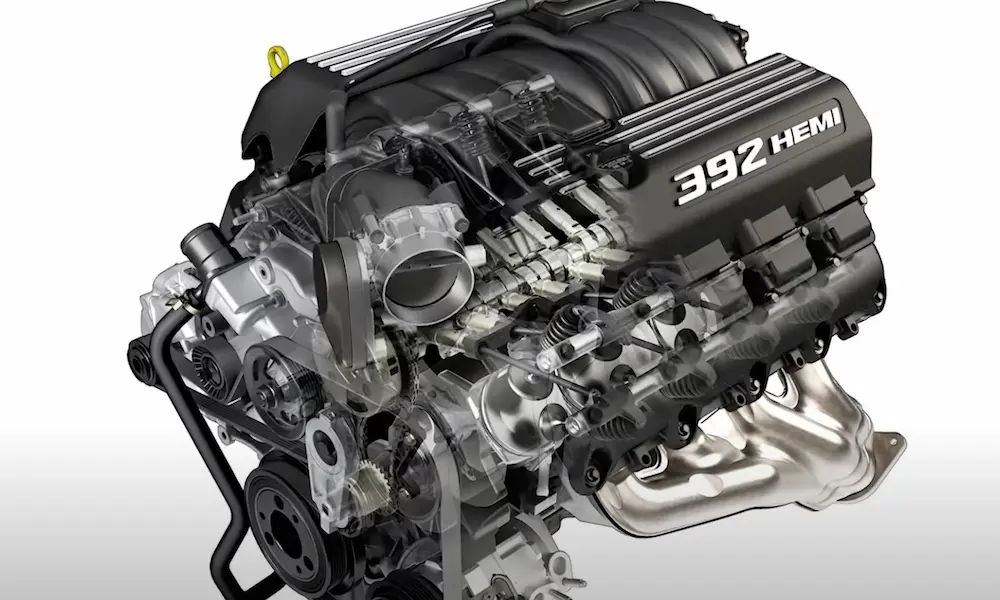
5.7L HEMI V8 Considerations
The 5.7L HEMI V8 engine includes cylinder deactivation technology that can sometimes malfunction and affect starting performance:
- Diagnostic codes P3401 and P3449 indicate cylinder deactivation control circuit problems
- The HEMI’s Multiple Displacement System (MDS) can create unique diagnostic challenges
- Lifter failures are more common in these engines and can affect starting
Security System Problems: When Your Charger Thinks You’re a Thief
Modern Dodge Chargers have sophisticated anti-theft systems that can prevent starting even when all mechanical systems are working perfectly.
Security system reset procedure:
For 2006-2010 Dodge Chargers experiencing security system lockouts (indicated by a flashing red security light), try this reset:
- Remove and reinstall the IOD fuse (#2) in the rear fuse box
- If that fails, disconnect the battery negative terminal for 10 minutes
A YouTube tutorial demonstrates this process step-by-step.
Key fob issues:
- Dead battery in key fob
- Unrecognized key (not programmed to vehicle)
- Damaged transponder chip in key
Systematic Troubleshooting Approach
Rather than replacing parts randomly, follow this systematic approach to diagnose your Charger’s starting problems:
Step 1: Initial Checks
- Verify battery condition (voltage and load test)
- Check all battery connections for tightness and corrosion
- Confirm transmission is in Park or Neutral (neutral safety switch)
- Retrieve diagnostic trouble codes with an OBD-II scanner
Step 2: Determine Crank vs. No-Crank
Based on whether the engine turns over or not, proceed to the appropriate tests:
For no-crank:
- Test starter system components: fuses, relays, starter motor
- Check for power at starter when attempting to start
- Inspect TIPM and WIN module if applicable
For crank-no-start:
- Verify fuel pump operation (listen for priming sound)
- Test for spark at spark plugs
- Check engine sensors (crankshaft, camshaft position)
- Verify compression in cylinders
Step 3: Advanced Diagnosis
If basic tests don’t reveal the problem, move on to more detailed diagnostics:
Wiring harness inspection:
Pay special attention to connectors under the fuse box, where corrosion and loose connections commonly develop. Physical inspection of wiring harnesses for chafing, corrosion, or rodent damage can reveal problems that electrical testing misses.
Module testing:
Certain repairs require module programming or reinitialization procedures to restore proper operation. TIPM replacements, WIN module installation, and PCM replacement all require specific programming sequences.
Dodge Charger Starting Problem Diagnostic Table
| Symptom | Possible Causes | First Checks | Notes |
|---|---|---|---|
| No crank, no lights | Dead battery, Main fuse blown | Battery voltage, Main fuse | Most common issue |
| No crank, dash lights work | Bad starter, Starter relay, Ignition switch | Starter relay #27, Starter fuse #4 | Listen for click when turning key |
| Engine cranks slowly | Weak battery, Loose connections, Engine mechanical issues | Battery load test, Cable connections | Cold weather worsens symptoms |
| Cranks but won’t start | Fuel pump, Ignition system, Engine sensors | Fuel pump sound, Spark test, OBD codes | No fuel pressure is common cause |
| Intermittent no-start | TIPM issues, Loose connections, Security system | TIPM reset, Connection check, Security light | Most challenging to diagnose |
| Starts then dies immediately | Fuel pressure regulator, Anti-theft, Crankshaft sensor | Fuel pressure test, Security light, OBD codes | Engine needs continuous signals to run |
Quick Fixes to Try First
Before diving into complex diagnostics, try these quick fixes that often solve Dodge Charger starting problems:
- Battery terminal cleaning: Remove terminals, clean with wire brush, reconnect tightly
- Key fob battery replacement: A weak key fob battery can prevent security system recognition
- Fuse check and replacement: Check starter fuse (#4) and replace if blown
- Fuel pressure test: Connect a fuel pressure gauge to the test port on the fuel rail
- TIPM reset: Disconnect battery for 15 minutes to reset the TIPM
By understanding these common scenarios and following the diagnostic approaches outlined in this guide, you’ll be able to identify and resolve most Dodge Charger starting problems. Remember that modern vehicles have complex, interconnected systems, so a methodical approach is essential for effective troubleshooting.