Got a check engine light and a Dodge P0340 code staring back at you? This could be a quick sensor swap or a sign of something deeper. Either way, this guide walks you through what’s really happening, what to check first, and how to fix it without throwing parts at the problem blindly.
What Is the Dodge P0340 Code?
The Dodge P0340 code means your powertrain control module (PCM) can’t get a reliable signal from the camshaft position sensor circuit. It’s officially called “Camshaft Position Sensor ‘A’ Circuit Malfunction.”
The “A” matters here. In a single-cam engine like the 5.7L Hemi, there’s only one camshaft circuit to worry about. But in dual overhead cam engines like the 3.6L Pentastar V6, “A” points specifically to the intake cam sensor on Bank 1. Replacing the wrong sensor won’t fix anything.
The camshaft sensor tells your PCM which cylinder is coming up on compression. Without that data, your engine can’t fire injectors in sequence or time ignition correctly. The whole combustion process starts flying blind.
Dodge P0340 Symptoms You’ll Notice
The symptoms of a P0340 code show up fast and hit hard. Here’s what to expect:
- Hard start or no-start — The engine cranks for several seconds before firing, or doesn’t start at all
- Rough idle — The engine stumbles and shakes at low RPM
- Hesitation during acceleration — The car bogs down when you press the gas
- Engine misfires — Uneven combustion causes the engine to skip
- Limp mode — The PCM caps your RPMs and performance to protect the engine
- Erratic shifting — The transmission shifts harshly or locks into a low gear
- Worse fuel economy — The PCM dumps extra fuel as a safety measure, burning more gas
The limp mode and transmission behavior trip a lot of people up. They assume it’s a transmission problem. But the transmission controller uses engine timing data to calculate shift points. When that data disappears, shifting gets sloppy or stops entirely.
| Symptom | What’s Causing It |
|---|---|
| Extended crank or no-start | PCM can’t identify stroke position |
| Rough idle and stalling | Stoichiometric balance breaks down |
| Hesitation under throttle | Injector pulse timing goes off |
| Limp mode activation | PCM-driven performance cap |
| Erratic or locked transmission | Load-based shift scheduling corrupted |
| Poor fuel economy | Engine defaults to rich open-loop fueling |
Don’t ignore these signs. In interference engines, a timing sync failure can cause pistons and valves to physically collide. That’s a catastrophic, wallet-destroying repair.
What Actually Causes the Dodge P0340 Code
Here’s where most DIYers go wrong. The code says “circuit malfunction,” not “bad sensor.” That means the problem could be the sensor, the wiring, the connector, the timing chain, or even the PCM itself.
Wiring and Connector Problems
The sensor harness runs through a brutal environment — heat, vibration, oil, and grime. The 18-gauge wires can crack at the insulation, especially near the exhaust manifold. A cracked wire causes an intermittent short that triggers the code even though the sensor itself is fine.
The connector is just as vulnerable. Many Dodge connectors use a red sliding lock tab. If that tab isn’t fully seated, engine vibration can break the electrical connection. Oil leaks from a failing valve cover gasket can saturate the connector and either insulate the pins or bridge them together — both scenarios kill the signal.
Some Dodge models also used soy-based wire insulation that rodents find delicious. If you’ve noticed any other electrical gremlins, check the harness for chew damage.
Timing Chain Wear
A stretched timing chain causes the camshaft to lag behind the crankshaft. When that lag exceeds the PCM’s acceptable threshold, it flags the camshaft signal as invalid and sets the P0340. You’ll often see a companion P0016 code (Crankshaft/Camshaft Correlation) when this is the real problem.
Worn timing chain tensioners and damaged reluctor wheels cause the same issue. The reluctor wheel is the toothed ring that the sensor reads. If it’s cracked, chipped, or shifted on the shaft, the signal gets corrupted.
The Sensor Itself
Yes, the sensor does fail on its own. But it’s not always the first place to look. Before replacing it, check the wiring and connector. Many Reddit mechanics have reported replacing the sensor only for the code to return immediately because the actual fault was in the harness.
| Root Cause | Component | What Happens |
|---|---|---|
| Electrical | Sensor harness wiring | Open circuit or signal noise |
| Electrical | Connector pins and housing | Corrosion and intermittent contact |
| Mechanical | Timing chain | Cam-to-crank synchronization lag |
| Mechanical | Reluctor wheel | Corrupted or missing signal pulses |
| Chemical | Engine oil contamination | Connector saturation and pin fouling |
| Electronic | PCM internal driver | Failure to process valid input |
Dodge P0340 on the 3.6L Pentastar V6
The Pentastar V6 powers the Dodge Charger, Challenger, Durango, and Grand Caravan, and it has some specific failure patterns to know about.
Cam Phaser Failures
The Pentastar uses oil-pressure-driven cam phasers on both camshafts for variable valve timing. Inside each phaser is a locking pin that holds the phaser in a neutral position during startup. When that pin wears out or the phaser gums up with oil varnish, the camshaft can rotate independently of its drive gear.
That creates a genuine mechanical timing error that the PCM reports as P0340 or P0344. A classic sign is a rattling or growling sound on cold starts that fades as the engine warms up. If you hear that noise alongside the code, the phaser is your suspect, not the sensor.
Reluctor Wheel Shift
On the Pentastar, the reluctor wheel is a separate piece pressed onto the camshaft. It can shift slightly over time — even a few millimeters throws the signal outside the PCM’s expected window. This shows up as an intermittent P0340 that comes and goes without a clear pattern.
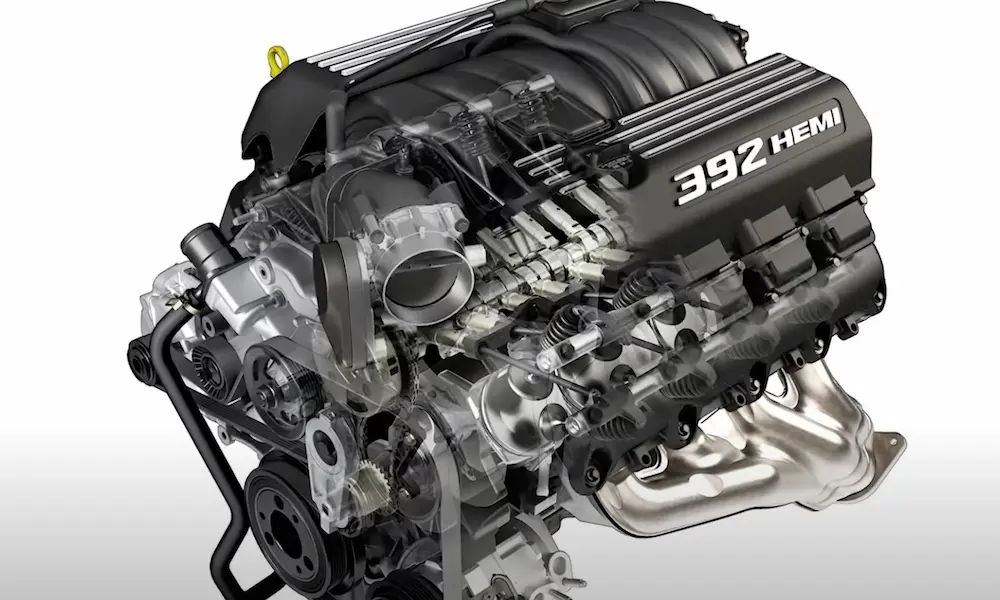
Dodge P0340 on the 5.7L Hemi V8
The Hemi places the camshaft sensor at the front of the engine block, near the timing cover. That location creates its own set of problems.
Heat and Contamination
The front-mounted position puts the sensor directly in the path of cooling system leaks and front main seal oil leaks. Metallic dust from a failing belt drive pulley can also accumulate on the sensor’s magnetic tip.
Because the Hemi’s sensor uses a Hall-effect magnetic design, it attracts metallic debris naturally. Once enough metallic “fuzz” coats the sensor tip, the magnetic field gets permanently disrupted. The signal weakens or disappears entirely, and the P0340 code appears.
Lifter Wear and Metal Debris
Hemi engines are known for lifter tick caused by needle bearing failures in the roller lifters. As those bearings break down, they shed microscopic metal particles into the oil stream. That debris travels through the engine and coats the magnetic camshaft sensor tip over time. If your Hemi has a lifter tick and a P0340, address both problems together.
How to Diagnose the Dodge P0340 Code
Work through this in order. Don’t skip steps.
Step 1 — Read the Freeze Frame Data
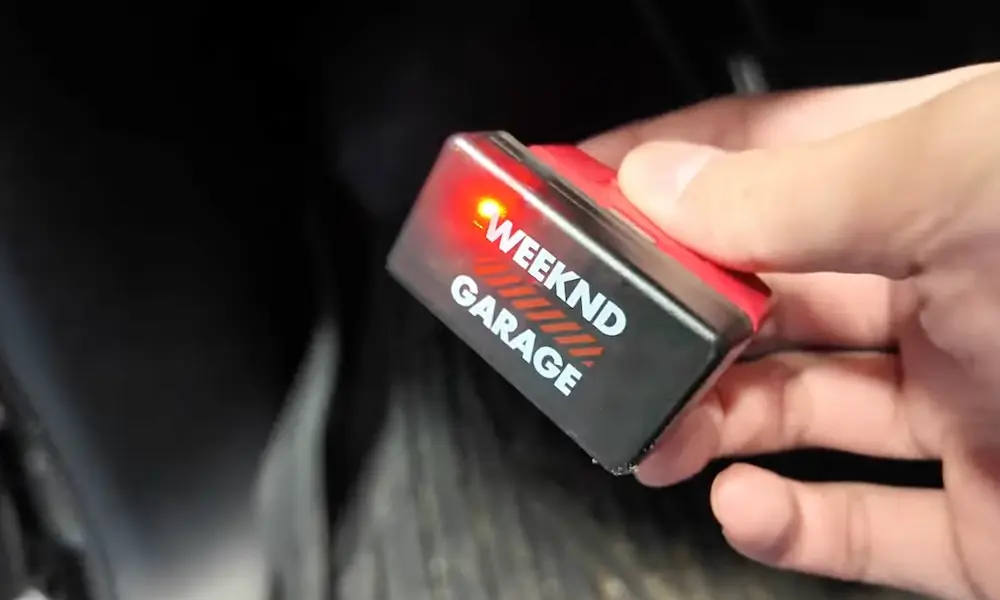
Connect a scan tool and pull the full code list, not just the P0340. Check the freeze frame data to see engine conditions when the fault triggered. If P0016 appears alongside P0340, you’re dealing with a mechanical timing issue, not a simple electrical fault.
Step 2 — Visual Inspection
Locate the sensor and trace the harness. Look for these specific things:
- Is the red connector locking tab present and fully engaged?
- Does the harness have at least 6 inches of clearance from exhaust components?
- Are there cracks, melted spots, or rodent damage on the wire insulation?
- Is there oil or “green crusties” (copper corrosion) inside the connector?
A lot of P0340 faults end right here. Oil-soaked connectors and heat-damaged wires are the most common culprits on high-mileage Dodge engines.
Step 3 — Multimeter Testing
Unplug the sensor connector and test the circuit with the ignition on. The three-wire Hall-effect sensor circuit needs all three circuits working:
- 5-volt reference — One pin must show a steady 5 volts. No voltage means a PCM or harness problem.
- Ground path — A second pin needs a clean ground. High resistance here causes erratic sensor behavior.
- Signal wire continuity — The third pin should show continuity back to the PCM without breaks.
Step 4 — Oscilloscope Testing
If everything checks out electrically but the code keeps coming back, use an oscilloscope to watch the live signal. A clean signal shows a steady square wave. A fuzzy, dropping, or inconsistent wave — especially when you wiggle the harness — points directly to a connector or wiring issue.
Dodge P0340 Technical Service Bulletins
Dodge has issued TSBs that address specific P0340 causes by model year.
TSB 18-054-14 covers a defective sensor batch affecting the 2014 Dodge Grand Caravan. If the sensor’s serial number starts with the letter “D,” it has a known internal failure and must be replaced. After replacing it, a cam/crank variation relearn procedure with a factory scan tool is required to recalibrate the system.
TSB 18-002-14, revised as a flash update for the engine control module on 2014 Ram models, changes the diagnostic logic for timing-related faults. The original software flagged the code after a single glitch. The updated software requires the fault to occur on two separate drive cycles before triggering the check engine light. This software revision eliminates false alarms from minor electrical interference.
If your Dodge falls in the affected model year range, check whether these TSBs apply before spending money on parts.
Repair Cost Breakdown for Dodge P0340
Here’s what you’re likely looking at for a straightforward sensor replacement:
| Dodge Model | Sensor Cost | Average Labor | Total Estimate |
|---|---|---|---|
| Dodge Charger | $102 – $113 | $100 – $147 | $202 – $259 |
| Dodge Ram 1500 | $85 – $95 | $80 – $110 | $165 – $205 |
| Dodge Journey | $93 – $110 | $70 – $100 | $163 – $210 |
| Dodge Grand Caravan | $115 – $135 | $180 – $260 | $295 – $395 |
| Dodge Dakota | $100 – $120 | $90 – $115 | $190 – $235 |
If the real problem is a stretched timing chain, expect the bill to jump to $1,600 – $1,900. A failed PCM adds another $800 – $1,200 plus programming costs.
One more cost note: cheap aftermarket sensors often have incorrect magnetic resistance. Technicians frequently report the P0340 code returning shortly after fitting a $30 sensor. A genuine Mopar or OEM-equivalent sensor costs more upfront but saves you the repeat labor charge.
Preventing the Dodge P0340 Code
A little maintenance goes a long way toward keeping this code from showing up again.
Change your oil regularly. The timing chain, tensioners, and cam phasers all depend on clean oil. Use a quality full synthetic and change it every 5,000 miles. Sludge buildup clogs cam phasers and accelerates timing chain wear — both of which can trigger a P0340 without any electrical fault at all.
Inspect the harness at every service. Check for heat damage, rubbing against metal edges, and loose connector tabs. Catching a cracked wire early costs nothing. Ignoring it until it causes a no-start costs you a tow bill plus diagnostic time.
Keep your battery healthy. A weak battery or failing alternator introduces voltage ripple into the 5-volt reference circuit. That unstable signal can look like a bad sensor to the PCM. Replacing an aging battery has cleared persistent P0340 codes in documented cases.
Clean and protect the connector. Use electrical contact cleaner on the pins during routine maintenance. Apply a small amount of dielectric grease before reconnecting to slow down corrosion. It takes two minutes and extends connector life significantly.
The Dodge P0340 code isn’t just an annoyance — it’s your engine telling you that its timing system needs attention. Fix the actual cause, use quality parts, and stay on top of your oil changes, and you’ll keep this code from becoming a recurring headache.