Got a check engine light and a Dodge P0456 code staring back at you? That tiny code can mean big headaches — especially at emissions time. The good news? Most causes are cheaper than you think. Stick around and you’ll know exactly where to look, what to replace, and how to confirm the fix actually worked.
What Is the Dodge P0456 Code?
The Dodge P0456 code means your car’s powertrain control module (PCM) detected a very small leak in the evaporative emission (EVAP) system. We’re talking a hole smaller than 0.020 inches — roughly the width of a few human hairs.
The EVAP system is a sealed network that traps fuel vapors from the gas tank and burns them in the engine instead of releasing them into the air. When the system can’t hold a vacuum during its self-test, the P0456 code gets logged and the check engine light turns on.
Here’s the tricky part: the leak is so small that you usually can’t see it. That’s what makes Dodge P0456 one of the most frustrating codes to track down without the right tools.
Why Your Dodge Has an EVAP System (The Short Version)
Your fuel tank constantly produces vapors — especially on hot days. Without a containment system, those vapors escape into the atmosphere and contribute to smog.
The EVAP system captures those vapors in a charcoal canister and holds them until the engine is running. Then the PCM opens the purge valve, and engine vacuum pulls the stored vapors into the intake manifold to be burned as fuel. Smart system — until something leaks.
The key players in the system:
- Gas cap — seals the filler neck
- Charcoal canister — stores fuel vapors
- Purge valve — controls vapor flow into the engine
- Vent valve — allows air in/out during refueling
- Evaporative System Integrity Module (ESIM) — monitors for leaks using gravity and vacuum
- Vapor hoses and lines — connect everything together
How Dodge Detects a P0456 Small Leak
Dodge doesn’t use a pump to pressurize the tank like older systems did. Most models from 2011 onward use an Evaporative System Integrity Module (ESIM) — a gravity-based vacuum switch mounted on the charcoal canister.
Here’s how it works:
- You park and turn off the engine
- The fuel and air inside the tank cool down
- Cooling air contracts and creates a natural vacuum
- The vacuum pulls a diaphragm inside the ESIM, closing an internal switch
- The PCM reads that switch as “system is sealed — all good”
If there’s a leak as small as 0.020 inches, the vacuum dissipates too quickly. The switch never closes long enough, and the PCM logs the Dodge P0456 code.
One critical detail: the ESIM uses internal gravity weights to seal its check valves. If the module is installed at the wrong angle, those weights can’t function correctly — and you’ll get a P0456 even with brand new parts.
| Detection System | How It Works | Common Failure | Typical Year Range |
|---|---|---|---|
| Leak Detection Pump | Active pump pressurizes system | Diaphragm tear or motor failure | 1996–2004 |
| Natural Vacuum (NVLD) | Diaphragm reacts to cooling vacuum | Stuck internal check valve | 2003–2012 |
| ESIM (Integrity Module) | Gravity-weighted vacuum switch | Wrong mounting orientation | 2011–Present |
| Fuel Tank Pressure Sensor | Direct electronic pressure reading | Sensor calibration drift | Modern platforms |
The Most Common Causes of Dodge P0456
1. Bad Gas Cap
This is the number one cause of a Dodge P0456 — and the cheapest fix. The cap has a nitrile rubber gasket that seals against the filler neck rim. Over time, heat cycles crack or harden that rubber. Even a tiny flat spot can break the seal.
Check these things first:
- Is the cap fully tightened? It should click several times.
- Is the rubber gasket cracked, hard, or flattened?
- Is the filler neck rim corroded or pitted? Even a new cap won’t seal on a rough surface.
Part cost: $20–$60
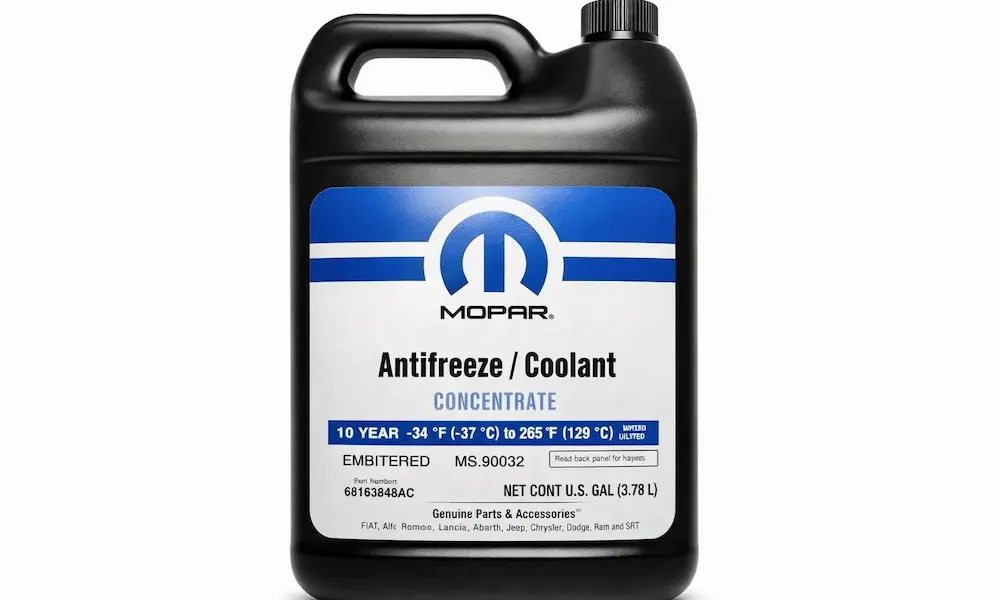
One important note: don’t grab a cheap aftermarket cap. Many don’t meet Dodge’s tight tolerances and can trigger the same P0456 code even when brand new. Stick with a Mopar OEM cap.
2. Cracked Purge Valve Hose
On the Dodge Durango and Ram trucks with 3.6L and 5.7L engines, the plastic purge hose near the engine bay is a notorious failure point. The heat makes the plastic brittle, and hairline cracks form — especially at the quick-connect fittings.
These cracks are often invisible to the naked eye. You’ll need good lighting or a smoke test to catch them.
Symptoms to watch for:
- Rough idle right after refueling
- P0456 code that keeps coming back after clearing
- Remote start that won’t work (Dodge disables it when any emissions code is active)
Part cost: $50–$150
3. Failing Purge Valve
The purge valve opens and closes thousands of times per drive cycle. Inside, a rubber-tipped plunger seals against a small orifice. Tiny charcoal dust particles from the canister can get lodged on that seal, preventing it from closing completely.
A stuck-open purge valve creates a micro vacuum leak. During the PCM’s self-test, the vacuum decays through the engine intake, and the P0456 code gets set.
To test it properly, apply a vacuum to one side while the valve is de-energized. If the vacuum drops, the valve is bad — regardless of whether it passes an electrical resistance test.
Part cost: $150–$200
4. ESIM Module Failure
The ESIM (Evaporative System Integrity Module) is mounted directly on the charcoal canister. Its internal vacuum switch and check valves can become clogged with dust or salt particles, especially in harsh climates.
The large green O-ring that seals the module to the canister is another common failure point. If it’s not fully seated, it creates a small leak right at the connection.
Critical installation rule: The ESIM’s electrical connector must point to the 3 o’clock position when installed. Any other angle throws off the internal gravity weights, and you’ll get a persistent P0456 — even with a brand new module.
Part cost: $30–$80
5. Corroded Fuel Filler Neck
Dodge vehicles with steel filler necks — especially in salt-belt states — can develop pinhole rust spots over years of moisture exposure. These pinholes are too small to leak liquid fuel but large enough for vapors to escape and trigger a Dodge P0456.
If the rim of the filler neck is pitted, no gas cap will seal it. The entire filler neck assembly needs replacement.
6. Charcoal Canister Damage
A cracked canister housing — usually from road debris impact — can cause a small vapor leak. More often on the Dodge Grand Caravan, the rubber jumper hoses connecting the canister to the plastic vapor lines dry out and crack at the ends. The canister sits under the vehicle near the driver seat area, directly exposed to moisture and road salt.
Part cost: $200–$600 for the canister assembly
| Component | Failure Mode | Signs of Trouble | Est. Part Cost |
|---|---|---|---|
| Gas Cap | Rubber seal dry-rot | Cap won’t click; loose feel | $20–$60 |
| Purge Hose | Heat-cracked plastic fittings | Hairline cracks near engine | $50–$150 |
| Purge Valve | Internal plunger won’t seal | Rough idle after refueling | $150–$200 |
| ESIM Module | Vacuum switch seal failure | Code returns after clearing | $30–$80 |
| Charcoal Canister | Impact crack or saturated charcoal | Gas pump keeps clicking off | $200–$600 |
Model-Specific P0456 Issues You Need to Know
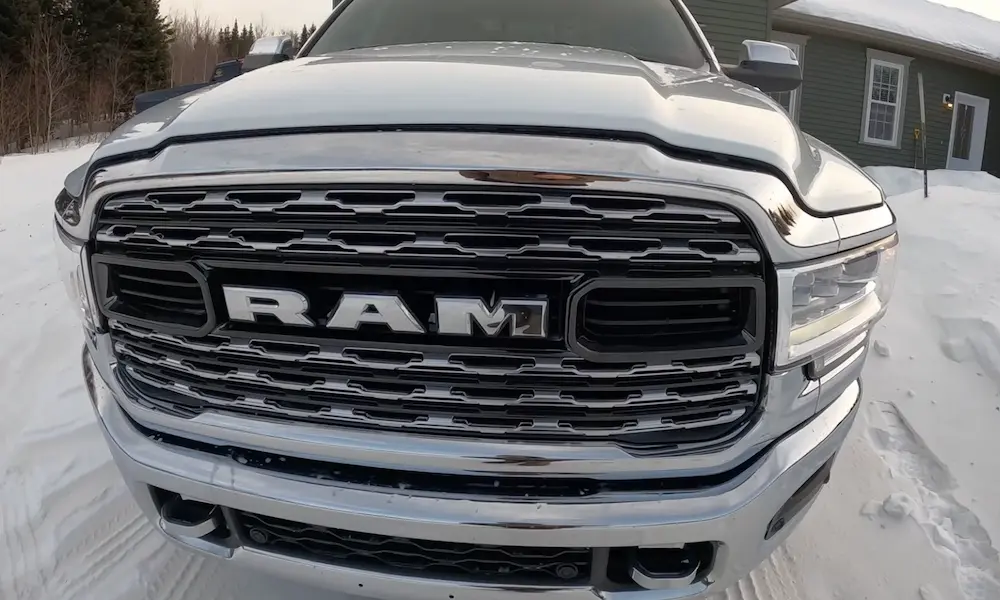
Dodge Ram 1500 and 2500
Ram trucks routed along the frame rail are prone to vapor line wear from road debris and frame flex during hauling. The lines sit between the body and the frame — nearly impossible to see without a mirror.
The 2019 Ram 2500/3500 with the 6.4L engine has a well-documented software issue. The PCM was calibrated too sensitively for real-world conditions. A drop in barometric pressure during a storm could trigger a false P0456. TSB 18-071-23 requires a PCM flash update to correct the detection threshold.
Dodge Durango (2011–2021)
The purge hose assembly on this platform is a primary suspect for any P0456. If the Durango’s remote start stops working alongside the check engine light, that plastic purge hose with cracked quick-connect fittings is almost always the culprit.
Check the Durango vapor canister guide for detailed component locations specific to this platform.
Dodge Grand Caravan
The canister and ESIM location under the vehicle exposes them to severe moisture and salt. Older Caravans frequently develop corroded steel filler necks with pinhole leaks. High-mileage vans almost always show cracked rubber jumper hoses at the canister connections.
For 2016 model year Journeys and Caravans, TSB 18-050-16 outlines a PCM reprogram to prevent false triggers from sensor noise.
How Technicians Diagnose Dodge P0456
Step 1: Check for Other Codes First
If P0440 or P0455 show up alongside Dodge P0456, ignore the small leak code temporarily. Those codes point to a major failure — a completely disconnected hose or a failed vent solenoid. Fix the big stuff first.
If P0456 is the only code, work from simple to complex.
Step 2: Smoke Test
A smoke machine is the go-to diagnostic tool for locating a P0456 leak. It generates a thick, non-toxic vapor and pushes it into the EVAP system at very low pressure — no more than 0.5 inches of water.
Because the leak is so small, you may need to wait several minutes for smoke to accumulate at the exit point. Technicians use a high-intensity UV light to spot dye residue at the leak site, especially in tight or obscured areas like the top of the fuel tank.
Important: Don’t exceed 0.5 psi during the smoke test. Too much pressure damages the ESIM’s internal diaphragms.
Step 3: Active PCM Testing
With a professional scan tool, a technician can command the vent valve closed and the purge valve open while watching the fuel tank pressure sensor in real-time. A rapid vacuum decay confirms a hardware leak. A steady reading points to a valve that isn’t closing correctly.
Dodge dealerships run a Small Leak Verification Test (SLVT) using the wiTECH system. This automated routine confirms a pass or fail result immediately after a repair — no waiting for the PCM to run its own monitor naturally.
What Happens If You Ignore Dodge P0456
Ignoring this code isn’t a great idea, even if the car drives fine. Here’s what happens over time:
- Failed emissions inspection — An active Dodge P0456 means an automatic inspection failure in states like California, regardless of actual tailpipe emissions. Your vehicle can’t be registered until the code is cleared and the monitor passes.
- Slightly worse fuel economy — Vapors leaking out are fuel you paid for but never burned.
- Rough idle — A stuck-open purge valve creates an un-metered air leak that disrupts the air-fuel mixture.
- Remote start disabled — Dodge programs the PCM to shut off remote start any time an emissions code is active.
- Lower resale value — A persistent check engine light drops your trade-in value significantly.
- Moisture intrusion — Long-term vapor path breaches can allow moisture into fuel lines and the pump assembly, leading to internal corrosion.
How to Avoid Topping Off the Gas Tank
One of the most common ways drivers unknowingly trigger a Dodge P0456 is topping off the tank. When the pump clicks off, the tank is full. Forcing more fuel in pushes liquid gasoline into the vapor lines and floods the charcoal canister. Saturated charcoal can no longer trap vapors, and the canister needs full replacement — a $200–$600 repair that was completely preventable.
Simple habits that protect your EVAP system:
- Stop fueling when the pump clicks off — every time
- Tighten the gas cap until it clicks (multiple clicks)
- Inspect the gas cap rubber seal during oil changes
- Clean around the charcoal canister vent filter if you drive on dirt or gravel roads regularly
Key Technical Service Bulletins for Dodge P0456
| Bulletin Number | Affected Vehicles | Action Required | Root Cause |
|---|---|---|---|
| TSB 18-071-23 | 2019 Ram 2500/3500 | PCM flash update | Software triggers false leak codes |
| TSB 18-048-23 | 2012–2023 All Gas Models | Mandatory SLVT with wiTECH | Standardizes repair verification |
| TSB 18-050-16 | 2016 Journey/Caravan | PCM software reprogram | Prevents false sensor noise triggers |
The Drive Cycle: Why the Code Comes Back
Clearing the code with a scanner doesn’t mean the problem is fixed. The PCM runs its own self-test under very specific conditions:
- Tank must be 15%–85% full
- Vehicle must sit for at least 8 hours to stabilize temperatures
- Ambient temperature must be between 40°F and 100°F
- A specific series of driving conditions must be completed
That’s why some drivers clear the code, drive normally for three or four days, and the light comes back. The PCM simply hadn’t found the right window to run the test yet.
Dealerships bypass all those conditions with the wiTECH SLVT routine, forcing the test to run immediately. That’s the only way to confirm a fix the same day.
Your Dodge P0456 Diagnostic Checklist
Work through this list in order — start simple, then escalate:
- Check for other EVAP codes — P0440 or P0455 change the diagnosis entirely
- Inspect the gas cap — look for cracked rubber, remove debris, reinstall until it clicks
- Check the purge hose in the engine bay — look for cracks at the plastic fittings
- Perform a smoke test at 0.5 inches of water pressure
- Inspect the ESIM mounting orientation — connector must point to the 3 o’clock position
- Run the Small Leak Verification Test with a professional scan tool
- Check for applicable TSBs — especially for 2016 and 2019 model years
The Dodge P0456 code looks scary on a scanner, but most of the time it traces back to a $20 gas cap or a $60 plastic hose. Start cheap, confirm your fix with the SLVT, and you’ll clear it for good.