That terrifying shimmy that makes your steering wheel feel like it’s trying to escape your hands? That’s the Dodge truck death wobble — and it’s more dangerous than it sounds. This guide breaks down exactly what causes it, how to diagnose it, what recalls apply to your truck, and the upgrades that actually fix it permanently.
What Is the Dodge Truck Death Wobble?
Death wobble isn’t just a loose steering wheel or a minor vibration. It’s a violent, self-sustaining harmonic oscillation of your front wheels and tires. It usually kicks in at speeds above 45 mph after hitting a pothole, a bridge expansion joint, or railroad tracks.
Once it starts, it doesn’t just calm down on its own. You have to slow below 40 mph — or stop completely — to regain control. That’s not a quirk. That’s a serious safety hazard.
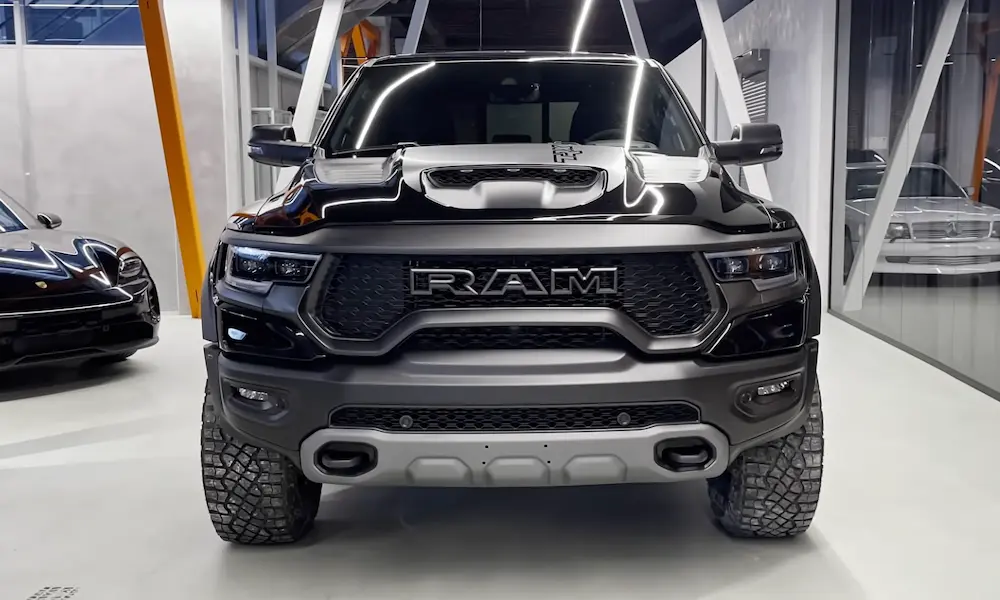
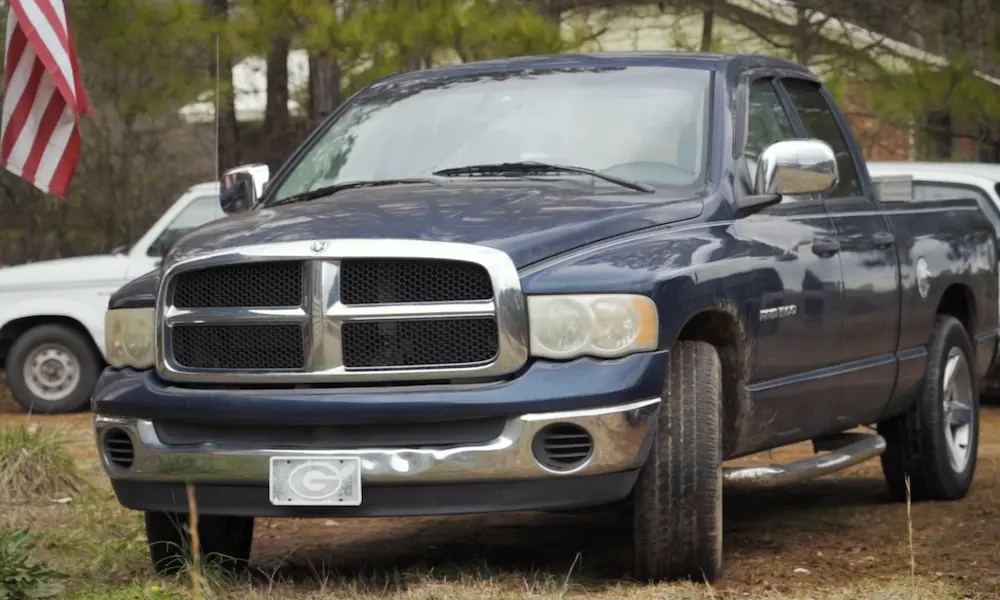
Dodge Ram 2500 and 3500 trucks built between 1994 and the present are the most affected. Their solid front axle design is incredibly strong for towing and hauling — but it’s also why death wobble is a known problem on this platform.
Why the Solid Front Axle Makes Dodge Trucks Vulnerable
Here’s the short version of the physics involved.
When one front tire hits a bump, it deflects upward and backward. On a tight suspension, the coil springs, shocks, and bushings absorb that energy. But if there’s even minor play anywhere in the steering or suspension linkage, that kinetic energy doesn’t get absorbed — it gets stored, then released in the opposite direction.
The axle housing shifts laterally. The steering knuckles pivot. The opposite wheel kicks back. Energy compounds with each cycle. Before long, your front tires are pivoting back and forth at their natural resonant frequency while your steering wheel shakes violently in your hands.
Every worn bushing, every loose joint, and every weak component feeds that resonance. That’s why death wobble isn’t caused by one thing — it’s usually a combination of worn parts that finally reach a tipping point.
The Y-Style vs. T-Style Steering Linkage: The Design Flaw That Started It All
This is the most important thing to understand about Dodge Ram death wobble history.
The Problematic Y-Style Geometry (1994–Mid-2008)
From 1994 through mid-2008, Ram heavy-duty trucks came with a Y-style steering linkage. In this setup, the drag link runs from the steering gearbox pitman arm to the passenger-side knuckle. The tie rod connects the driver-side knuckle to a joint in the middle of the drag link — forming a “Y” shape.
The problem? That center joint creates a virtual pivot point. As the suspension cycles up and down, the distance between the two knuckles changes. This causes independent, dynamic toe changes on each wheel. Once that center joint wears out, the wheels start toeing in and out independently — and that’s exactly what triggers death wobble.
The Superior T-Style Geometry (Mid-2008 Onward)
Mid-2008 brought the T-style linkage — a major improvement. A heavy tie rod connects both steering knuckles directly. The drag link then runs from the pitman arm straight to the passenger-side tie rod end near the knuckle.
Both wheels stay tied together at all times. No independent toe changes. No center joint to wear out. The primary trigger for death wobble is eliminated by design.
If you’re still running a Y-style setup on a 2003–2008 truck, upgrading to the Mopar T-style steering linkage kit (52122362AL) is one of the highest-impact changes you can make. The drag link outer diameter jumps from 1.250 inches to 1.580 inches — roughly three times the bending strength.
The Specific Components That Cause Death Wobble
Multiple parts can trigger or worsen death wobble. Here’s what to focus on.
Track Bar Bushings
The track bar is the most critical component in a solid-axle front end. It keeps the axle centered under the chassis. If its rubber bushings soften, crack, or develop even a fraction of an inch of play, the axle starts swinging laterally like a pendulum — storing and releasing the exact energy that drives death wobble.
Factory track bars on 1994–2013 trucks used small, compliant rubber bushings. They degrade over time. Even on post-2013 trucks with the updated design, high mileage catches up.
Steering Damper Foaming
The factory steering stabilizer mounts horizontally. On many stock and budget aftermarket units, nitrogen gas and hydraulic oil share the same chamber with no physical separator. Constant side-to-side agitation causes the gas to foam into the oil, creating unpressurized dead zones in the damper.
If a steering impact happens while the piston sits in a dead zone, the damper provides zero resistance. That first shimmy passes straight through the steering system — unfiltered — and becomes full death wobble instantly.
Ball Joints and Steering Gear Play
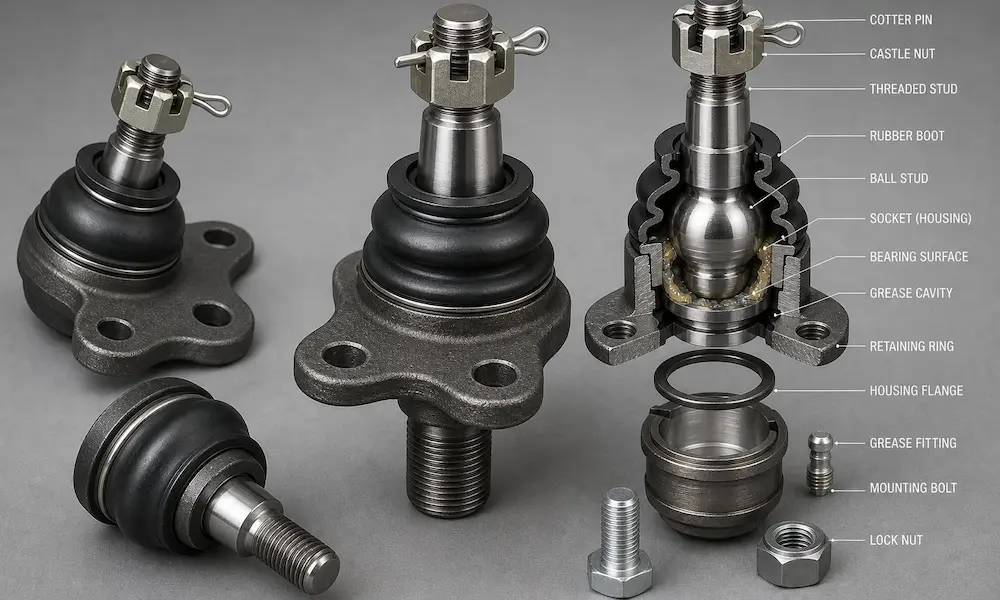
Worn ball joints allow the steering knuckle to tilt, adding radial play at the wheel. The factory steering gearbox also mounts to the inner frame rail, which flexes under load. That flex causes the sector shaft to deflect rather than rotate cleanly, adding slop to every steering input.
Tire Construction and Pressure
Oversized tires with soft sidewalls act like lateral springs — they flex under load, snap back, and feed energy into the steering linkage. Over-inflating large tires intensifies shock loads. Under-inflation or mismatched pressures reduce lateral stability. Cupped or feathered tread patterns add harmonic vibrations on top of everything else.
How to Diagnose Death Wobble Step by Step
Don’t start buying parts until you know what’s actually worn. Here’s the process.
Loaded Dry Steer Test (Vehicle Weight on Ground)
- Park on a flat surface. Apply the parking brake and block the rear wheels.
- Start the engine. Have someone rock the steering wheel 45 degrees each way.
- Get under the front end with a flashlight.
- Watch the upper track bar frame mount. There must be zero lateral movement between the bar and the bracket. Any movement means a failed bushing or oblong mounting hole.
- Check the axle-end track bar mount for vertical or horizontal play.
- Inspect every tie rod end and drag link joint. Watch for vertical plunging or lateral slop during direction changes. Healthy joints rotate smoothly but show zero play.
- Watch the steering gearbox sector shaft for any lateral deflection. Any sideways shifting means worn internal bearings.
Unloaded Suspension Test (Truck Jacked Up)
- Lift the front axle and support it securely on jack stands with tires off the ground.
- Have someone grab the tire at 12 and 6 o’clock and rock it hard.
- Watch the upper and lower ball joints. Up to 1/16 inch of axial play is normal. Zero radial play is required. Any side-to-side deflection means failed ball joints.
- If movement exists but ball joints are tight, check the hub assembly. Deflection between the rotor and knuckle indicates a failing front wheel bearing.
- Check front axle U-joints for powdered rust escaping past the seals or any detectable play in the cross.
- Rotate front tires to the rear. If death wobble changes or disappears, tire construction is a primary contributor.
Federal Safety Recalls You Need to Know About
The NHTSA has addressed multiple critical steering and suspension defects on Dodge Ram trucks. Check your VIN immediately if you haven’t already.
| Recall ID | Affected Trucks | The Problem | The Fix |
|---|---|---|---|
| N49 / NHTSA 13V-529 | 2008–2012 Ram 2500/3500 4×4 | Left outer tie rod ball stud fracture | Full steering linkage replacement |
| N62 / NHTSA 13V-528 | 2003–2008 Ram 2500/3500 4×4 | Same tie rod fracture risk as N49 | Steering linkage replacement |
| R46 / NHTSA 15V-541 | 2013–2014 Ram 3500, 2014 Ram 2500 | Track bar frame bracket bad weld | Bolt-on reinforcement brackets or frame repair |
| 19V-021 | 2013–2018 Ram 2500/3500 4×4 | Drag link jam nuts loosening and separating | Jam nuts welded permanently to adjuster sleeve |
| H36 | 2008–2009 Dodge Trucks | Drag link inner joint fracture risk | Inspection and full inner joint replacement |
Important note on Recall 19V-021: The welded repair fix permanently prevents future drag link adjustments. Any future alignment work requiring drag link adjustment means buying an entirely new drag link assembly. The repair is safe — but it transfers ongoing costs to you.
The R46 recall is particularly serious. A badly welded track bar bracket can separate completely from the frame rail, causing near-total loss of steering control with no warning.
Alignment Specs That Actually Prevent Death Wobble
Standard alignment shops often apply factory specs that aren’t tight enough to prevent death wobble — especially on lifted trucks or trucks running oversized tires.
| Parameter | Factory Spec | Optimized Spec | Why It Matters |
|---|---|---|---|
| Total Toe-In | 0.36° total | 0.00°–0.05° total | Near-zero toe prevents tires fighting each other, maximizing caster stability |
| Caster (Diesel) | +3.2° to +4.8° | +3.8° to +4.3° | Heavy diesel engine needs less caster; reduces front driveshaft wear |
| Caster (Gas/Hemi) | +3.2° to +4.8° | +4.2° to +4.8° | Lighter engines need higher caster for straight-line tracking |
| Cross Caster | Max 1.0° | 0.5° passenger-side higher | Compensates for crowned US roads; prevents pulling |
| Camber | Non-adjustable | 0.0° | Fixed by axle weld; visible negative camber means a bent axle housing |
Setting positive caster only works if toe is near zero. Too much toe-in forces the tires to fight each other, completely neutralizing the self-centering benefit of positive caster.
When you adjust caster cams, both sides must stay within one mark of each other. Uneven adjustment twists the axle housing and causes the truck to lean visibly when parked.
The Upgrades That Permanently Fix Dodge Truck Death Wobble
Replacing worn parts with OEM spec parts will buy you time. But if you want to fix death wobble for good, these upgrades address the root causes rather than just the symptoms.
Heavy-Duty Adjustable Track Bar
Replace the factory unit with a high-quality adjustable track bar from Carli Suspension or Thuren Fabrication. These use heavy-wall DOM steel tubing and either high-durometer polyurethane bushings or 1.25-inch Heim joint frame mounts. The result is zero radial play — permanently.
Check Heim joints periodically. They’re vastly superior to rubber bushings, but they do wear eventually.
Gas-Charged Internal Floating Piston Steering Stabilizer
Upgrade to a high-pressure IFP steering damper from Fox, Carli, or Bilstein. The internal floating piston physically separates the nitrogen charge from the hydraulic oil. Foaming becomes impossible. You get consistent damping across the entire piston stroke — including the moment a road impact tries to trigger death wobble.
For trucks running aggressive mud-terrain tires, a dual stabilizer setup adds even more control. You can adjust nitrogen pressure on each side to counteract directional tire pull while providing heavy-duty damping from both ends.
Steering Box Stabilizer Brace
For 1994–2008 trucks, a bolt-on steering box stabilizer bridges both frame rails and adds a pillow-block bearing around the sector shaft. It stops frame flex from affecting steering and keeps the sector shaft tracking straight under load — instead of deflecting and adding slop to your steering feel.
T-Style Steering Linkage Upgrade (2003–2008 Trucks)
If your truck still runs the Y-style linkage, the Mopar 52122362AL T-style kit replaces it entirely. During installation, clock the tie rod ends perfectly perpendicular to the knuckles and pitman arm at ride height. This prevents the joints from binding through suspension travel.
Key Torque Specs to Get Right
Loose hardware is a surprisingly common source of front-end instability. These specs matter.
| Component | Torque (ft-lbs) | Notes |
|---|---|---|
| Track bar frame bolt (small, 14mm) | 185 | Zero lateral movement required |
| Track bar frame bolt (large, 16mm) | 215 | Heavier track bar mounts |
| Track bar R46 replacement bolt | 285 | Install from rear pointing forward |
| Tie rod knuckle nuts | 80 | Both sides |
| Drag link to tie rod nut | 80 | Direct linkage connection |
| Steering damper nut | 60 | Stabilizer body to linkage |
| Radius arm to axle bolts | 225 | Torque with full vehicle weight on suspension |
| Wheel lug nuts (2500/3500) | 140 | Single rear wheel heavy-duty models |
Always torque radius arm bolts with the truck sitting on its own weight. Torquing them with the suspension hanging binds the bushings and causes popping and premature wear.
Death wobble has a reputation for being impossible to fix — but it isn’t. It’s a combination of worn parts, weak factory geometry, and ignored alignment specs. Work through the diagnostic steps, check your recalls, swap the weak components for quality upgrades, and get a proper alignment from a shop that knows solid-axle trucks. That’s how you kill death wobble for good.