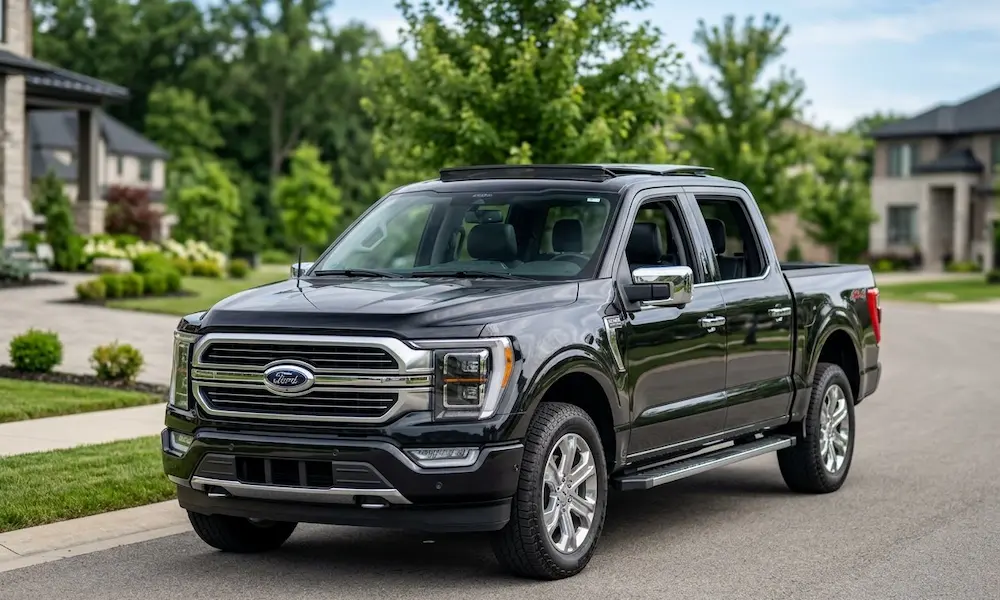
Is your F-150 dashboard displaying an annoying “Active Air Dam System Fault” message? You’re facing one of the most common issues with 2021-2023 F-150 and 2022-2023 F-150 Lightning models. This retractable aerodynamic feature might improve fuel efficiency by up to 4%, but it’s quickly become the bane of many truck owners’ existence. Let’s dive into what’s happening, why it matters, and how you can fix it without breaking the bank.
What Is the Active Air Dam System?
The Active Air Dam (AAD) is a movable panel beneath your F-150’s front bumper designed to improve aerodynamics. It automatically deploys when you reach 40-45 mph and retracts when you slow down or park.
Here’s how it works:
- Two actuator motors (left and right) control the air dam blade
- The Powertrain Control Module (PCM) manages everything through a LIN bus network
- When deployed, the air dam extends about 4 inches below the bumper
- This reduces ground clearance from 9 inches to just 5 inches
That last point explains why so many F-150 owners experience problems – the deployed air dam sits dangerously low to the ground, making it extremely vulnerable to damage from road debris, speed bumps, and even modest off-road obstacles.
Common Warning Signs of AAD System Problems
If you’re experiencing any of these symptoms, your Active Air Dam system likely needs attention:
- Dashboard Warning Message – “Active Air Dam System Fault See Manual” appears in your instrument cluster
- Unusual Noises – Grinding or clicking sounds from the front of the truck during acceleration or deceleration
- Visible Damage – Cracks, dents or complete separation of the air dam blade
- Failed Deployment – The air dam doesn’t extend or retract as it should when changing speeds
Understanding the Diagnostic Trouble Codes
When you connect a diagnostic scanner, you’ll typically find one of these codes:
C0604:00 – Active Air Dam Performance
This is the most common code, usually indicating a software or firmware issue. It might appear even when there’s no physical damage to the system. According to Ford’s technical service bulletin, this code often stems from outdated firmware in the AAD actuators or the PCM itself.
C0630:00 – Active Air Dam Stuck
This code points to a physical problem – the air dam is physically stuck, damaged, or the actuators have failed mechanically. Unlike the performance code, this usually requires hardware replacement rather than just a software update.
DIY Diagnosis: Is It Software or Hardware?
Before heading to the dealer, try these steps to determine if your issue is likely software or hardware related:
- Clear the code using an OBD-II scanner
- Test drive your truck at varying speeds (especially above 45 mph)
- Watch the air dam (if possible) to see if it deploys and retracts properly
- Check for physical damage by visually inspecting the front underside of your truck
If the code returns immediately, you’re likely dealing with a hardware issue. If it takes time to come back or doesn’t return at all, it could be a software glitch that’s already resolved itself.
Latest Technical Service Bulletins
Ford has released several TSBs addressing Active Air Dam problems:
| TSB Number | Date | Focus | Primary Solution |
|---|---|---|---|
| TSB 24-2404 | November 2024 | False warning messages | PCM software update |
| SSM 51718 | 2023 | C0604:00 codes | Actuator replacement |
| TSB 23-2126 | May 2023 | F-150 Lightning specific | PCM reprogramming |
According to the F-150 Lightning Forum, the most recent bulletin (24-2404) specifically targets false warning messages appearing in the instrument cluster. The fix involves updating the PCM software using Ford’s diagnostic system.
Repair Options and Costs
Your repair path depends largely on whether you’re facing a software or hardware issue:
Software Update
If diagnostic testing confirms a software-only issue (typically C0604:00 without physical damage):
- PCM update via Ford Diagnosis and Repair System (FDRS)
- Cost: $75-150 for labor
- Often covered under warranty or TSB provisions
Actuator Replacement
When software updates don’t resolve the C0604:00 code:
- Both actuators should be replaced simultaneously
- Left AAD Actuator (ML3Z 17626 D): $218-242
- Right AAD Actuator (ML3Z 17626 E): $218-242
- Labor: $200-250
- Total cost: $636-734
Complete System Replacement
For vehicles with physical damage (typically with C0630:00 codes):
- Air Dam Blade (ML3Z 17626 F): $113-125
- Both Actuators: $436-484
- Labor (2.5-3.0 hours): $375-450
- Total cost: $819-909
According to Cars.com, their long-term test F-150 required a complete system replacement that cost over $1,100 after the air dam was damaged by road debris.
The Removal Option: Is It Worth Considering?
Many F-150 owners eventually choose to permanently remove the active air dam system rather than face repeated repairs. Here’s what you should know:
Benefits of Removal
- Eliminates all fault messages (when properly done)
- Improves ground clearance by 4 inches
- Prevents future damage from road obstacles
- Eliminates repair costs for a failure-prone system
Drawbacks of Removal
- Reduces fuel economy by approximately 1 MPG
- May void certain aspects of your vehicle warranty
- Requires proper electrical modifications to prevent fault codes
Professional Removal Process
- Remove the air dam blade (requires 7mm screws)
- Unbolt actuators from frame (1/2″ bolts)
- Properly seal electrical connections with dead-head connectors
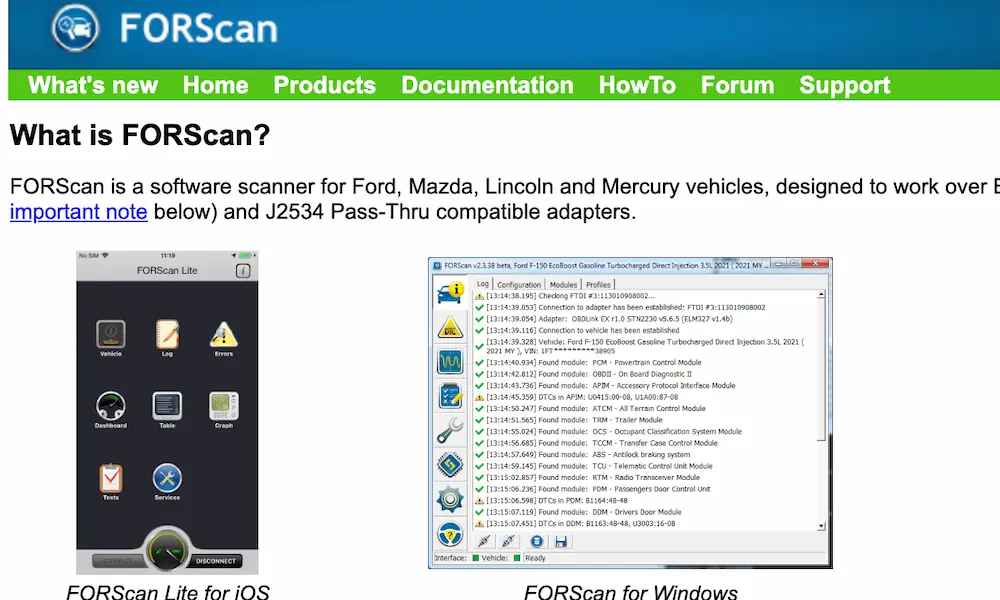
- Optional PCM programming to disable fault codes via Forscan
Many F-150 owners report on F150Gen14.com that the tradeoff of slightly reduced fuel economy is well worth the improved ground clearance and elimination of frustrating fault messages.
Model-Specific Considerations
The Active Air Dam system varies slightly between different F-150 variants:
Regular F-150 (2021-2023)
- All trim levels have the same AAD system
- System operates identically across all engine options
- Most prone to damage during off-road use
F-150 Lightning (2022-2023)
- Uses similar hardware but different software calibrations
- Has Lightning-specific TSB 23-2126 for fault patterns
- May experience simultaneous issues with active shutters
PowerBoost Models (2024)
According to a Ford technical bulletin, these models may experience related issues with upper air deflectors causing turbocharger problems, which can compound AAD system faults.
Warranty Coverage
Understanding your warranty coverage is crucial when dealing with AAD system faults:
- Software-related faults: Typically covered under TSB warranty provisions
- Manufacturing defects: Covered under the standard 3-year/36,000-mile bumper-to-bumper warranty
- Damage-related failures: Generally not covered, as they’re considered owner responsibility
- Out-of-warranty repairs: Can cost $800-1,600 for complete system replacement
If your truck is still under warranty, document any AAD system issues promptly and have them addressed by your dealer.
Prevention Tips for Active Air Dam Owners
If you choose to keep your active air dam system intact:
- Avoid off-roading or driving on unpaved roads when possible
- Approach speed bumps and driveway transitions at an angle
- Monitor system operation during speed changes
- Address fault codes promptly to prevent actuator damage
- Consider preventive removal before warranty expiration if frequent faults occur
Is the Active Air Dam Worth the Hassle?
The Active Air Dam system represents a classic engineering trade-off: better fuel economy versus real-world durability. While Ford claims up to 4% efficiency improvement, the system’s fragility and high repair costs make it questionable for many driving situations.
As noted in extensive discussions on F-150 Lightning Forum, most owners who frequently drive on anything but smooth highways eventually opt for system removal or disable.
The bottom line: If you rarely leave paved roads and prioritize fuel economy, keeping the system might make sense. For everyone else, the peace of mind that comes from removing this vulnerable component often outweighs the slight MPG hit you’ll take.
Have you dealt with Active Air Dam issues on your F-150? What solution worked best for you?